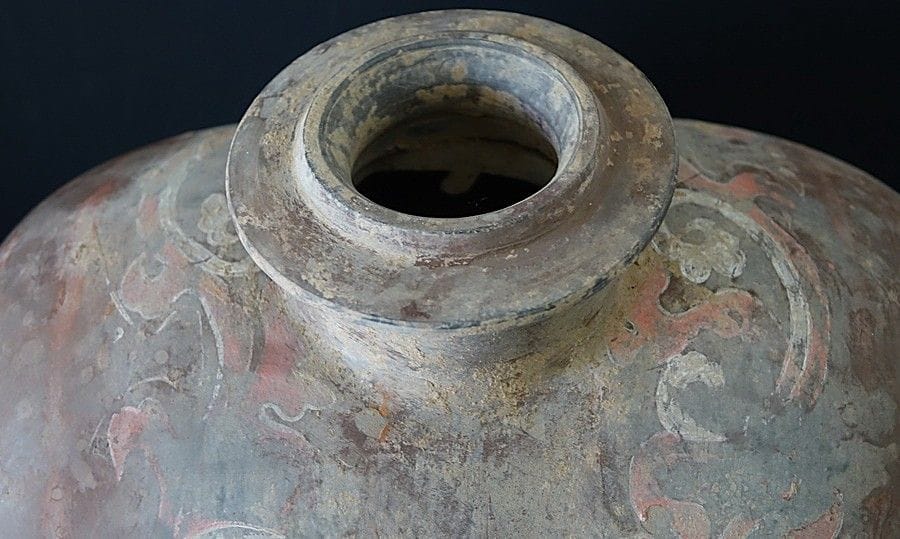
Chinese Han Dynasty Earthenware Cocoon Jar
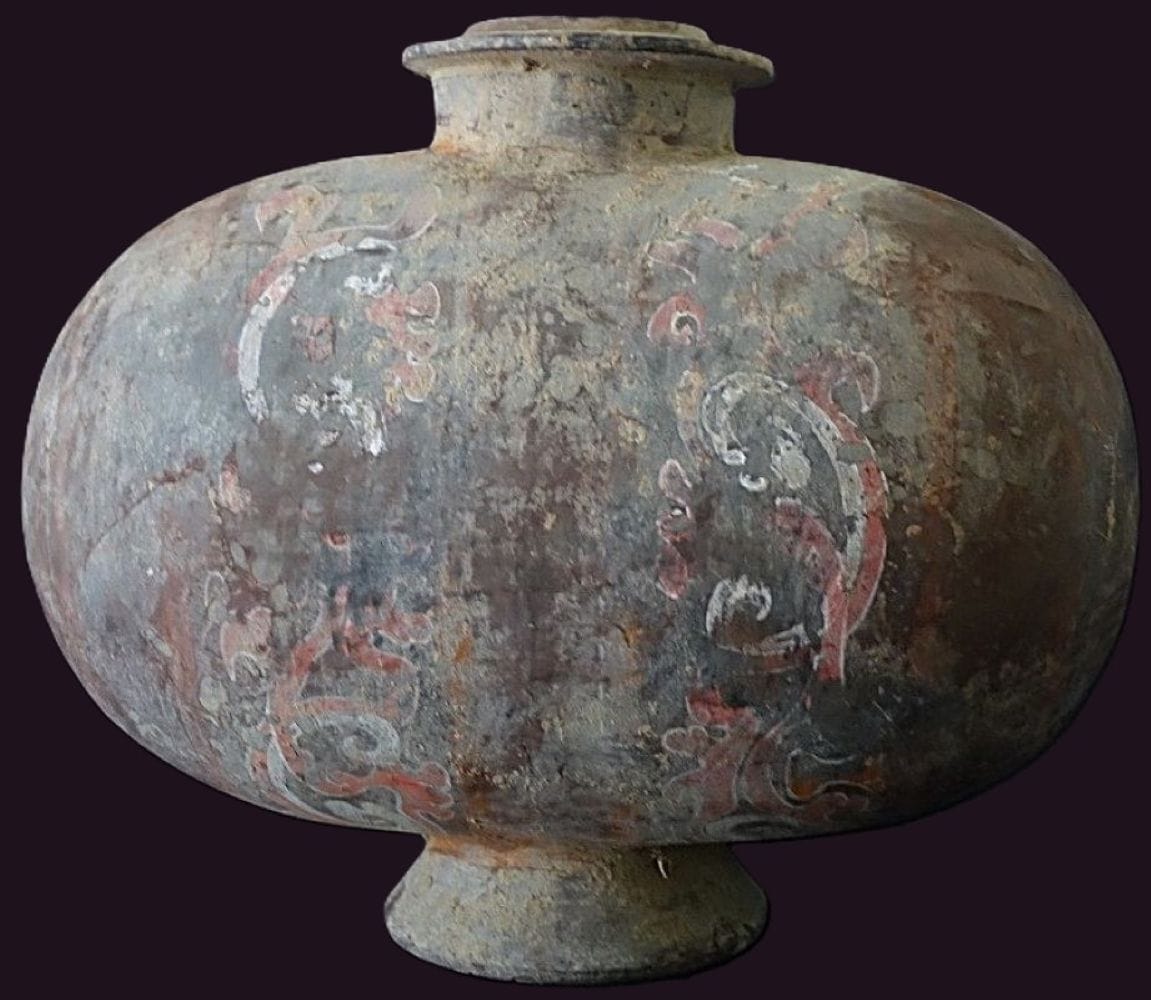
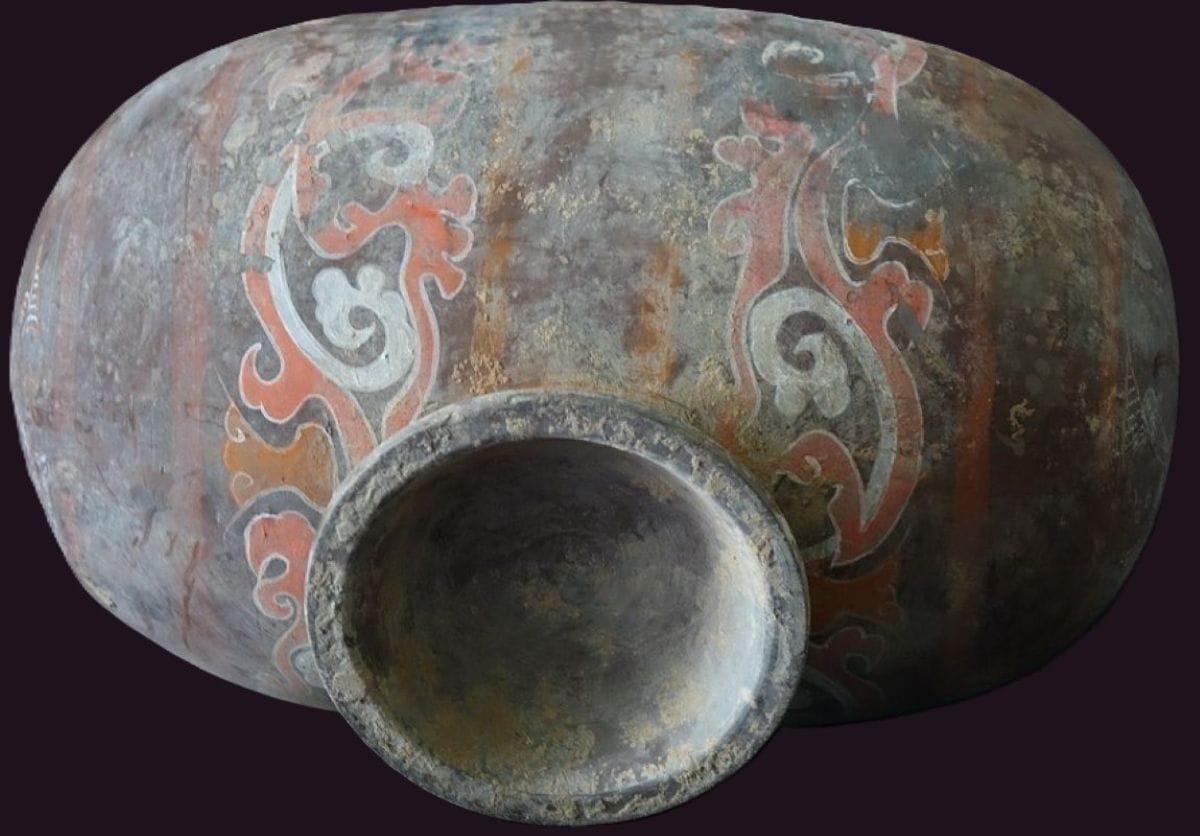
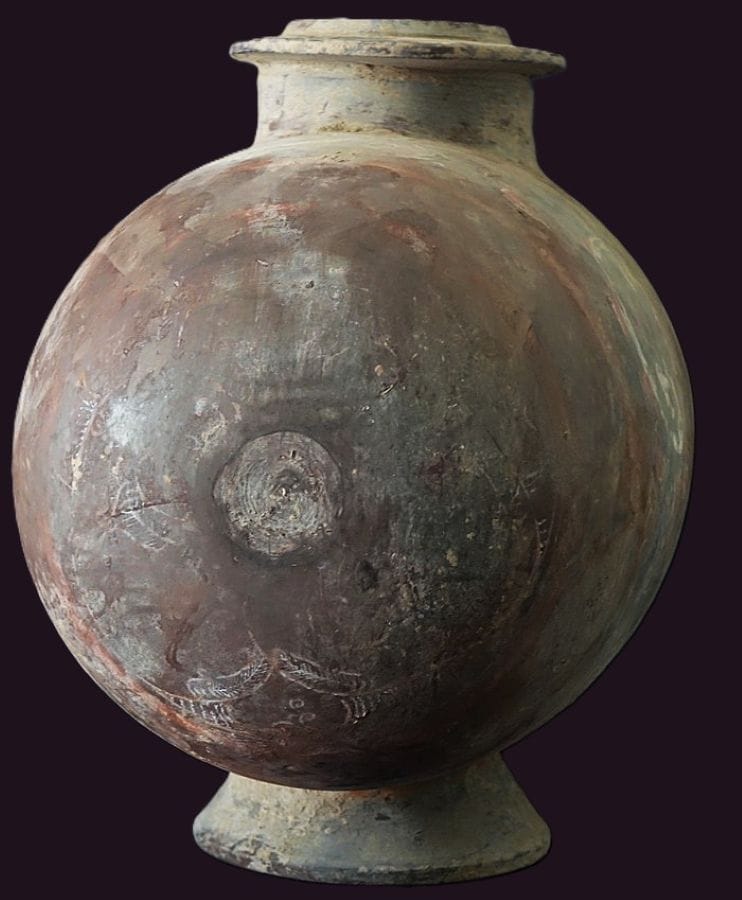
This Chinese Han Dynasty earthenware cocoon jar retains traces of its original orange and white painted swirl motifs. Originally, these vessels were likely lused to hold liquids like fermented grain wine or water. Their unique horizontal shape allowed them to sit securely on flat surfaces or be tied onto pack animals without rolling, making them well-suited for travel and military transport.
During the Han Dynasty, most painted earthenware cocoon jars were produced specifically to accompany the deceased into the tomb. They served several key symbolic purposes:
As mingqi (spirit goods), they were placed in tombs to store food or drink for the soul’s journey, ensuring the deceased lacked for nothing.
The silkworm cocoon jar was a powerful metaphor for transformation, pupation, and immortality. Just as a silkworm emerges from its cocoon into new life, the vessel symbolized the transition of the soul.
Silk production was one of the main industries in the Han economy. By placing cocoon-shaped jars in a tomb, it reflected wealth, prosperity, and a connection to the earthly riches that silk making provided.
SPECIFICATIONS:
- AGE: Han Dynasty 206 BCV – 220 AD
- HEIGHT: 30 cm
- WIDTH: 34 cm
- DEPTH: 21 cm
- WEIGHT: 2.75 kg
- #10a