
Exceptional 19th-century Javanese Keris
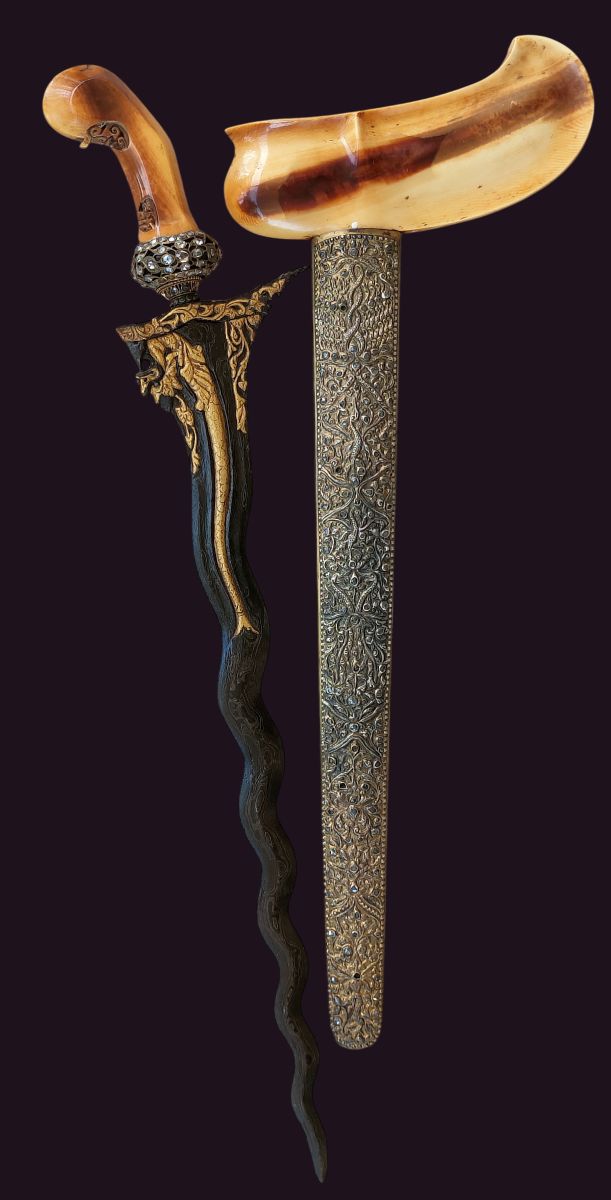
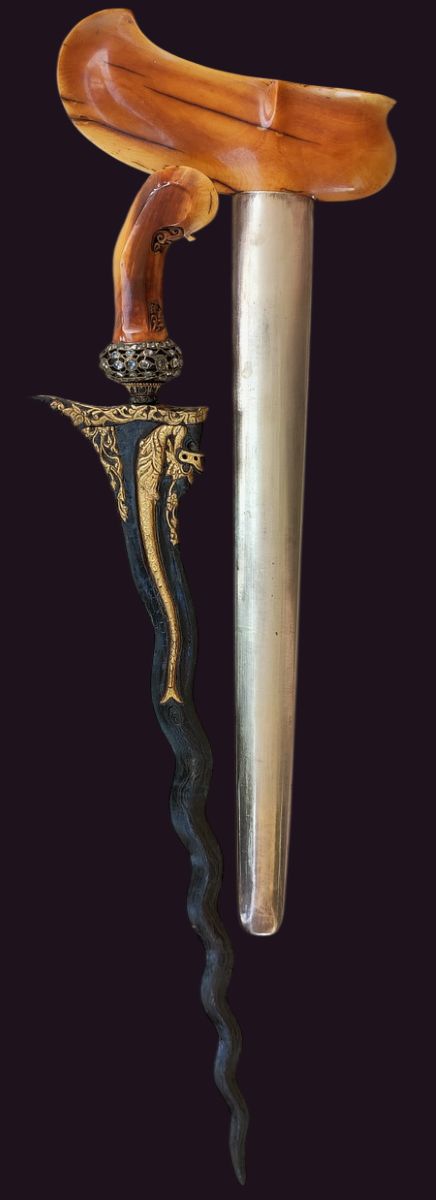
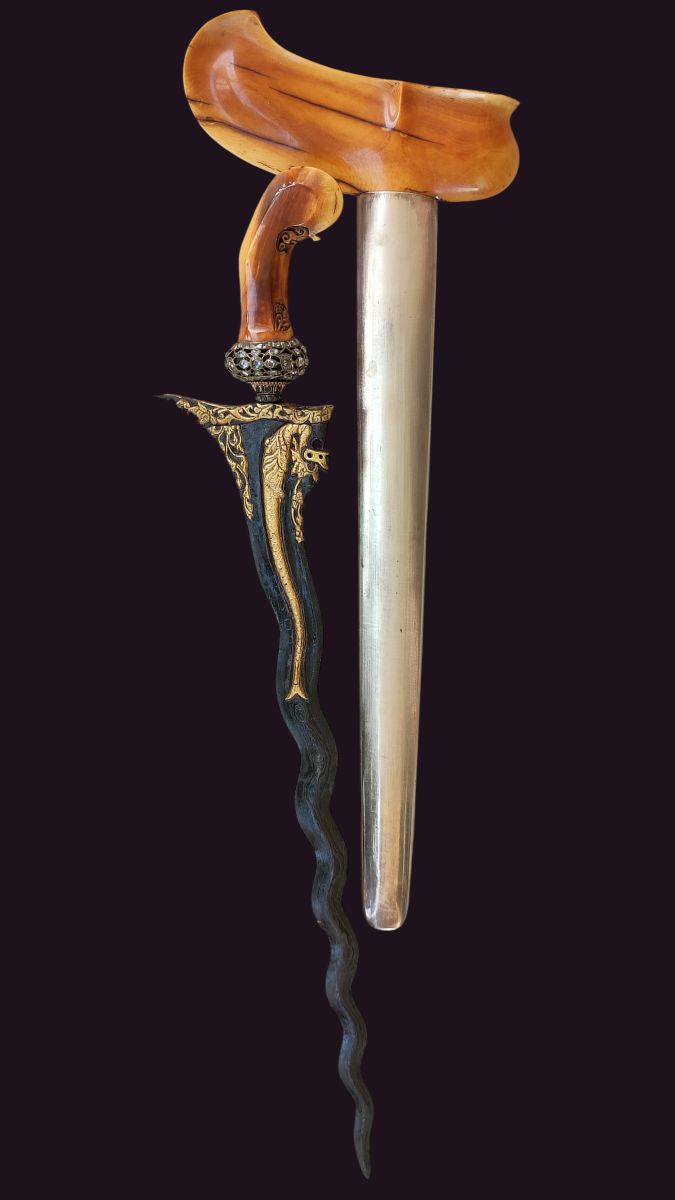
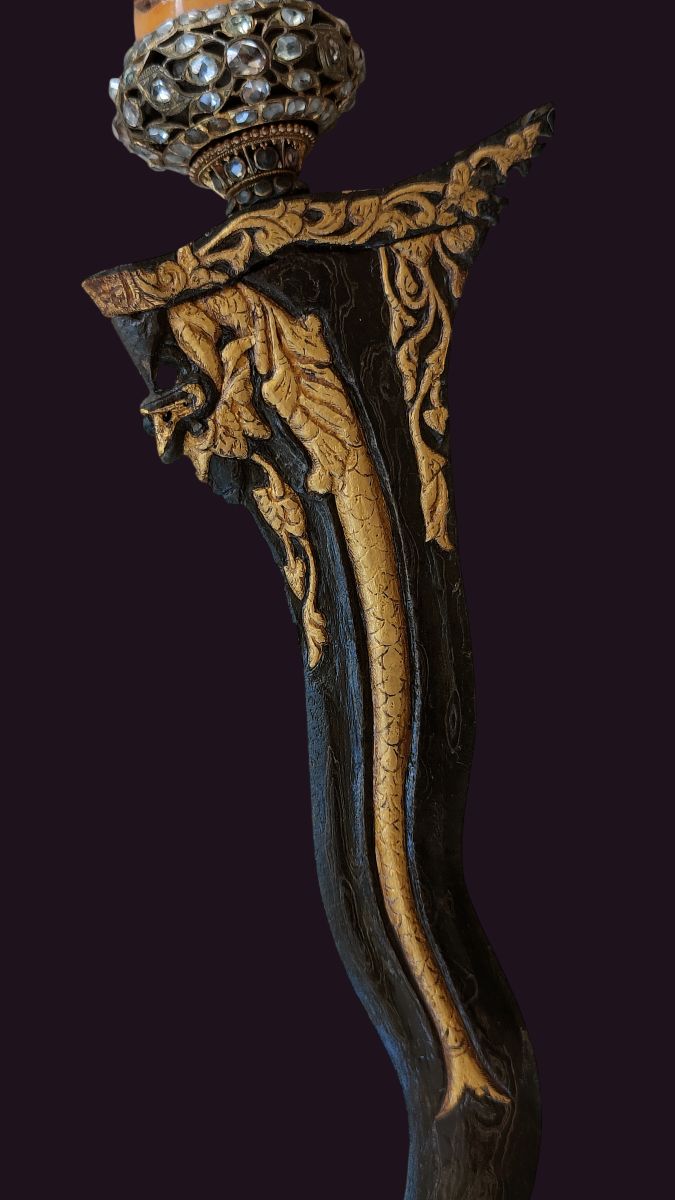
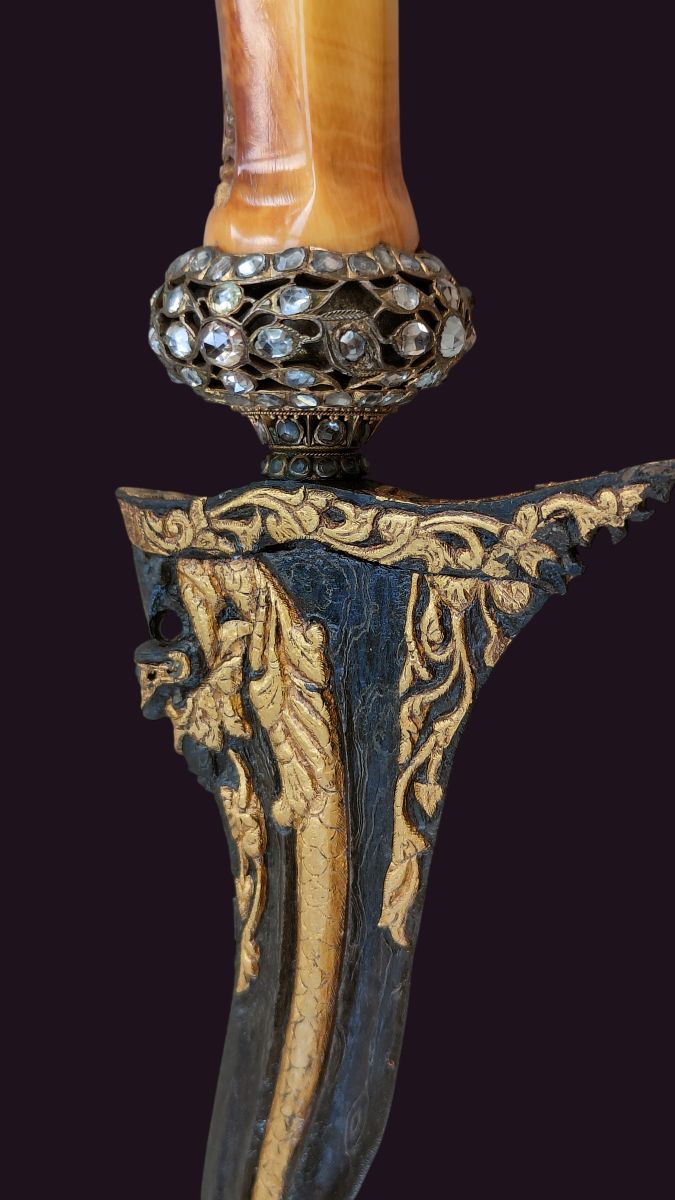
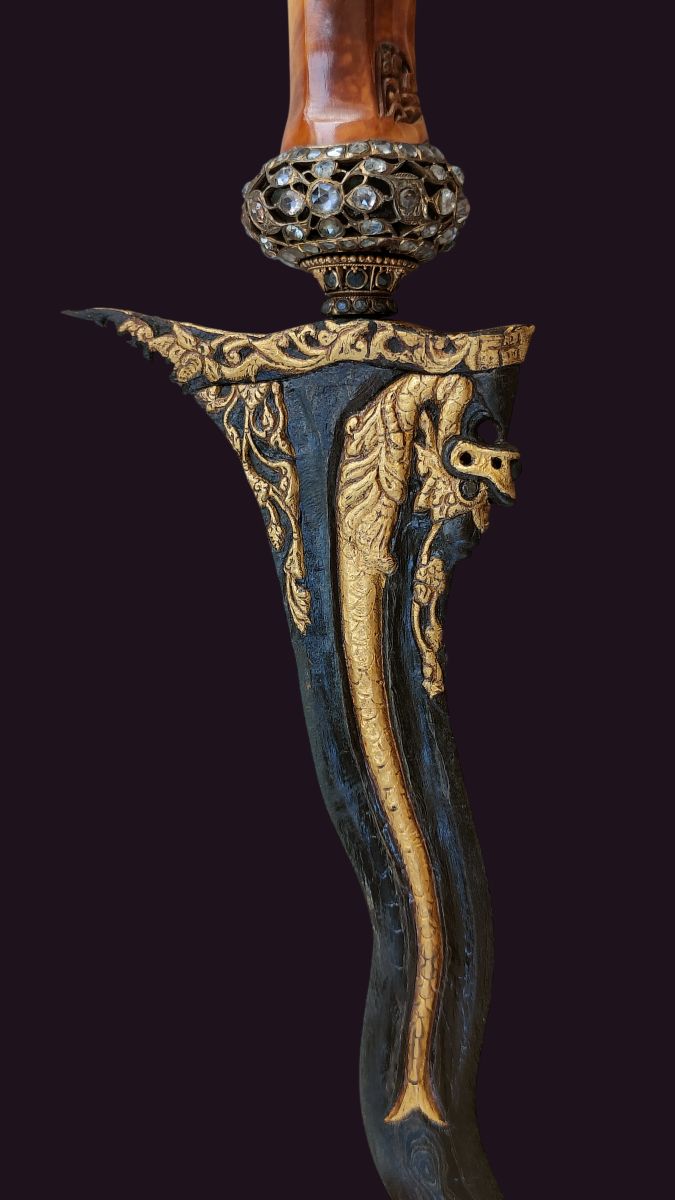
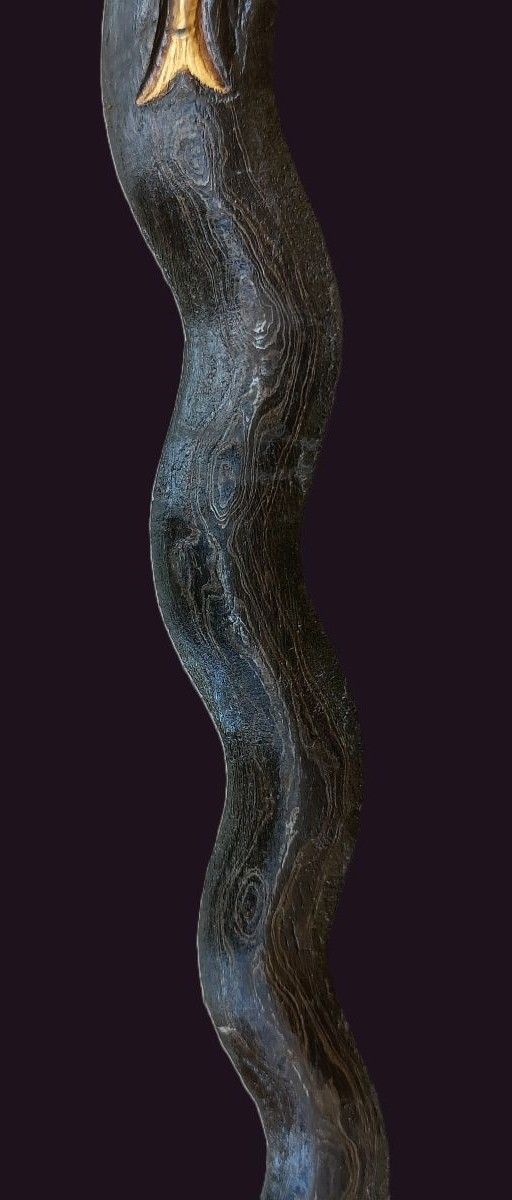
An exceptional 19th-century Javanese keris featuring a hand-forged nine-luk pamor blade with a finely rendered naga (mythical serpent) enriched with gold overlay, complemented by an elaborate set of high-status dress fittings.
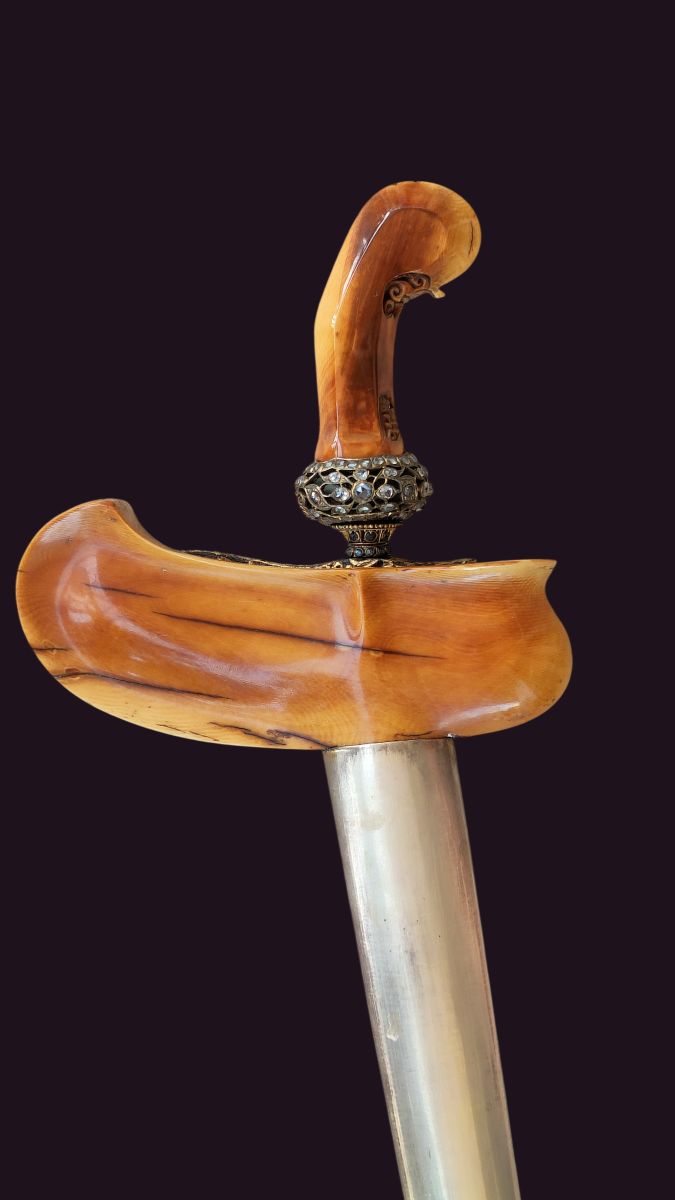
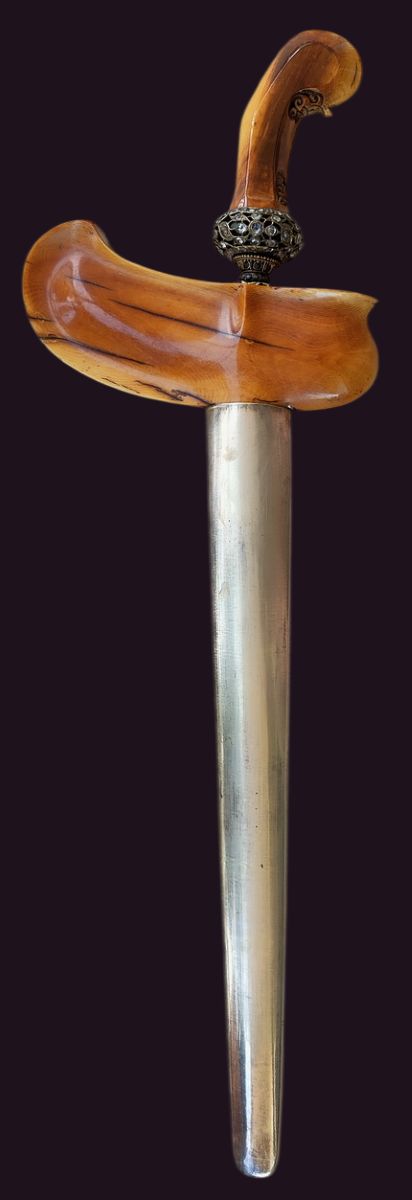
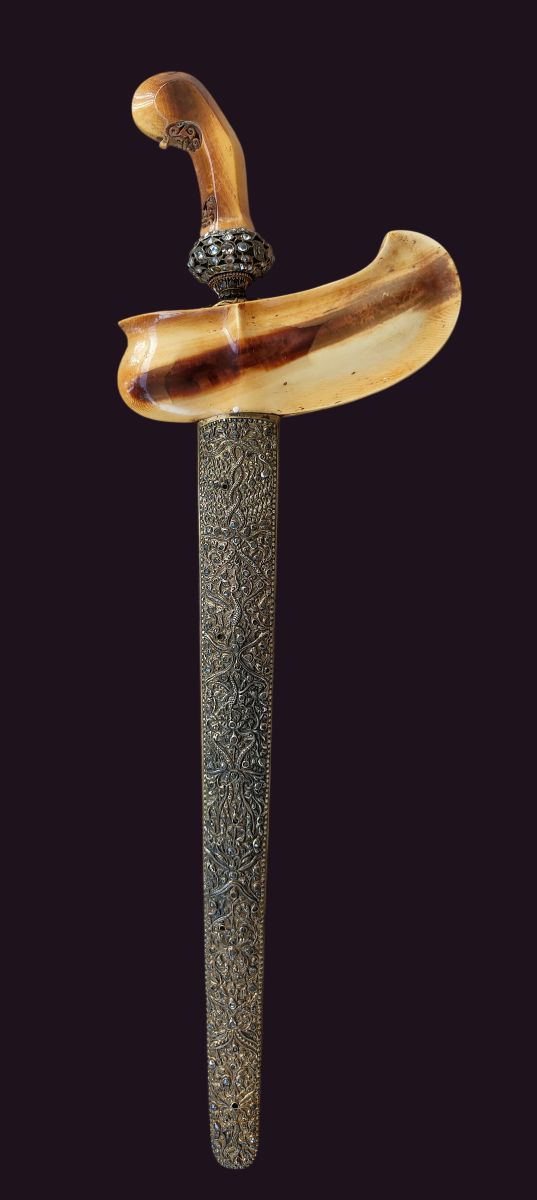
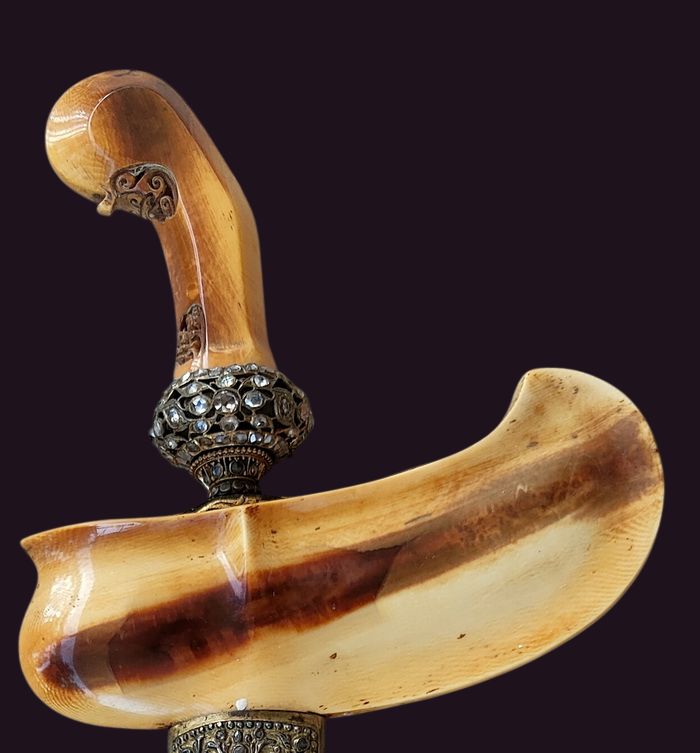
Both the hilt and wrangka are fashioned from ivory, ranging in colour from warm cream and honey to deep reddish-brown. Under magnification, the material displays characteristic Schreger lines. Natural colour variation gives the warangka a particularly attractive appearance that has become more pronounced with age.
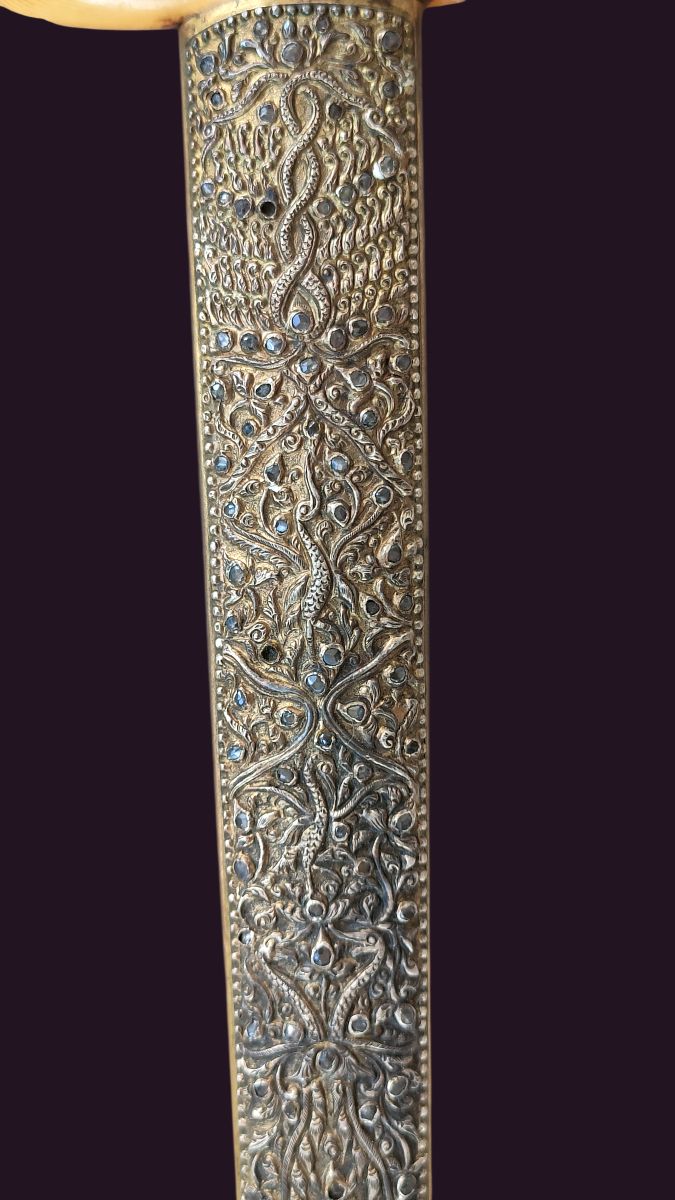
The hilt is mounted with an elaborate openwork metal collar set with numerous small faceted stones, some of which are now missing. The same sense of richness continues along the sheath, which is covered with intricately worked metal decorated with scrolling foliage, birds and numerous small inset stones. Some stones along the sheath are missing.
From the pamor and gold decoration of the blade to the richly coloured ivory and extraordinarily detailed metalwork, this keris is a fine Javanese keris in which craftsmanship and decoration were clearly of considerable importance and meant to be held by someone of high status.
SPECIFICATIONS:
- AGE: Exceptional 19th-century Javanese Keris – 19th – early 20th Century
- LENGTH: – 51cm
BLADE LENGTH: – 37cm
WEIGHT: – 650 gms - #138
Exceptional 19th-century Javanese Court Keris
This antique Javanese wavy-bladed (11 luk) keris shows a dark-etched iron surface treatment (warangan). A crowned Naga emerges at the sor-soran; its body trails down the centre from the top of the blade spine, amidst a scrolling vegetal motif (lung-lungan). The gold is applied using the kinatah emas technique, hand-hammered into grooves cut directly into the iron. The gold decoration (kinatah) follows the contours of the serpent’s head, jaw, and scales, with dark iron showing through the recesses.
Features on this beautiful antique Javanese Keris
• Wrangka (Sheath Top): Carved from a single piece of dense elephant ivory, finished in a warm amber-golden tone via traditional boiling stains (such as herbal or gambir dyes) to accentuate the natural grain. Fine horizontal drying checks run parallel to the grain structure, providing classic visual evidence of aged tusk dentine.
• Pendok (Scabbard Cover): A silver sheath cover worked in high-relief repoussé on one side, with a dense, scrolling floral pattern with an aged silver-sulphide patina.
• Selut & Mendak (Hilt Collar & Cup): A prominent spherical hilt cup (selut) and collar (mendak) rendered in filigree openwork, set with multiple faceted stones (intan).
• Ukiran (Hilt): A stylised Javanese wooden or ivory hilt matching the warm patina of the dress, anchored above the gem-set collar.
Learn more about the Javanese keris
View our growing collection of Indonesian and Malay Keris