Antique Shan Bronze Buddha – black lacquer & Gilding
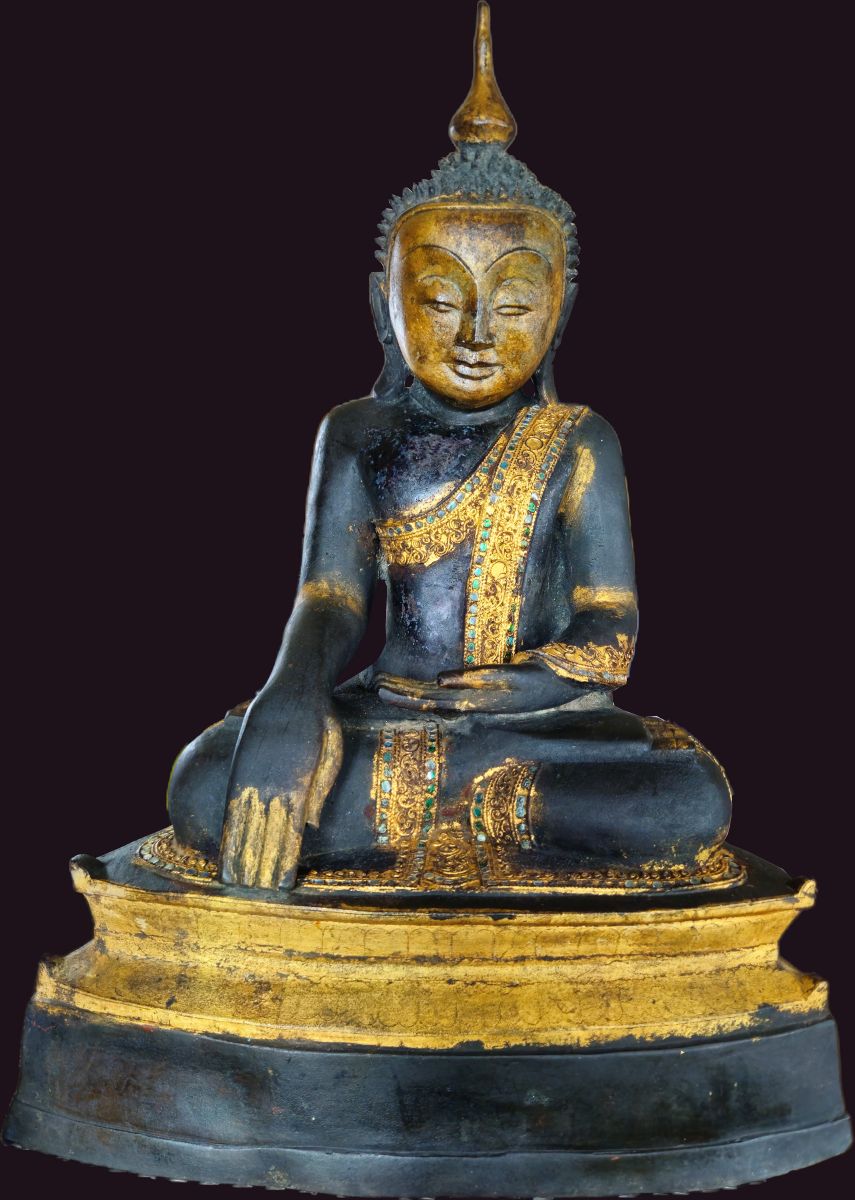
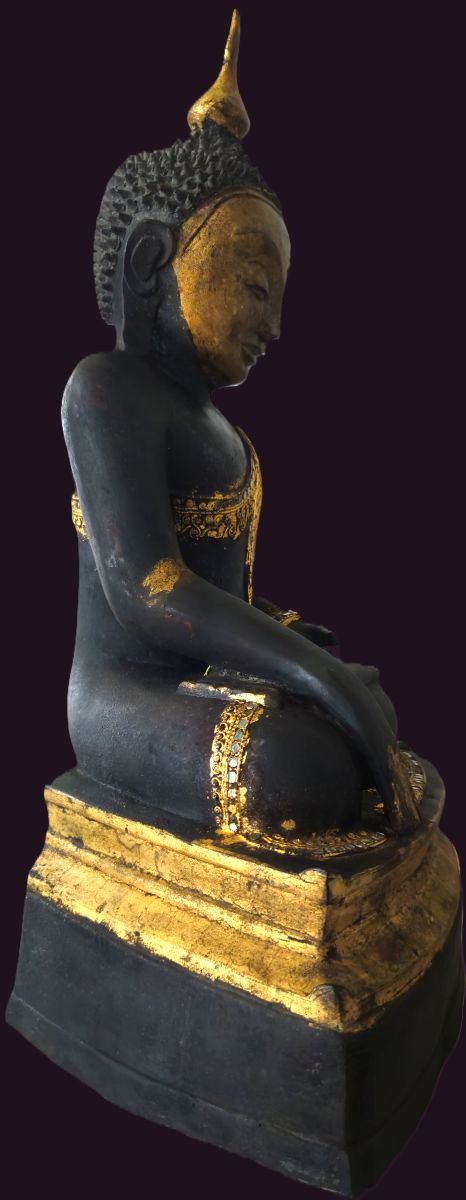
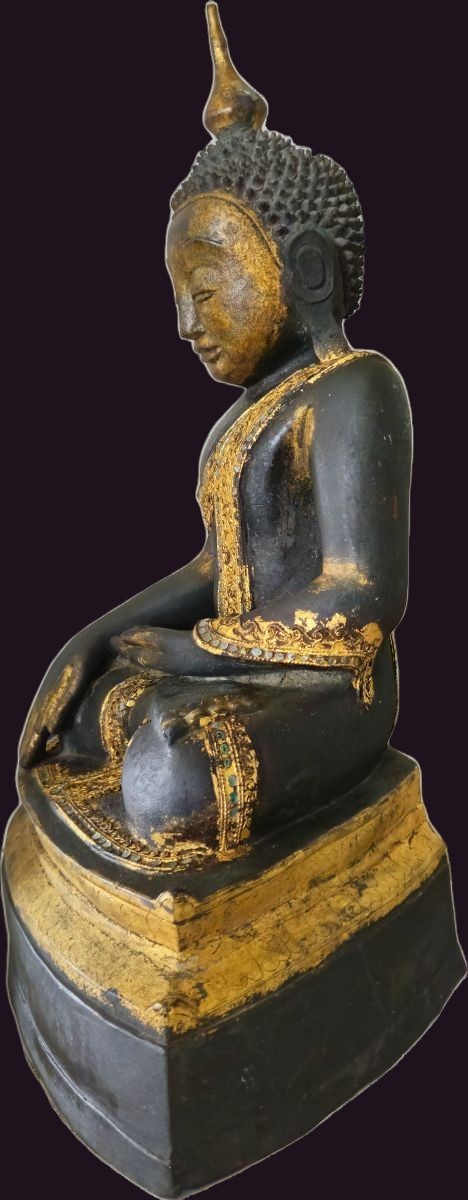
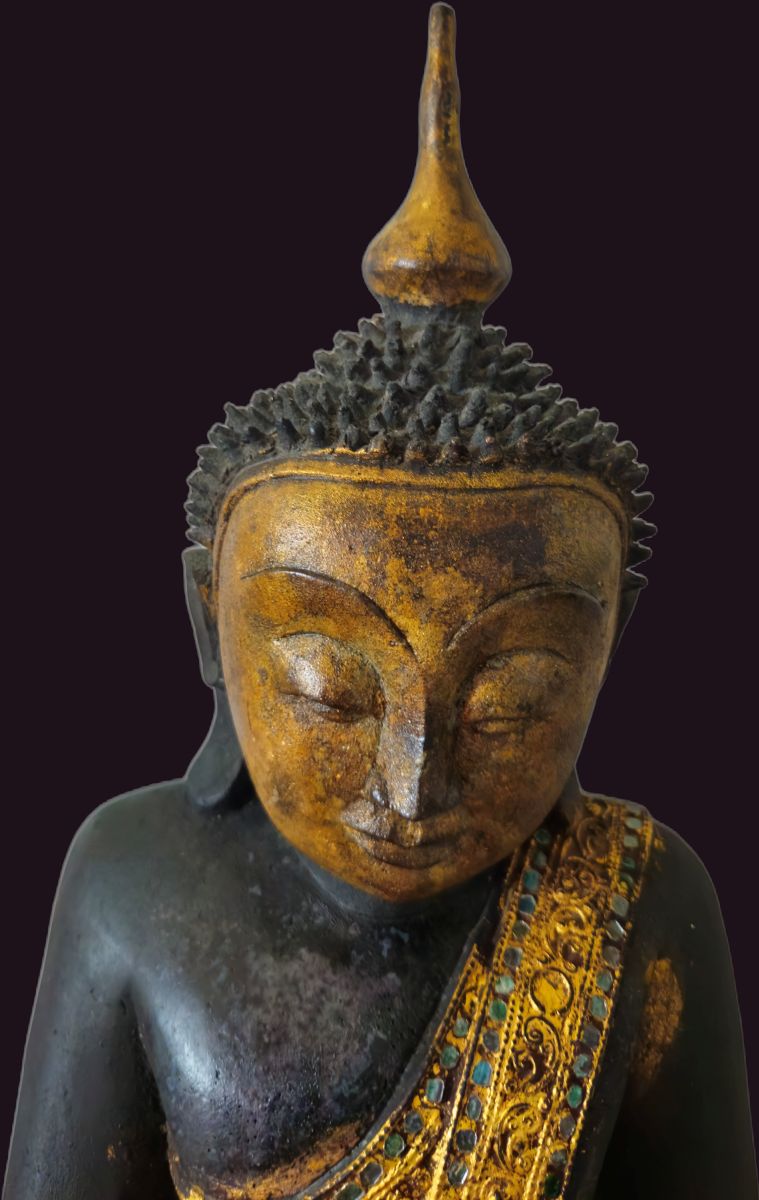
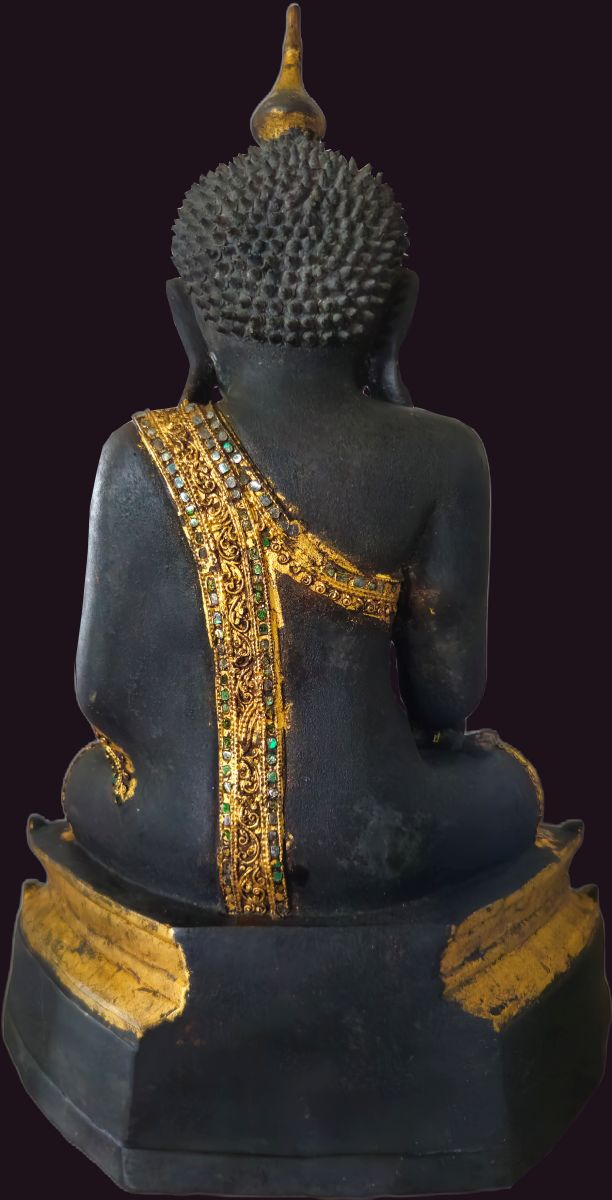
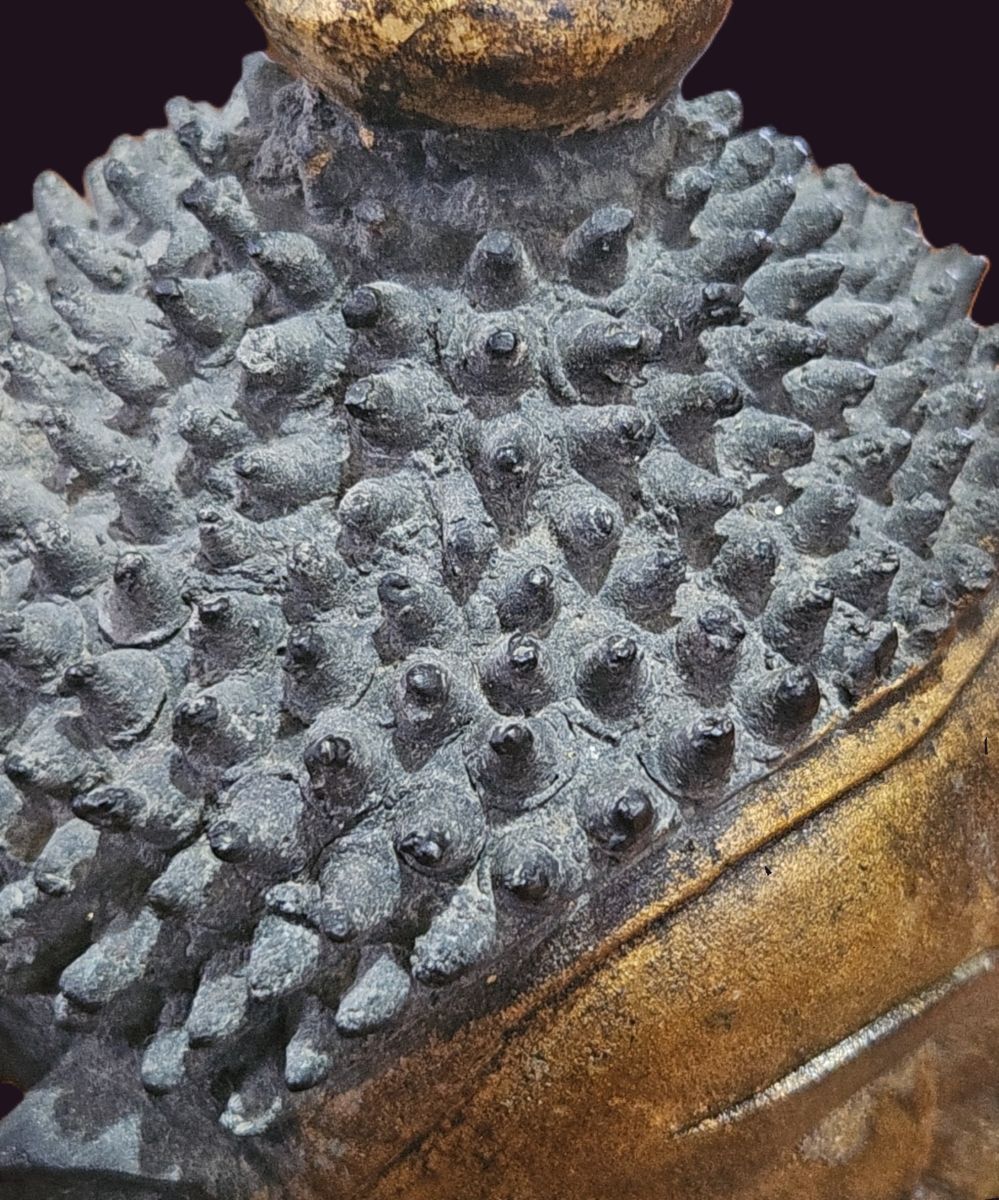
An impressive antique Shan bronze Buddha with a black thitsi lacquer body and decorative gilded border on the edges of the sanghatti. Instead of being cast as part of the figure, the hair curls on this bronze statue appear as separate metal elements set directly into the surface. A traditional 7.5 cm metal finial rises above the shallow raised ushnisha.
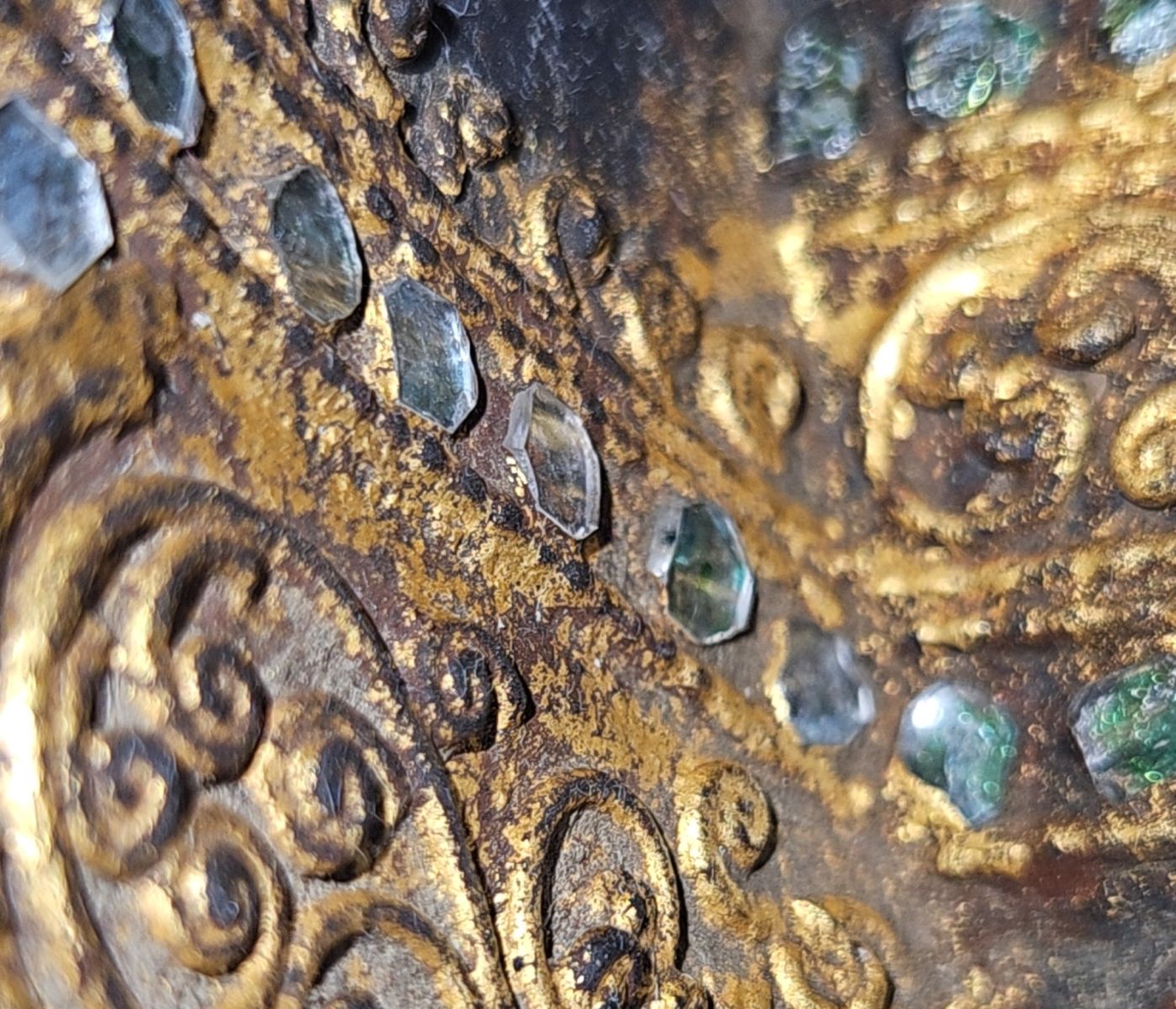
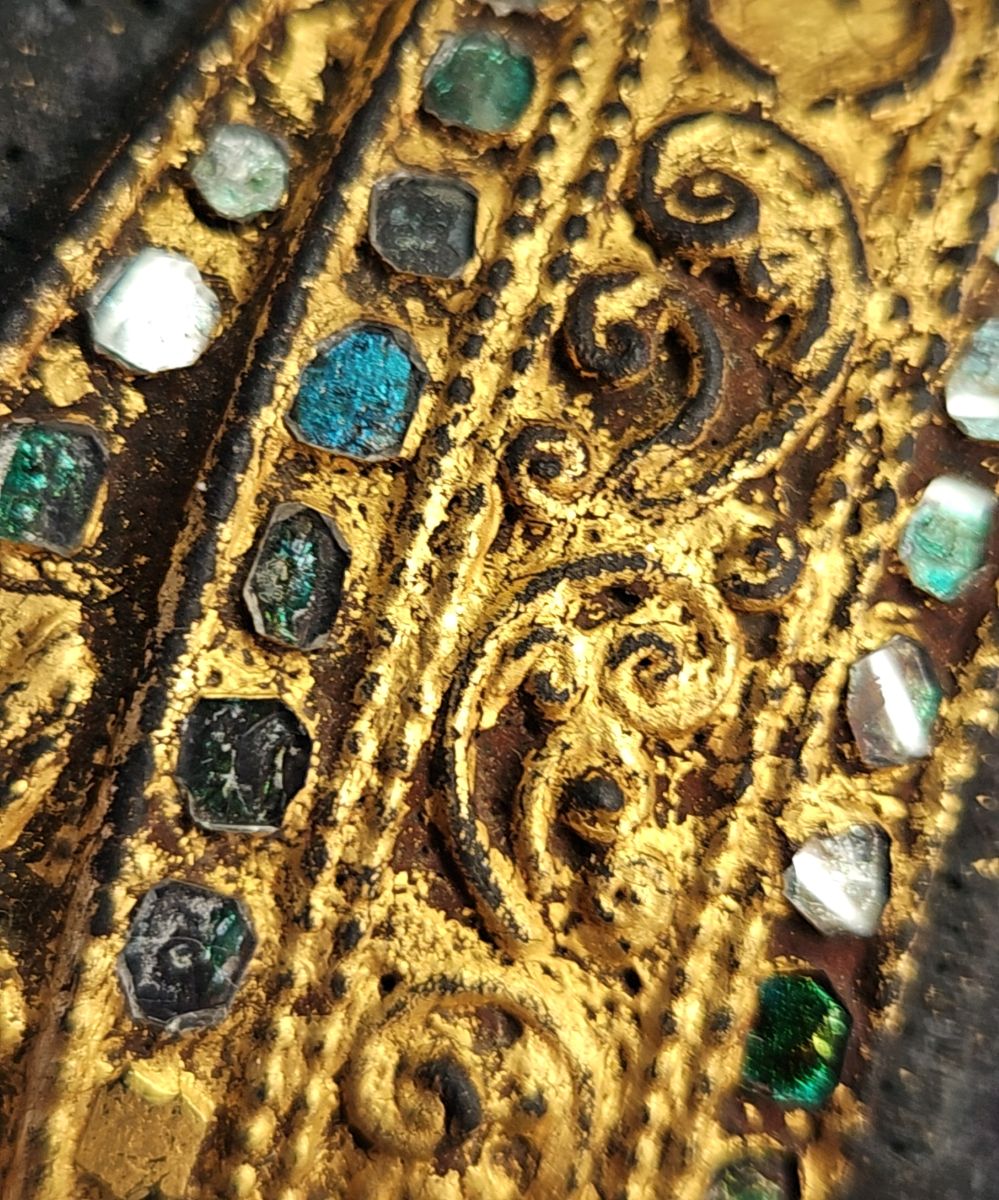
Unlike the added thayo lacquer work typical of later Mandalay statues, the decorative border here appears to be cast directly into the figure. This integration is particularly visible along the raised outline of the saṅghāti. The relief is exceptionally well preserved, showing none of the loss or flaking common to aged thayo lacquer work, suggesting it may have been cast directly into the metal.
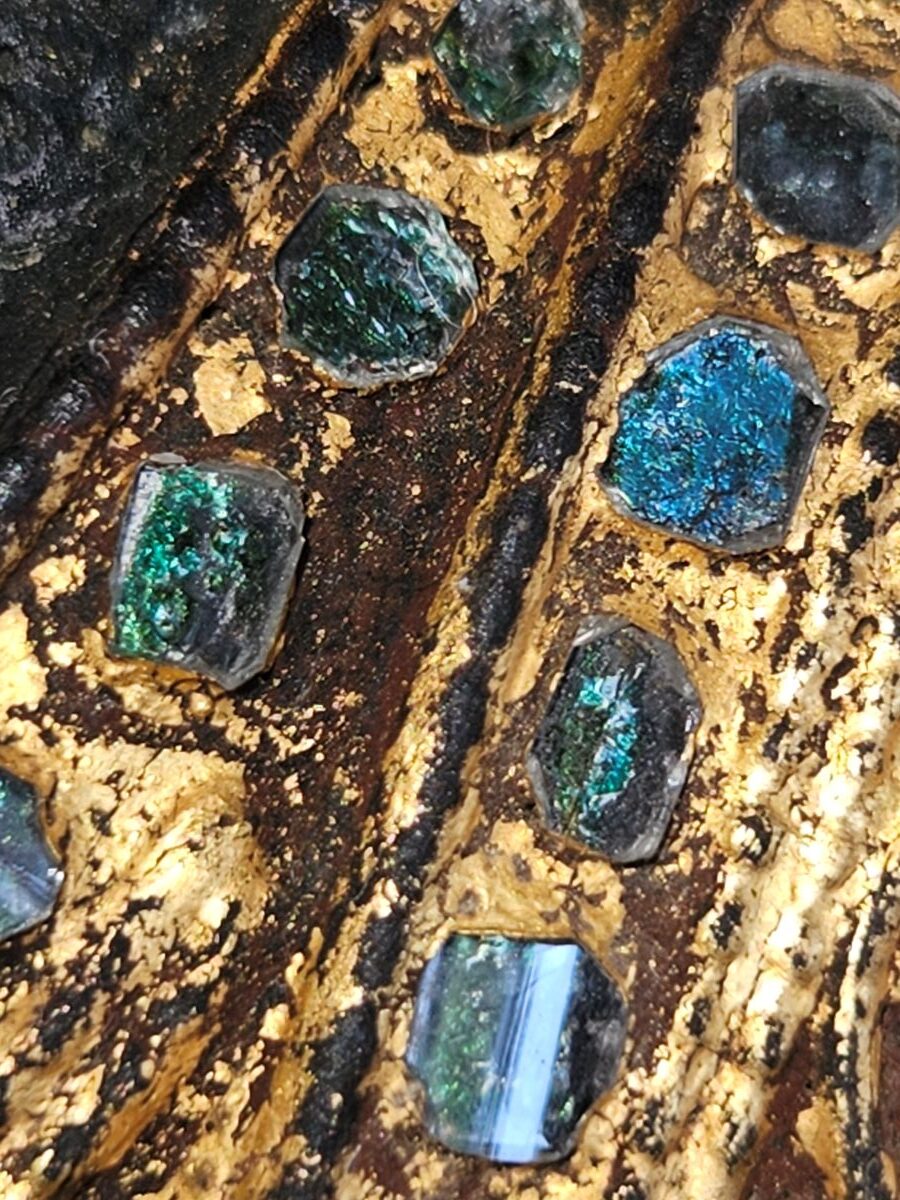
The hand-cut glass inserts in this bronze Buddha statue are not the standard flat mosaics seen in later Burmese statues dating to the 19th and 20th centuries. Magnification shows a reflective foil backing, creating an effect distinct from typical late-period glass inlay. On the upper plinth directly beneath the seated Buddha, two rows of shallow lotus petals are incised into the metal.
Individually applied metal hair curls, black lacquer, gilded relief work and cut-glass ornament give this bronze Shan Buddha a particularly distinctive character. The statue appears consistent with an older Shan tradition.
SPECIFICATIONS:
Antique Shan Bronze Buddha – black lacquer & Gilding
- AGE: Around 18th century – could be earlier.
- HEIGHT: 55 cm
- WIDTH: 37 cm
- DEPTH: 23 cm
- WEIGHT: 12 kg
- #135
Traditional Bronze Casting in Burma
The tradition of bronze casting Buddha statues in Burma (Myanmar) spans over two millennia. The craft began with early metalworking cultures in the Samon Valley and Pyu city-states, before maturing into a highly refined art during the Pagan period. Master foundrymen relied primarily on the cire perdue (lost-wax) technique to execute complex, free-standing sculptures, ritual implements, and temple bells. Crafting an image began with modelling a precise wax figure over a core of fine clay, sand, and organic binders such as rice husk. Artisans then coated this wax model in successive layers of fine slurry and clay to form a heavy outer mould. Once the wax melted, foundrymen poured molten bronze, an alloy of copper, tin, lead, and occasionally precious metals, directly into the void.
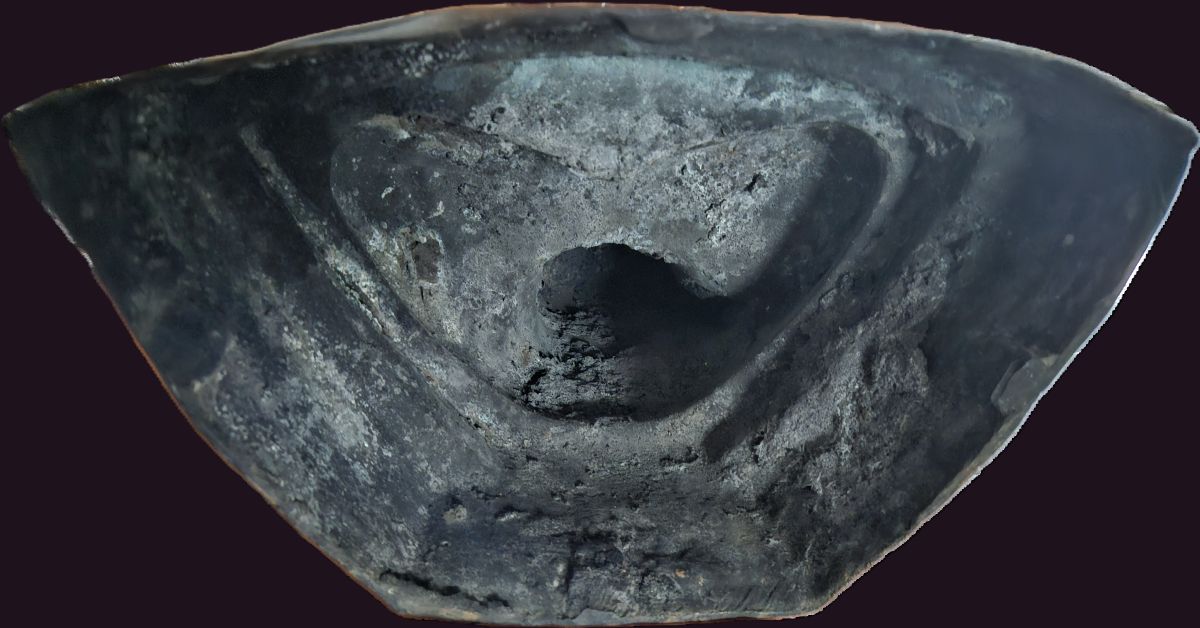
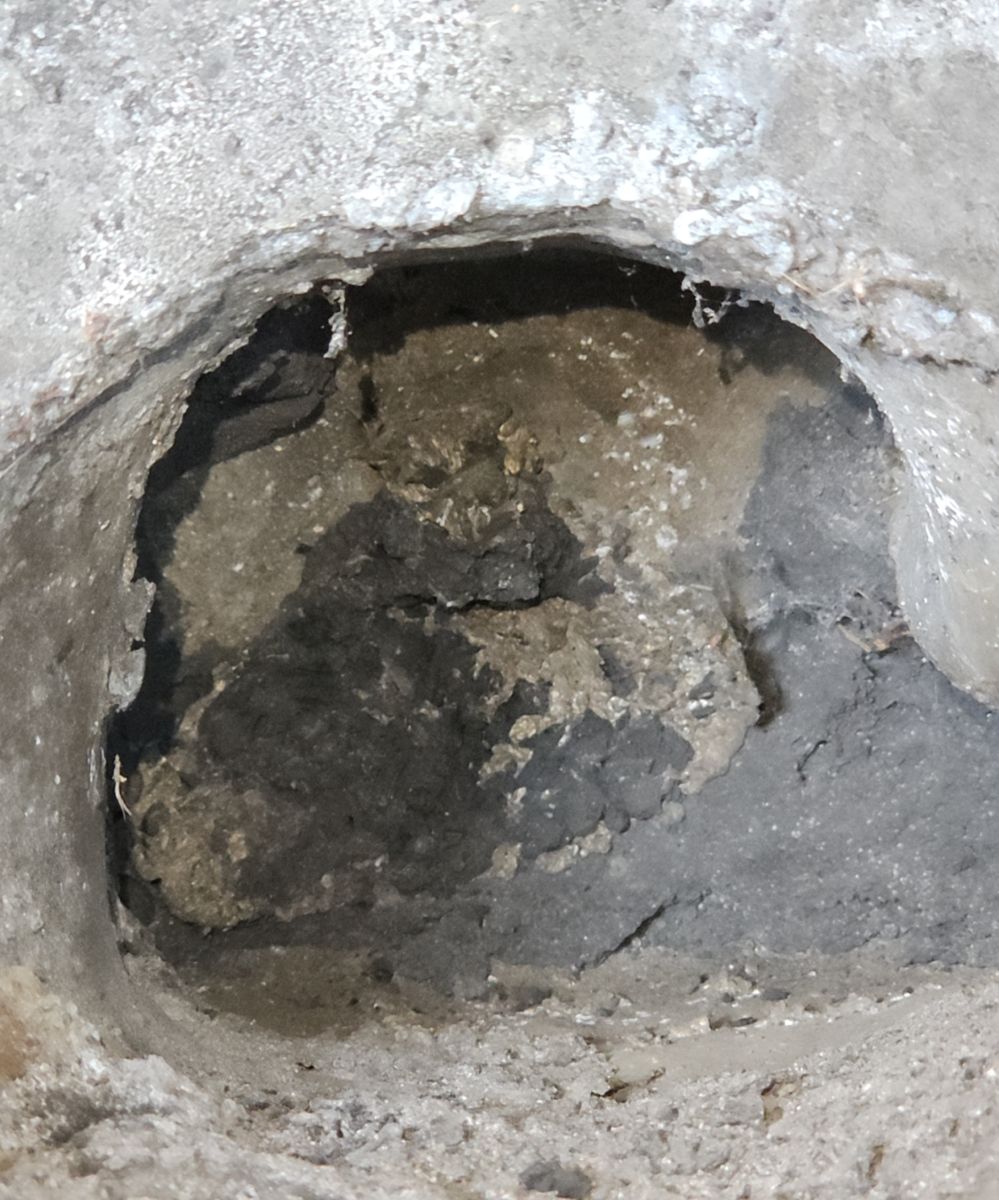
After cooling, artisans carefully removed the outer clay mould and meticulously cleared away the inner core material. Artisans then chiselled, filed, and cold-worked the rough casting by hand to sharpen facial features, refine drapery folds, and smooth manufacturing seams. Bronze castings were often enhanced with techniques like chasing, surface chasing, or applied gilding to protect the metal and signify spiritual purity. Because large or intricate bronze sculptures posed significant technical challenges related to weight and thermal stress, smiths often cast complex compositions in separate modular sections such as the body, base, backplate, or decorative flame finials before pinning, mortising, or cold-joining them into a unified sacred image.