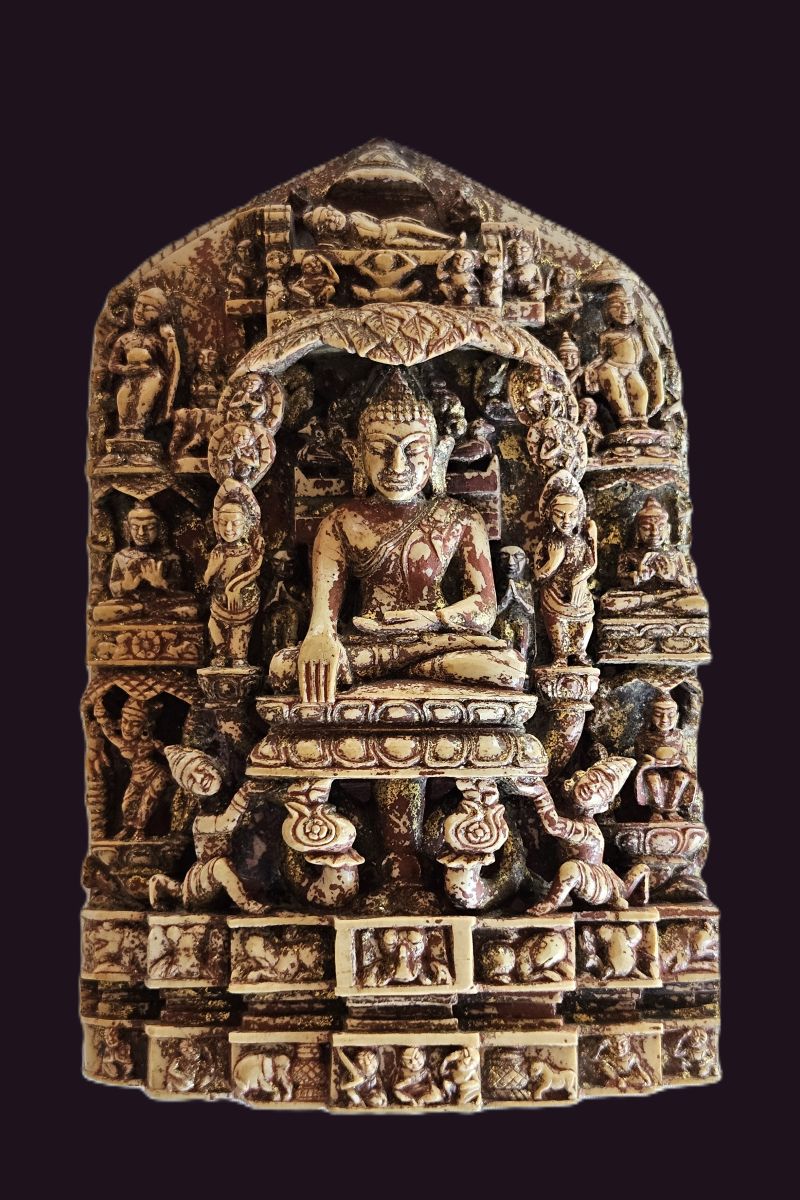

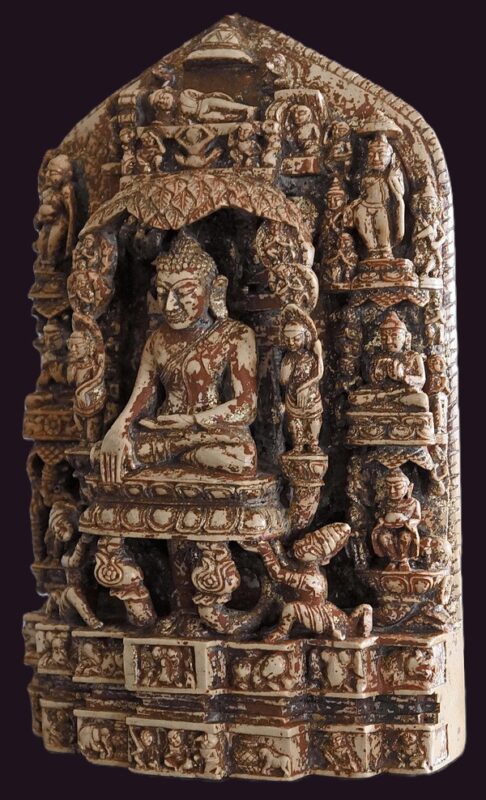

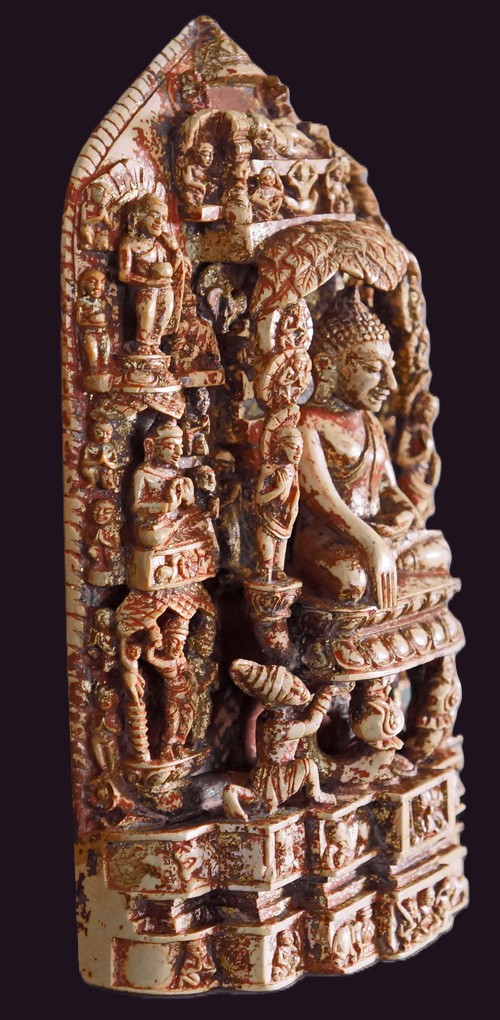
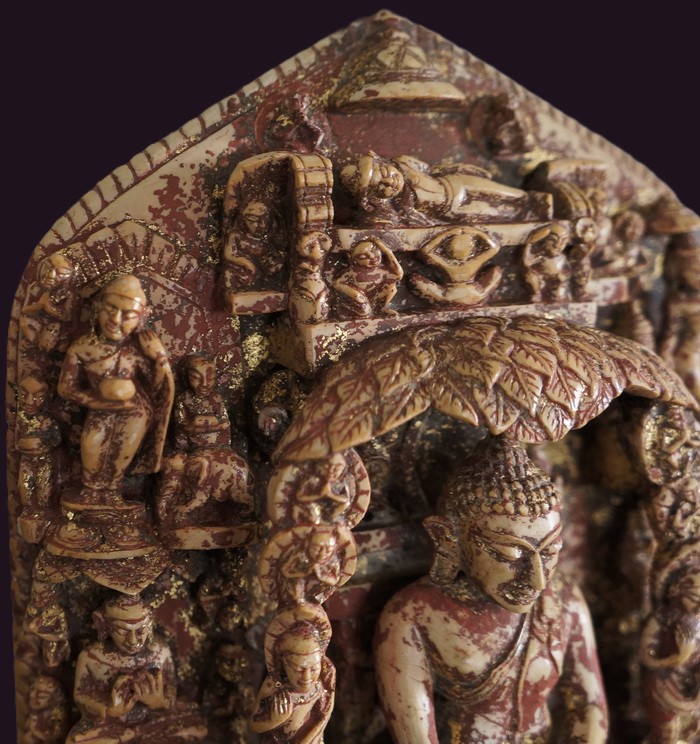
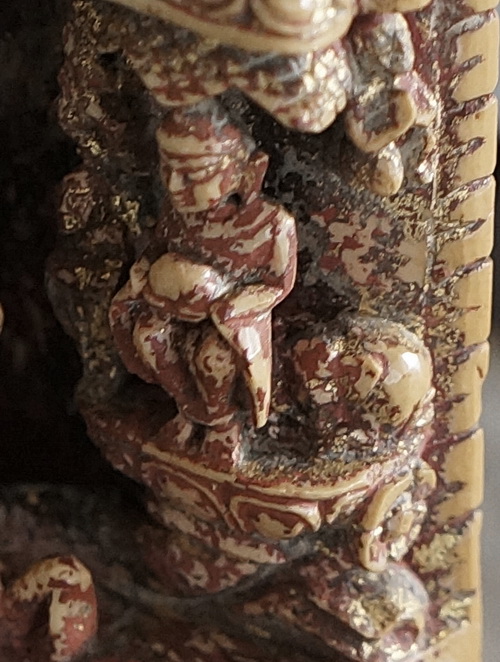
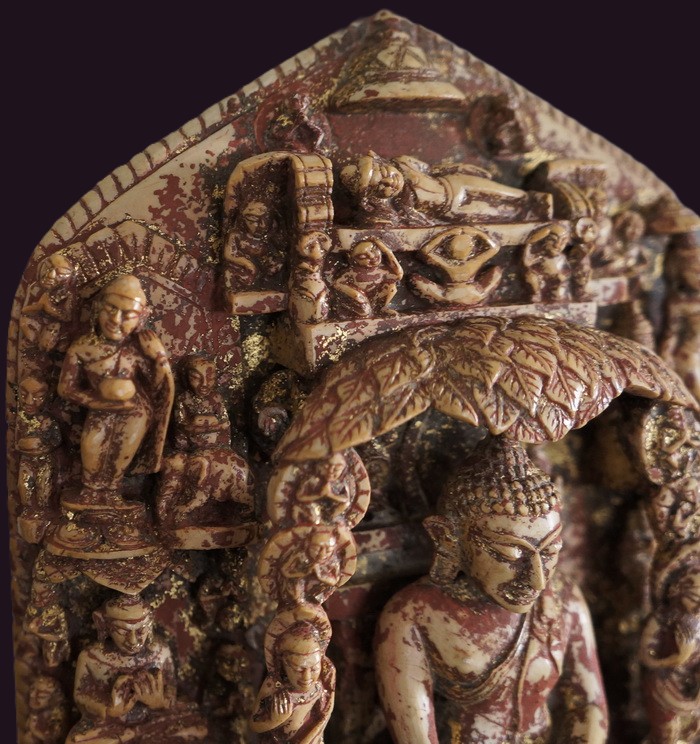
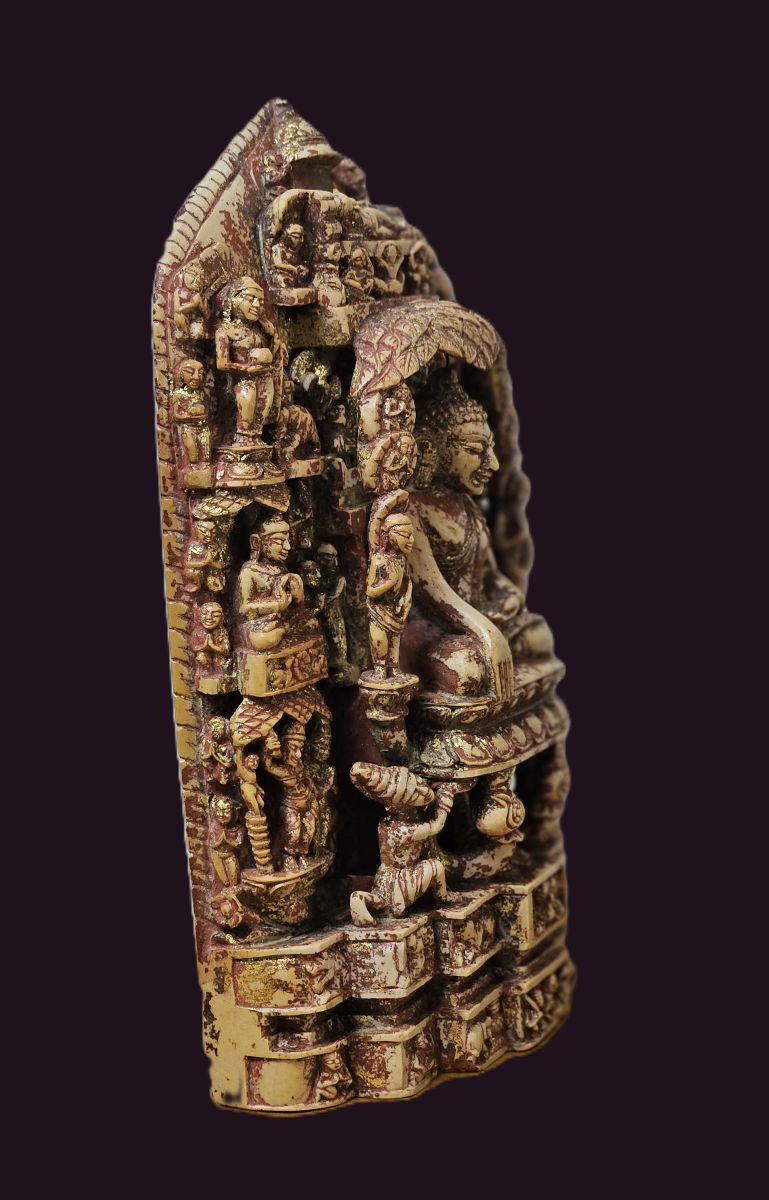

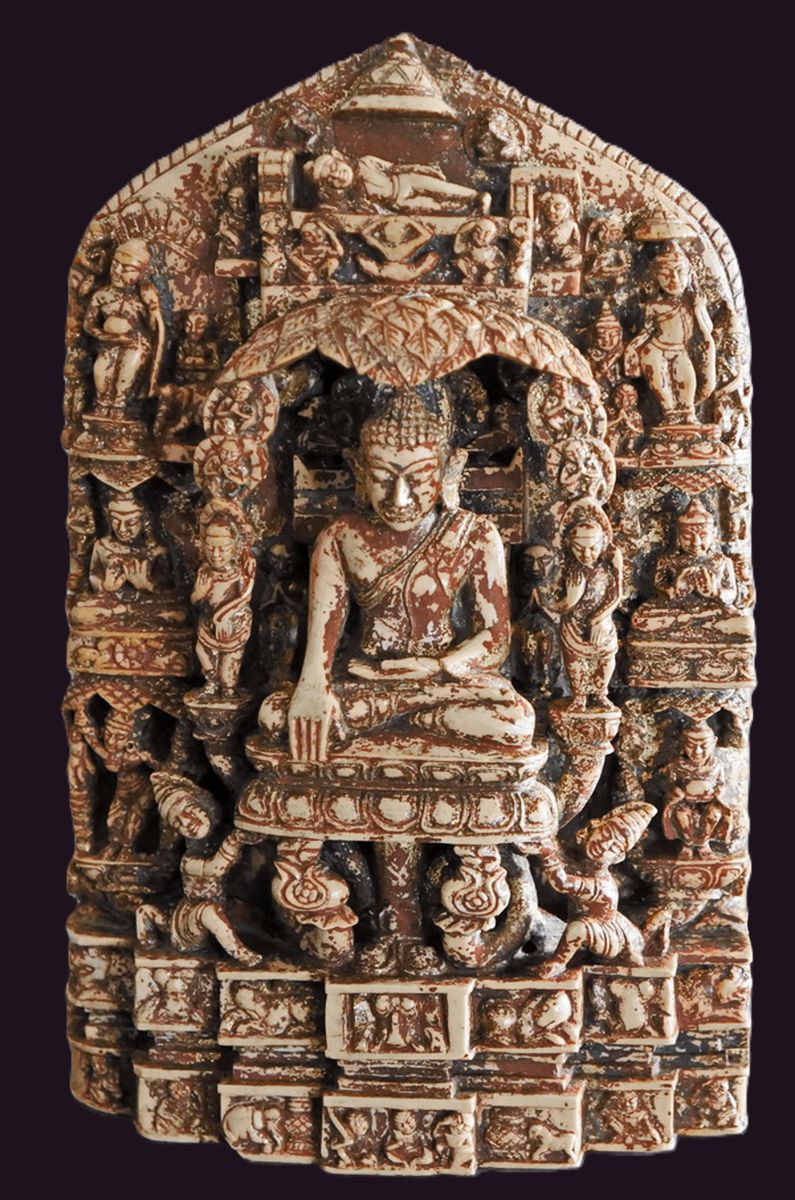
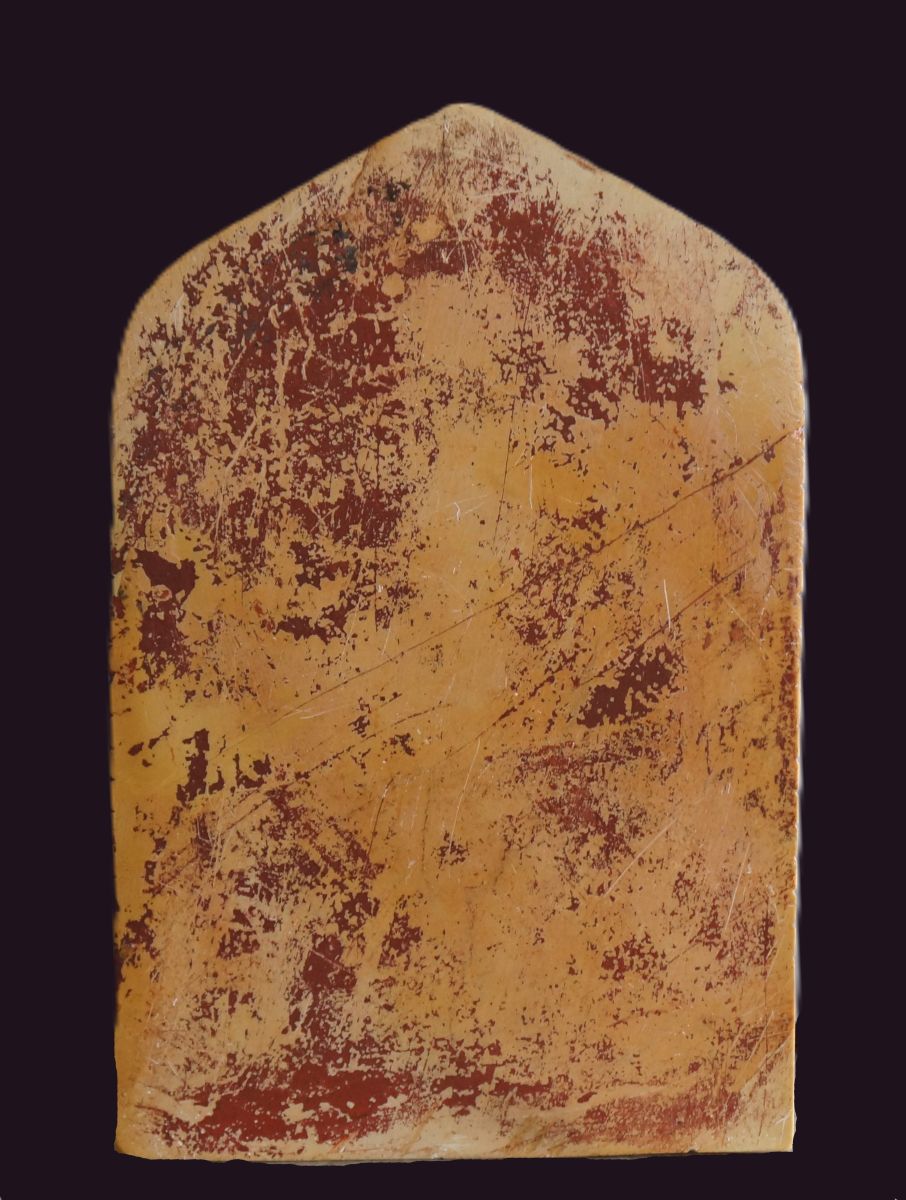
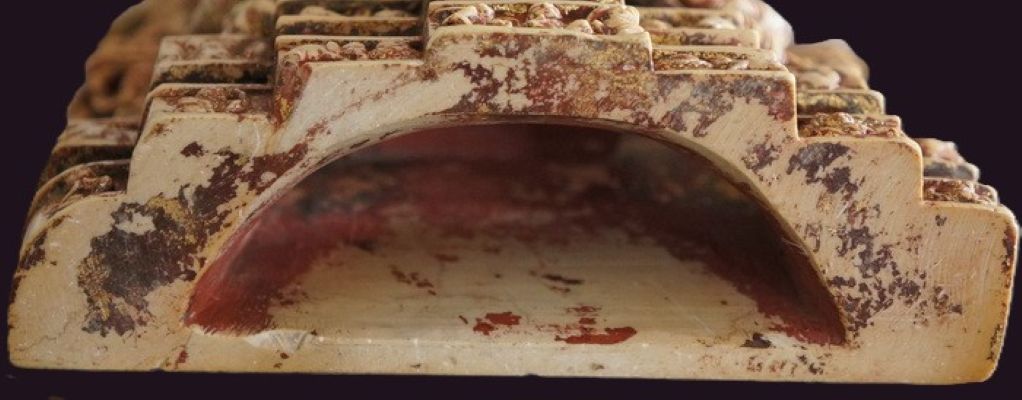
11th-12th c Bumese Pagan Andagu 8 Scene Stele
The skill needed to carve this intricate multi-scene 11th-12th Century Bumese Pagan Andagu 8 Scene Stele required a level of patience, devotion and understanding of the eight great events in the life of the Buddha along with a deep familiarity with the Eight Great Events of the Buddha’s life, and exceptional carving skills.
This fine-grained, pyrophyllite stone that, while soft enough for intricate work, demanded absolute precision; a single misplaced strike could shatter a week’s or even months of labor.
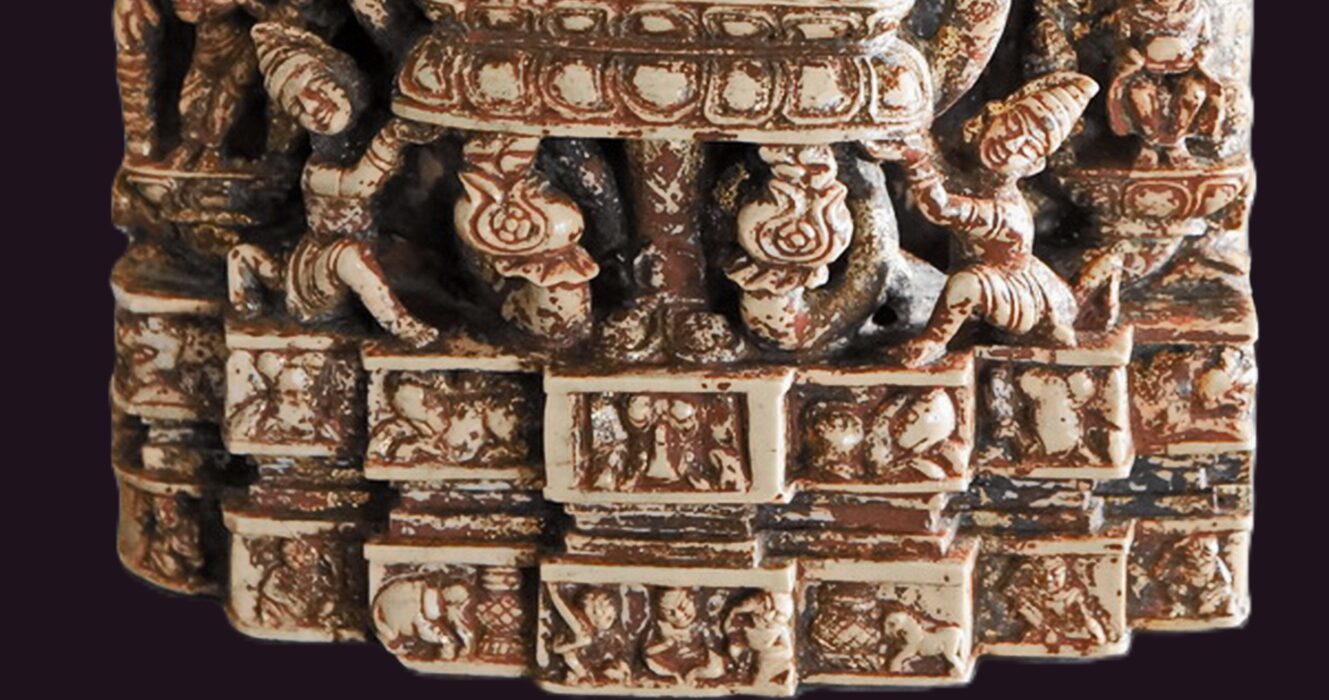
To depict the Eight Great Events within a frame often no larger than a hand’s span, the carver had to execute hundreds of minute incisions, to define the delicate folds of royal regalia or the serene facial expressions of the Buddha in each of his depictions.
This process was not only a technical challenge but a spiritual exercise, as the carver lived through each biographical milestone of the Buddha with every stroke of the chisel resulting in a dense, high-relief masterpiece where the physical density of the stone is transformed into a narrative.
SPECIFICATIONS:
11th-12th c Bumese Pagan Andagu 8 Scene Stele
Significant Pagan-Era Stone Sculpture
This Burmese Pagan Andagu stone 8 scene stele is made from a fine-grained, beige pyrophyllite stone that allowed Pagan craftsmen to achieve “minute, intricately carved detail”. While the material’s exact geological origin remains a subject of scholarly debate, its use in 11th and 12th-century Myanmar represents a pinnacle of devotional art. This piece is not merely a sculpture; it is a portable lithic temple, designed to allow the faithful to contemplate the entire life of the Buddha in a single, hand-held votive tablet.
The Eight Great Events in the Life of the Buddha
Physiognomy and Stylistic Identity
The central Buddha is a study in the transition between Pala-Indian influence and a distinct Burmese aesthetic.
- The Countenance: The large, pronounced nose and thick, slightly upturned lips reflect the “Mon-Burmese” facial type. The downward-gazing eyes and eyebrows meeting in a graceful arc signify a state of deep internal meditation (samadhi).
- The Ears: The elongated earlobes, stretching to touch the shoulders, are one of the thirty-two marks of a Great Man (Mahapurusha), symbolizing his former life as a prince weighted down by heavy gold jewelry, which he ultimately renounced for enlightenment.
Iconography and Mon Symbolism
- The Halo: The lotus-bud shaped halo (prabhamandala) is not merely decorative; it signifies the “unfolding” of divine wisdom.
- The Hamsa Birds: Perched at shoulder level, these sacred geese/birds are of vital historical importance. As the national emblem of the Mon people, their presence suggests the strong cultural and religious influence of the Mon heartland on the rising Pagan Empire.
- The Attendants: Behind the standing Bodhisattvas in the foreground, the presence of the chief disciples, Sariputta and Moggallana, reinforces the orthodox Theravada lineage, anchoring the scene in historical scripture.
The Narrative Cycle: The Eight Great Events (Ashta-mahapratiharya)
While the central figure remains the focal point in the Bhumisparsa Mudra (calling the earth to witness), the surrounding vignettes form a narrative map of the Buddha’s journey.
- The Sequence: Following the traditional clockwise path, the eye begins at the Nativity (Lumbini) at the base and travels through the Enlightenment (Bodh Gaya), the First Sermon (Sarnath), and the Taming of the Nalagiri Elephant (Rajgir), among others.
- The Culmination: The journey ends at the apex with the Parinirvana (Kushinagar). Here, the Buddha is depicted reclining on a couch, a poignant scene of transition that crowns the stele.
While this Pagan Burmese Andagu 8 Scene Stele focuses on the core “Eight Great Events,” it sits within a much larger visual tradition. In the vast brick temples of Bagan, these eight scenes were expanded into the eighty Jataka tales (previous lives of the Buddha) and the seven stations (Satta Sattaha) occupied after enlightenment. This stele serves as a condensed, high-precision version of the sprawling murals and wooden carvings found in the great pagodas of Myanmar, proving that the Pagan masters could convey the infinite within the finite space of a single stone.
A more detailed description of the scenes in this Andagu stone stele can be viewed here
Beyond the Gallery
For more insights into Burmese antiquities and the stories behind these rare acquisitions, subscribe to my Substack newsletter. [Read more and subscribe here.]