Antique Shan Burmese Konbaung Period Wood Buddha
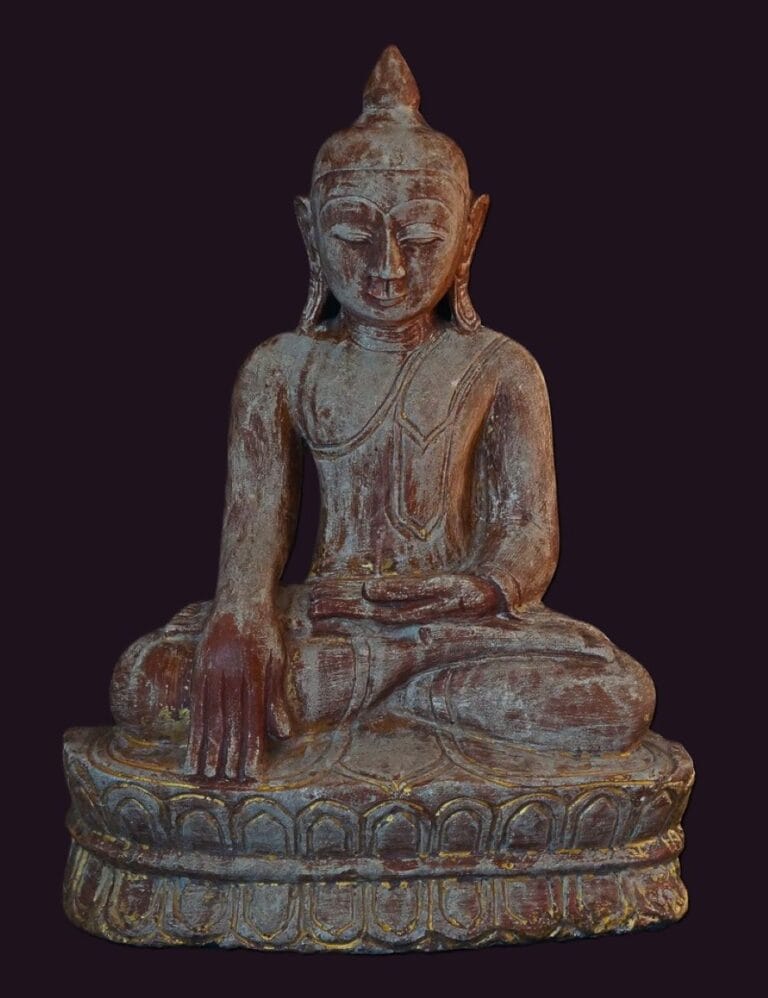
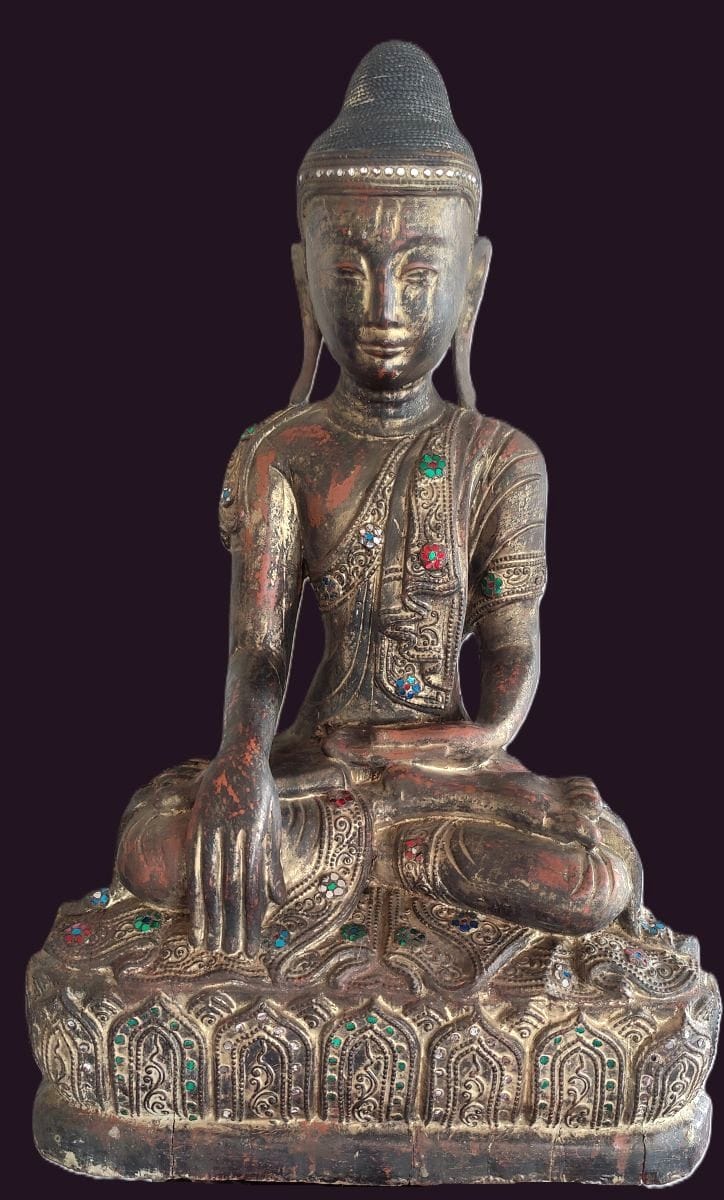
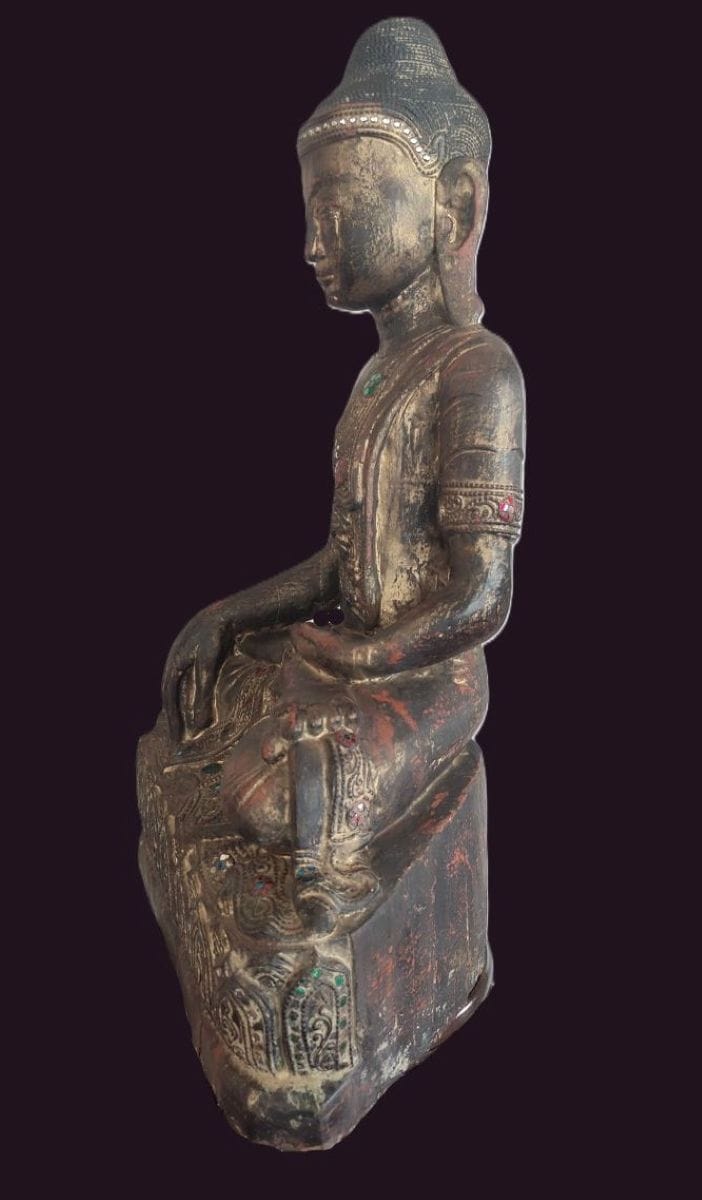
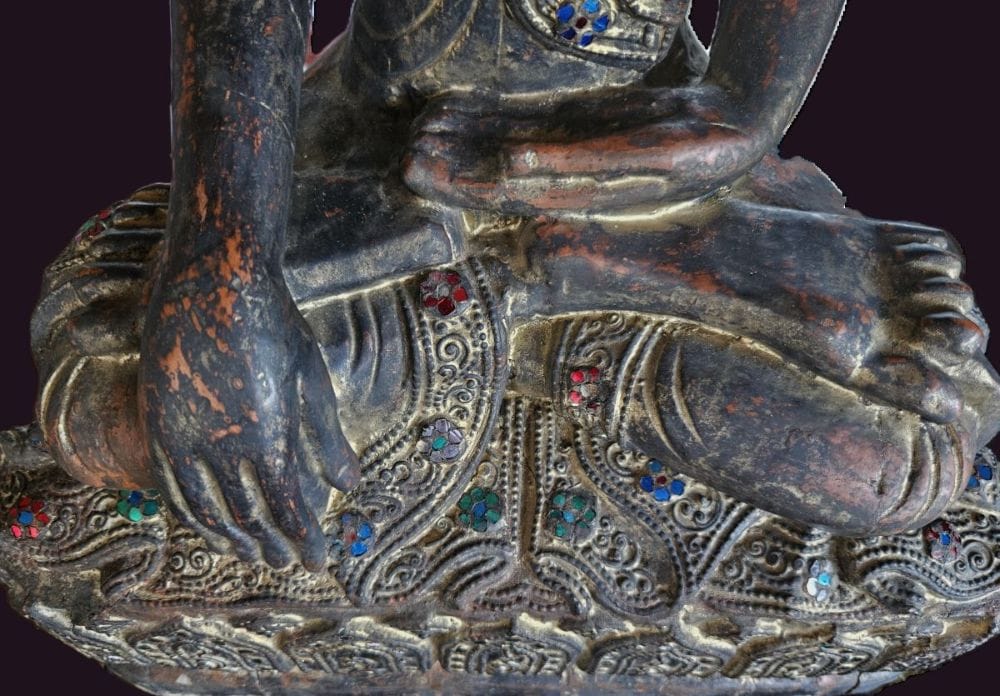
Antique Shan Burmese Konbaung period wood Buddha statue of the Mara Vijaya type, representing the Moment of enlightenment. The figure is seated in the characteristic Shan manner, with the right hand extended in bhumisparsha mudra, touching the earth as witness to the Buddha’s victory over Mara.
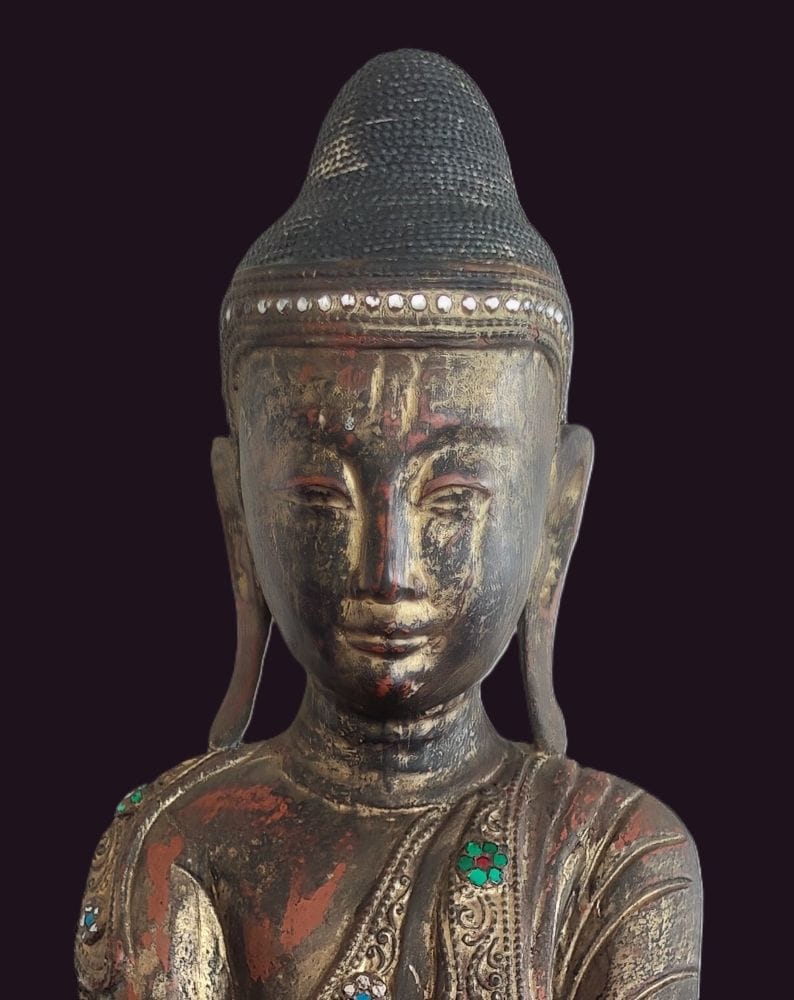
The face of a Shan Buddha is typically oval or heart-shaped, featuring smooth, soft contours that taper gently down to a small, delicate chin. displays the quiet naturalism that distinguishes this piece to a regional highland workshop.
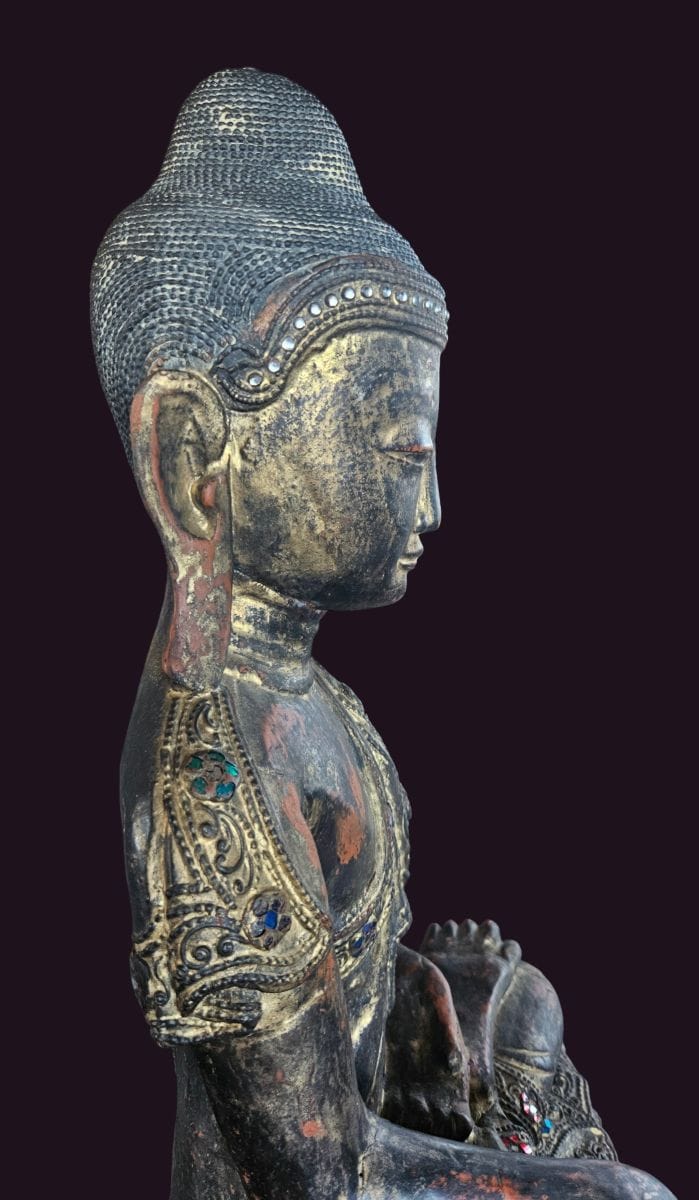
The conical ushnisha has the moderate elongation typical of traditions from the southern and central Shan States. Its surface is rendered in a fine, stippled dot pattern and is surmounted by a delicate hairline band set with small white glass insets.
SPECIFICATIONS:
- AGE: – 18th – Mid 19th Century
- CONSTRUCTION: – Teak Wood
- HEIGHT: – 58cm
- WIDTH: – 36cm
- DEPTH: – 20cm
- #912
Antique Shan Burmese Konbaung Period Wood Buddha
The Konbaung style Buddha statue such as this are frequently heavily stylized with deeply carved drapery, sweeping folds and wide flowing lapels and frequently adorned with beaded motifs and glass inserts.
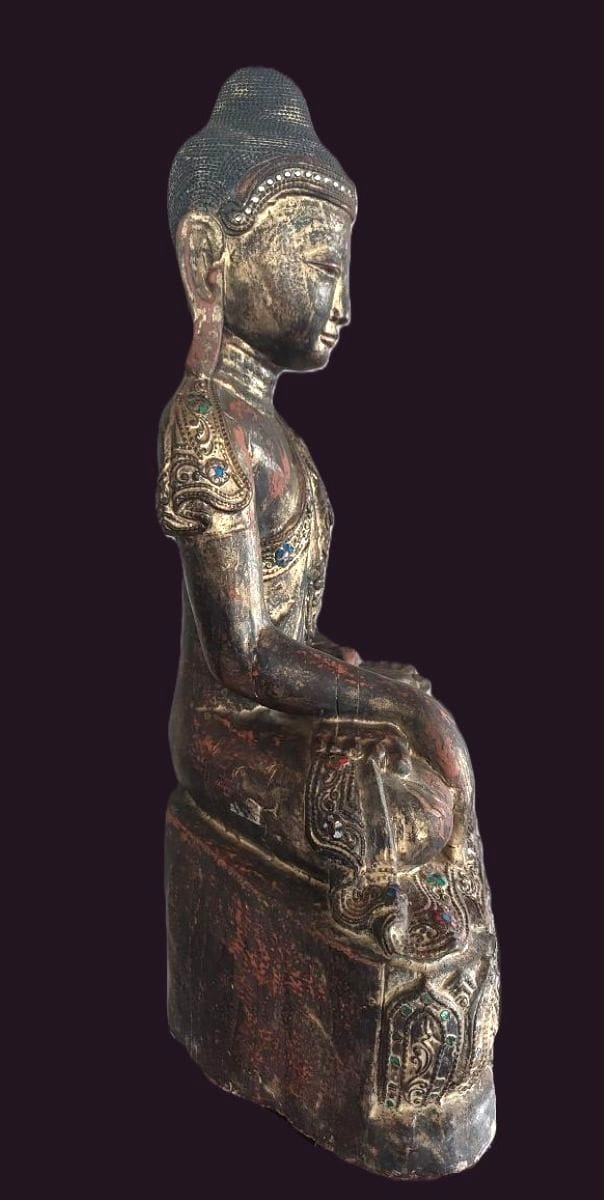
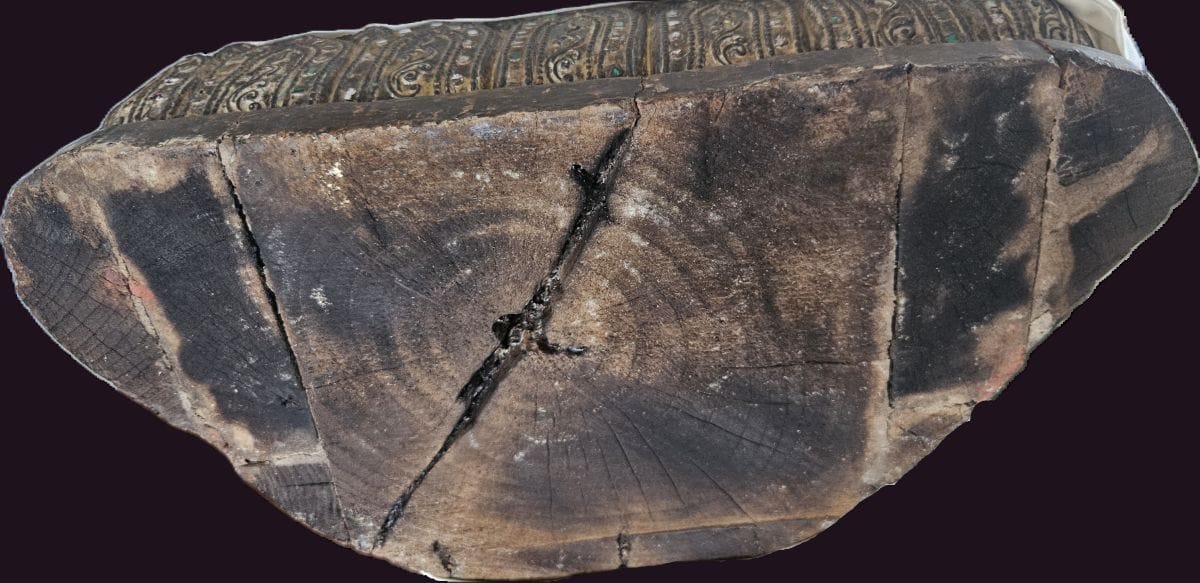
Genuine age-related wear is evident in the glass mosaics and thayo lacquer. The hair curls were applied by hand rather than pressed from molds or those seen in the typical style of separate peppercorn pieces made from thayo lacquer. The hand-cut glass mosaics retains the soft unevenness and gentle clouding typical of old glass, while the lacquer relief shows fine age-cracking rather than modern chipping. The base is constructed from jointed timber sections in the traditional manner, with a single band of carved lotus decoration across the front of the base.
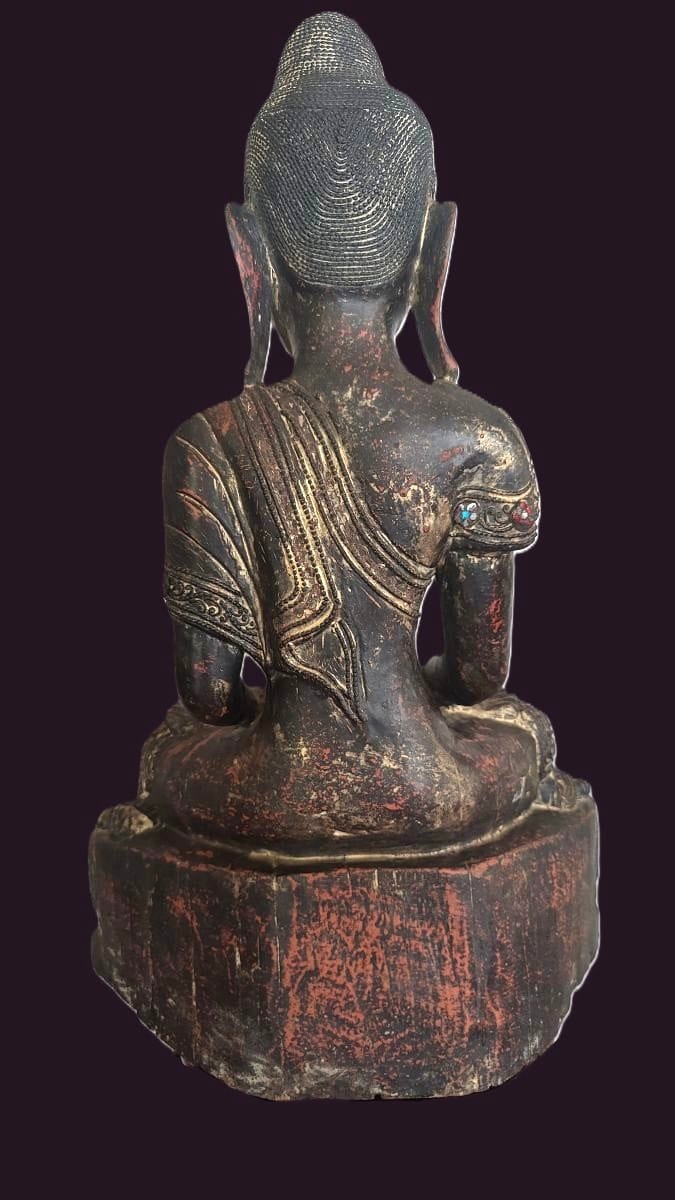
The rear of the figure shows the robe folds in parallel lines outlined with thayo lacquer. The red ground coat, thitsi lacquer, shows extensively through the losses in the upper black and gilded layers, the pattern of wear entirely consistent with temple use over a long devotional life. The lotus throne base retains its original wood with natural wood splitting along the grain.
The Shan sawbwa courts maintained active cultural ties with Mandalay during the Konbaung period, and this piece reflects that exchange. Its facial type and craftsmanship are distinctly Shan, while the thayo relief, glass mosaics, and lotus throne with arched registers draw on decorative traditions fostered by royal patronage in the capital and adopted across the highlands. We date the piece to the late 18th to mid-19th century. The glass inlays and hairline band suggest a date no earlier than circa 1750, while its quality and condition are consistent with the pre-colonial period.