



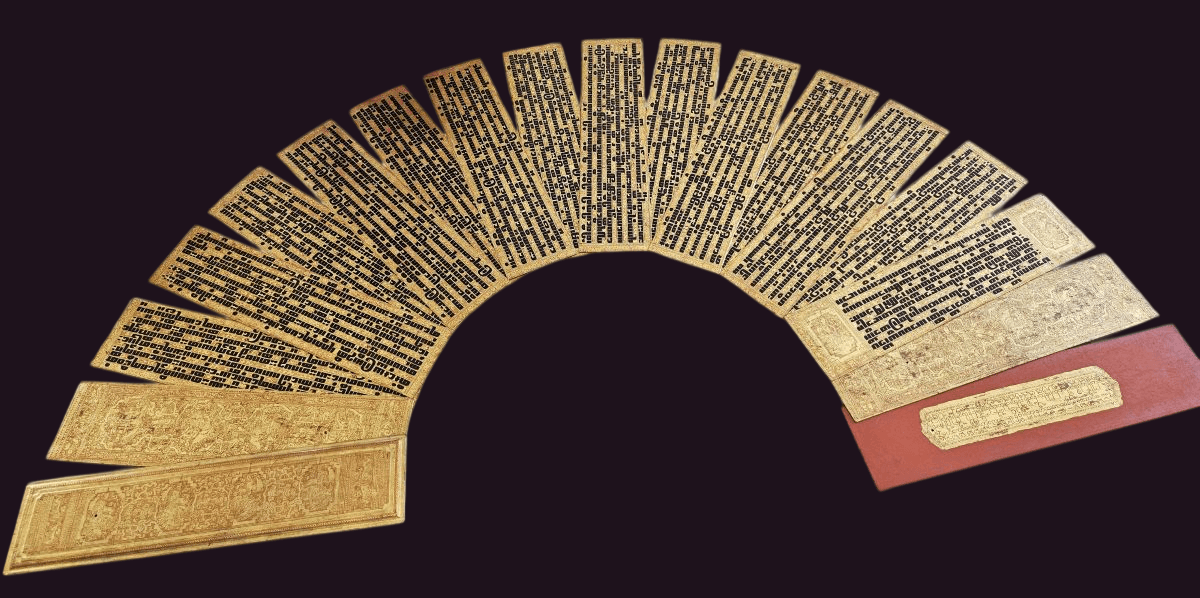

19th-Century Burmese Gilded 16-Leaf Kamma Vaca
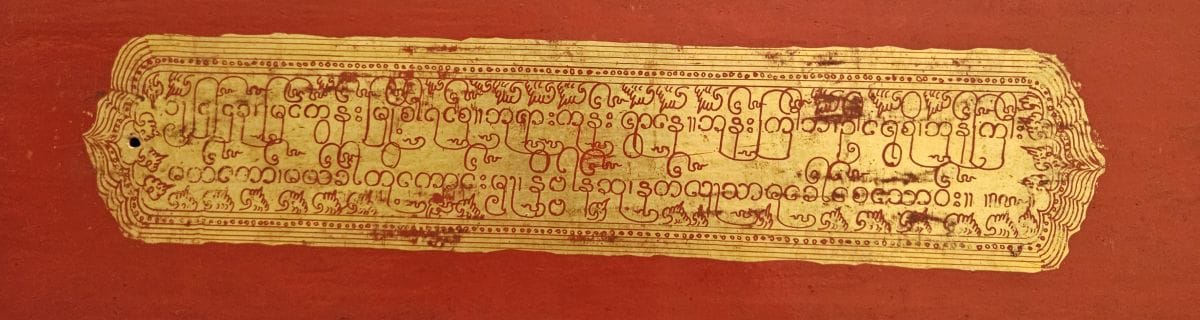
These beautiful Burmese gilded 16-leaf Kamma Vaca manuscripts were usually made as meritorious gifts to monasteries; sometimes, as in this Kamma Vaca, the donor’s name is written on the inside of the cover.
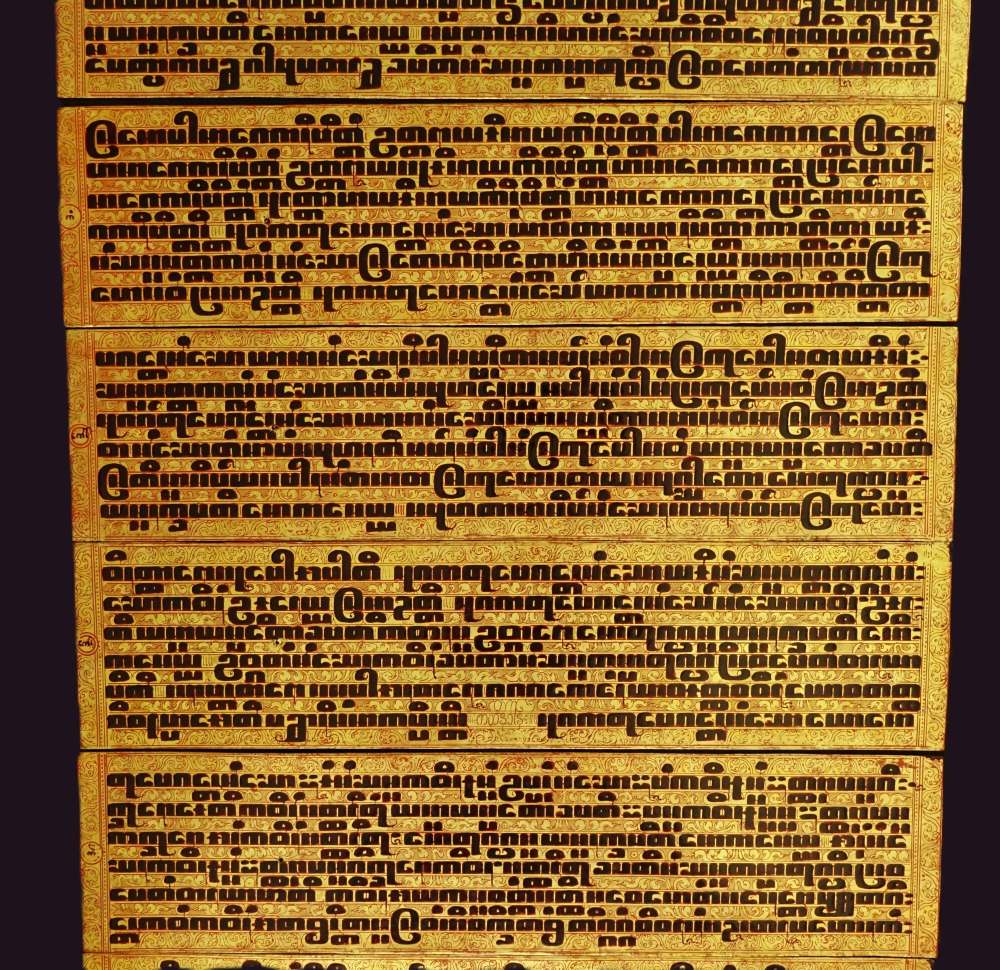
This Burmese square script in the Pali language, known as the “tamarind seed” script, is written in bold black lacquered letters that stand out against a gilded background. Unlike palm-leaf pe-za manuscripts, leaves of this style are typically crafted from lacquered cloth. Once cured, the treated fabric hardens into a dense, flexible board that is sanded smooth before gilding and lettering.
Every leaf (16 pages) feature fine red-lacquer scrollwork over gold leaf. The opening text leaf includes outer end panels depicting devas set within cartouches. The first and last leaves on both ends display four distinct panels of celestial beings along the full length of the leaf, with a floral arrangement on the outside edges. The surface wear on the red lacquer reflects authentic, long-term monastic handling.
The inside front cover of the kamma vaca features a donor dedication inscribed in Burmese within a gilded cartouche. An AI translation dates the inscription to 1885 AD, although this date remains unverified (AI translation). Small binding cord holes pierce both covers and every leaf.
SPECIFICATION:
- COMPLETE SET – A kamma vaca in good condition with a legible dedication, covers, and 16 leaves is increasingly hard to find. Minimal corner damage on one page.
- AGE: – (1247 ME (1885 CE) (AI translation of donor panel)
- LENGTH: – 61 cm
- WIDTH: – 14.5 cm
- HEIGHT: – 4 CM
- SASEGYO: – 4 Metre hand-woven narrow band has faded Burmese script running along the full length)
- WEIGHT: 3 kg.
- #12
19th-Century Burmese Gilded 16-Leaf Kamma Vaca
The earliest known origins of the gilded Kammavācā tradition trace back to around the 14th century, with the tradition maturing significantly by the 17th century. During the Bagan period (1044–1287), Kammavaca texts were simply incised or written in ink on plain, undecorated palm leaves. From the 14th century onward, artisans began applying plain gold or silver grounds to the folios, writing four lines of large square characters in black ink over the unadorned gilded leaf.
The gilded Kammavaca (or Kammavaca) represents one of the most visually striking and culturally significant manuscript traditions in Burmese Theravada Buddhist history. Originating as ritual texts transcribed for monastic ordination and administrative assemblies, these manuscripts evolved during the Konbaung period (1752–1850) into lavish works of royal and sacred art. Crafted from folded cloth, lacquered palm leaves, or ivory, the pages were heavily lacquered in deep red chin-the and embellished with pure gold leaf. The sacred Pali liturgy was painstakingly inscribed using a distinctive, bold square script known as maysat or “tamarind seed” script, executed in thick black resin. Commissioned by monarchs, aristocratic patrons, and wealthy lay devotees, these gilded manuscripts were gifted to monasteries to earn merit, mark significant life transitions, or celebrate monastic ordinations.
Beyond their aesthetic splendor, gilded Kammavaca hold immense theological and historical importance within Southeast Asian art and religious heritage. Unlike general devotional texts or jataka stories meant for public recitation, the Kammavācā contains the precise legal formulas and procedural rules governing the Sangha, making it a functional cornerstone of monastic discipline (Vinaya). The extraordinary craftsmanship devoted to these texts underscored the sanctity of the monastic order and the devotion of the donor. Today, these manuscripts serve as vital historical records, preserving ancient Burmese lacquering techniques, calligraphic traditions, and royal iconographic styles while remaining enduring symbols of religious devotion and artistic mastery.
Following the fall of the Burmese monarchy in 1885, royal patronage for lavish manuscript workshops vanished. While traditional lacquered folios continued to be made in small quantities through the mid-20th century, the introduction of modern printing presses made paper editions of the Pali Vinaya legal texts vastly cheaper and easier to produce. Monasteries quickly adopted printed paper copies for practical monastic ordination ceremonies.