
Rare Mrauk-U Bronze Buddha Lemro Transitional Style
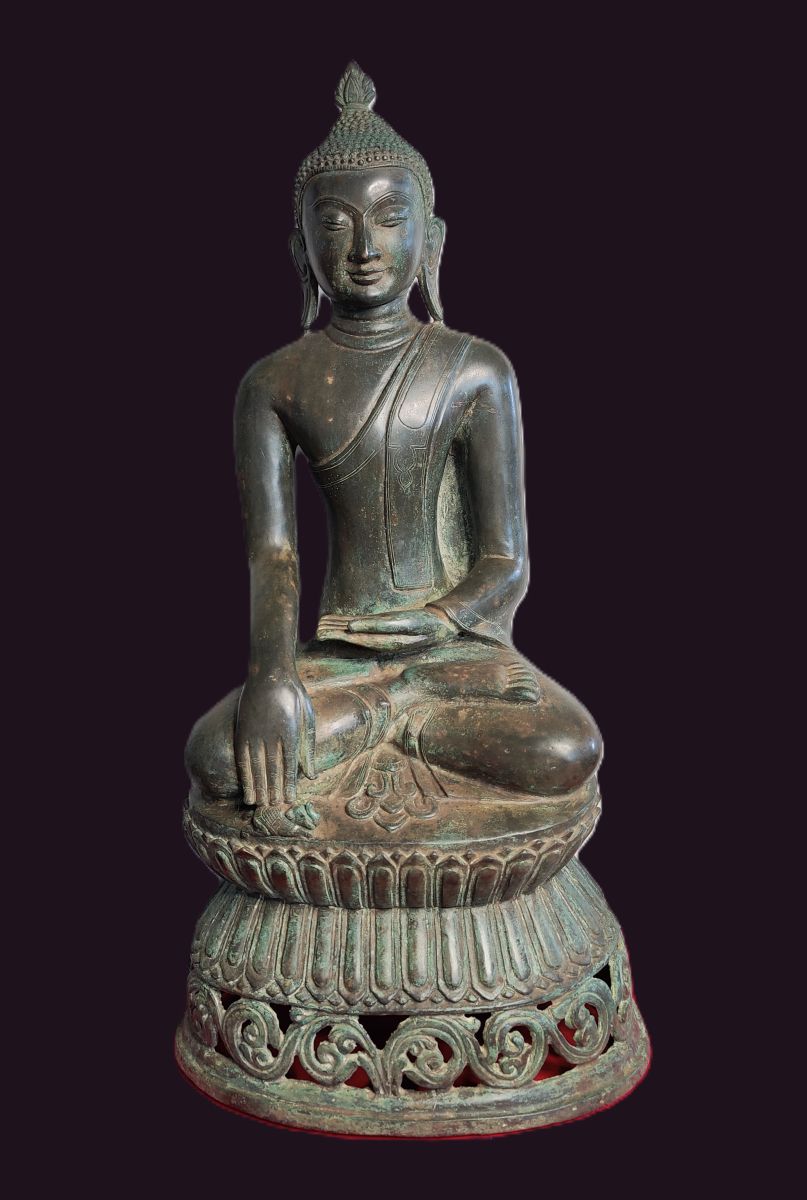
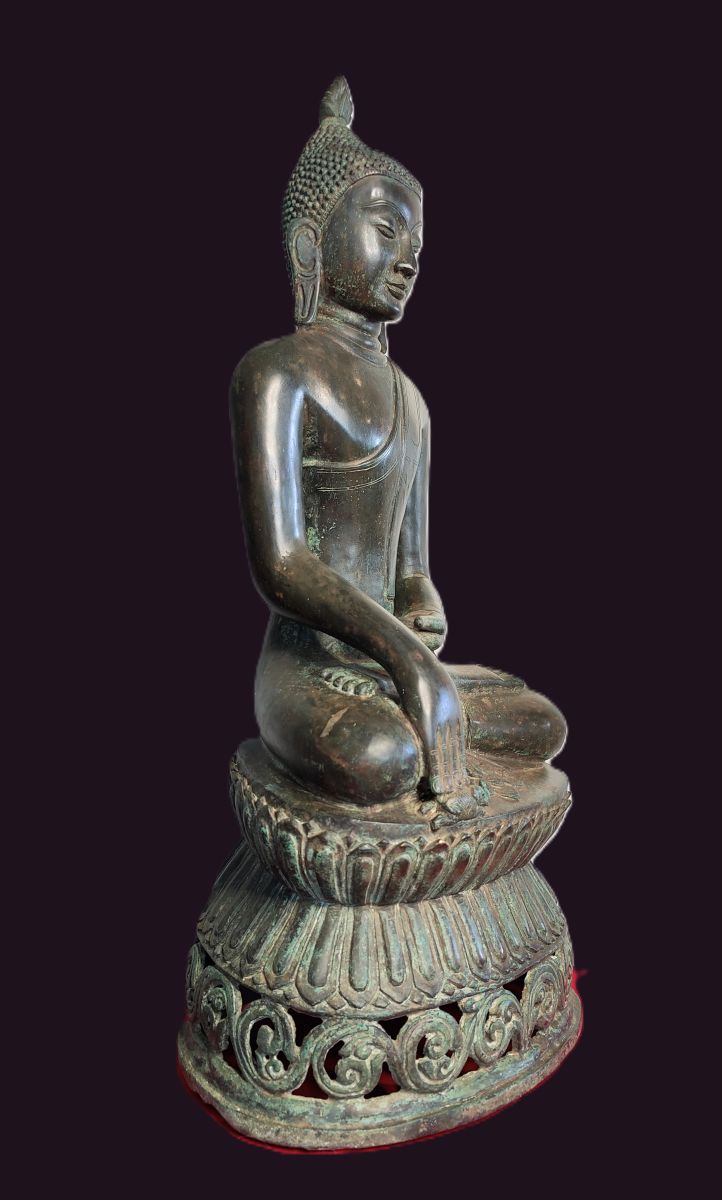
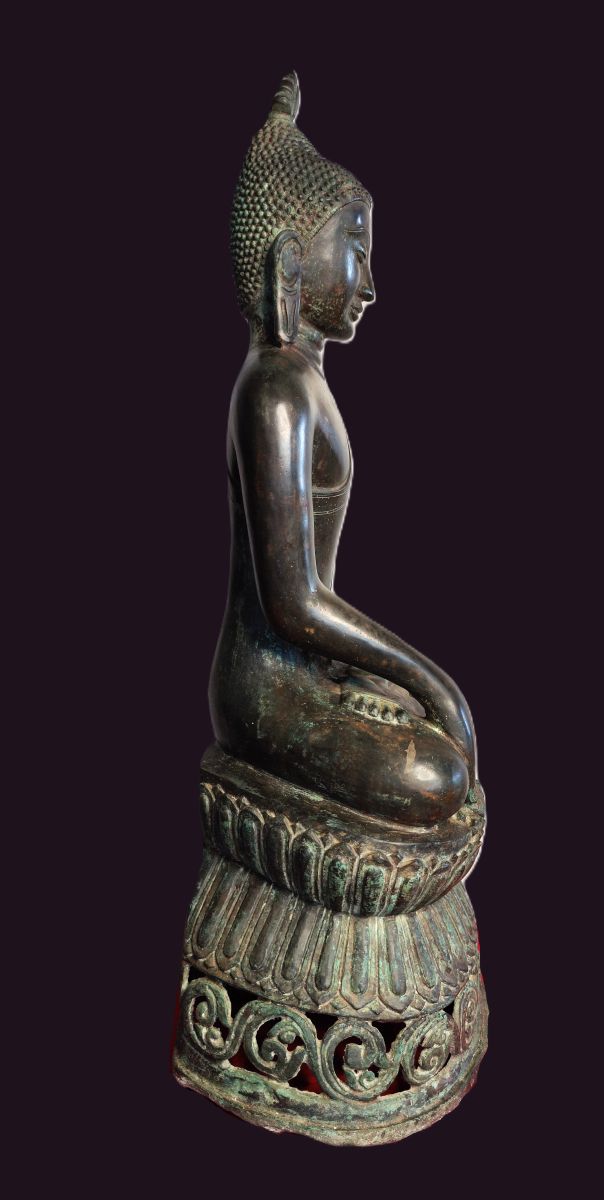
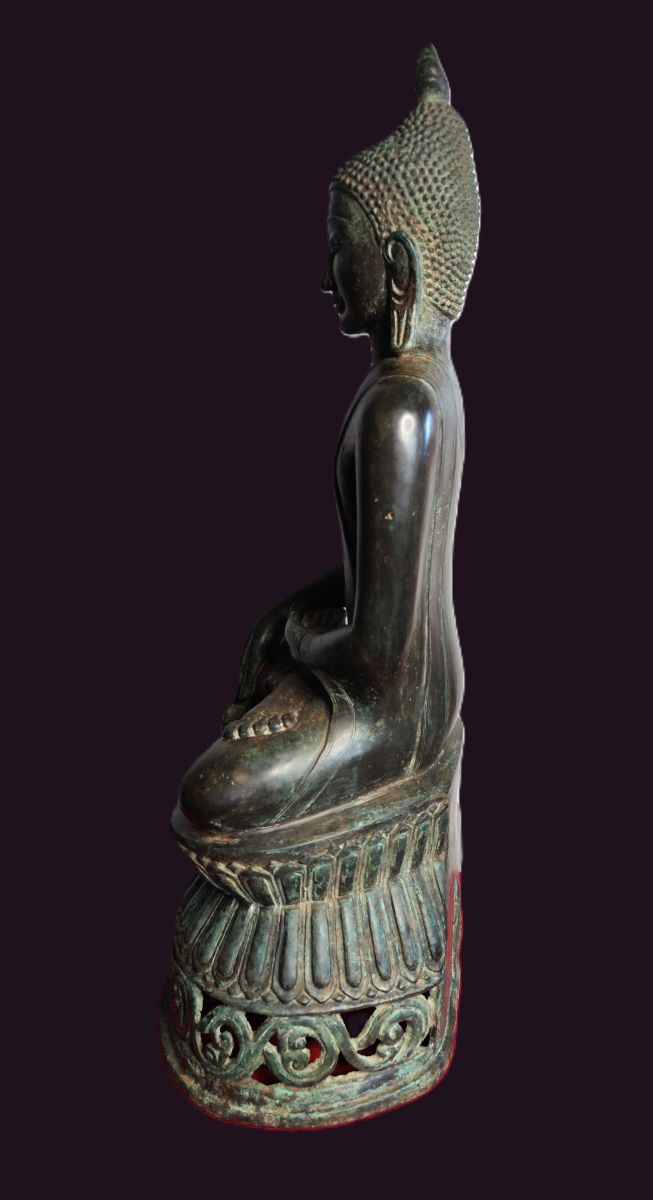
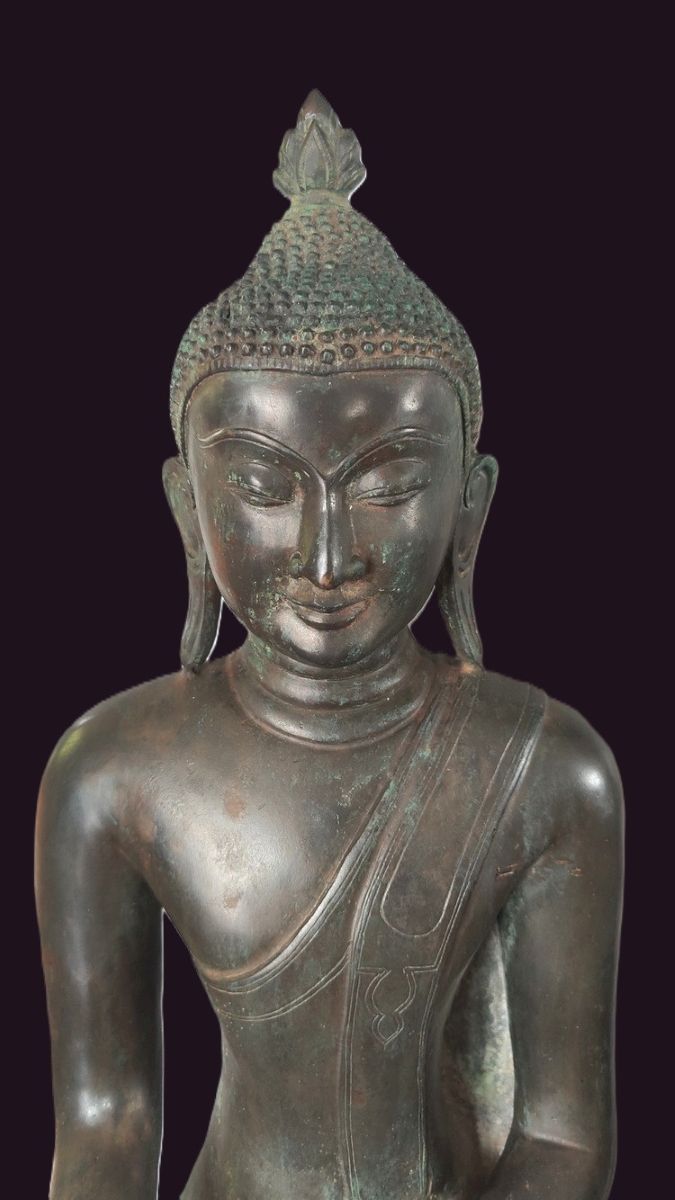
Rare Mrauk-U Bronze Buddha Lemro transitional style (ca. 14th – 15th Century). This bronze Buddha statue aligns with documented period examples from the primary reference text, “Buddhist Art from Ancient Rakhine” by San Tha Aung.
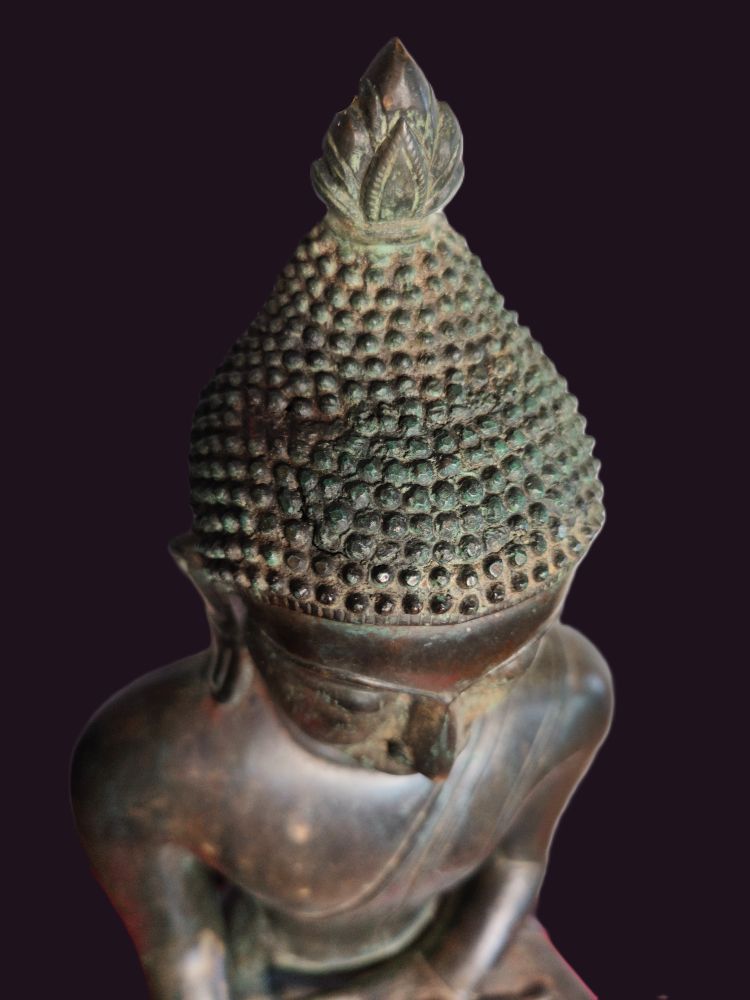
- The Ratna Finial: A distinct, flame-like or leaf-shaped gem finial rises from a tightly curled, prominent ushnisha.
- Facial Configuration: The face features high, arched eyebrows that meet at the bridge of the nose, framing downcast eyes and a subtle, serene smile that mirrors classic Lemro proportions.
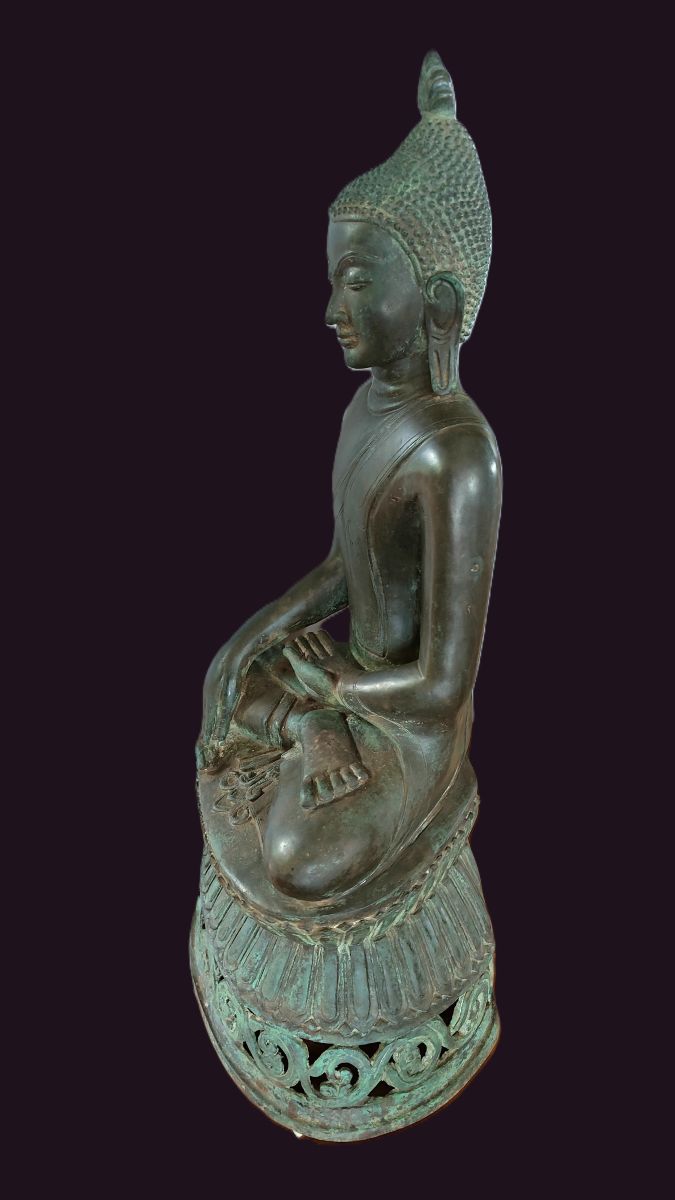
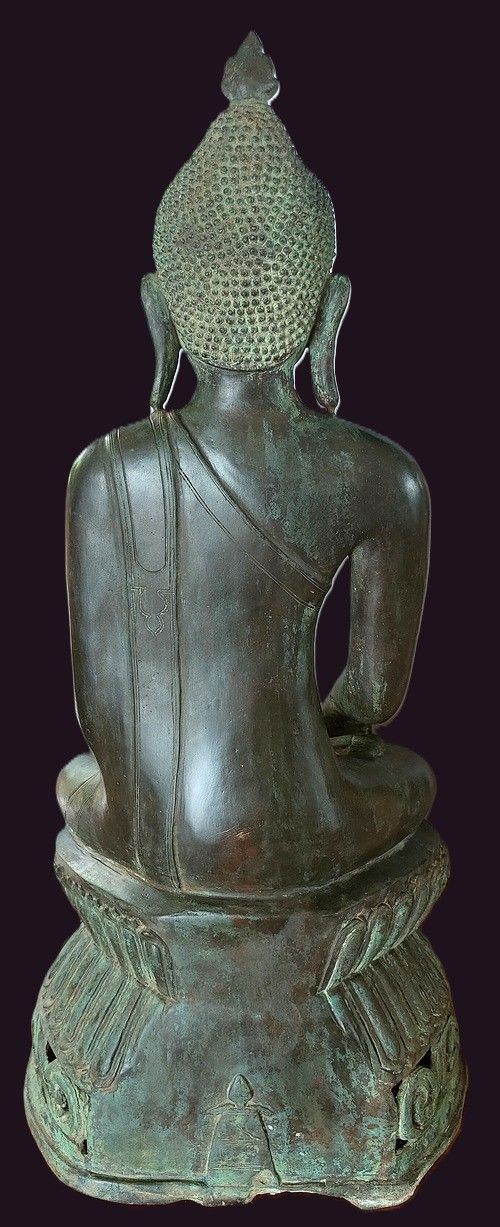
- The Pedestal: The figure rests on an exceptionally tall double-lotus throne (padmasana), supported by an openwork base adorned with stylized, scrolling foliate cutouts, a hallmark design that fully matured as the kingdom transitioned into the Mrauk-U era.
SPECIFICATIONS:
- HEIGHT: – 73cm
- WIDTH: – 32cm
- DEPTH: – 22cm
- WEIGHT: – 23.50 Kg.
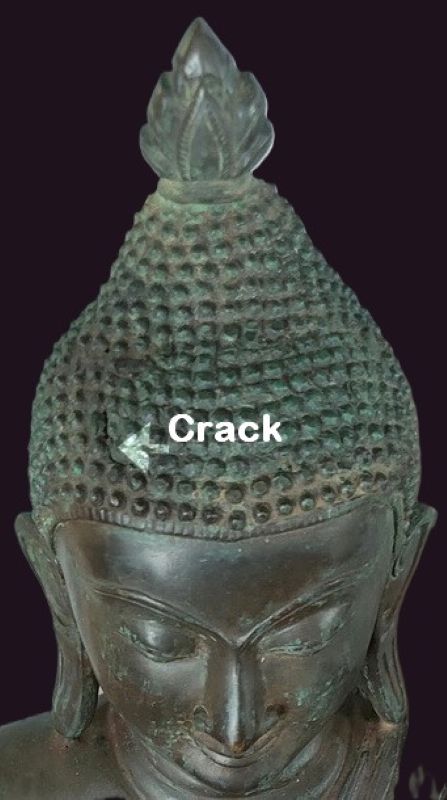
- CONDITIONS: Crack on the head (see images)
- #127
Rare Mrauk-U Bronze Buddha Lemro Transitional Style
Artistic and Iconographic Transition
The most interesting detail on this bronze is the cone shaped motif on the centre back near the base. This kind of workshop mark possibly links the piece to a specific foundry or monastic commission during the period in which it was cast.
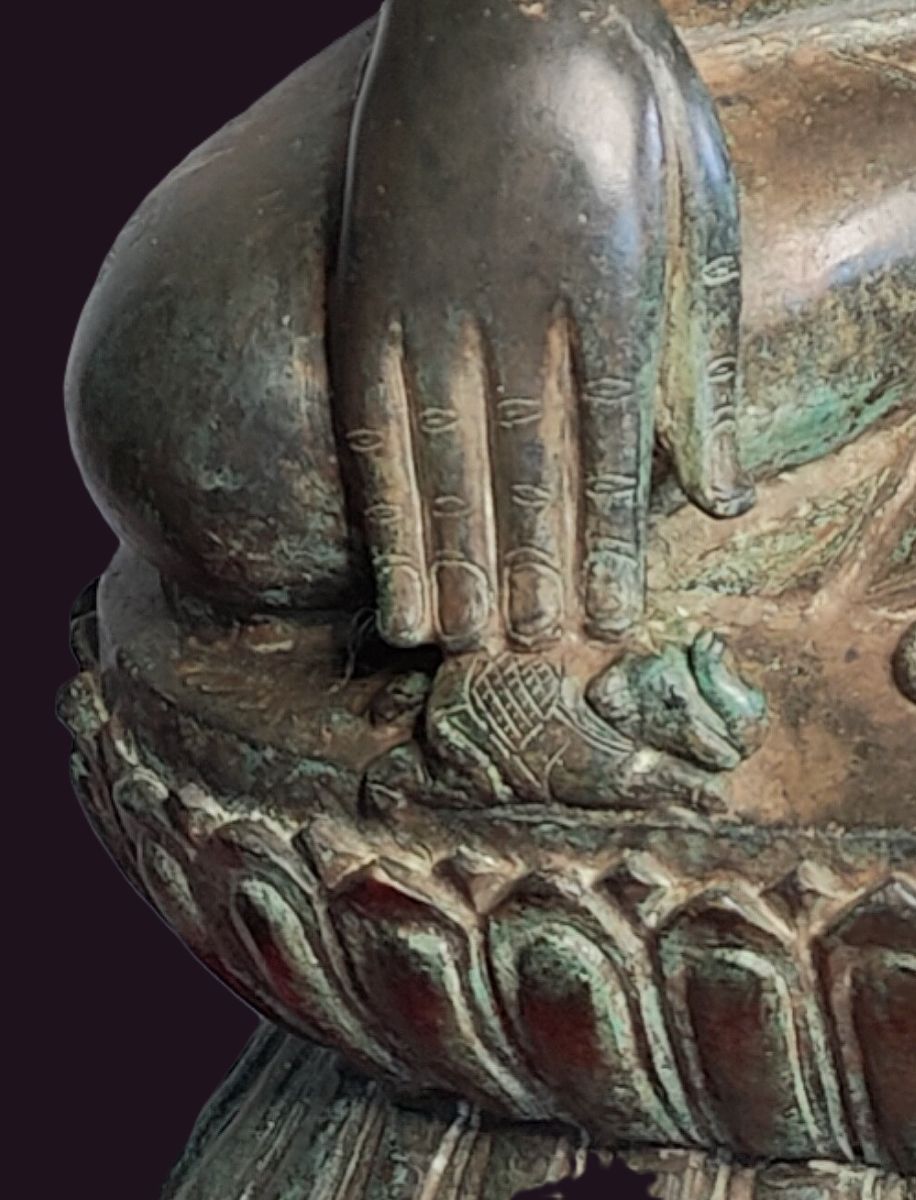
Front Iconographic detail: A miniature, elephant in a kneeling posture sits beneath the elongated fingers of the right hand in bhumisparsha mudra. Whether representing Mara’s war mount Girimekhala yielding to the Buddha’s enlightenment or reflecting a rare regional synthesis that depicts the taming of the Nalagiri elephant is left to conjecture.
The structural workshop mark on the back and the rare narrative detail on the front elevate the piece from a standard devotional icon to an academically significant artifact of regional Buddhist art.
Metalworkers along the Lemro River valley shifted Arakanese bronze casting in a completely new direction. They moved away from the heavy, blocky Pala-influenced shapes of the older Waithali kingdom, experimenting instead with elongated torsos, slender fingers, and crisp, sweeping robe borders. This transitional period laid the foundry work and stylistic blueprint for the famous Mrauk-U bronzes that followed.
This bronze shows that the move to Mrauk-U in 1430 wasn’t a sudden break in artistic style, but the continuation of techniques already perfected along the Lemro River. Foundry workers in the Lemro period were already casting complex openwork bases and multi-layered narrative scenes well before the new capital was established. Inside the hollow cast, the original core material confirms its regional age, displaying the classic structural traits of traditional lost-wax methods used in these early workshops.
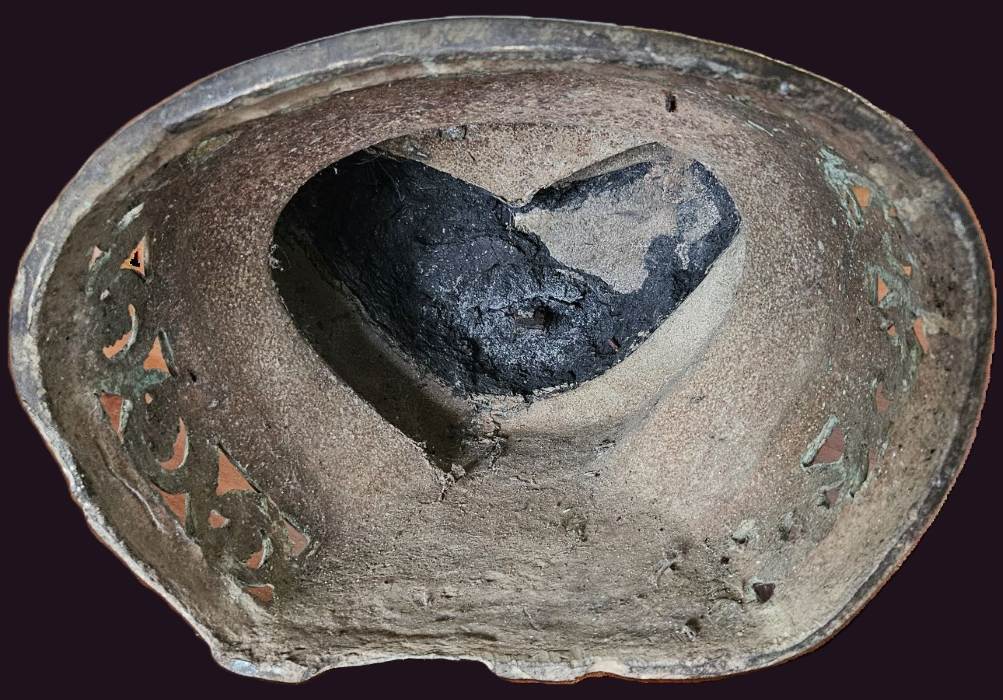
The Composition and Purpose of the Core
To create a large, hollow bronze image, artisans first hand molded an internal core to establish the basic shape of the Buddha. In the Arakanese tradition, this core was formulated using a localized mixture of coarse clay, sand, and organic binders, predominantly rice husks or animal dung. This organic matter was essential; it created microscopic pathways within the clay, allowing gases to escape safely so the cooling metal wouldn’t fracture.
When the molten bronze alloy was poured into the mold, the extreme temperature completely charred the organic binders trapped inside the core. This intense thermal reaction permanently altered the material, transforming it into the dark, blackish, friable mass visible inside the upper cavity today.
Indicators of Authenticity
Inside the statue, the unworked walls around the core show a clean, sand-colored patina with the raw imprint of the original clay mold. There are no modern tool marks, no concentric grooves from rotary grinders, wire brushes, or steel files. Looking at the openwork scrolling on the base, the interior edges are soft and slightly uneven. This shows that carver cut the scroll patterns directly into the soft wax model before casting, rather than sawing into cold bronze afterward.
Later Mrauk-U Buddha statues are known for their heavy crowns and rigid, ornate royal robes. This earlier piece takes the opposite approach. It belongs to the monastic tradition, keeping the surface plain and letting the slender proportions of the body do the work instead of palace regalia.