19th C. Shan-Mandalay Burmese Buddha Art
19th C. Shan-Mandalay Burmese Buddha Art
The transition in 19th C. Shan-Mandalay Burmese Buddha art marks a distinct shift in Myanmar’s sculptural heritage. During this era, local regional styles merged with the royal court fashions of Mandalay. While both traditions express devotion to the Buddha, their visual languages diverge in ways that reflect distinct cultural histories, construction methods, and regional identities.
Shan State carvers were long known for a direct, expressive style. Their figures feature slightly flared earlobes, distinct facial proportions, and modular wooden construction, often built with separate, removable back panels held together by traditional mortise-and-cleat joinery.
When Kings Mindon and Thibaw made Mandalay the cultural center of the Konbaung Dynasty, that courtly look spread to outer workshops. Shan carvers adapted, blending traditional techniques with Mandalay tastes in three main ways:
- Thayo Paste Details: Artisans began using thayo (lacquered sap paste) to form raised, molded patterns on robes and headpieces, copying the elaborate court garments popular in the capital.
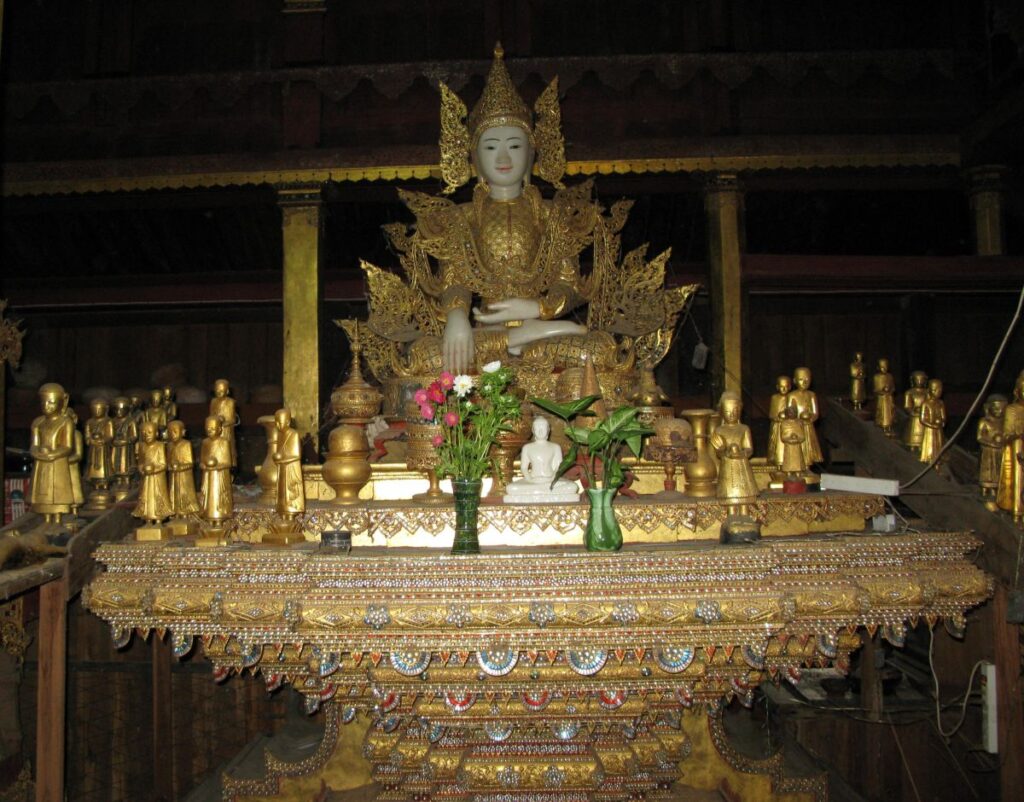
- Royal Jambupati Imagery: While Mandalay favored soft, flowing monastic robes, Shan carvers applied these new decorative techniques to crowned Jambupati figures, adding mirror-glass inlay and thick gilding across chest plates and collars.
- Narrative Base Carvings: Shan makers kept their tradition of storytelling. They continued carving openwork base friezes showing scenes from the Buddha’s life, local spirits, and composite beasts like the Pyinsa Rupa.
This transitional style produced figures that keep the solid joinery and narrative detail of the Shan hills while adopting the gilding and surface decoration of late Konbaung Mandalay.
19th C. Shan-Mandalay Burmese Buddha Art – Styles and differences
Shan Buddha Statues: Regional, Ethereal, and Folk‑Inflected
Shan Buddha images produced across the Shan States and neighbouring Tai cultural zones tend to embody a gentle, introspective serenity.
Their defining characteristics include:
- Facial Expression: Oval or heart‑shaped faces with softly arched eyebrows, elongated eyes, and a faint, almost wistful smile. The expression is more otherworldly than regal.
- Body Proportions: Slender torsos, narrow shoulders, and long, tapering fingers. Shan sculptors favour lightness and verticality.
- Materials: Wood is predominant, often lacquered or gilded; bronze examples exist but are less common. The craftsmanship often retains a hand‑carved intimacy.
- Stylistic Influences: Strong Tai aesthetic influence seen in the hairstyle (sometimes with a flame‑like ushnisha), textile patterns, and throne motifs.
- Overall Impression: Shan Buddhas feel local, devotional, and slightly folk‑art in spirit. They radiate calm rather than authority.
Mandalay Buddha Statues: Courtly, Monumental, and Highly Refined
Mandalay Buddha images, shaped by the Konbaung court’s patronage, represent the apex of Burmese classical sculpture.
Their style is markedly different:
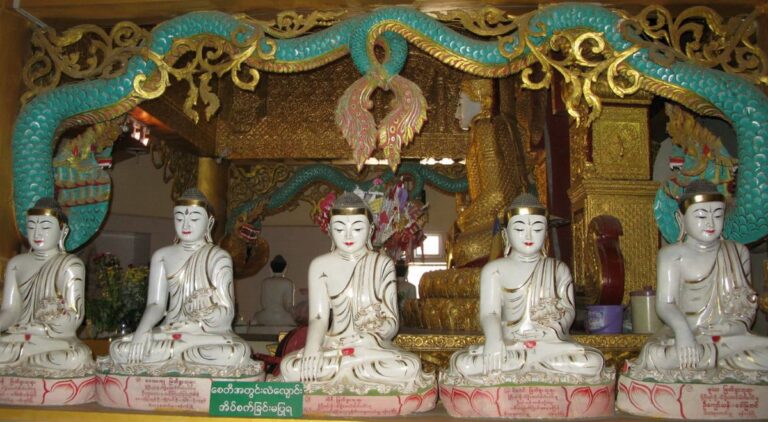
- Facial Expression: Full, rounded faces with smooth, idealised features; downcast eyes; sharply defined eyebrows; and a serene, confident smile. The expression is majestic rather than ethereal.
- Body Proportions: Broad shoulders, robust torsos, and perfectly balanced proportions. The Mandalay style emphasises physical presence and harmony.
- Materials: Marble (especially the famous Sagyin quarries), alabaster, and high‑quality lacquered wood. The finish is immaculate, polished surfaces, crisp carving, and lavish gilding.
- Stylistic Influences: Strongly shaped by royal ateliers, with standardised iconography, elaborate thrones, and ornate robes with flowing, symmetrical folds.
Resource: The Art of Shan State – Academia