
16th Century Mrauk-U Bronze Buddha
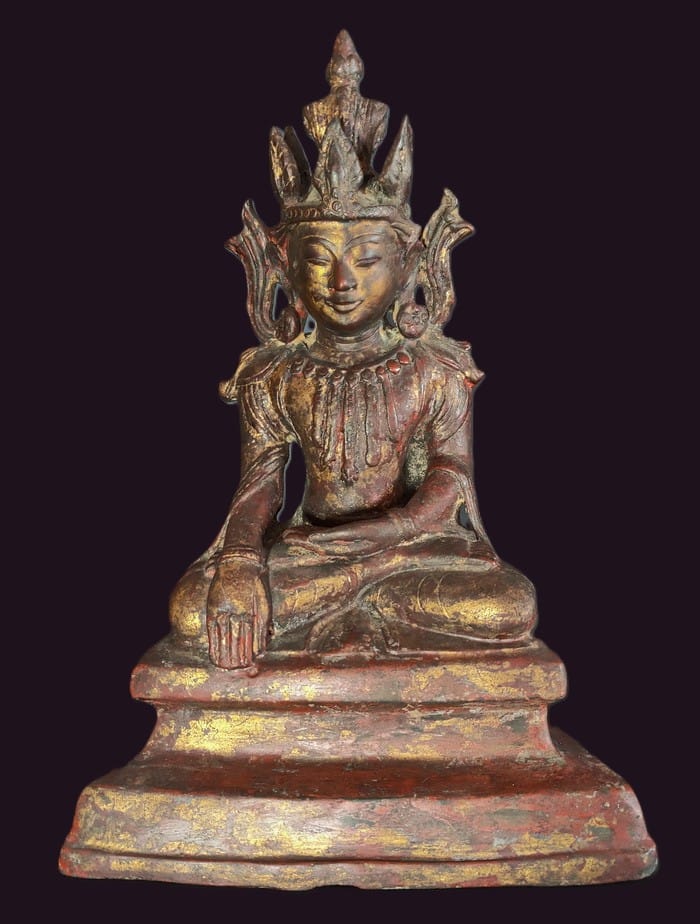
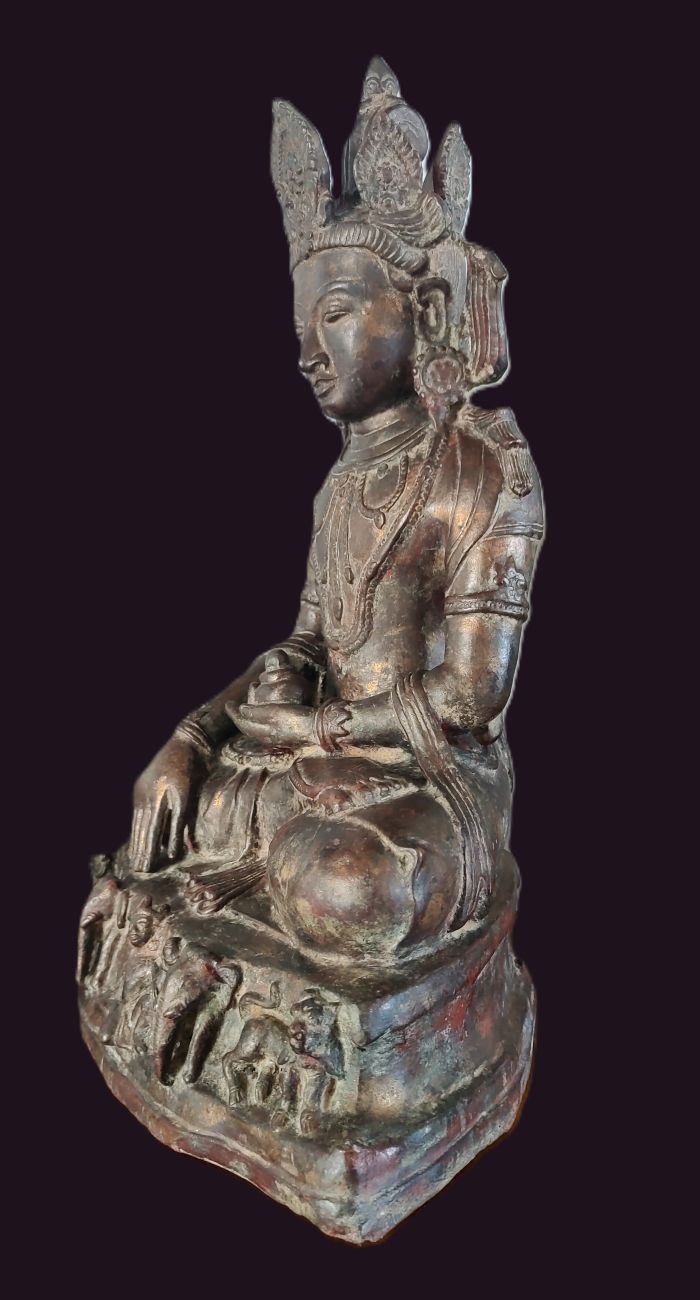
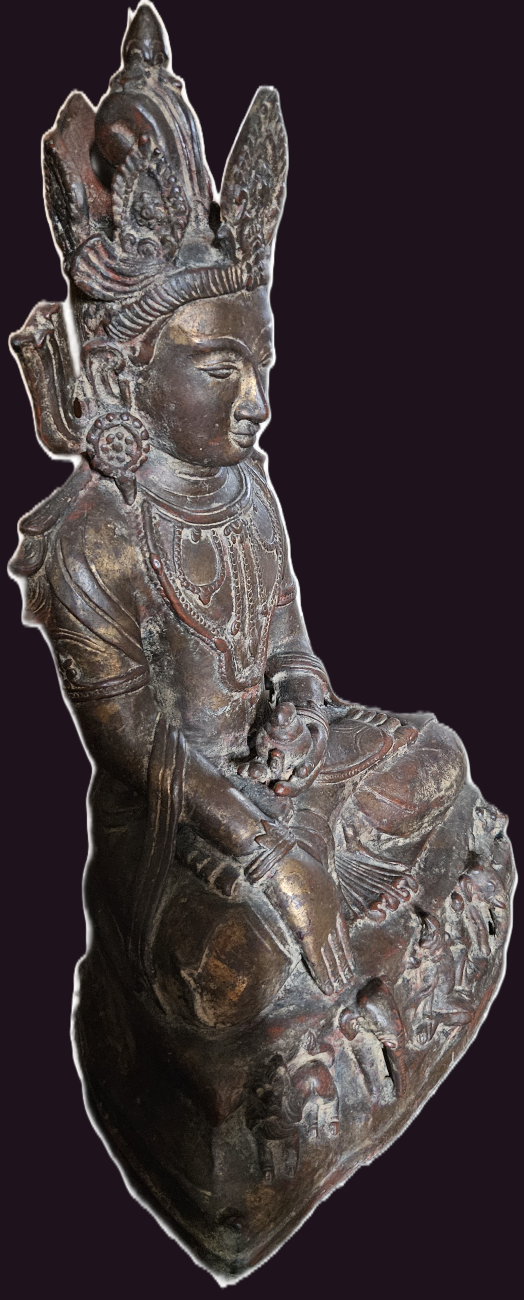
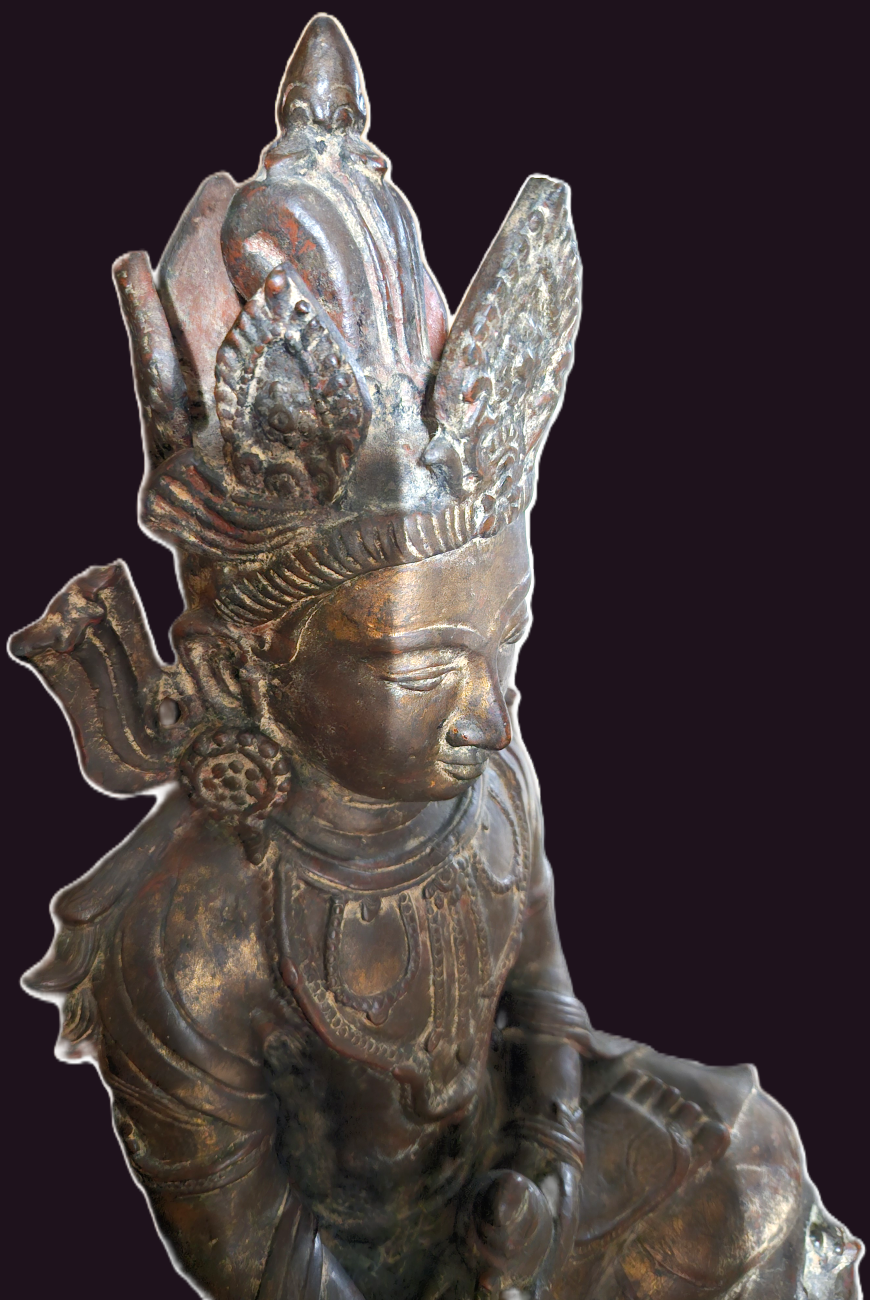
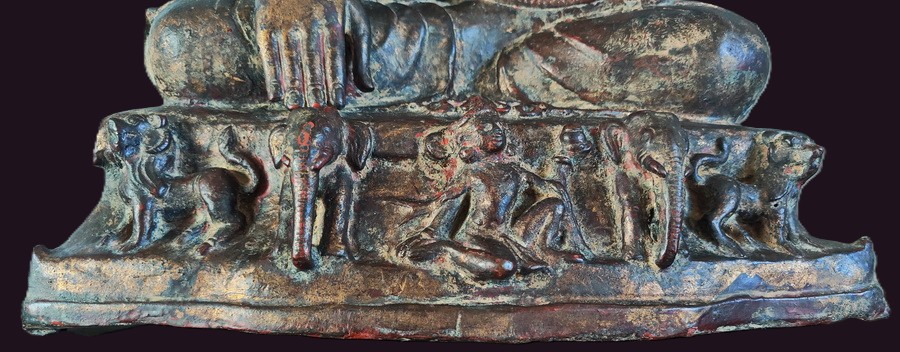
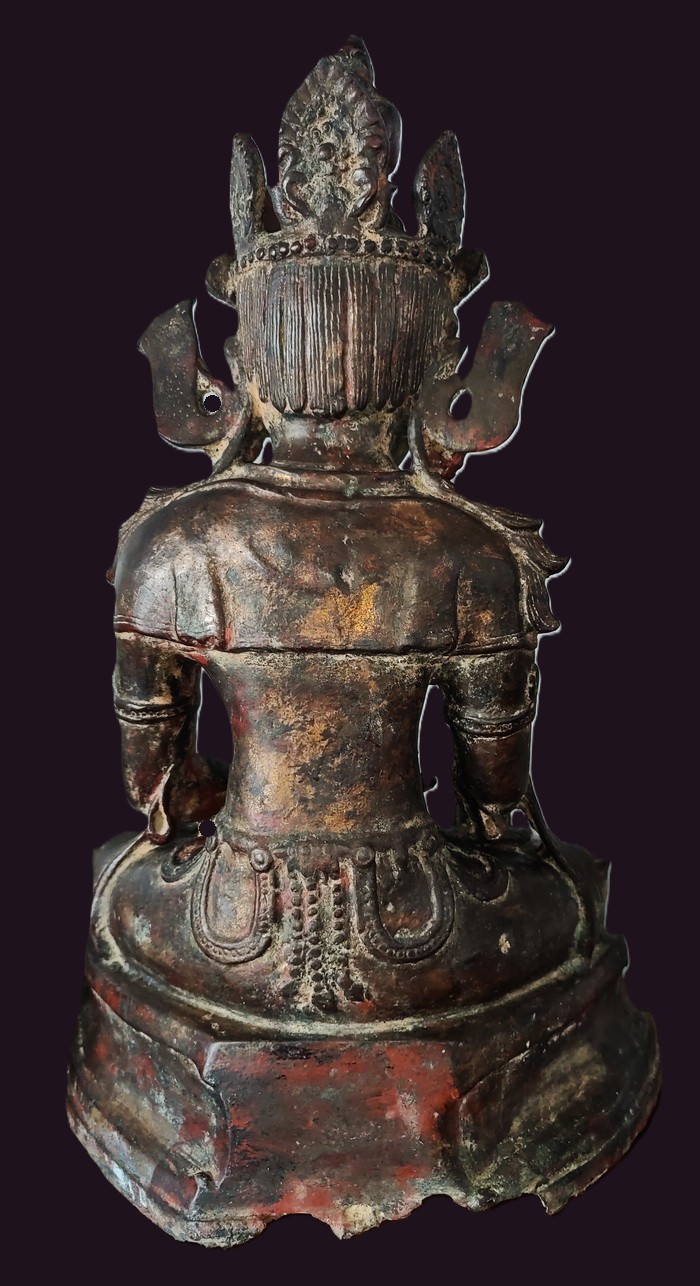
Rare 16th Century Mrauk-U Bronze Buddha Statue depicted in full royal regalia, sitting upon a decorative base exhibiting a central anthropomorphic figure in high relief, flanked by pairs of elephants and lions (Chinthe).
The representation of the Buddha in royal attire became especially prominent during the Mrauk‑U period, a time when strong artistic and religious influences from India were adopted into local iconography.
Base & Throne Details: The Buddha sits on an intricately detailed simhasana (lion throne), a structural layout drawn directly from the 8th–12th century Pala-Sena artistic tradition of Eastern India and preserved through regional Arakanese bronze casting.
The front frieze depicts a lion on each end flanked by elephants. In classical Indian iconography, the lions represent royal authority and the spiritual power of the Buddha’s teachings, while the elephants signify strength and cosmic stability.
Positioned at the center of the frieze is a crowned figure kneeling in a royal posture (rajalalitasana). Dressed in noble regalia and wearing a conical mukuta crown, this figure represents a royal donor or high-ranking patron. He holds a kalasha (sacred offering vessel) in his raised left hand, presenting an eternal offering to the Buddha above. Including the patron’s likeness directly on the throne base permanently tied the ruler’s earthly reign to the authority of the crowned Buddha.
SPECIFICATIONS:
- AGE: – Approx. 16th Century (confirmed through images viewed by London based appraiser) (See Note: related to the particular style of chignon hairstyle seen in this Buddha statue)
Height: – 55cm
Width: – 40cm
Depth: – 25cm
Weight: – 22.85 Kg.
#700
16th Century Mrauk-U Bronze Buddha
Historical context for cultural exchanges between Arakan and its neighbors, particularly the monastic and artistic centers of Bengal, Bihar, and the wider Pyu realm is illuminated by the Anandachandra Inscriptions. Dated to 729 CE and now preserved at the Shite-thaung Temple, though originally located at Vesali, these inscriptions provide some of the earliest documentary evidence for the establishment of Buddhism in the region and outline the religious practices of the Waithali Kingdom.
They also record a succession of Indian rulers, indicating early Buddhist transmission linked to the Chandra dynasty, which governed the Samatata region of Bengal as well as northern Arakan from approximately 327 CE. This connection underscores the deep historical ties between Arakanese Buddhism and the broader Buddhist traditions of the Indian subcontinent.
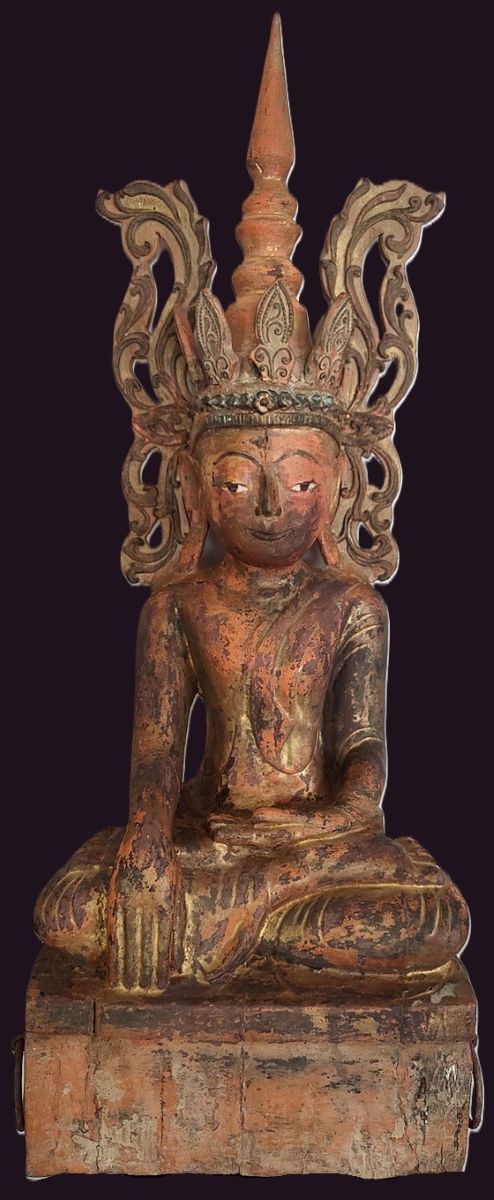
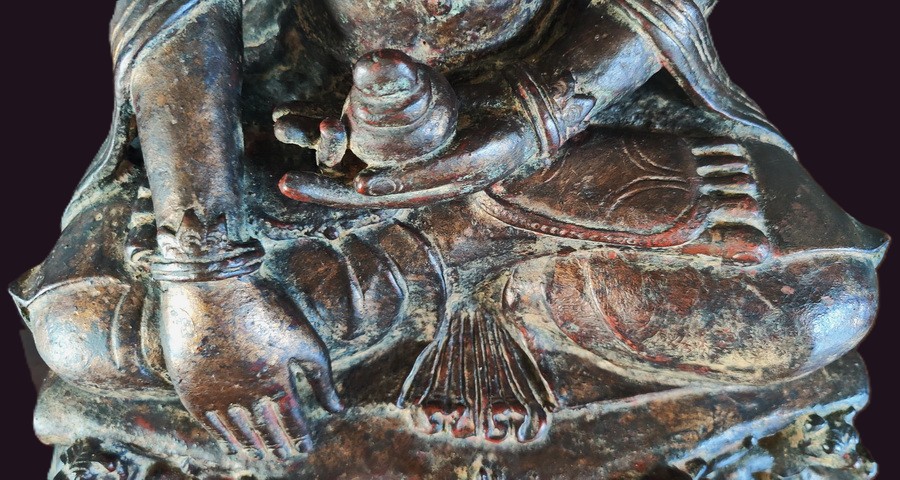
This style of Buddha statue is also referred to as a Jambupati or Royal King Buddha. This form is reflected in the elaborate crown and large chignon in the centre, a distinctive hair style adopted from the Ming/Sino Tibetan aesthetics with the jewellery, and ornamentation characteristic of crowned Buddha images from Rakhine. Typically, the right hand of the Buddha is in bhumisparsha mudra “Calling earth to Witness”, sometimes the left hand holds a kalasha (sacred offering vessel) in the left hand, believed to contain the “nectar of eternity or longevity” (amrita). Traces of gold leaf still remain with a red cinnabar lacquer base underneath.