Sui to Early Tang Dynasty Ming qi Ox and Cart
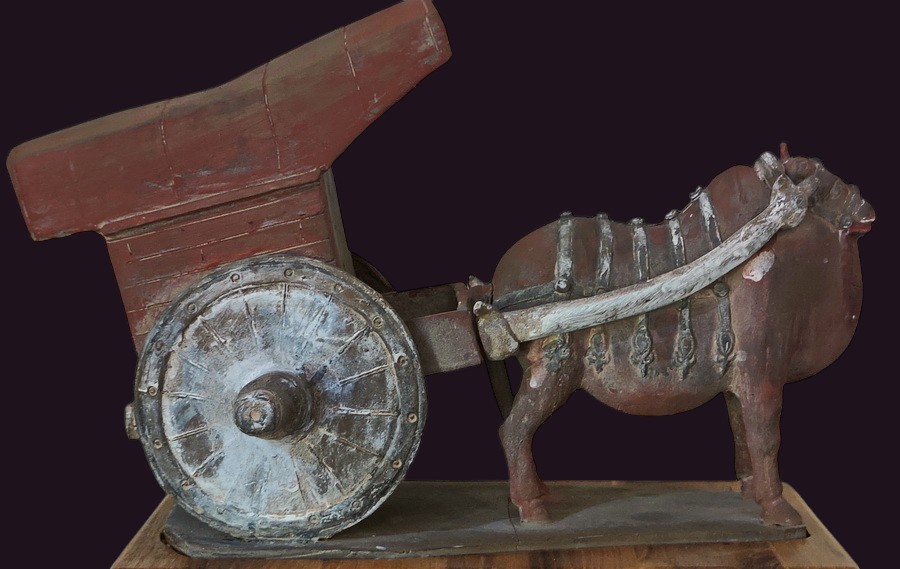
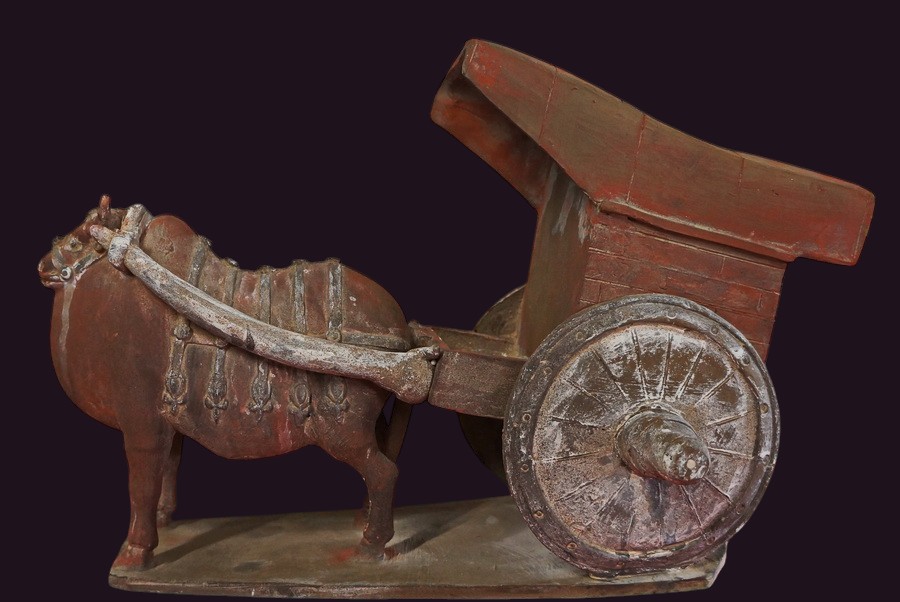
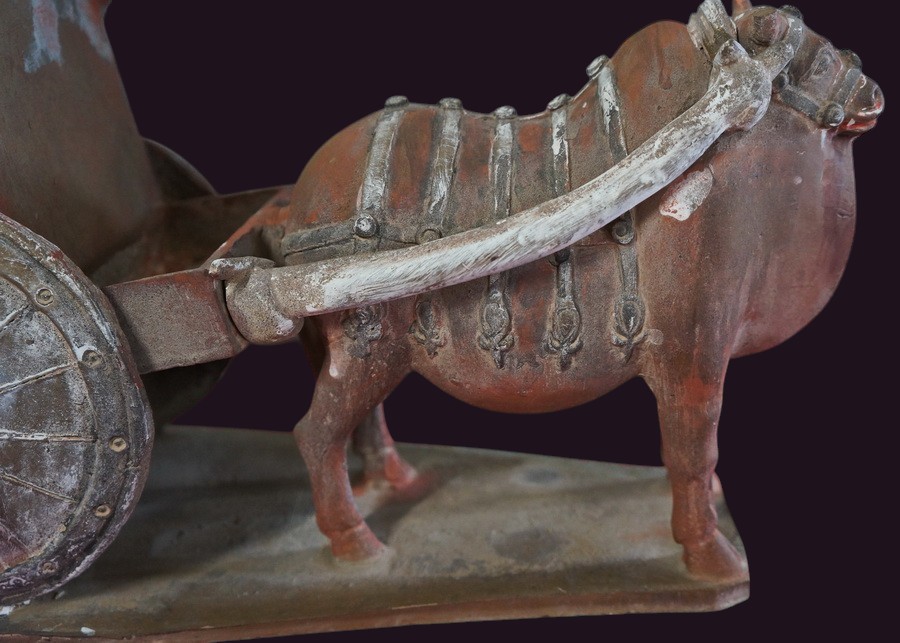
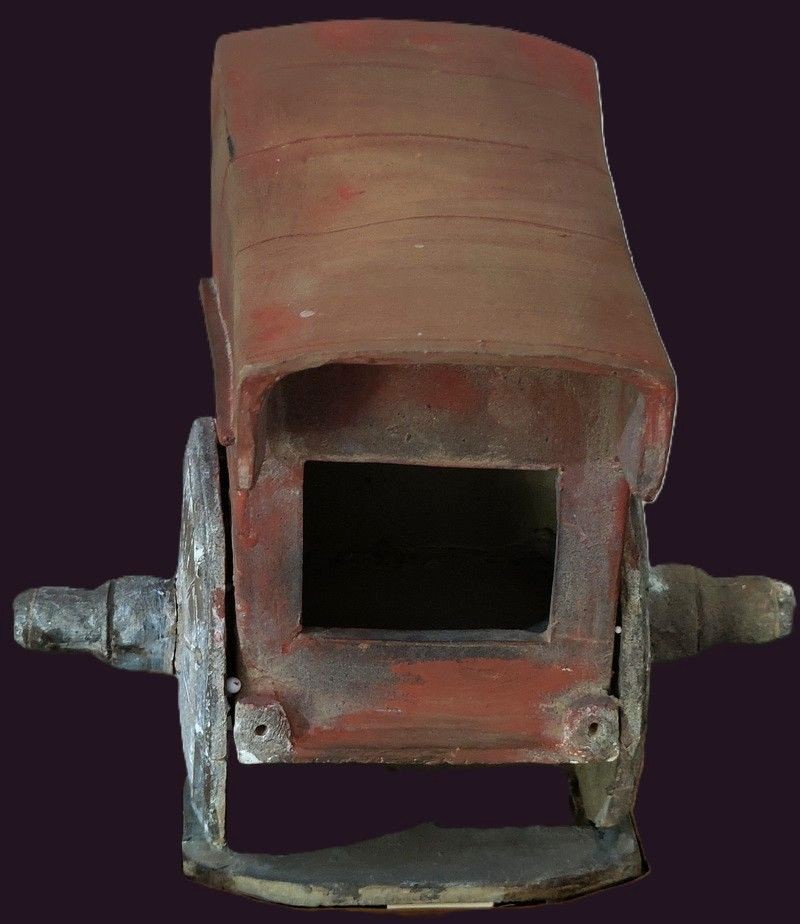
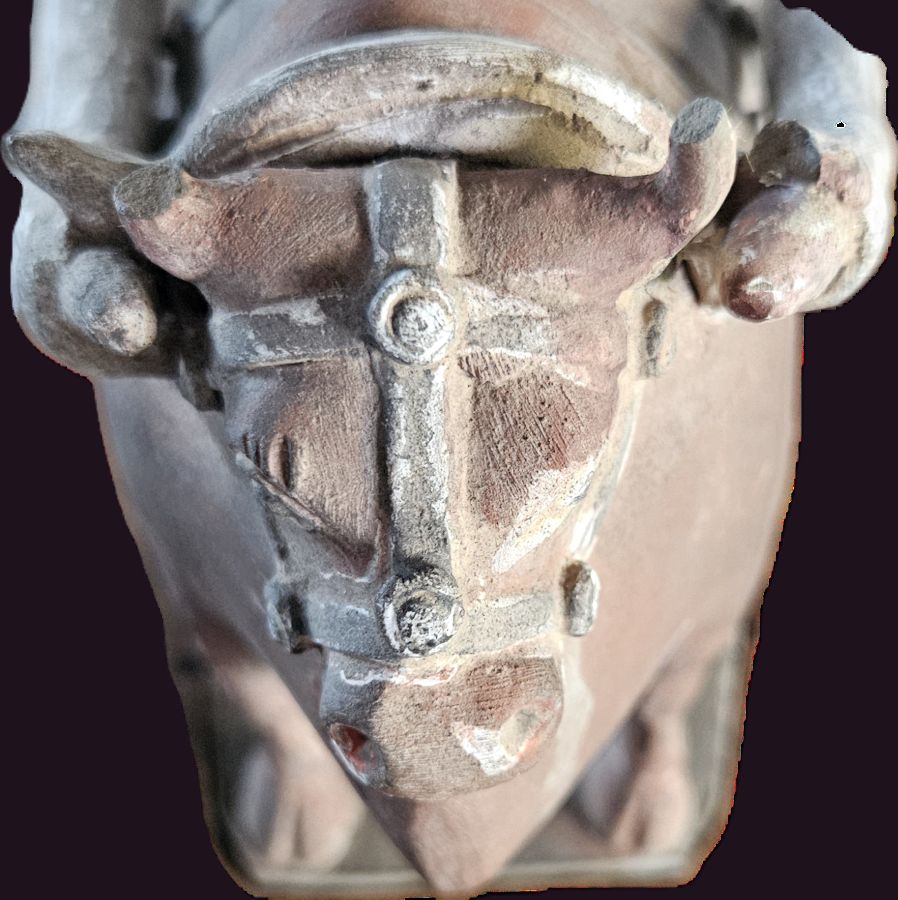
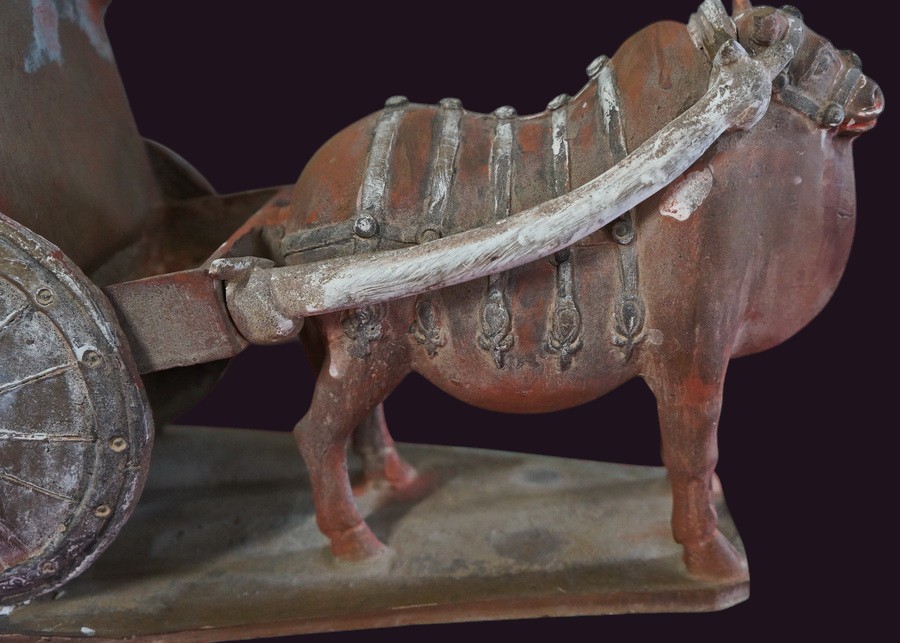
This unglazed Chinese Sui to early Tang Dynasty Ming qi Ox and Cart depicts a powerful draft ox yoked to a covered carriage. Beautifully modeled with a striking balance of stylized power and realistic muscle mass, the piece is a classic example of high-status burial pottery from the late 6th to 7th century AD.
Historical Significance of the Ox in China
During the early medieval periods of the Sui and Tang Dynasties, the buffalo and ox were revered as the backbone of China’s agricultural economy. Due to a historical shortage of horses following eras of conflict, high officials and elite families frequently utilized robust, ox-driven carts for personal transportation.
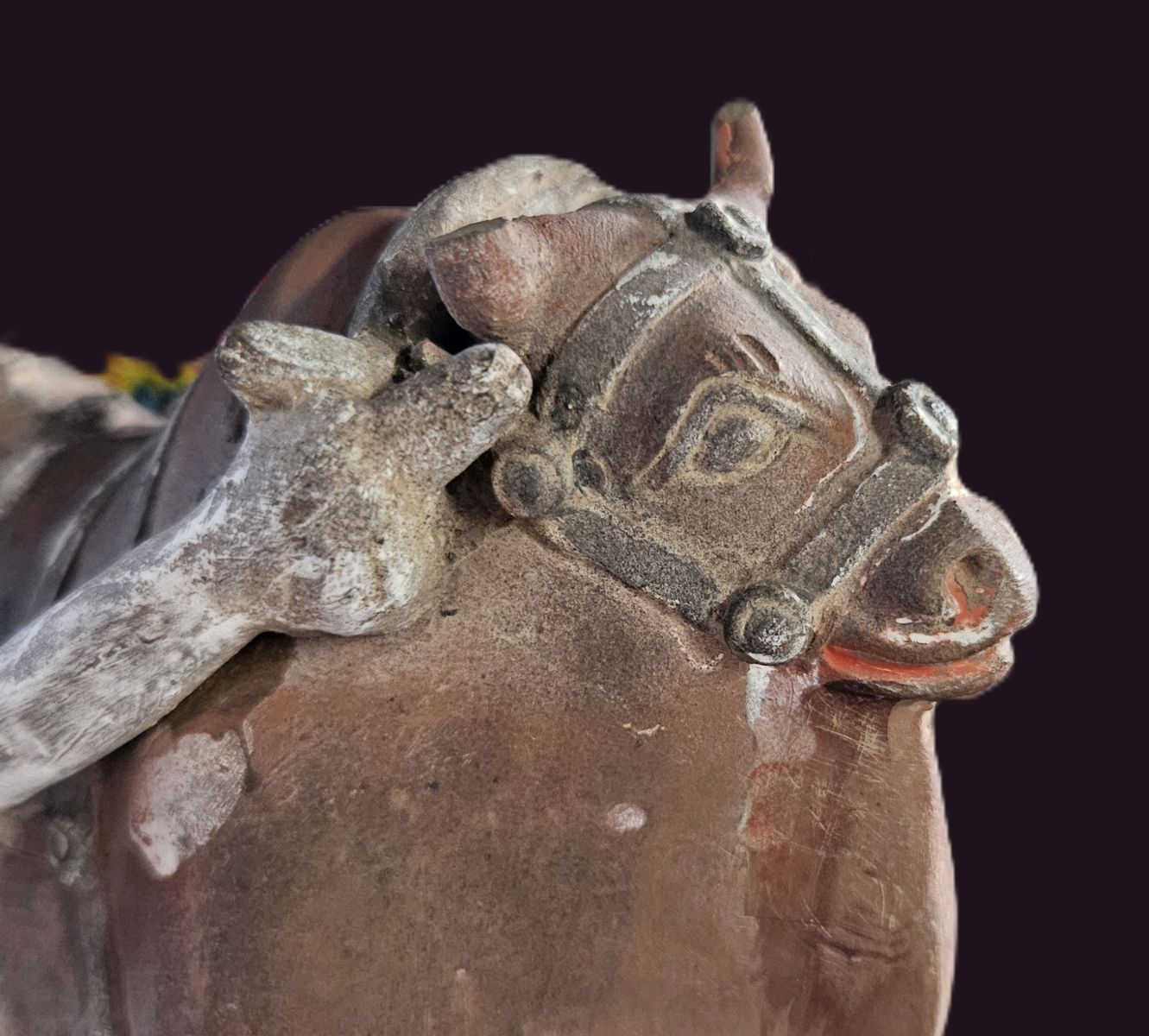
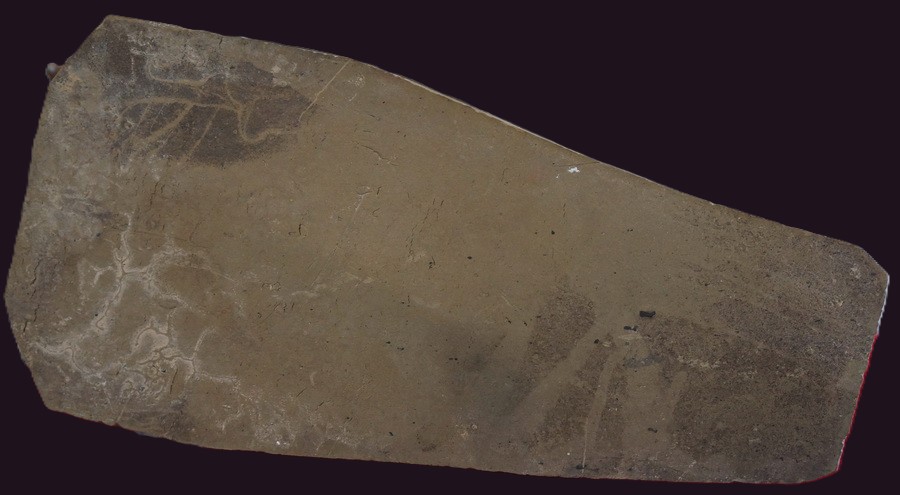
The unglazed terracotta retains remnants of its original cold-applied red, white, and dark mineral pigments under natural post-burial encrustation. The underside of the base features diagnostic evidence of long-term burial, including authentic mineralized rootlet tracks where organic root systems etched into the damp clay over centuries, alongside branching caliche (calcium carbonate) deposits.
SPECIFICATIONS:
- AGE: – Sui to Early Tang Dynasty – 6th – 7th Century AD
- HEIGHT: – 18 cm
- WIDTH:– 22 cm
- LENGTH: – 36 cm
- WEIGHT:– 2.35 Kg.
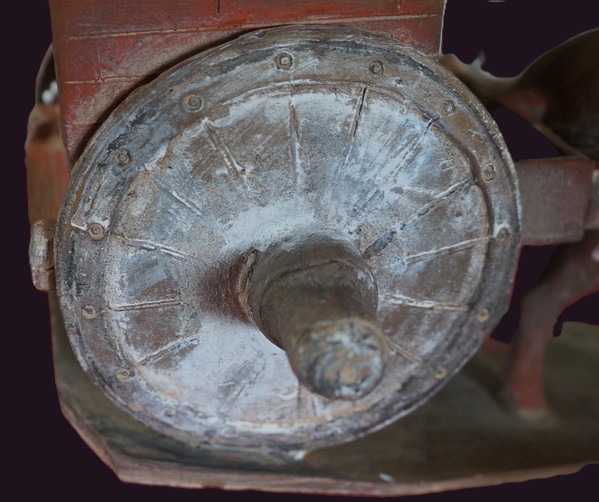
- CONDITION: Tips of the horns missing and tip of the yoke on one side missing, one spoke has a repair (hardly noticeable)
- #431
Sui to Early Tang Dynasty Ming qi Ox and Cart
Structural Details of this terracotta Ox:
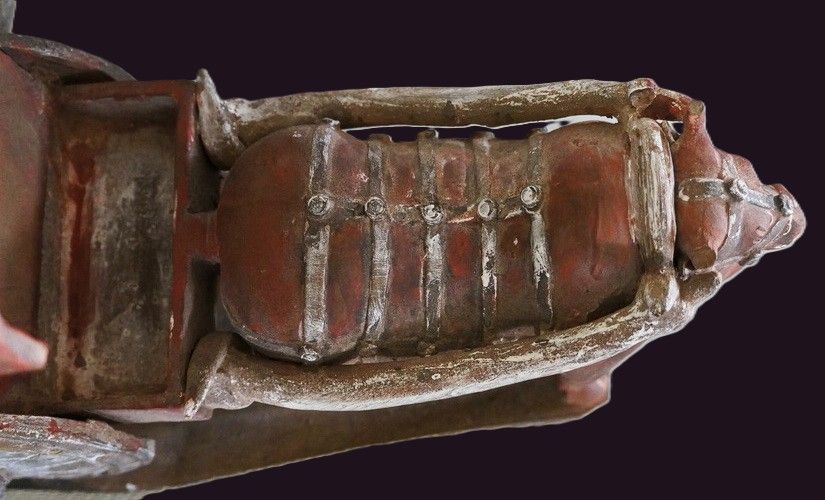
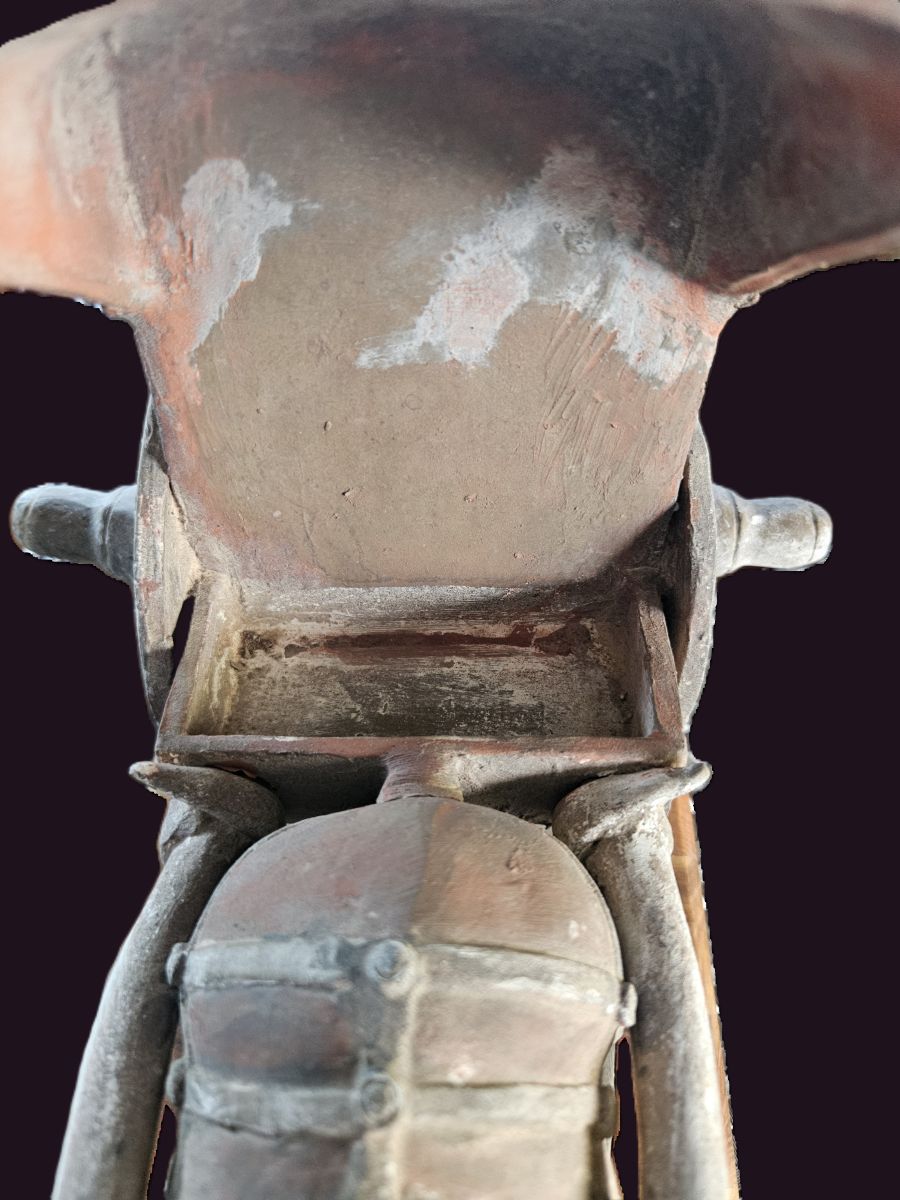
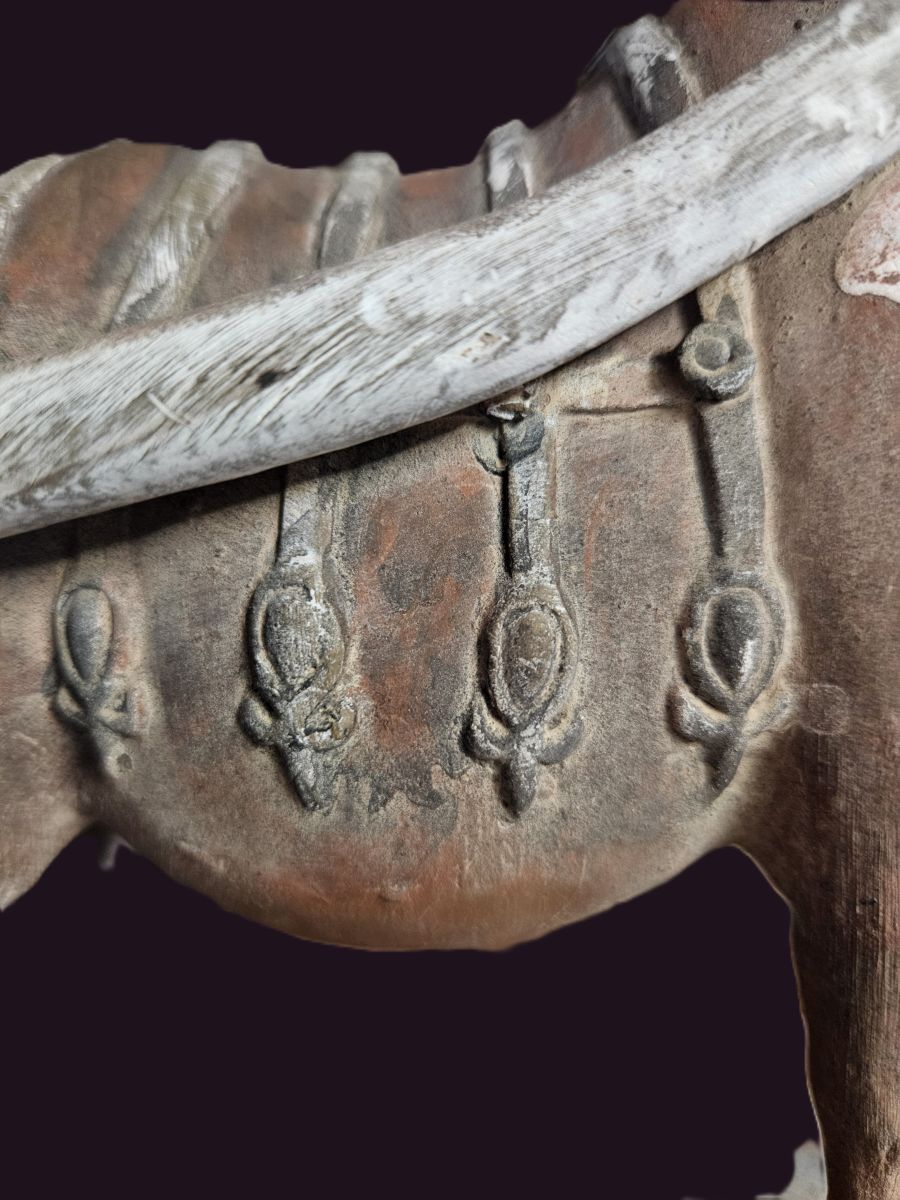
- Elaborate Harnessing: This ox is adorned with an intricate, molded decorative harness system across its back and flanks, featuring raised circular medallions along the spine and teardrop-shaped ornamental plaques.
- Architectural Canopy: The boxy carriage features a rigid, slightly stepped, and back-flaring roof structure, a hallmark of early medieval Chinese carriage design.
- Robust Engineering: The large wheels are decorated with prominent, raised rivets around the outer rim and central hub.
- Functional Mortise Holes: Two distinct, circular holes are molded into the tabs at the very base of the rear carriage frame. On real carriages, these mortises held removable wooden support legs (shou) to keep the cart level when unhitched, or served to attach a rear step-ladder for passenger boarding.
Ming qi Funerary offerings in ancient China
Ming qi funerary offerings provide evidence of the customs and beliefs related to both the rich and the poor people who lived in ancient China. Before the Han dynasty, this was a practice reserved for wealthy people. During the Han dynasty, the practice became popular with all classes of people, and a thriving industry evolved in the manufacture of Ming qi objects. (objects made specifically for funerary purposes).
The Chinese believe that the afterlife is just a continuation or an extension of their living existence, and by burying an object such as this ox with the deceased it would appease the soul of the departed and provide that for which he or she was attached or used during his lifetime, thus, ensuring a happy journey into the afterlife and beyond whilst ensuring they wouldn’t return to earth in the form of a “hungry ghost”.
A Comparison to this Qing dynasty green glazed Ox both with smaller horns. Their horns are typically smooth, short, and project outward or slightly upward and forward. Because they are working on dry land rather than hauling through thick marsh or muddy rice fields.
In the drier, flatter agricultural regions of northern China, traditional indigenous cattle collectively known as “Yellow Cattle” (Huangniu) are used as oxen. This category includes well-known draft breeds like the Qinchuan, Luxi, and Jinnan cattle.