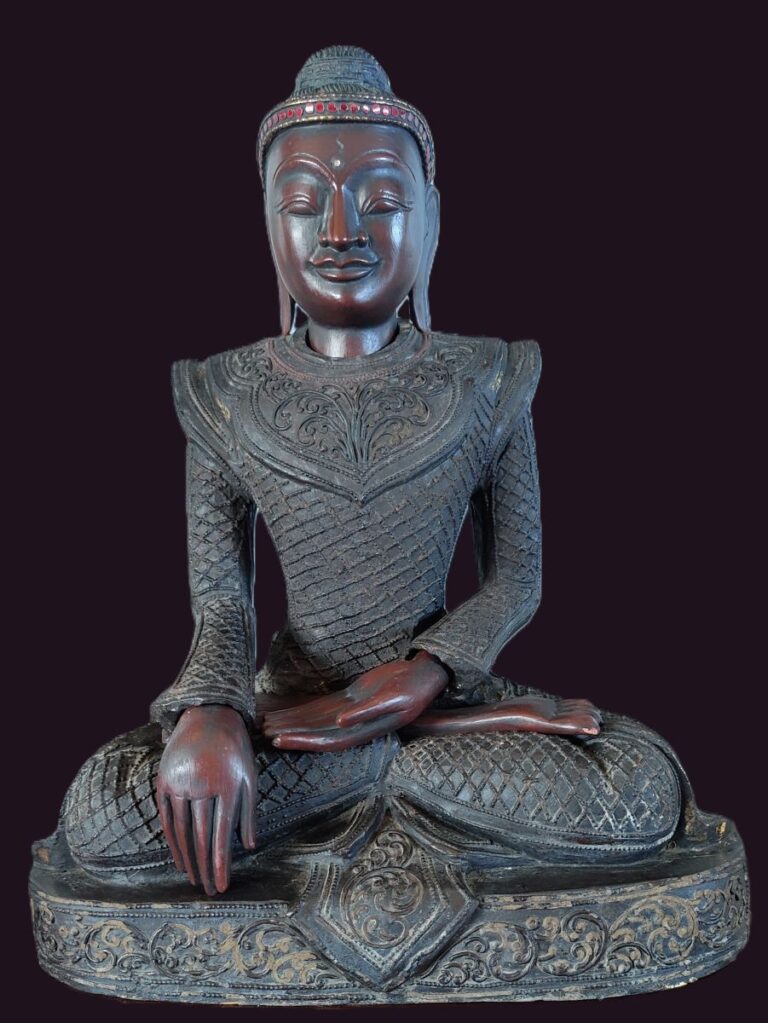
Antique Shan Mandalay Style Wood Buddha Statue
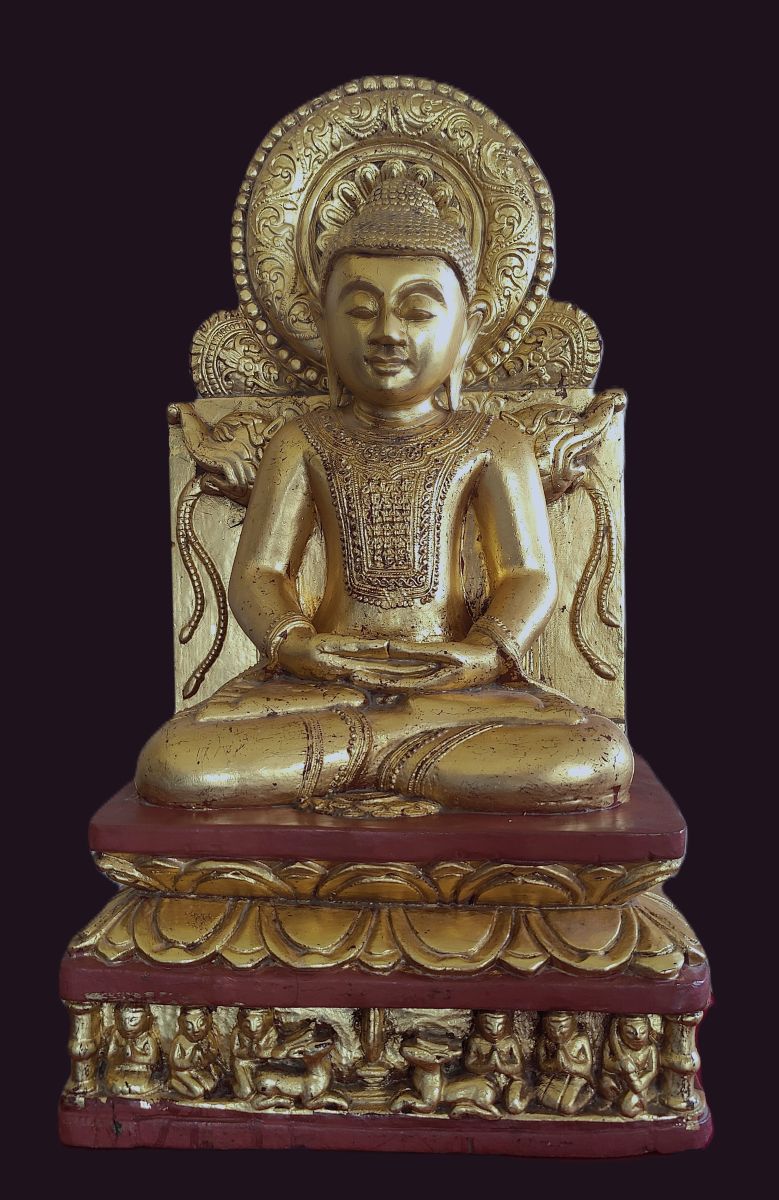
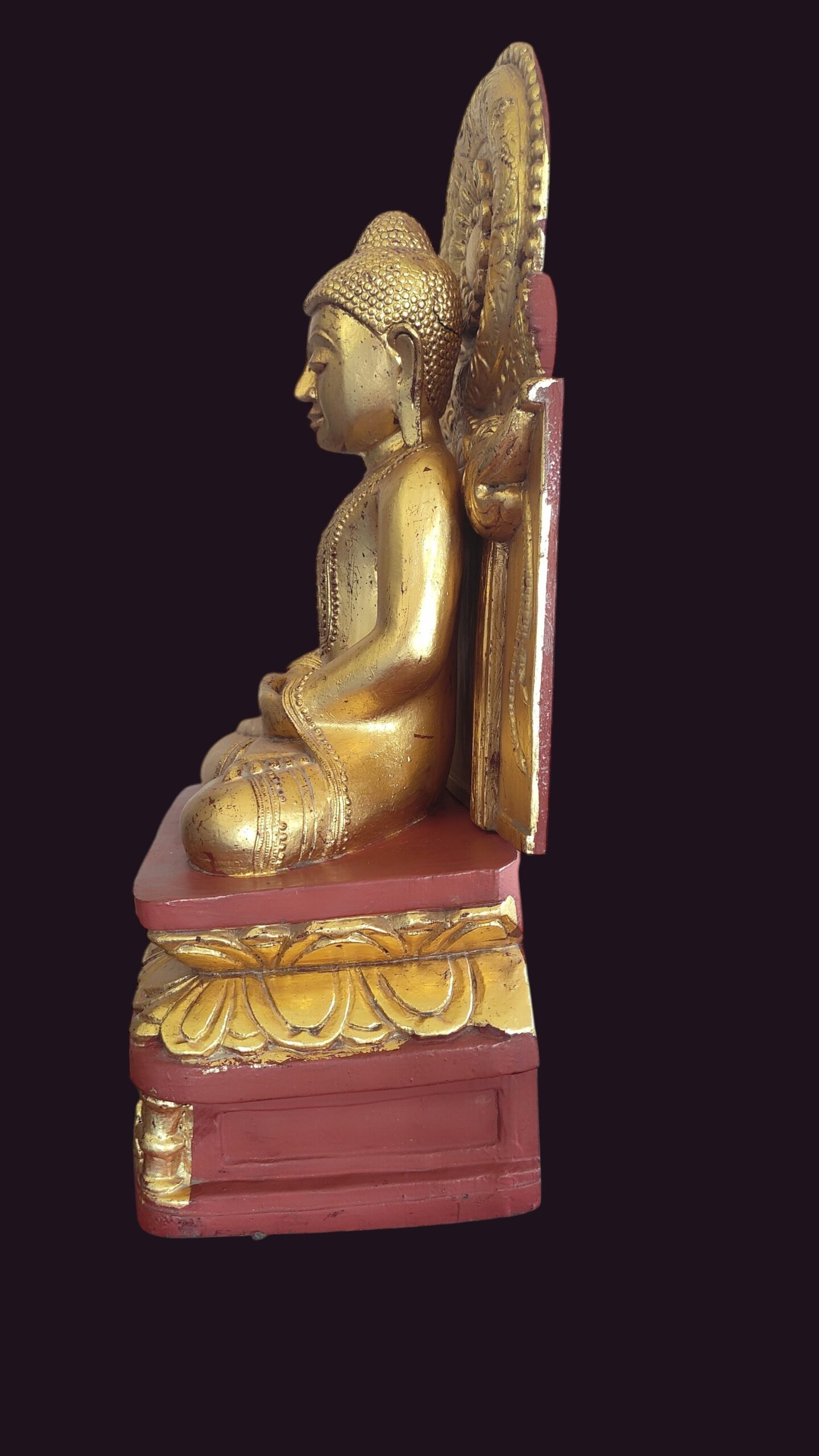
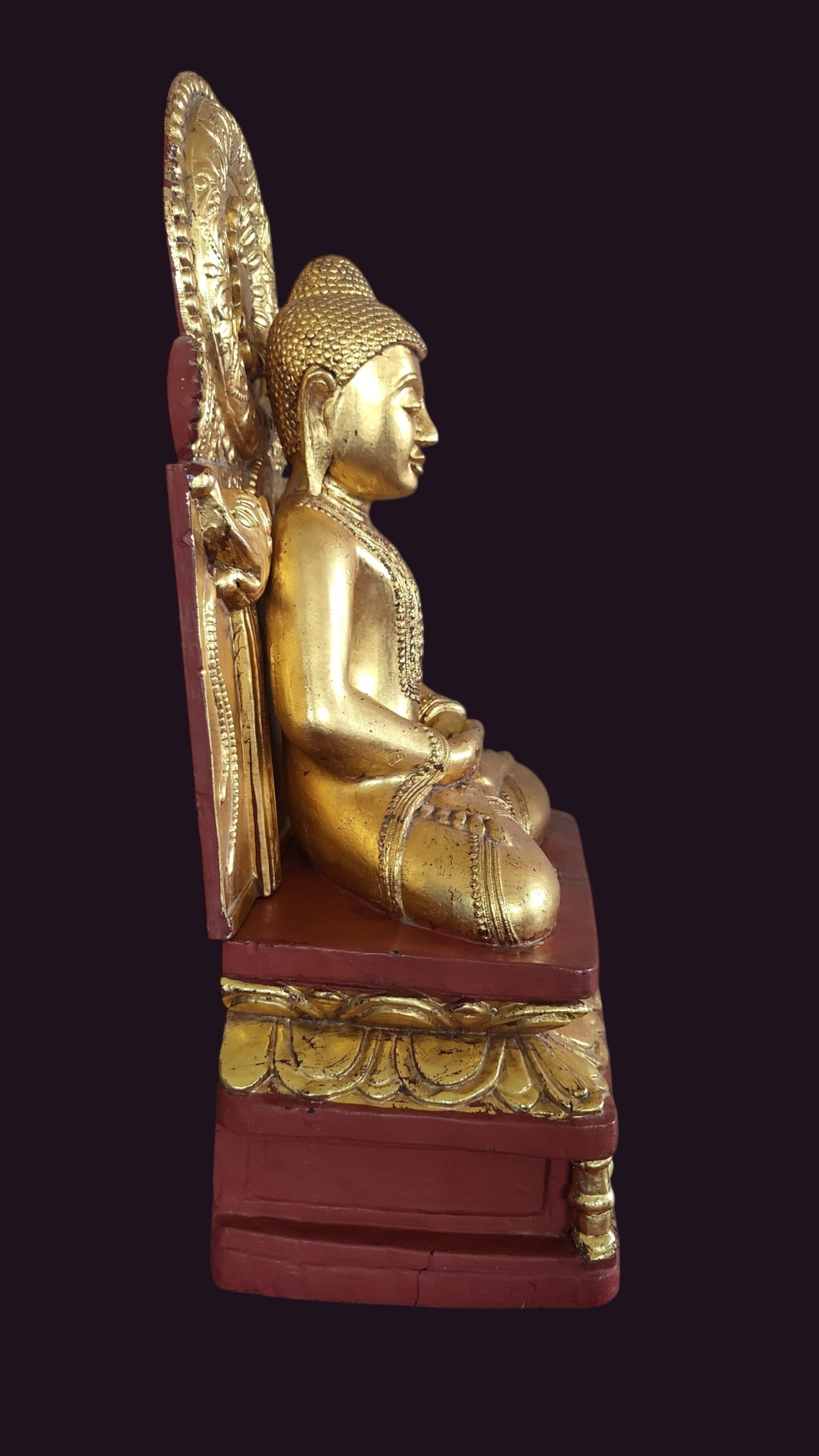
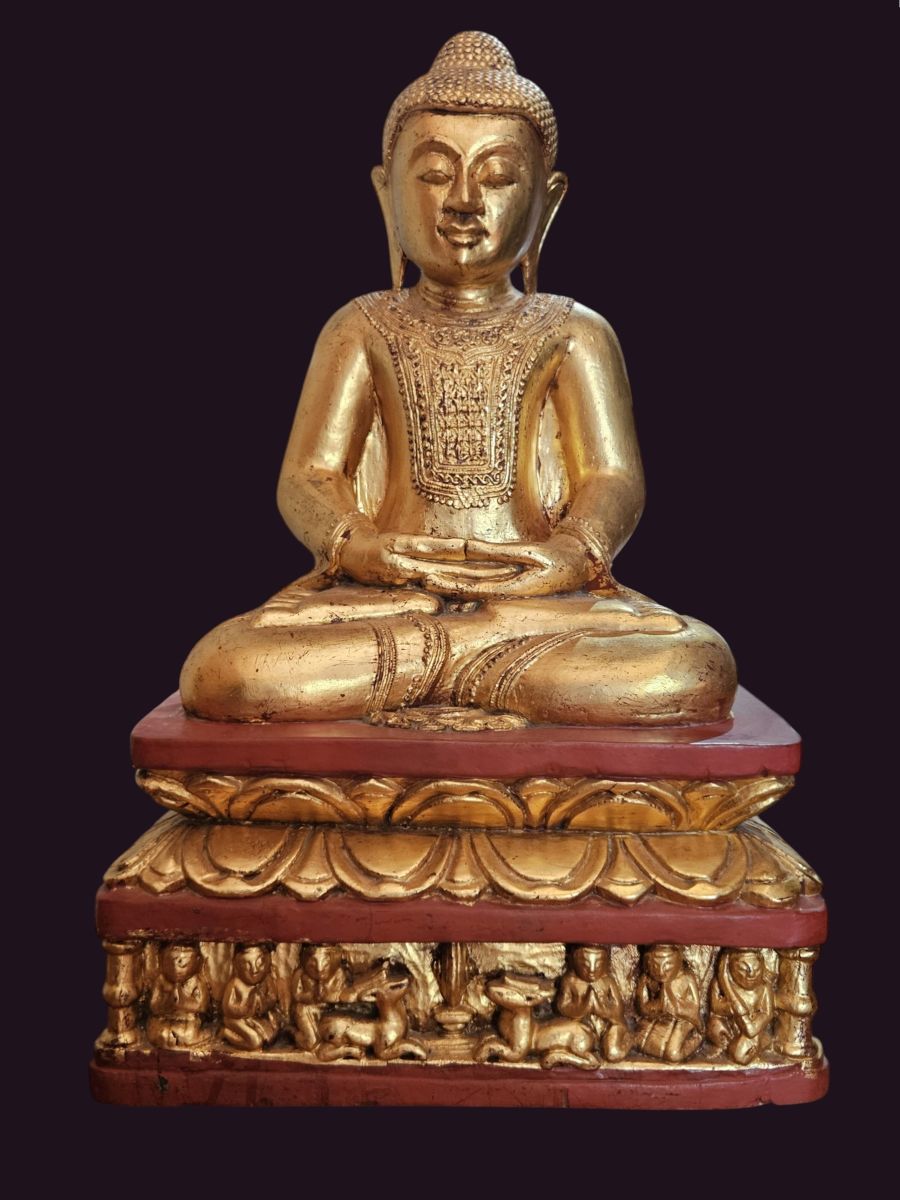
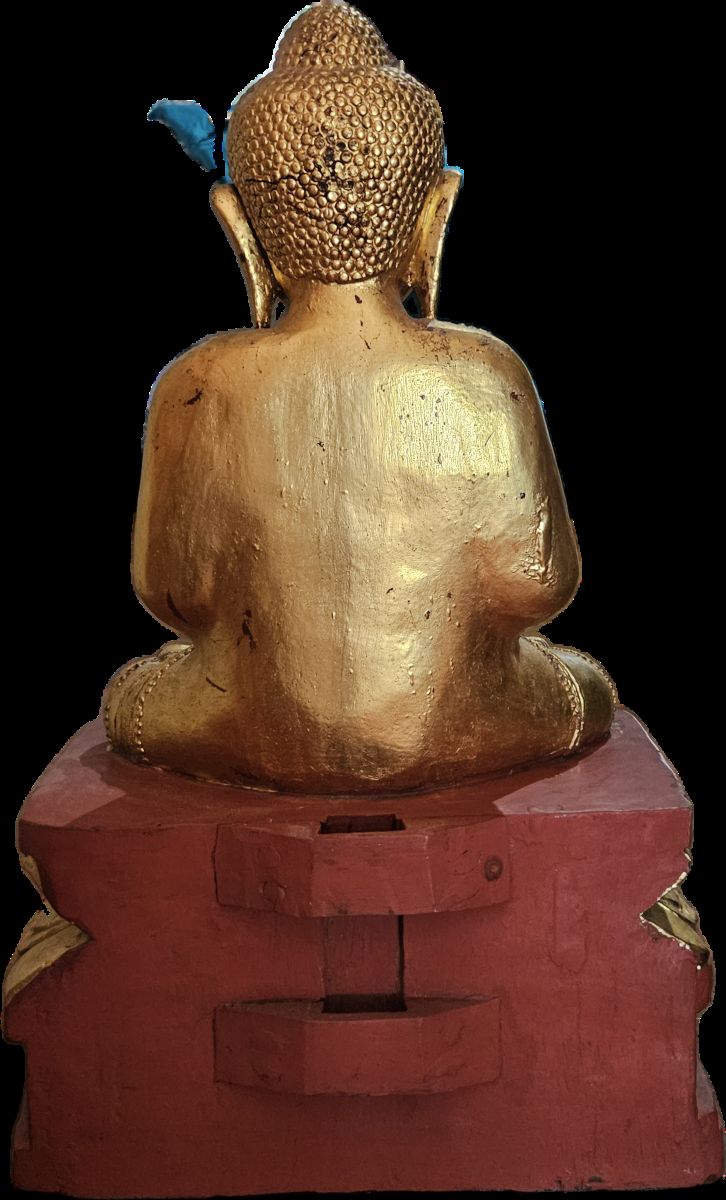
Antique Burmese Shan – Mandalay Style wood Buddha statue dating from the late 19th to early 20th century. The figure is seated in Padmasana (Lotus Pose) upon a double lotus throne (padmasana).
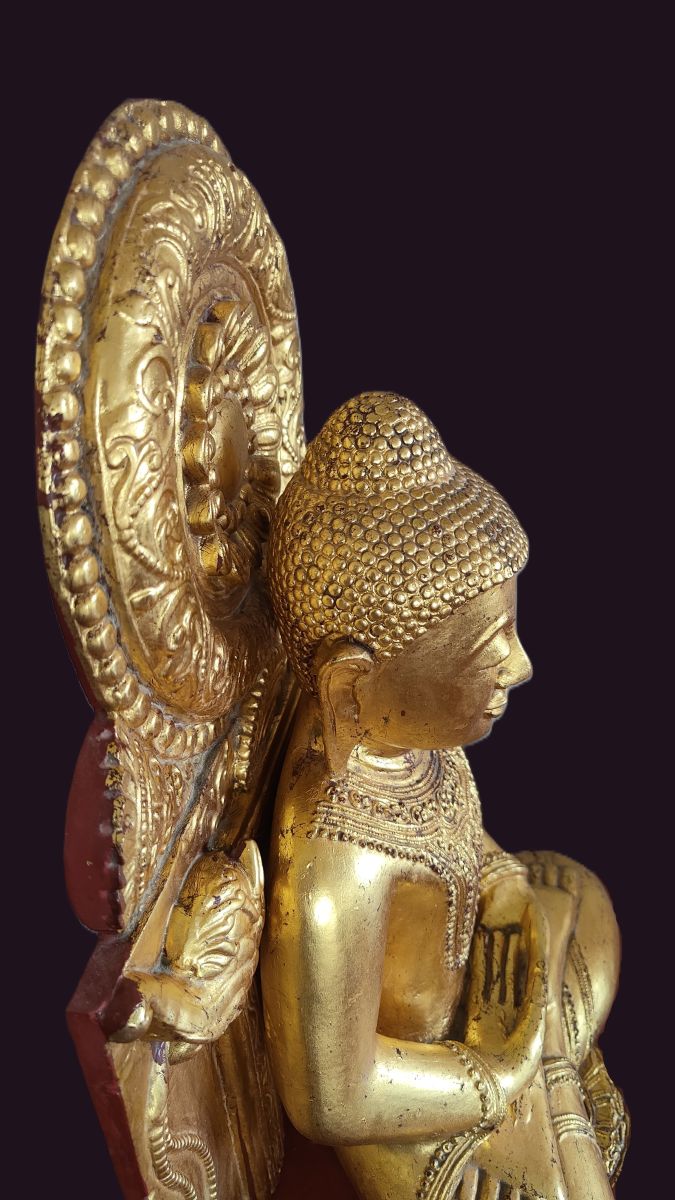
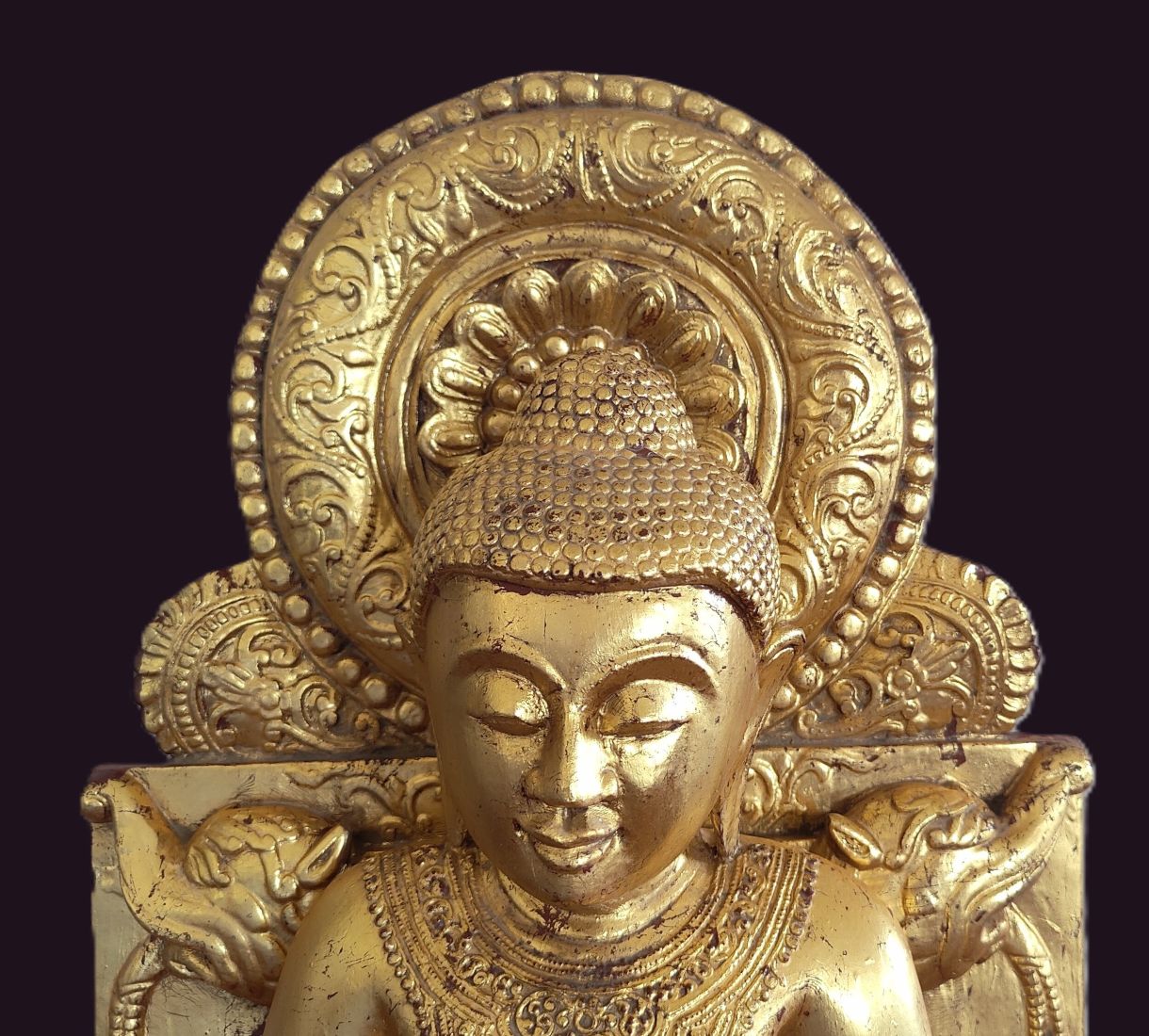
Detailed Thayo lacquer work embellishes the chest regalia, edges of the robe, hair curls and the halo (prabha-mandala). Flanking the shoulders on the carved backrest (reredos) are the heads of the Pyinsa Rupa, a composite beast in Burmese mythology made up of five animals: horse, carp, dragon, elephant, and water buffalo.
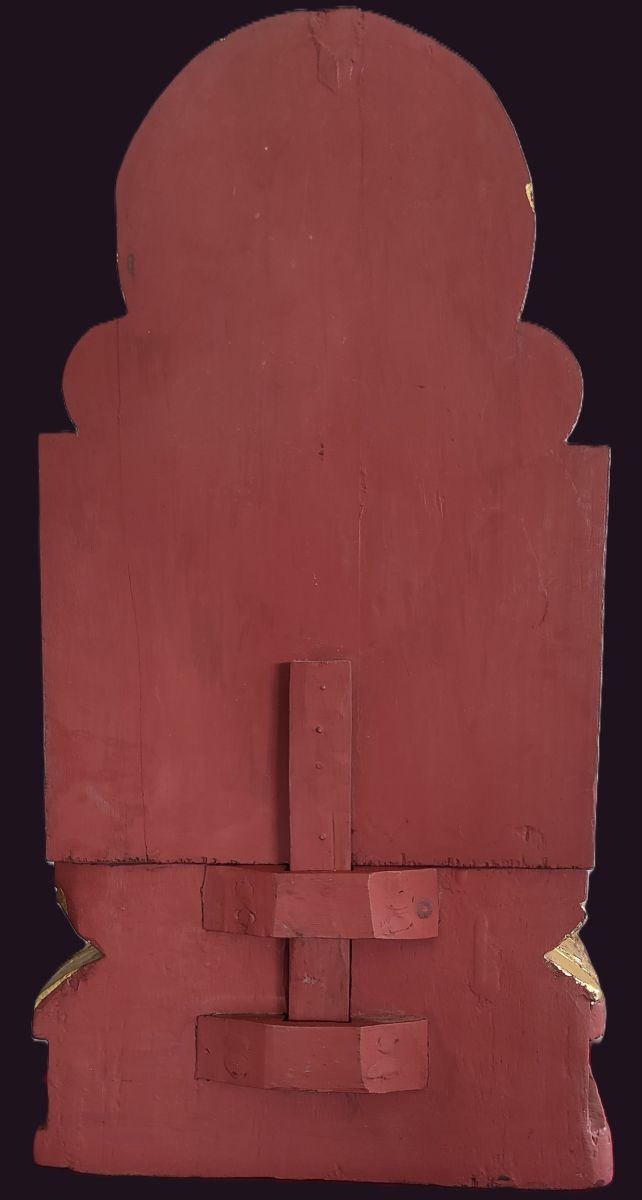
The statue has been re-gilded and painted red on the reverse in more recent times, around 20 years ago.
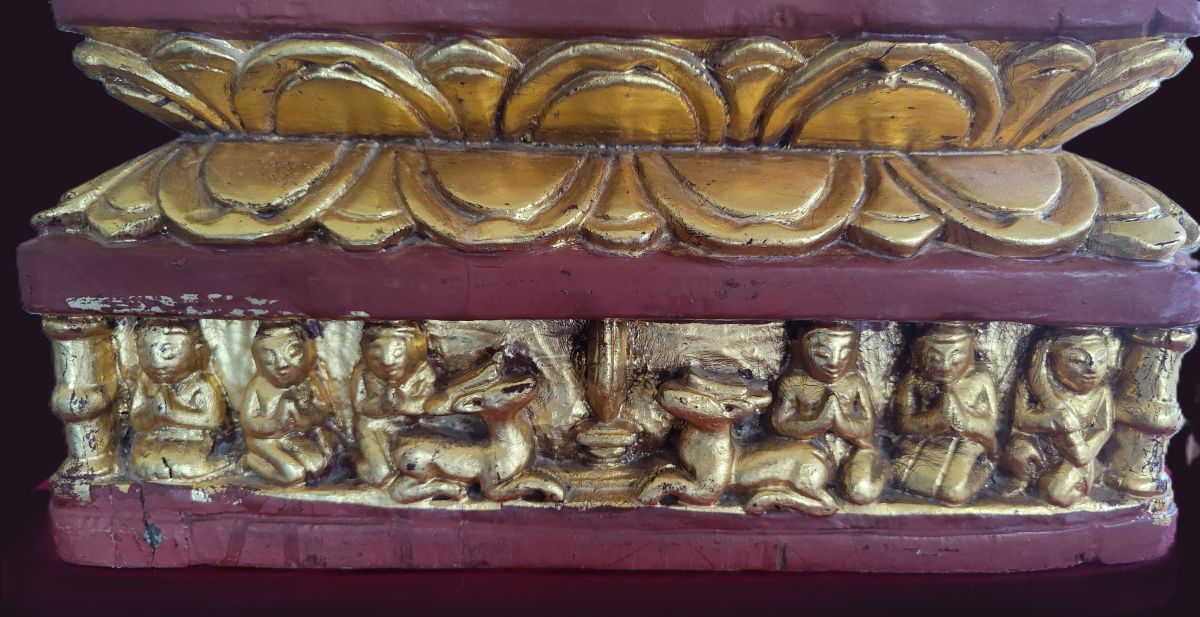
Relief Base: The base features an openwork carved narrative band at the bottom showing kneeling disciples, attendants, and deer framing a central wheel.
Lotus Pedestal: The double-tiered lotus pedestal (padmasana) above the relief panel uses heavy, rounded lotus petals more in line with the Shan regional style.
SPECIFICATIONS:
- AGE: 19th Century
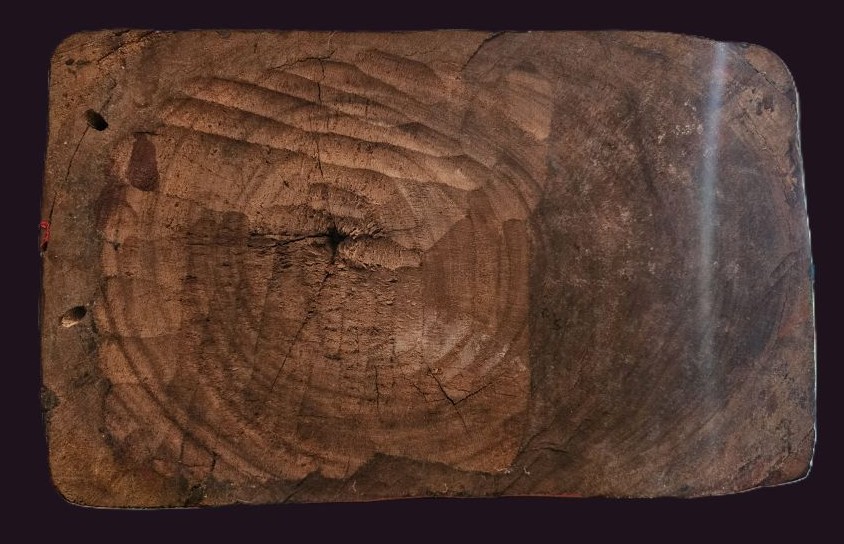
- CONSTRUCTION: – Wood
- HEIGHT: – Base to top of the halo 71cm – Buddha sculpture 62.5cm
- WIDTH: – 39cm
- DEPTH: – 25cm
- WEIGHT: – 15.35 Kg.
- #924
Antique Shan – Mandalay Style Wood Buddha Statue
INTERPRETATION OF THE FIGURES ACROSS THE BASE
The centre feature in this Antique Shan Mandalay Style Wood Buddha Statue
Turning the Wheel: When the Buddha delivered his first sermon in the Deer Park at Sarnath, this event was recorded as “Setting in Motion the Wheel of the Law” (Dharmachakrapravartana Sutta). Turning the wheel symbolizes the active spread of truth and wisdom throughout the world.
On each side of the wheel is a deer carved into the pedestal, representative of the first teachings of the Dharma in the deer park at Isipatana, one of the four places of pilgrimage, also known as Sarnath, located 13 kilometres north-east of Varanasi in Uttar Pradesh in India. The Buddha is seen here with five of his disciples, three on the proper right side and two on the proper left kneeling in reverence to the Buddha.
The figure seated on the end on the proper left side of the pedestal is one of the earth deities known as Vasundhara or Wathundaye, she is seen wringing her hair. This depiction of Vasundhara is also seen in Thai and Lao carvings and is referred to as Mae Thoranee, “mother earth”, although not exclusively associated with fertility or women.
The tale of Vasundhara tells of a young princess born with a rare gift, the power to bring flora to life with her touch. Though revered by her people, her talent drew the envy of a cruel king who sought to exploit her power. He imprisoned her in a dark dungeon, demanding she render his barren lands fertile. Vasundhara refused, instead using her touch to cultivate a vibrant garden inside her cell while befriending a bird that brought news from the realm outside.
Enraged, the tyrant ordered her prison burned, but Vasundhara called upon the heavens for aid. A sudden thunderstorm extinguished the flames, enabling her animal allies to free her. The king gave chase, but lightning struck him down during the pursuit. Returning home to a triumphant welcome, Vasundhara dedicated her life to restoring the realm, forever remembered as a guardian of the earth.
THE MUDRA
Dhyana Mudra: is a sacred hand gesture used in meditation and yoga practices across Buddhist, Hindu, and contemplative traditions. Known as the gesture of absolute balance and deep meditation, it helps channel prana (vital life force), steady the mind, and foster inner equanimity.
To form the mudra, both hands rest on the lap with the palms facing upward; the right hand lies atop the left, and the tips of the thumbs gently touch to form a subtle triangle. This triangular shape symbolizes the Three Jewels of Buddhism (Buddha, Dharma, and Sangha) and represents the harmony between the body’s subtle energy channels.
Other resources: The Art of the Shan State