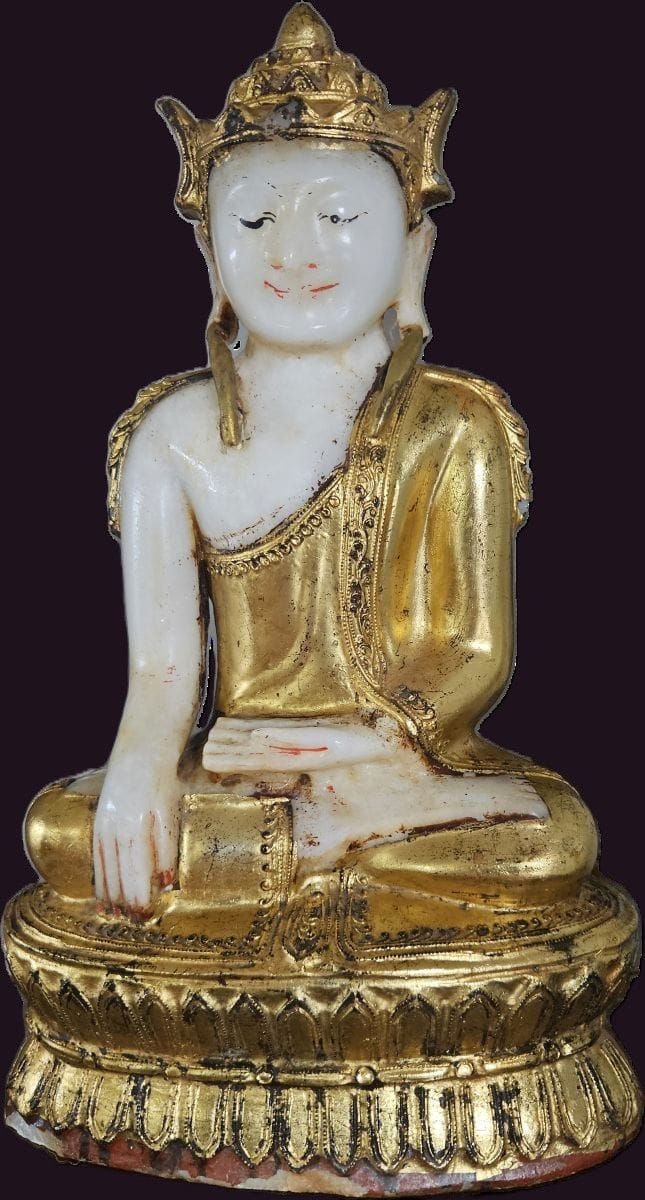
19th C. Burmese Black Parabaik Astrology Manuscript

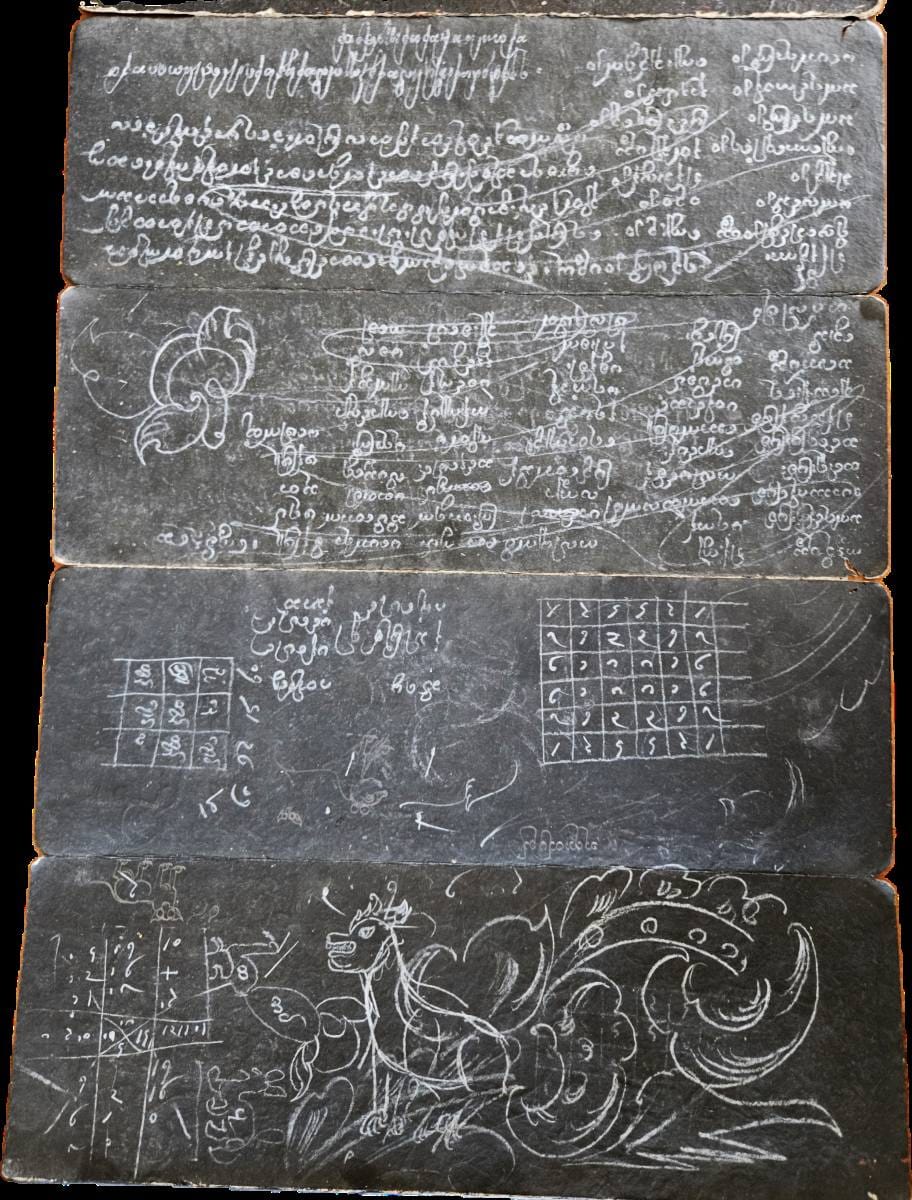
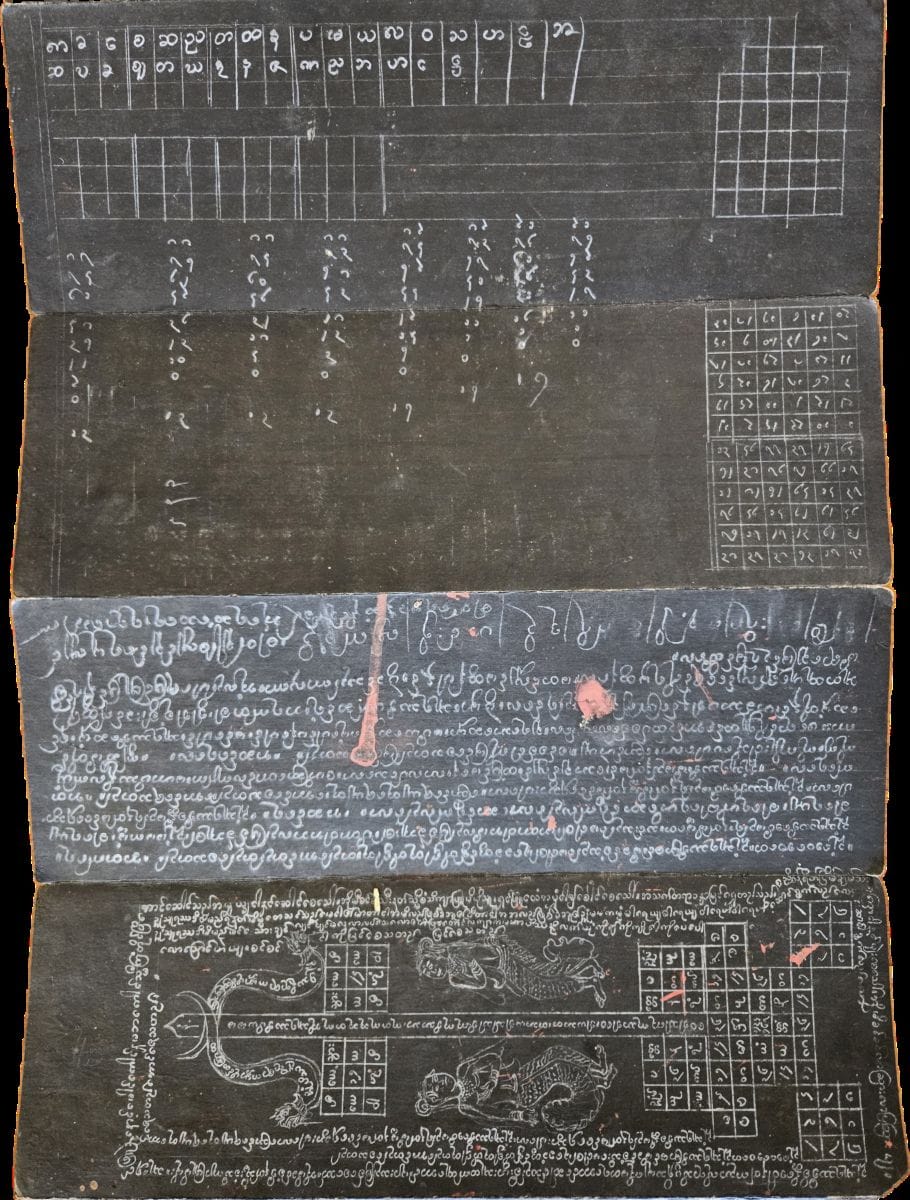

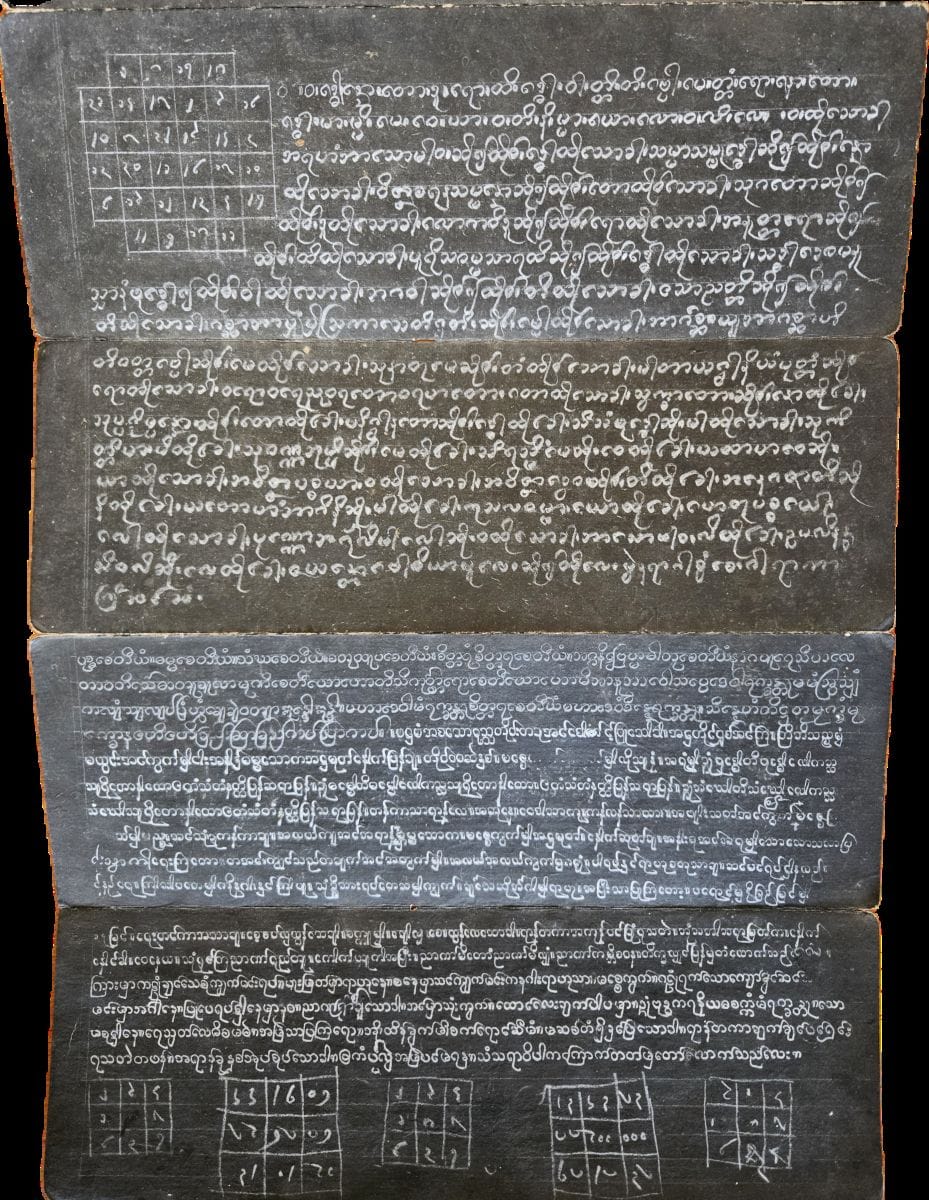


19th C. Burmese Black Parabaik Astrology Manuscript
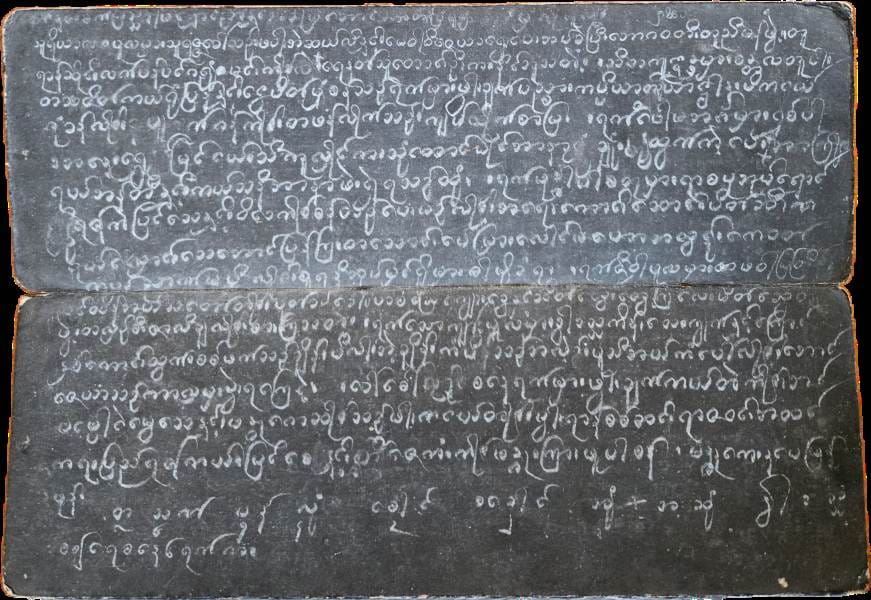
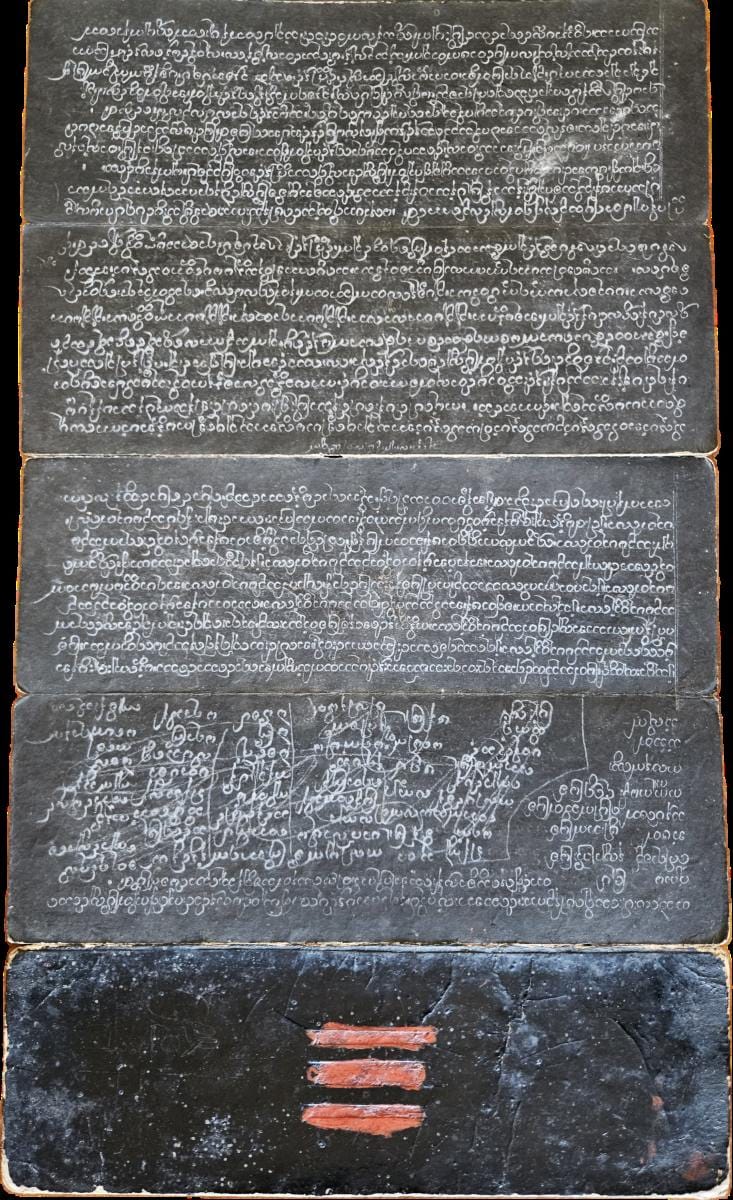
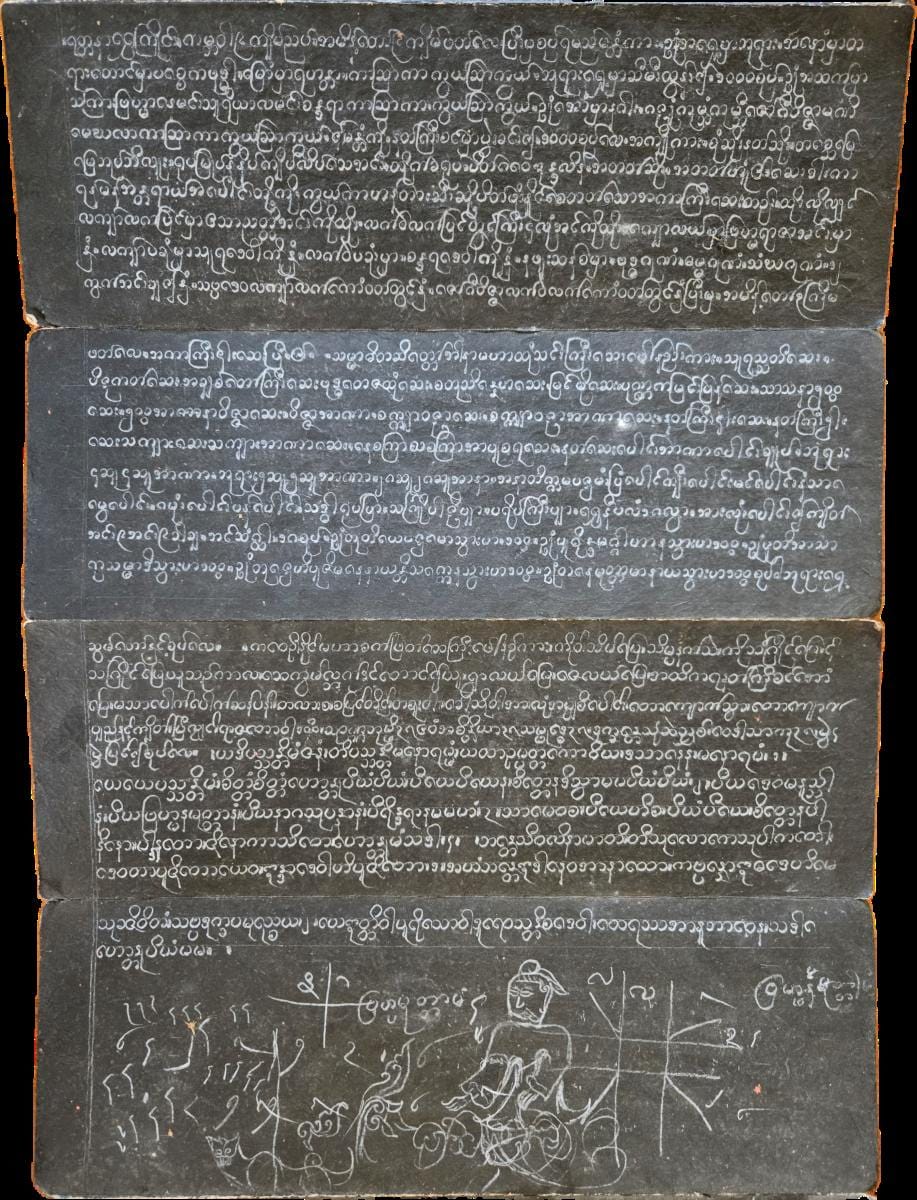
19th C. Burmese black parabaik astrology manuscript made from heavy handmade paper. The sheets are joined together on the long side and folded to form an accordion style manuscript. The protective front and back outer leaves unlike the plain white Shan manuscripts were either coated in dark lacquer or fitted with rigid covers. The standard material used in the manufacture was saa paper (ရှမ်းစက္ကူ), a mulberry paper produced in Shan villages like Maingkaing.
For cheaper 18th – 19th-century manuscripts, scribes used mango tree-bark paper. They also relied on bamboo papers for rough drafts and secondary copies choosing smooth wa-sha-hto paper over coarse wa-yo-yo bamboo stock. Sizes vary widely, from small pocket volumes to large ceremonial manuscripts. Black parabaiks are given a black, tacky finish using ground charcoal, adhered with rice starch or animal glue.
SPECIFICATIONS:
- AGE: Estimate only – early 20th century or older
- FOLIOS: 18 with script and illustrations on both sides.
- INDIVIDUAL PAGE LENGTH: 39 cm x 13.5 cm wide, thickness 1.5 cm
- WEIGHT: 300 gm
- CONDITION: Age related wear to front and back covers, pages worn around edges, script and diagrams good.
- #402
19th C. Burmese Black Parabaik Astrology Manuscript
Writing materials used by Burmese scribes
Steatite Pencils (Hsa-dan / Khoo-dan): The primary writing tool was a pencil made of soft soapstone (steatite) or soft white clay. Scribes carved the stone into slender, pointed sticks. It worked like chalk on a blackboard, leaving a clear white or off-white mark on the dark page.
White Chalk Pencil (Myaung-hsan): Made from compressed white clay or chalk paste rolled into thin rods. These were used for everyday temporary notes and legal drafts.
Yellow Gamboge Ink (Than-hpyu): For more permanent text on a black background, scribes painted with yellow pigment derived from the gamboge tree resin (Garcinia hanburyi) mixed with water and a binder like gum arabic or animal glue.
White Lime Paste Paints: Fine white paint made from calcined shellfish shells or ground limestone mixed with plant gums, applied using small bamboo dip pens or fine brushes.
Because soapstone and chalk marks are dry and non-permanent, scribes could easily erase text using a damp cloth or a piece of folded leather, then re-blacken any worn areas of the page with fresh soot paste.
Royal Scribes and Court Clerks (Ray-thin / Saray)
The vast majority of official parabaiks were produced by professional administrative clerks working for the royal court or provincial governors.
Court painters (sehn-gyin) were commissioned to paint high-end white parabaiks documenting royal ceremonies, grand processions, and maps and administrative clerks used black parabaiks as working notepads for census data, taxation, legal rulings, and diplomatic drafts.
Astrologers and Traditional Physicians (Bedin Sayas & Marma Sayas)
Royal court astrologers and local prognosticators used black parabaiks to calculate horoscopes, calendar dates, and auspicious timing for events and medical practitioners (Saya-mhway) recorded herbal formulas, pulse diagnoses, and medical treatments whilst practitioners of esoteric traditions used black parabaiks to draw protective cabalistic such as esoteric symbols, charts, or written formulas used as talismans or amulets to ward off evil, illness, or bad luck.