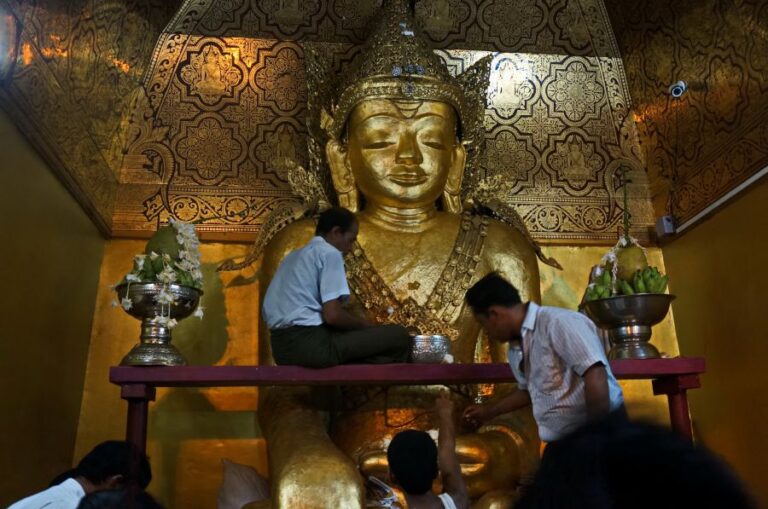
Po Win Taung Cave Murals & Sandstone Sculptures
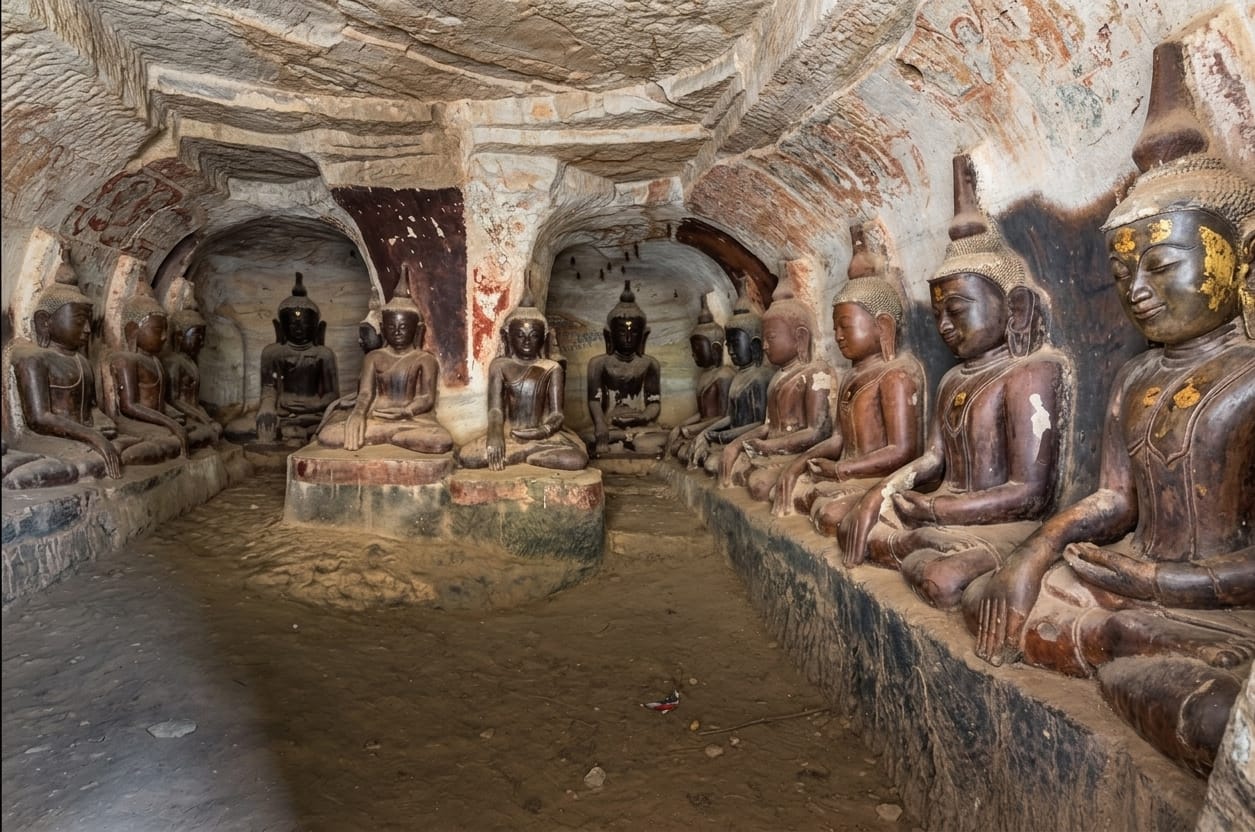
Po Win Taung Cave Murals & Sandstone Sculptures
The Po Win Taung Cave Murals & Sandstone Sculptures carved out of the cliff face give testament to the devotion and reverence to the Buddha in Myanmar. The caves are located 25 kilometres west of Monywa in the Sagaing Region, northwest of Mandalay. Po Win Taung Literal meaning is “Mountain of Isolated Solitary Meditation.” Po refers to the spiritual attainment or fruition, frequently associated with reclusive monks, alchemists, or meditators seeking higher mental states, Win meaning “to enter or retreat into” and Taung meaning “mountain or hill”. The site features a vast network of man-made chambers carved directly into natural sandstone cliffs and is largely a Buddhist religious complex and pilgrimage site.
The Po Win Taung cave complex consists of two sites Po Win Hill to the north and Shwe Ba Taung to the South/southeast approximately 500 metres to 1 kilometre apart. Due to the unevenness of the terrain, Po Win is reached from below and Shwe Ba Taung from above.
The shrines are hand-carved out of natural sandstone rather than volcanic rock. Po Win Taung the older complex dates from the 14th to 18th centuries. Parts of the neighbouring Shwe Ba Taung complex were excavated during the British colonial period. The site relies on lay donations for upkeep, with local monks and residents looking after the caves.
Po Win Taung Cave Murals
The murals within these hand-carved caves blend traditional animism with Theravada Buddhist art. Beside illustrations of the Jataka tales featuring mythical creatures, flowers, and animals, the wall paintings capture 17th and 18th-century Burmese daily life. Some scenes show worshippers paying homage to the Buddha, while others detail everyday customs like chewing betel nut or smoking pipes. The artwork also reflects foreign influences, depicting Portuguese, Dutch, and British figures in distinct attire.
Po Win Taung Buddhist Sandstone Sculptures
While the art and murals in Po Win Caves are overwhelmingly Burmese (primarily late Ava and Nyaungyan periods, dating from the 14th to 18th centuries), the site reflects significant cross-cultural synthesis. The architectural arches, decorative motifs, and Buddha iconographies show distinct stylistic roots drawn from Indian temple design, Sri Lankan Theravada traditions, and Chinese floral and artistic patterns.
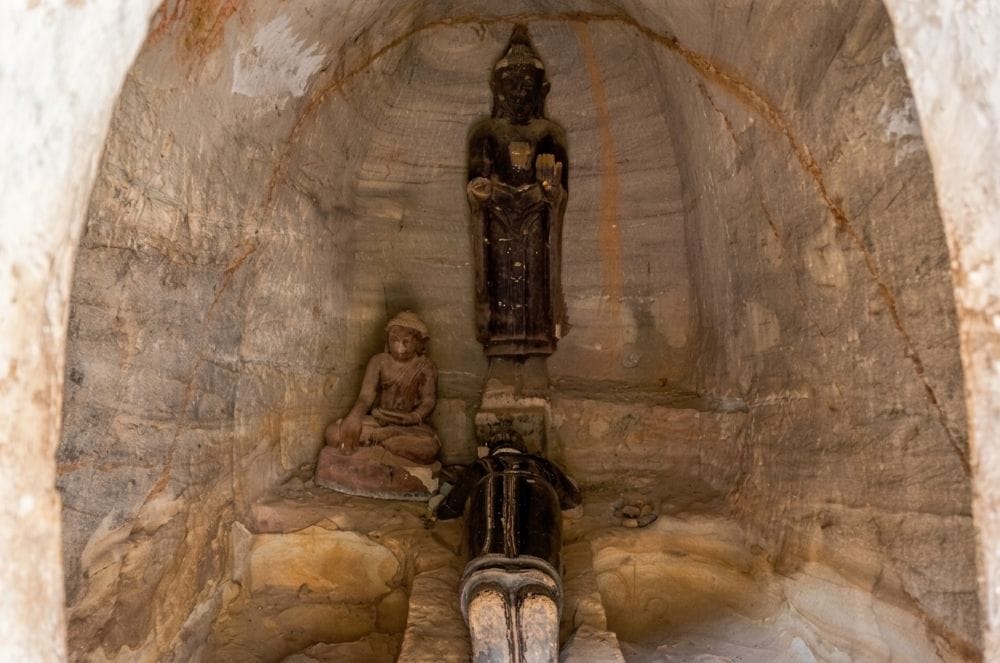
Documentation records thousands of Buddha statues across the complex. Most reflect late Ava-period style, with statues either set freely inside the chambers or carved directly from the sandstone walls. Relief carvings and painted murals feature kneeling monks in prayer alongside spiritual figures like nats and devas. The Buddha figures appear in seated, standing, or reclining positions, with seated icons typically shown in the lotus posture with the hands in the earth-touching gesture.
A shortage of early documentation makes it hard to establish when artists first began working on the caves. Modern estimates for the site range from around 790 to over 940 carved caves and chambers, alongside hundreds of small shrines and over 4,000 carved Buddha images. Research links most remaining murals and sandstone Buddha carvings to the Nyaung-yan or Second Ava period. Much of this historical artwork has deteriorated over the centuries, and have been frequently covered by whitewash or marred by well-meaning but damaging repairs.
The entrances, stairways, and facades carved directly into the sandstone rock faces feature prominent guardian figures, including lokapalas (protectors), ogres (belu), human caretakers, and mythical beasts (chinthe or lions) meant to protect the sacred spaces.
Inscriptions at Po Win Taung Caves
The few inscriptions that exist in Po Win are mostly those of donors with the oldest dated to 1599 and is seen on a reclining Buddha in the Western group of caves with other later inscriptions dating to the 20th century. Layers of whitewash make the older inscription difficult to date accurately.
These are some of the best images I have come across of the Po Win Taung cave complex