18th C Burmese Masterpiece – Alabaster Shan Buddha
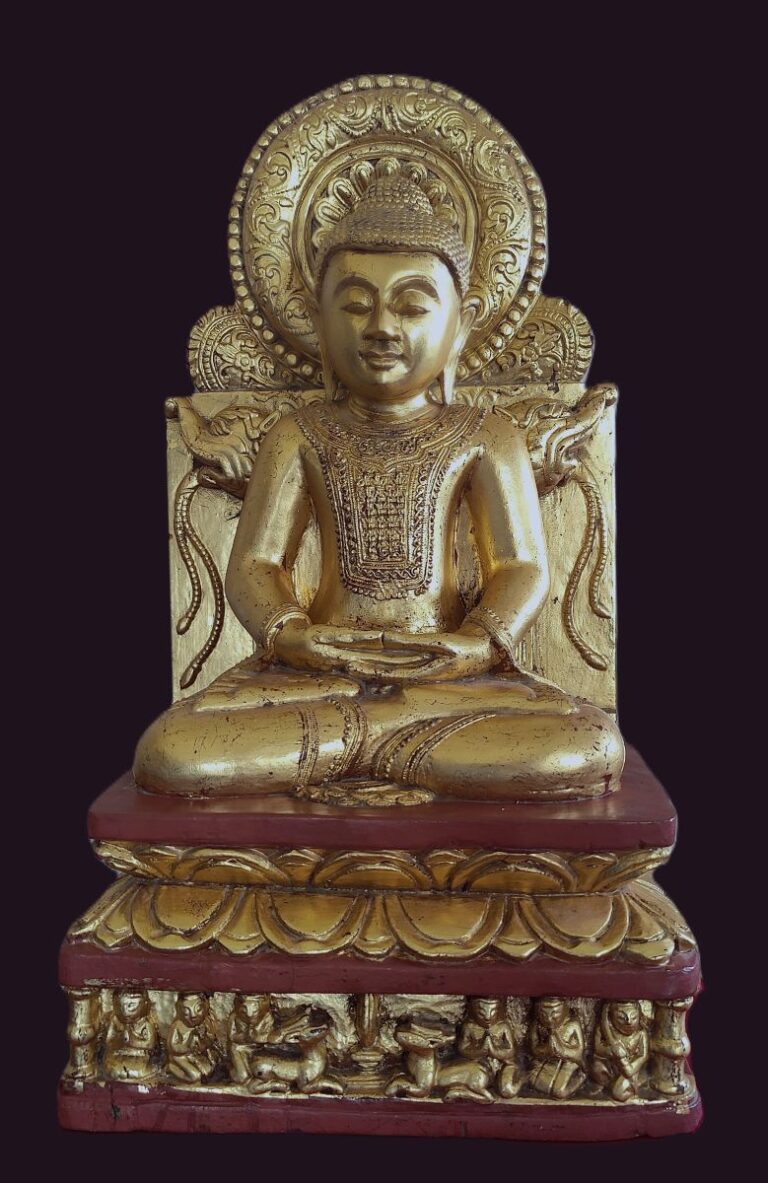
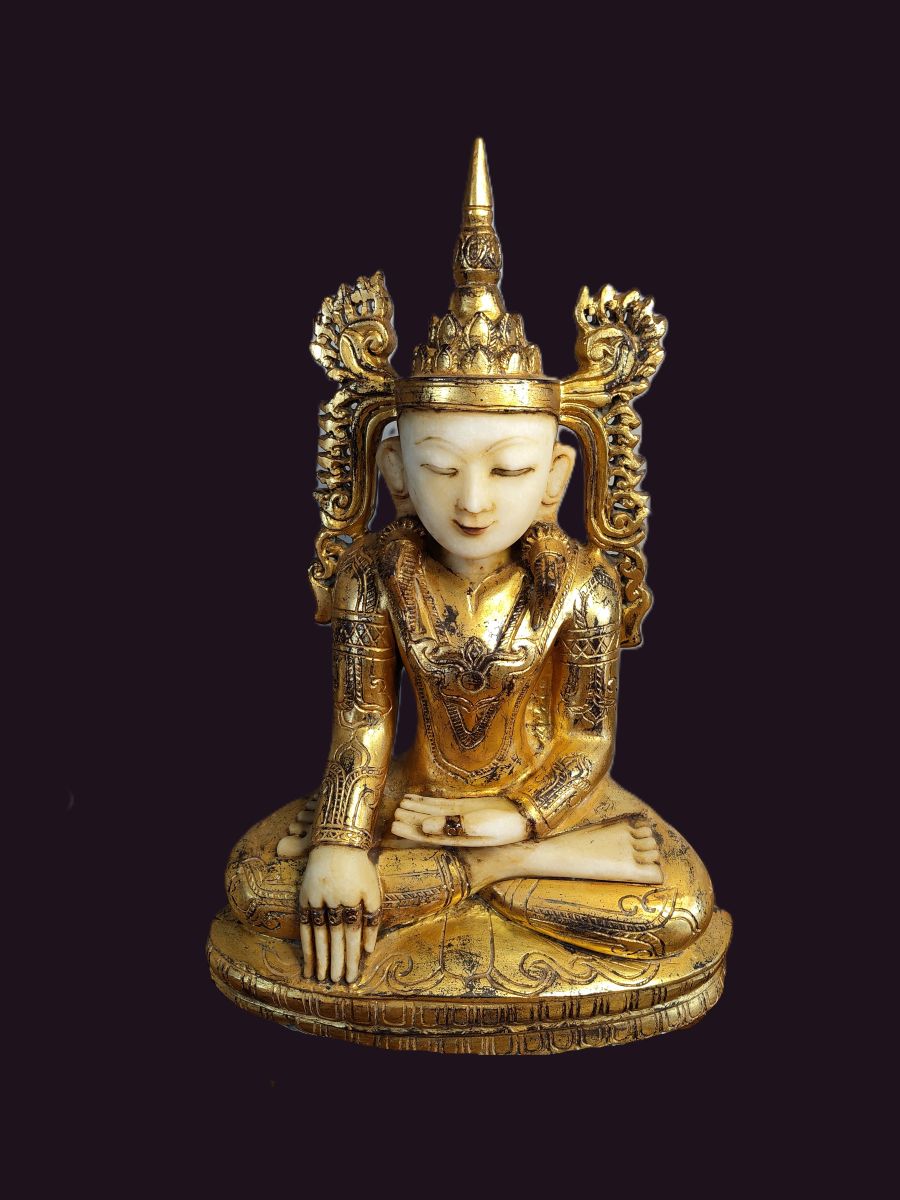
This is a stunning 18th C Burmese Masterpiece – Alabaster Shan Buddha statue carved from a single block of white Burmese alabaster and covered in a rich layer of original gilding; this statue is both a powerful devotional object and a significant work showing the skills of the Burmese stone carver.
The Shwebo Era (1752–1782)
This Buddha statue dates to the Early Konbaung Period during the reign of King Alaungpaya 1752 – 1760. The highly decorative style reflects the transition between the Konbaung period and the Mandalay period. Shwebo-era carvings retain a “rugged” strength. The broad shoulders and upright posture reflect a kingdom at the height of its military confidence.
SPECIFICATIONS:
18th C Burmese Masterpiece – Alabaster Shan Buddha
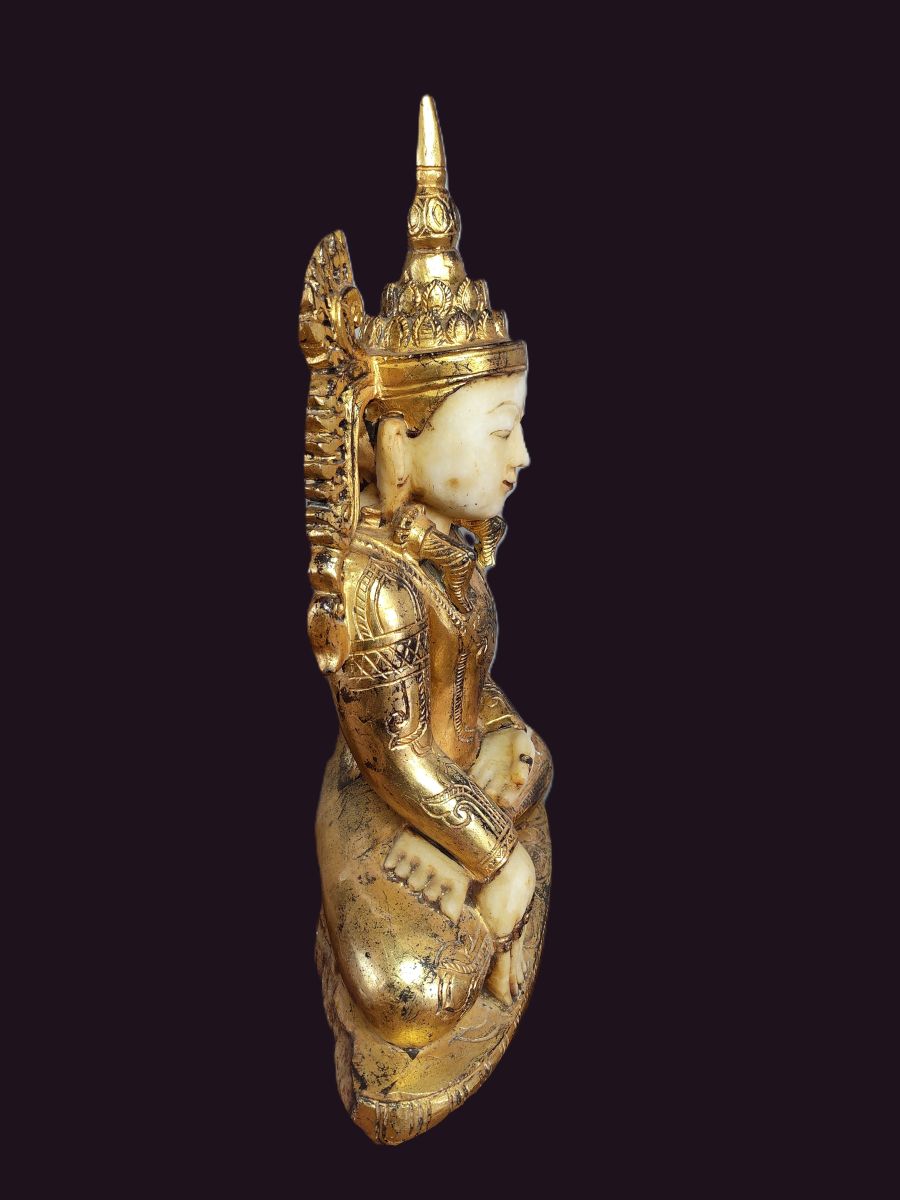
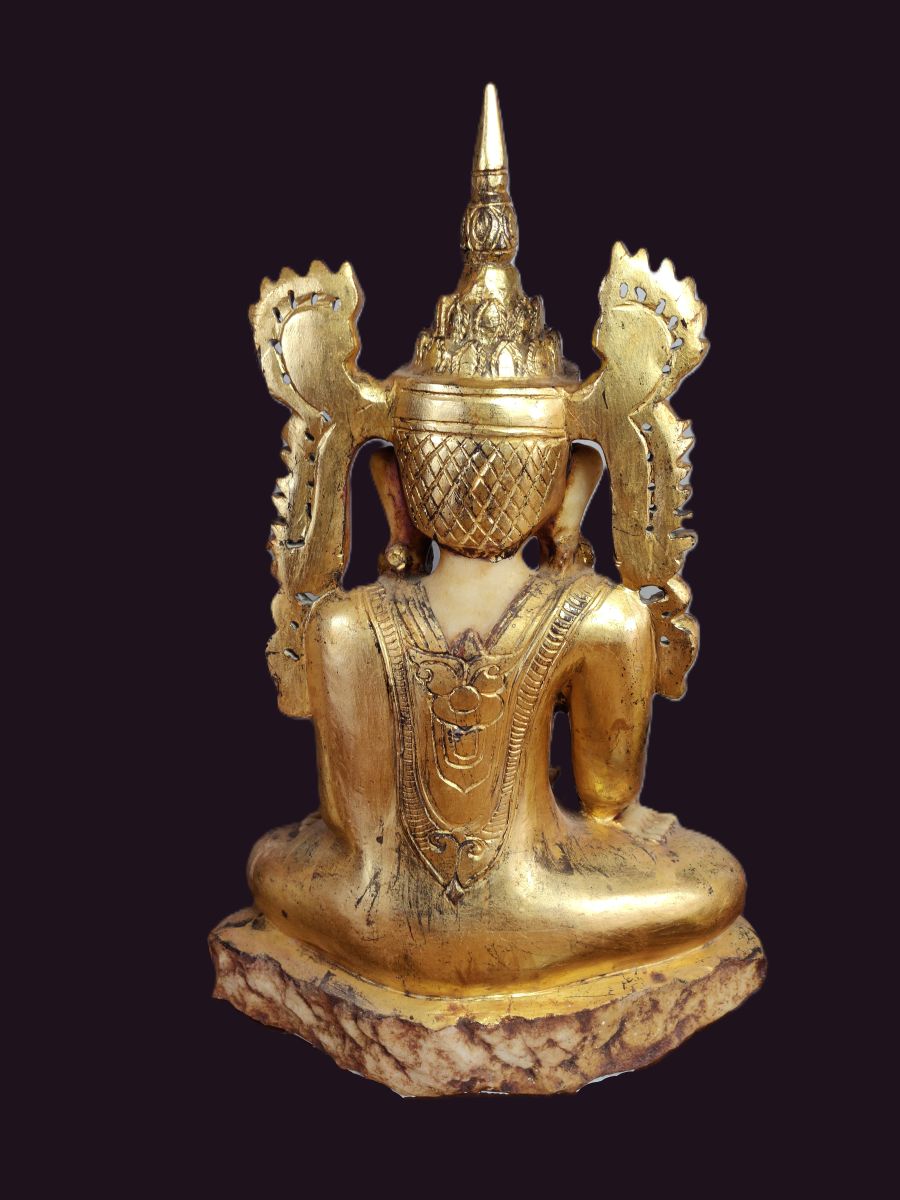
This 18th-century Shan early Konbaung dynasty Royal King Buddha statue is a refined example of the Jambupati style, depicting the Buddha in royal attire. It is carved from solid white alabaster and finished with extensive gold leaf gilding; the Buddha statue captures the transition between the late Ava (Innwa) and early Mandalay periods.
Key Artistic Features
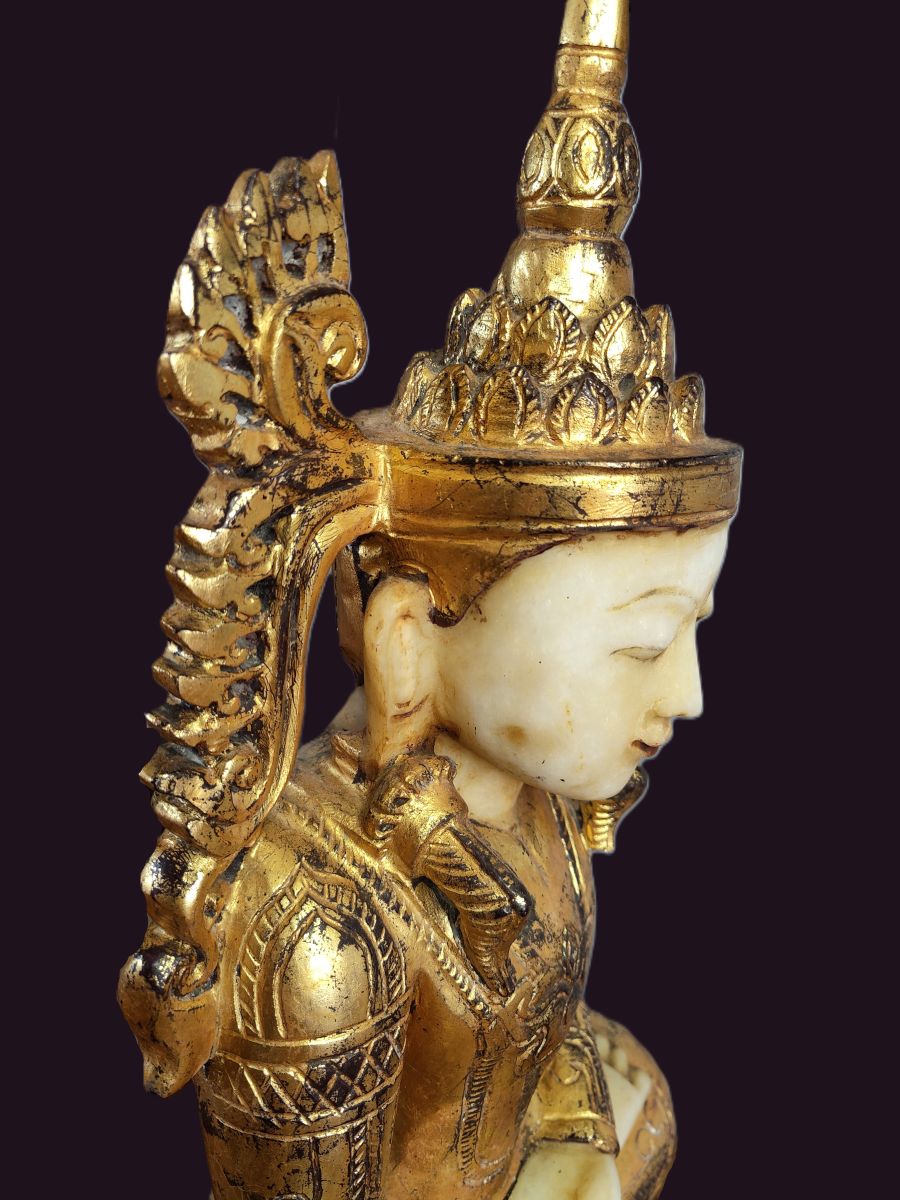
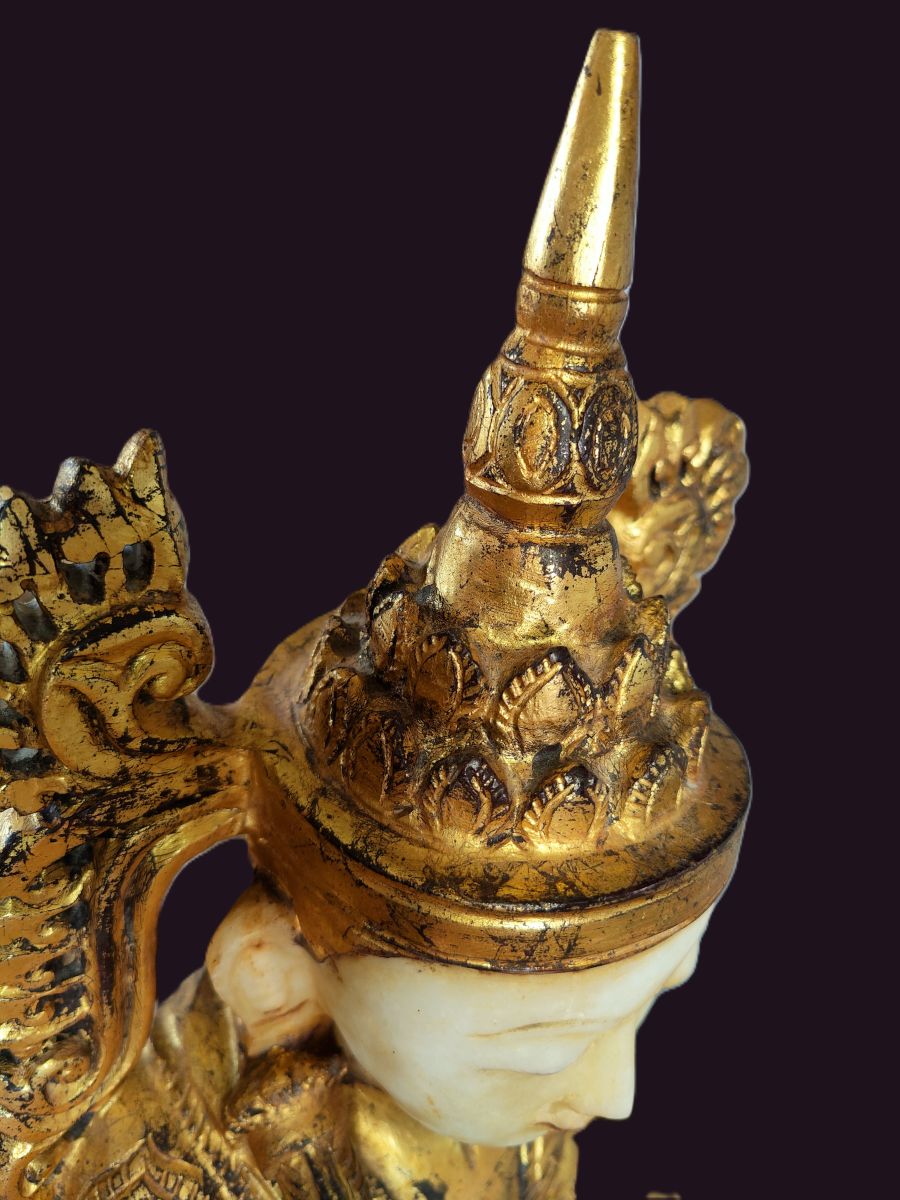
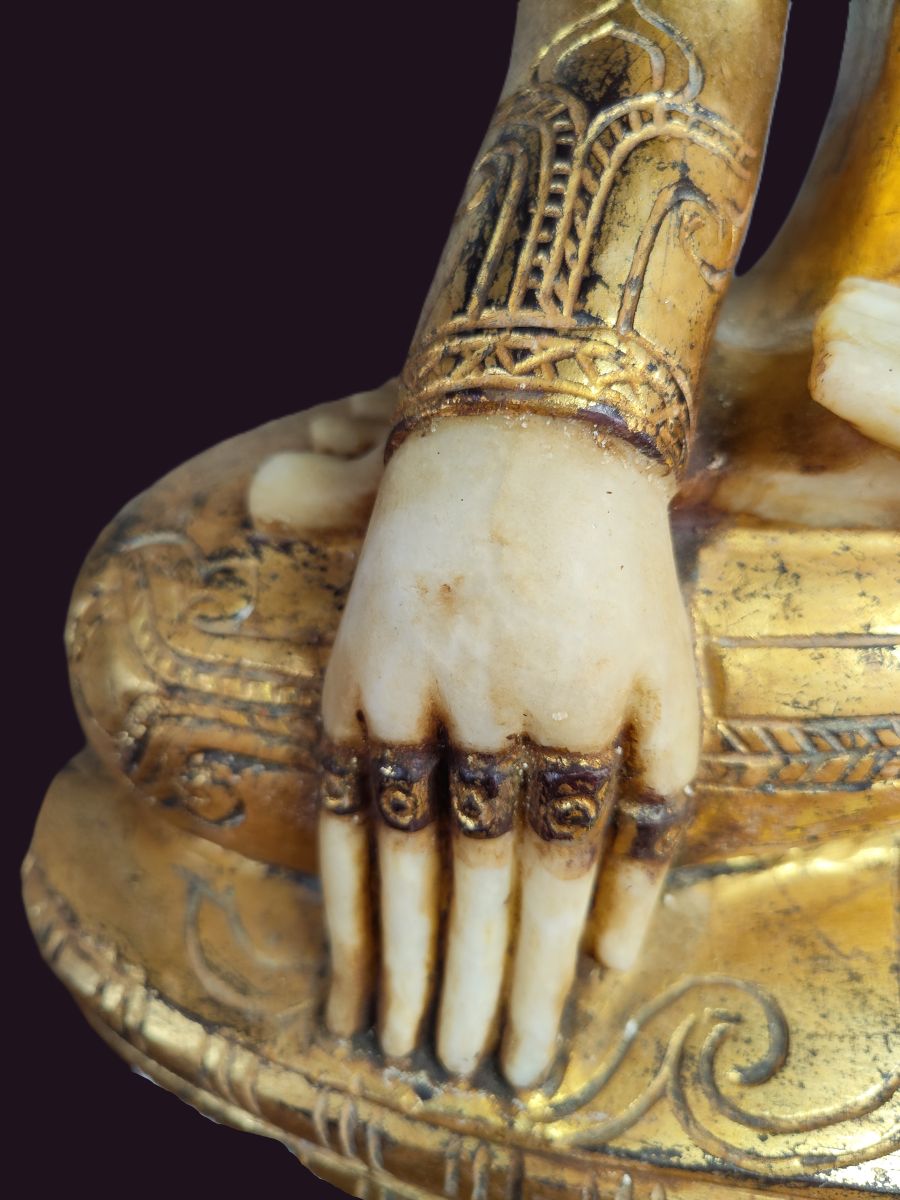
Royal Regalia: The crown is flanked by ornately carved side flanges with incised patterns on the arms and upper body depicting the jewellery worn by a king. Large pendant earrings hang from the earlobes with carvings representing rings on all fingers of the right hand and on the thumb of the left hand. The two-tiered crown features a prominent usnisha with a long-pointed finial typically seen in Shan style Buddha statues.
This alabaster Buddha statue is seated in Virasana with the right hand in Bhumisparsha Mudra (Earth Witness gesture), calling the earth to witness his enlightenment. The use of translucent white alabaster suggests a high-status commission. The gilding remains vibrant, highlighting the intricate floral and geometric incisions on the robe and base and the face exhibits the classic Shan aesthetic: a serene, youthful countenance with downcast eyes and a subtle, meditative smile that reflects internal peace.