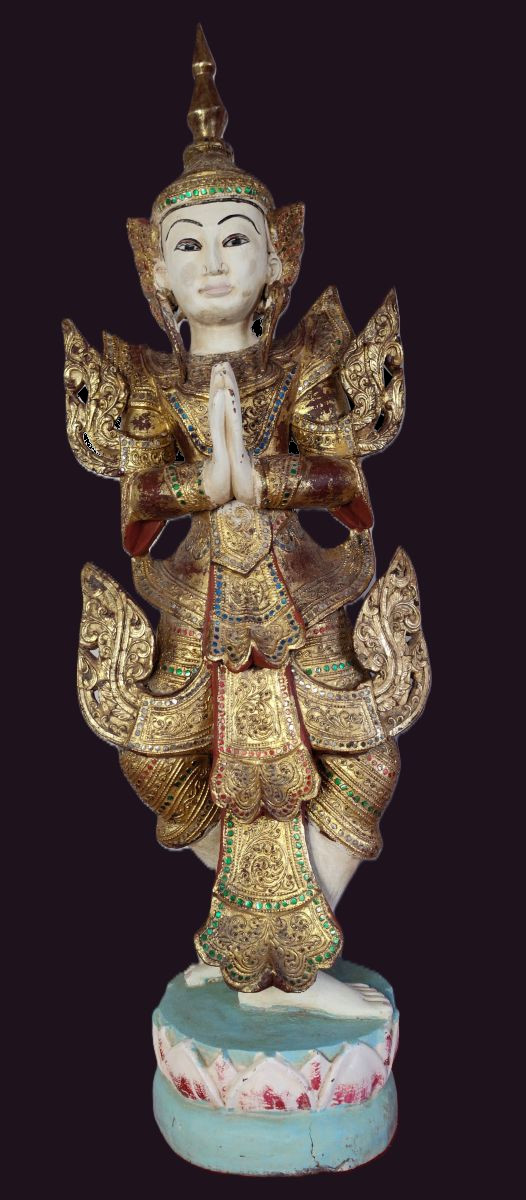
Antique Burmese Wooden Nat Figure – Popa Medaw
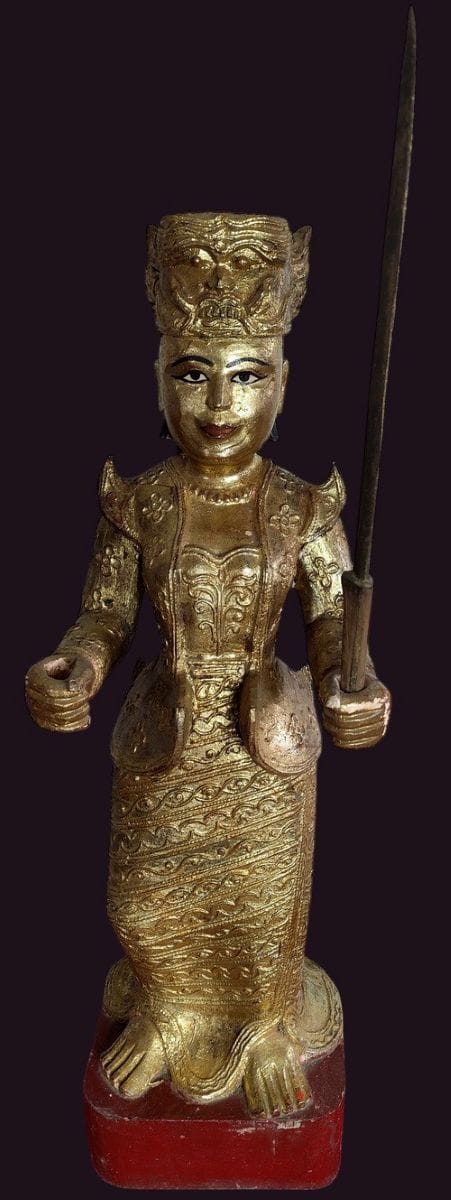
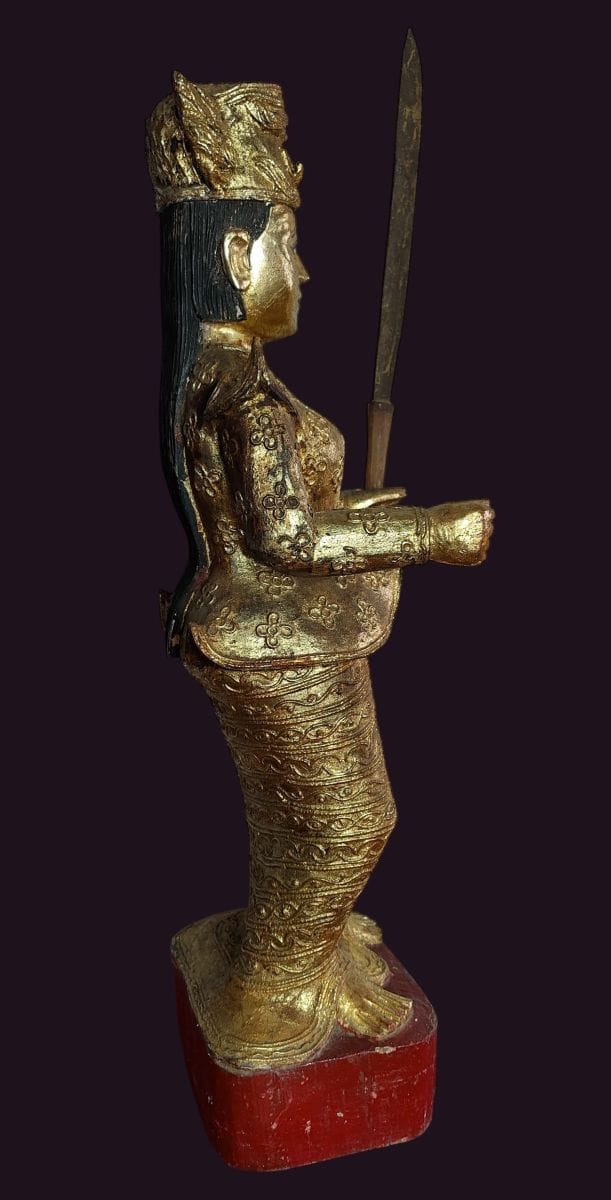
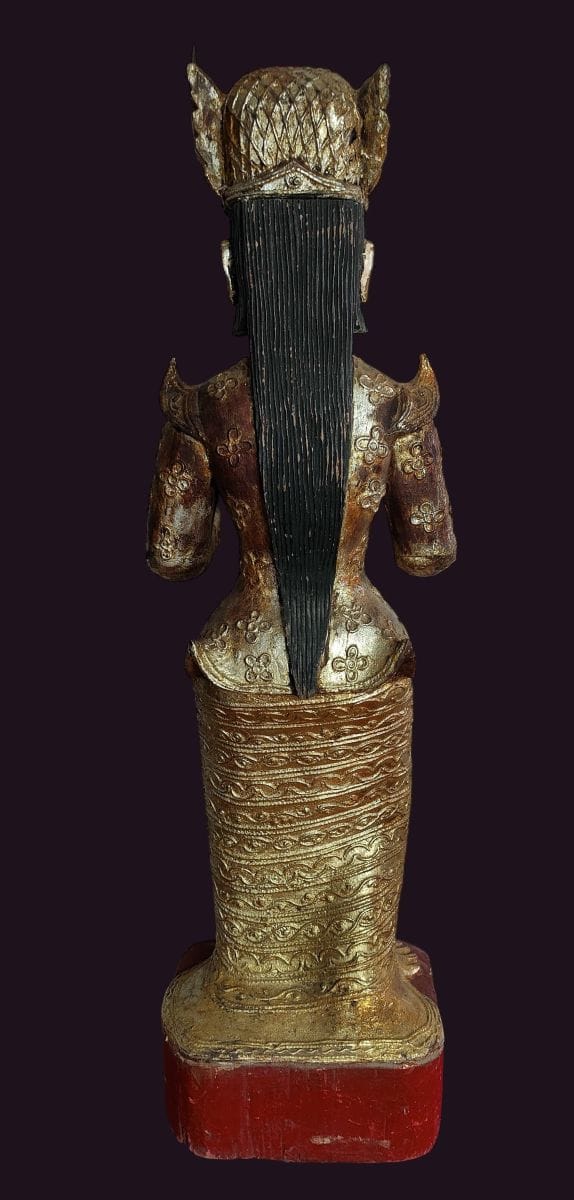
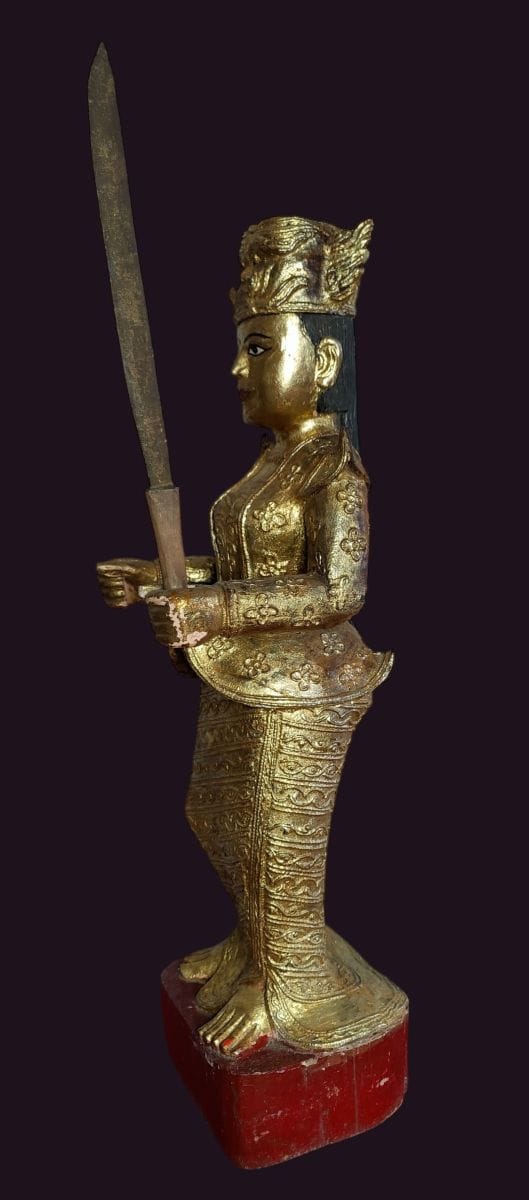
Antique Burmese Wooden Nat – Popa Medaw
This hand carved antique Burmese wooden Nat figure – Popa Medaw also known as Me Wunna depicts the flower-eating ogress (yakshini) of Mount Popa in central Myanmar’s Mandalay region. Mount Popa is a sacred extinct volcano rising 1,518 meters above sea level, crowned by a revered temple dedicated to the 37 Nats. Rooted in traditional animist beliefs where spirits inhabit trees and waters, Mt. Popa remains one of Myanmar’s most famous pilgrimage sites.
Popa Medaw’s (Me Wunna’s} story dates back to the reign of King Anawrahta (1044–1077 AD). According to Burmese history and legend, the King’s royal commander, Byatta, was tasked with gathering fresh flowers daily from Mount Popa. There he met and fell in love with Me Wunna. Together they had two sons, Min Gyi and Min Lay (the Shwe Hpyin Nyinaung brothers), who later became two of the 37 official Royal Nats. Tragically, after Byatta was executed on the King’s orders and her sons were taken to the royal court, Me Wunna died of a broken heart.
Also known as Popa Medaw (“Mother of Popa”), Me Wunna is not officially listed among the 37 Royal Nats, yet she remains one of the most widely venerated and important spirits in Burmese folklore.
SPECIFICATIONS:
- AGE: Late 19th to early 20th Century
- HEIGHT: 76 cm
- WEIGHT: 8.2 kg
- CONDITION: This Nat exhibits authentic age-related wear, including natural timber splitting along the joint areas (such as the elbows)
- #510a
Antique Burmese Wooden Nat – Popa Medaw
The Mythological Origins (Byatta & the Alchemist
- The Magic of Byatta: According to royal chronicles (Hmannan Yazawin), Byatta was a man of Indian descent shipwrecked at Thaton. He and his brother gained supernatural abilities (including high-speed running and levitation) by consuming the roasted flesh of a zawgyi (a magical Burmese alchemist).
- The Daily Flower Dash: King Anawrahta hired Byatta specifically because his magical speed allowed him to travel the ~50 miles between the capital city of Bagan and Mount Popa to gather fresh flowers ten times a day.
- Etymology of Popa: The word Popa comes from the Pali word Puppha, meaning “flower”. Me Wunna’s identity as a flower-eating yakshini (ogress/nature spirit) ties her directly to the flora and natural sanctity of the mountain.
The Tragic Execution of the Sons
- Building of Taungbyone Pagoda: King Anawrahta ordered the construction of a pagoda at Taungbyone and commanded every soldier to contribute bricks. Me Wunna’s two young sons (Min Gyi and Min Lay) were absent playing marble games instead of laying their assigned bricks.
- Royal Execution: King Anawrahta viewed their disobedience as treason and ordered their execution.
- Apology & Deification: Following their death, the King’s royal barge was mysteriously halted on the river believed to be held back by the angry spirits of the slain brothers. Realizing their power in death, King Anawrahta established their cult, built a shrine at Taungbyone, and added them to the royal list of the 37 Official Nats.
Popa Medaw’s Attributes
- Protector of Women & Families: While her sons are associated with power, military strength, and festival merriment, Popa Medaw is venerated as a benevolent protector of women, children, and family health.
- Visual Identifiers: Carvings of Popa Medaw typically depict her wearing a traditional ogress head-dress (Bilu crown) to signal her supernatural origins, yet with serene, motherly facial features. She is frequently flanked by small figures of her two sons.
- Pork Prohibition: Devotees of Popa Medaw (Me Wunna) and her sons strictly abstain from eating or offering pork at her shrines out of respect for Byatta’s heritage.