Antique Burmese Wooden Nat Spirit Min Gyi
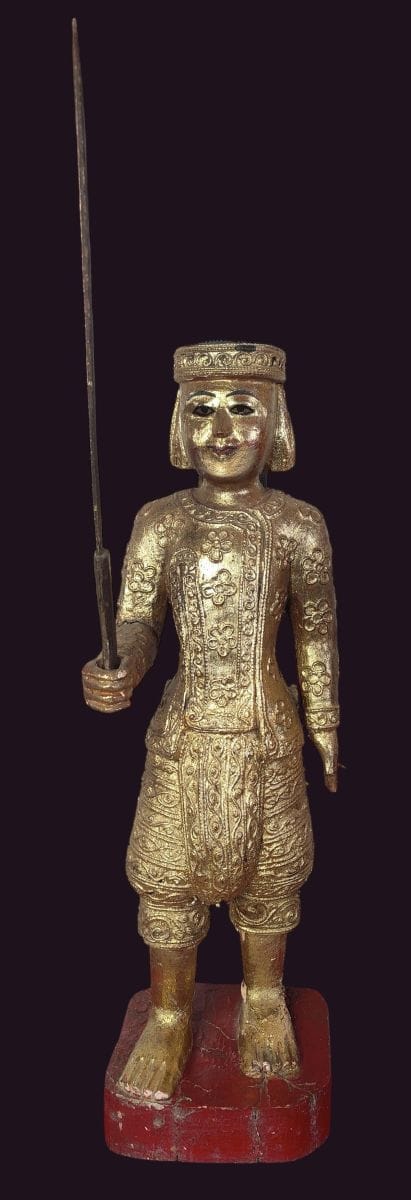
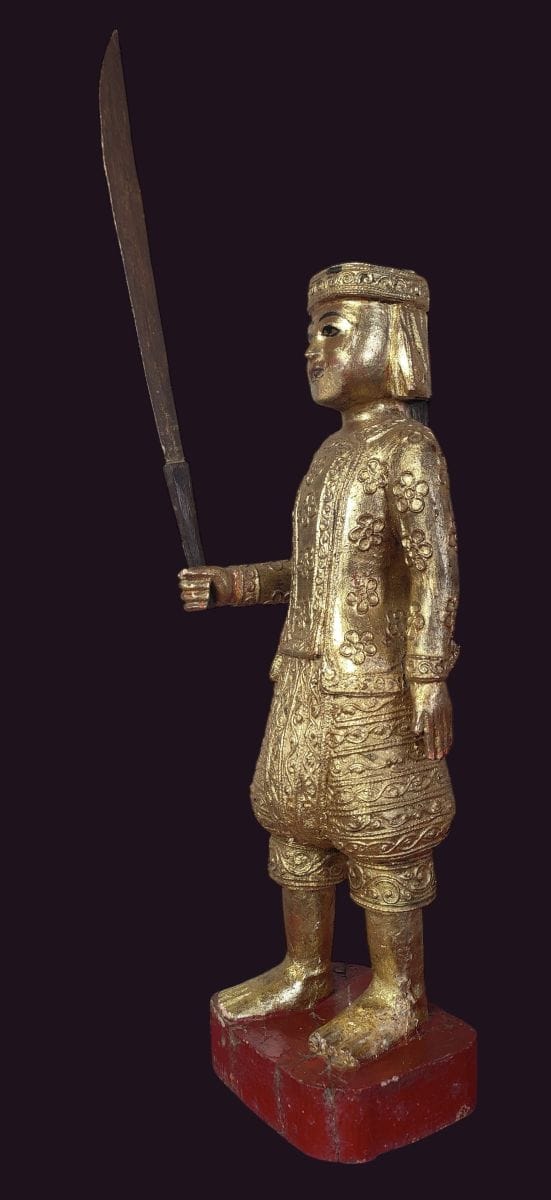
Antique Burmese Wooden Nat Spirit Min Gyi
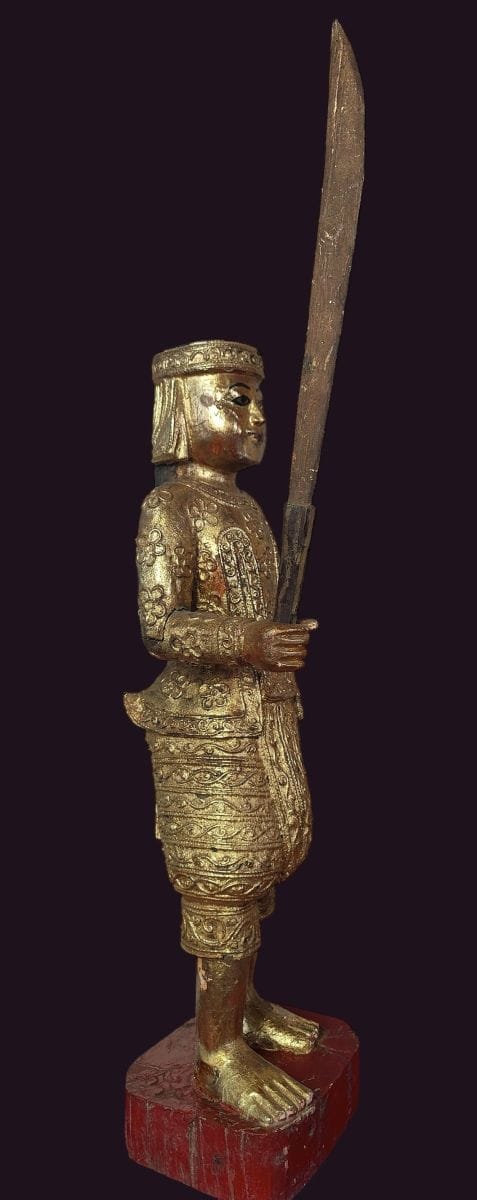
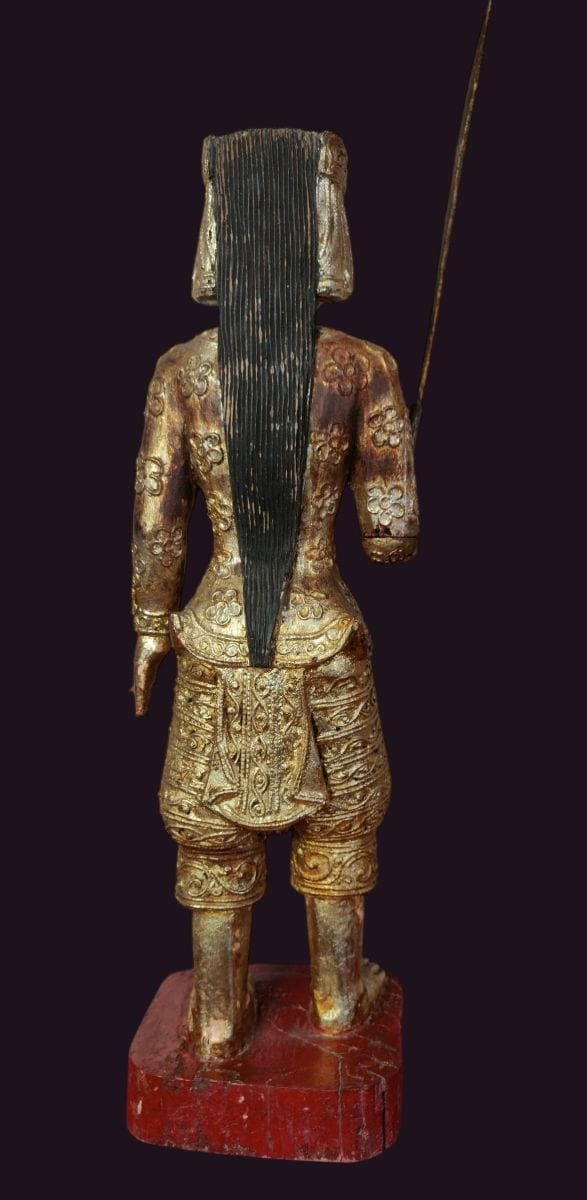
This Antique Burmese Wooden Nat Spirit Min Gyi represents one of the brother spirits, the other brother Min Lay are also known as the Taungbyone Brothers (Shwe Hpyin Nyinaung), and are among the most celebrated figures in the pantheon of 37 Royal Nats.
Their story dates back to the 11th-century reign of King Anawrahta of Pagan. As the king worked to establish Theravada Buddhism as the country’s main faith, he recognized that deep-rooted spirit worship could not simply be erased. Instead, he integrated 37 primary Nat spirits into the Buddhist cosmos as protectors subordinate to the Buddha, a decision that forged the unique blend of animism and Buddhism practiced across Myanmar today.
Min Gyi and Min Lay were the sons of Me Wunna (also known as Popa Medaw, or the “Mother of Popa“), a flower-eating ogress spirit associated with the sacred volcanic peak of Mount Popa. Perched atop the dramatic volcanic plug of nearby Taung Kalat sits a shrine complex dedicated to these guardian spirits, offering panoramic views of the surrounding plains.
SPECIFICATIONS:
- AGE: Late 19th – early 20th Century
- HEIGHT: 66cm
- WEIGHT: 5.3 kg.
- CONDITION: Proper right elbow with a crack or repair
- #501b
Antique Burmese Wooden Nat Spirit Min Gyi
British scholar Sir Richard Carmac Temple in his 1906 study “The Thirty-Seven Nats“, traced the word Nat to the Sanskrit and Pali word Natha, meaning “lord,” “protector,” or “guardian.” Before Anawrahta consolidated the Nat pantheon in 1056 AD, local spiritual life included ancient Naga (serpent spirit) traditions alongside nature worship. Today, the Taungbyone Brothers remain enduring symbols of loyalty, tragedy, and protection in modern Burmese heritage.
When asked “What is a Nat?”, Sir Richard Carnac Temple wrote:
“One is greatly tempted to derive it at once from the Indian Natha, especially in view of the probability that before the advent of Indian culture there was no generic term for spirit and that Natha means all that Nat does, a protector, savior, Lord, Master, chief and in India both a lofty and humble application, both to the mightiest of the Gods and the lowest of the godlings or superhuman heroes.”
In the Pali scriptures it is a frequent epithet of the Buddha himself. Although it might be argued that the Burmese borrowed it as a designation for the thirty-three angel inhabitants of the Tavatimsa Heaven who are now represented by the thirty-seven Nats, the Nats par excellence, the innumerable remainder being merely hangers-on. The ancient form of Nat worship in Upper Burma was that of the Naga or Serpent, which were traditionally worshipped before Pagan was overturned by King Anawrahta in 1048A.D. Although the Naga appears in almost all Burmese chronicles in both male and female form, it was more than likely a direct influence of the Naga of India.