Burmese Tai Yai Hollow Lacquer Buddha Statue
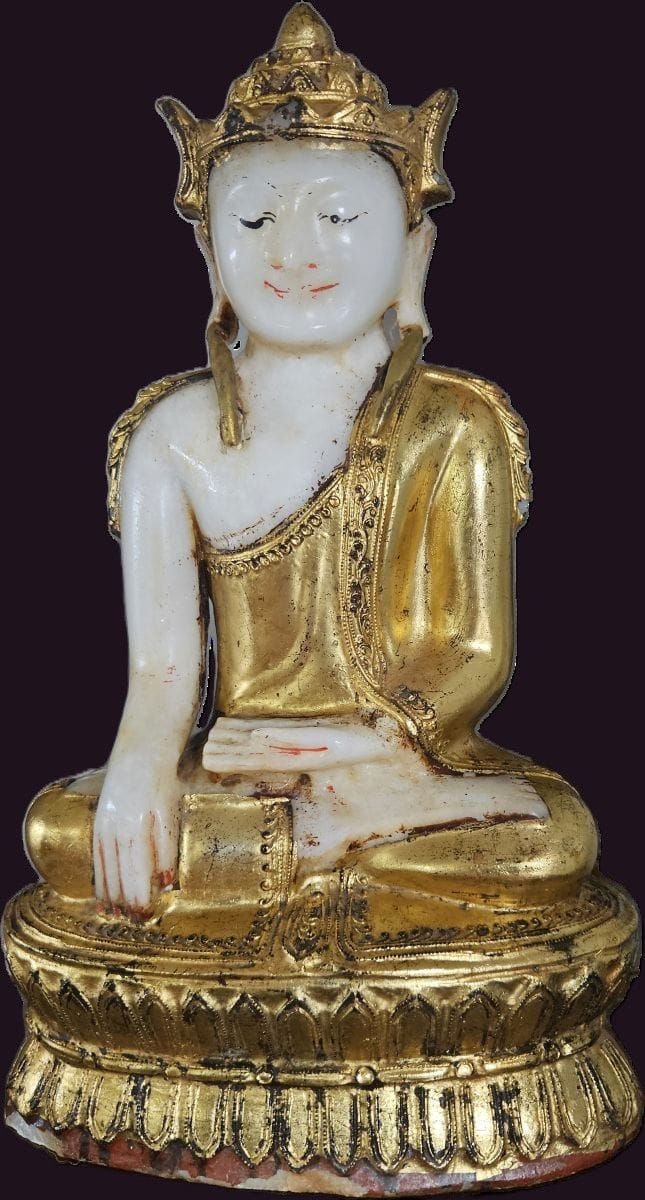
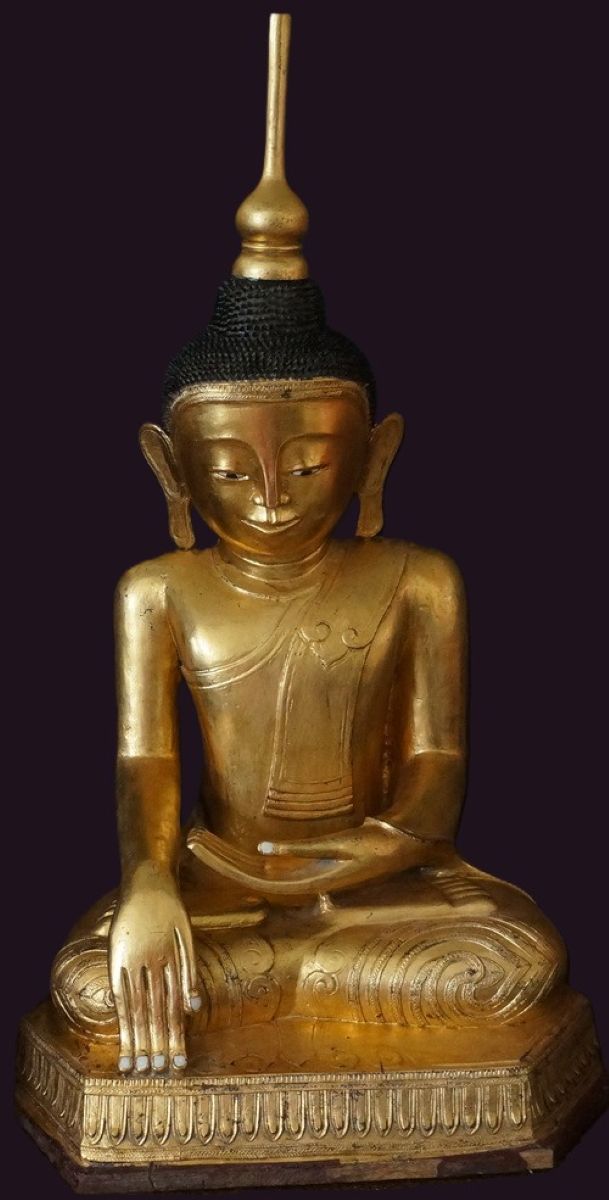
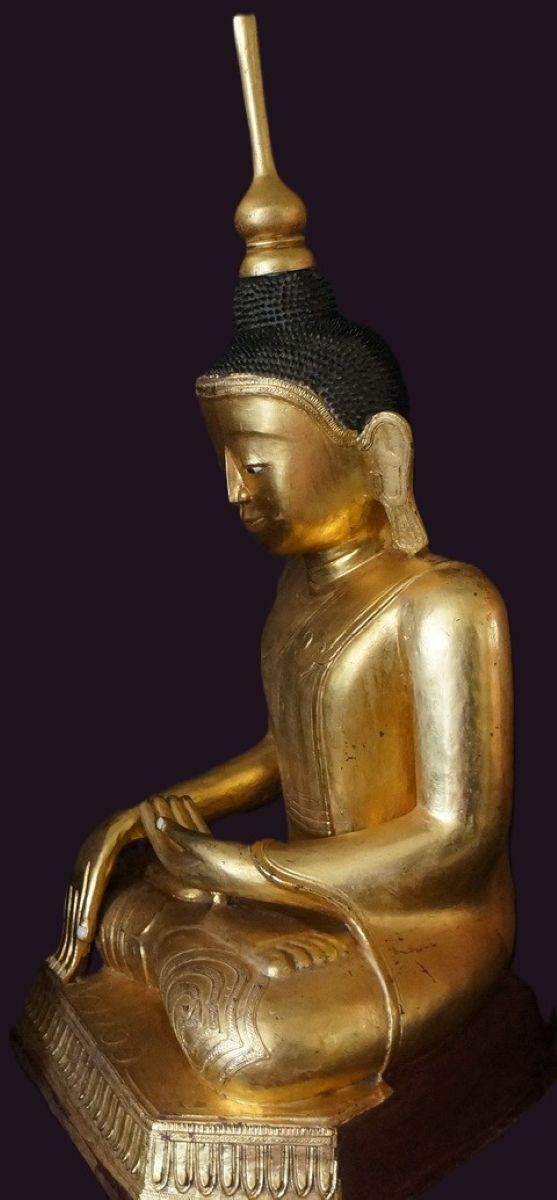
18th Century Museum quality Burmese Tai Yai Hollow Lacquer Buddha Statue from the Inn Thein (Indein) area of Myanmar, located on the western bank of Inle Lake in the Shan state.
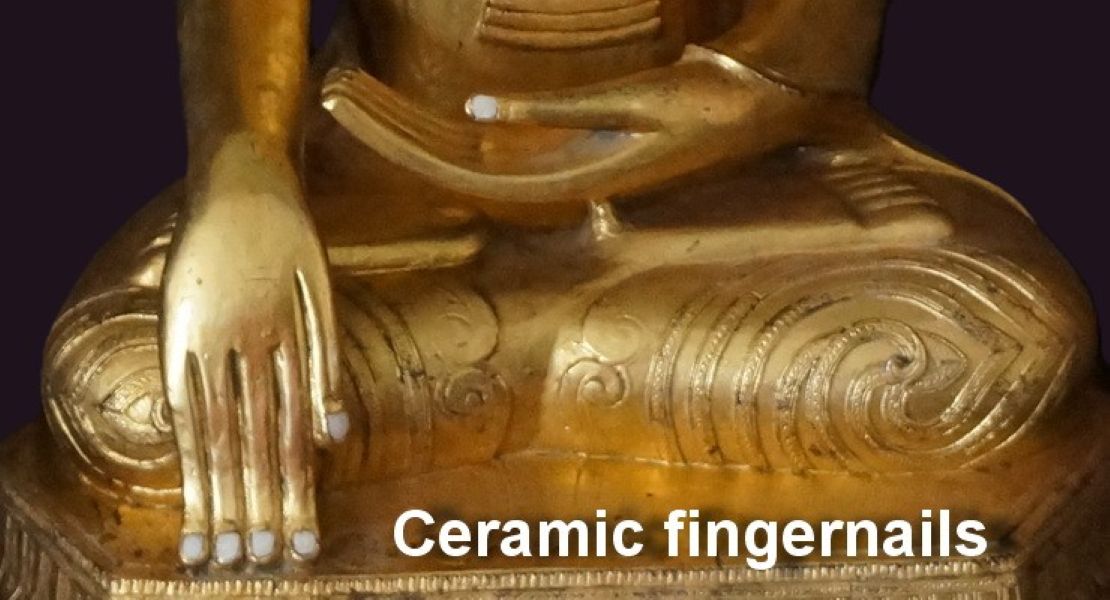
Seated in Vajrasana with hand gestures in Bhumisparsa mudra with a single row of lotus petals decorating the pedestal. The eyes and fingernails on this statue are inlaid with ceramic or marble. The small, rounded ushnisha carries a tall, tapering finial with a bulbous base. The finial is of wood, gilded, and removable.
The Elongated Finial (Usnisha)
The exceptionally tall, slender, smooth spire resting on the bulbous base is a definitive marker of Shan craftsmanship. Central Burmese Ava statues often favor a slightly more compressed or multi-tiered flame finial, whereas the Tai Yai style frequently extends the spire upward to give the statue a more elongated, vertical silhouette.
SPECIFICATIONS:
- HEIGHT: – 102 with finial 132 cm
- WIDTH: – 80 cm
- DEPTH: – 58 cm
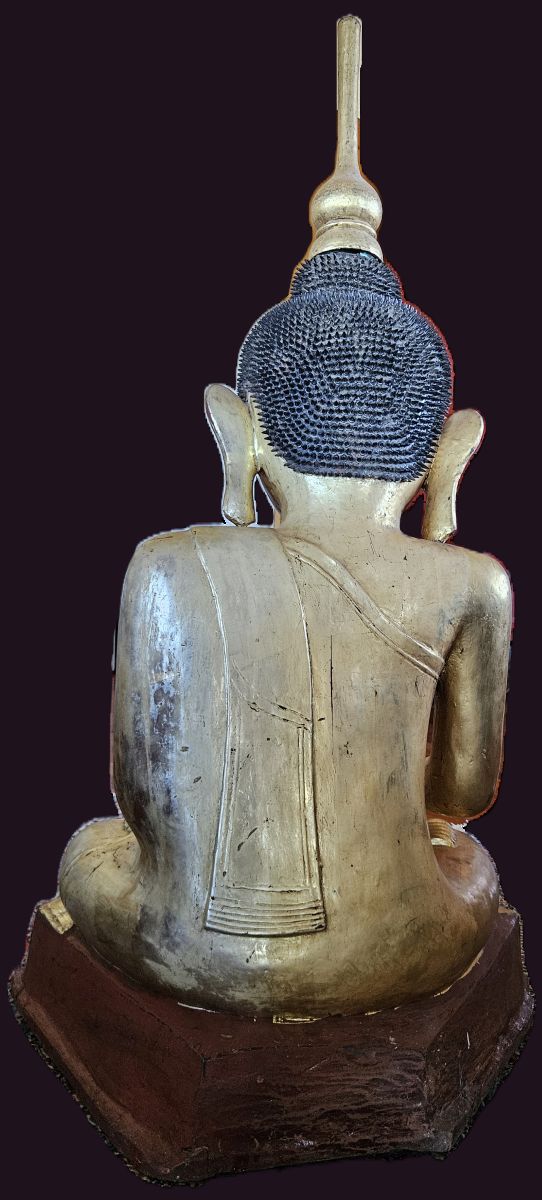
- CONDITION: This statue has been sitting by a window for several years in our home which has caused the back gilding to fade.
- #2019
Burmese Tai Yai Hollow Lacquer Buddha Statue
The Tai Yai (who inhabit the Shan State of Myanmar and parts of Northern Thailand) produced a distinct style of hollow lacquer Buddha statues that was influenced by the Ava court style.
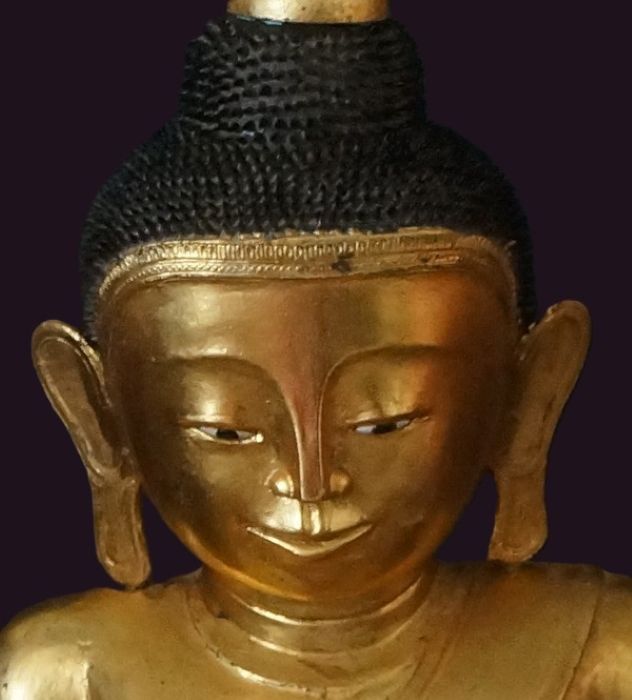
The distinct facial style in this hollow lacquer Buddha is characteristic of Tai Yai art
- The large, wide-set, downcast eyes with the prominent white inlay create a vivid, serene expression commonly seen in Shan images with a subtle, gentle sweetness to the mouth that is less austere than standard Ava court style Buddhas. The large, stylized ears with lobes that curve slightly outward away from the neck are classic Shan execution.
- The simple, flat folded sash hanging over the left shoulder features a highly restrained, geometric finish. Tai Yai artists often preferred this minimalist, clean line over the heavily decorated or deeply undercut monastic folds found in urban Central Burmese workshops.
- The knees of this Buddha statue and the top of the pedestal are decorated in a relief pattern as is the lapel. As in many statues of this age the hair curls and gilding on this statue may have been refreshed during its lifetime.
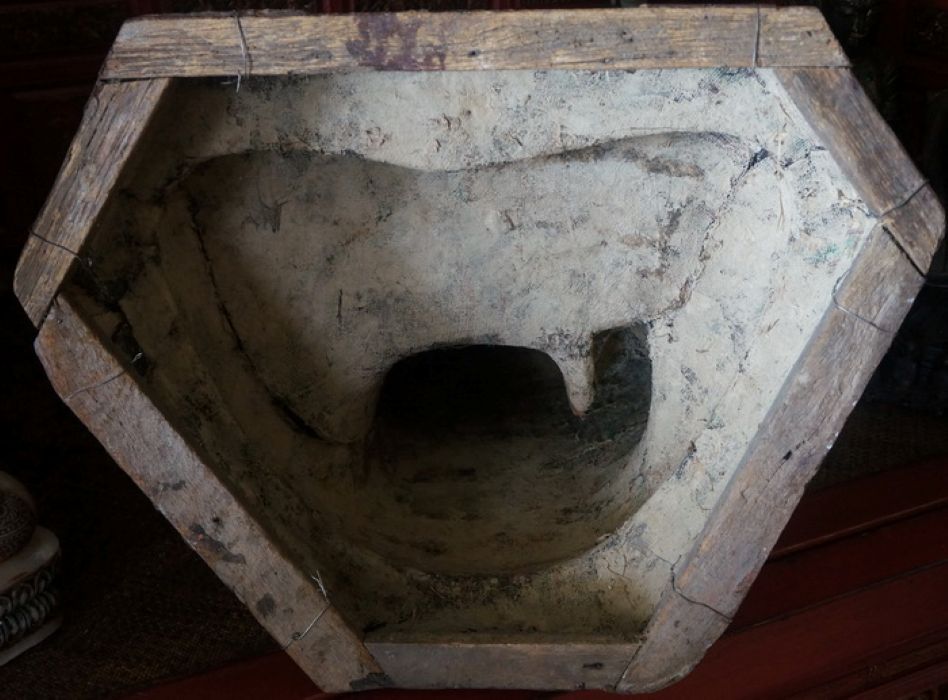
- The base has been reinforced with a wooden frame to strengthen it and there are areas around the outside of the base where the lacquer has been damaged.