CLICKING ON THE IMAGE WILL TAKE YOU TO A LARGER VIEW
Burmese Gilded Kammavaca Buddhist Manuscript
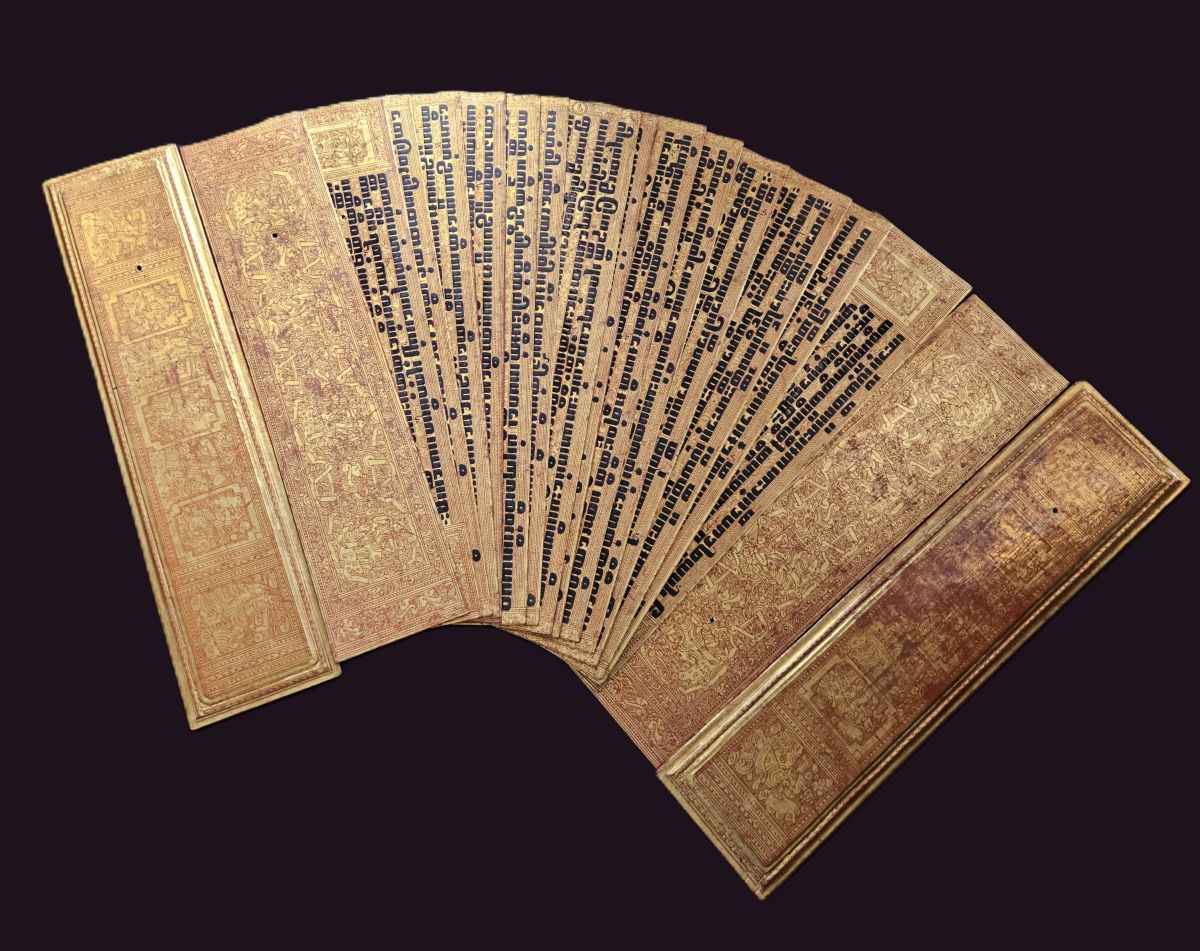
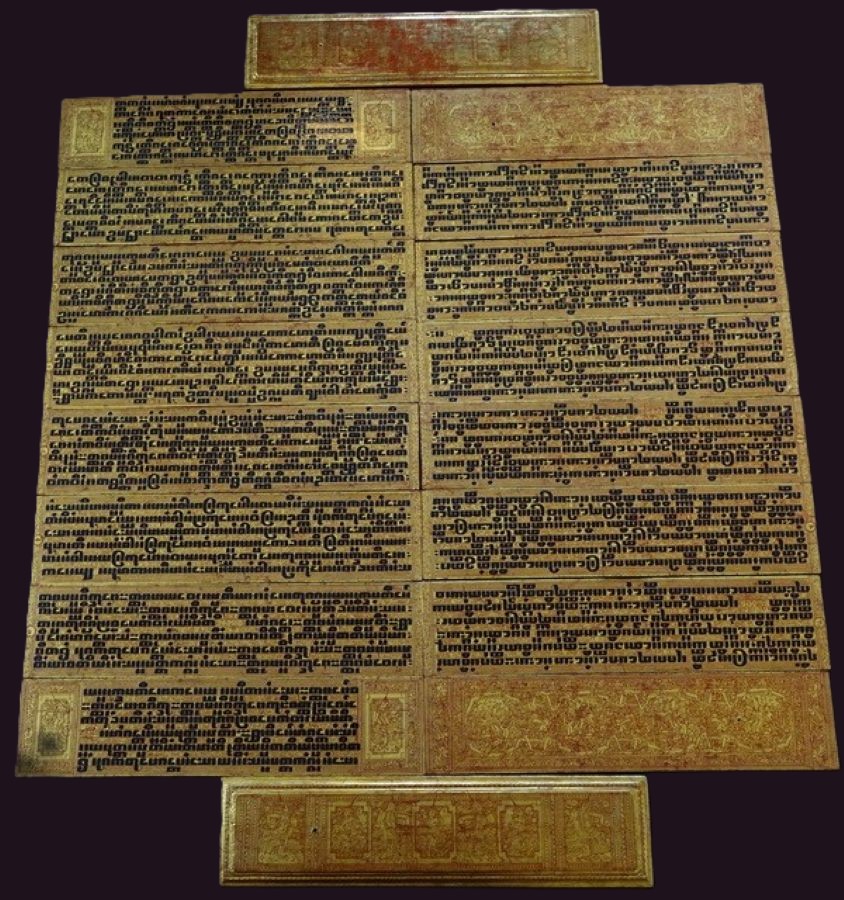
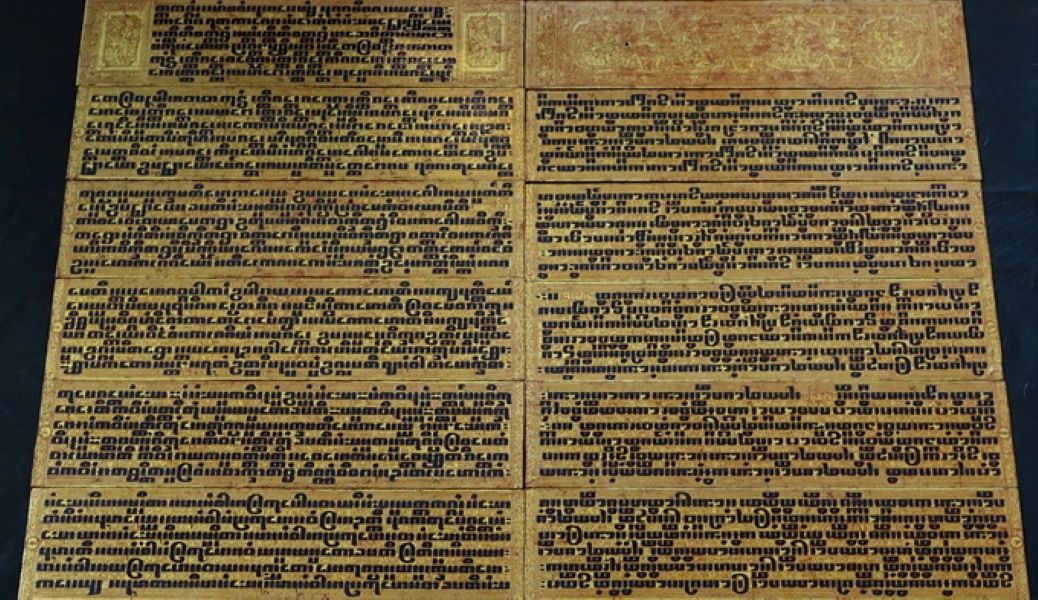
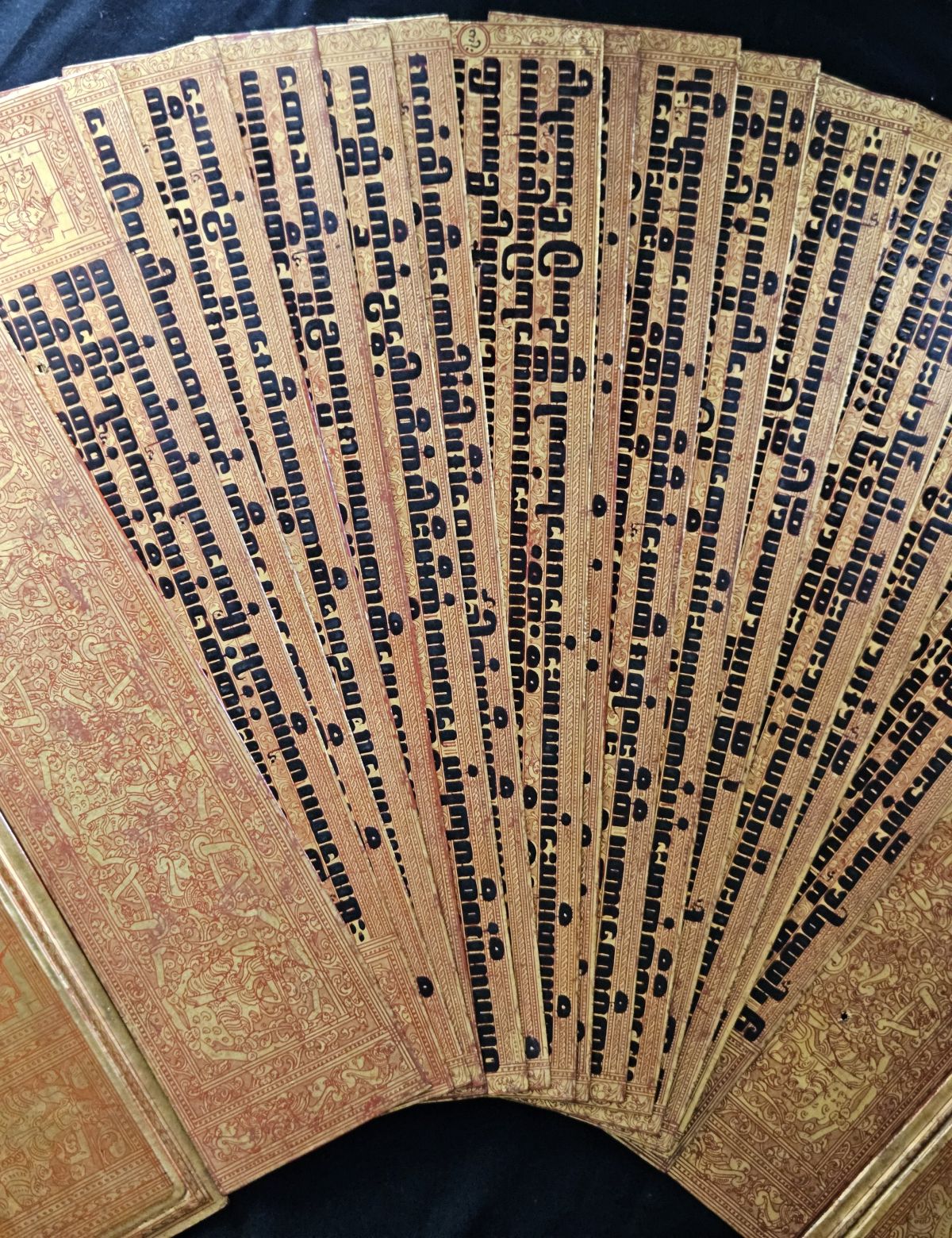
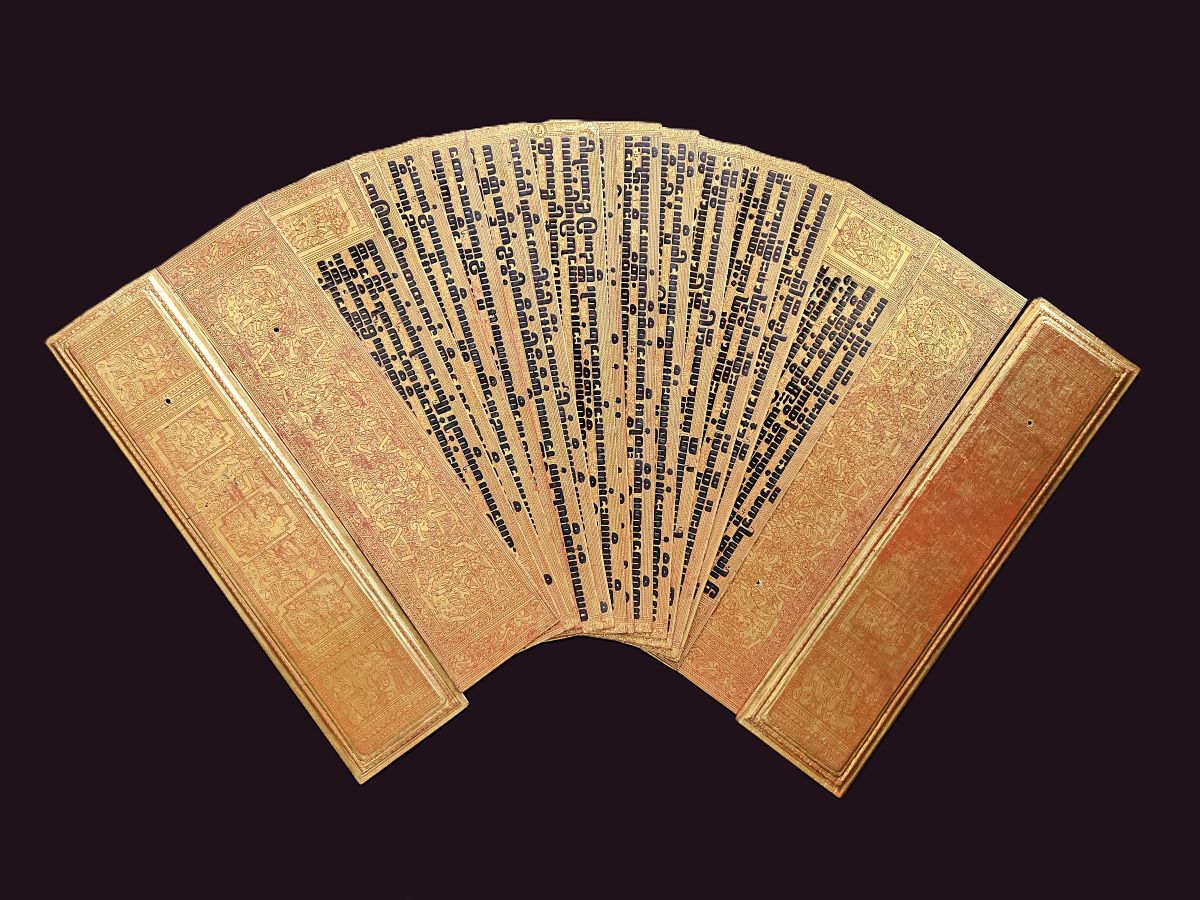
This complete, 16-page Burmese gilded Kammavaca Buddhist manuscript dates to December 1924 (102 years old). It represents the peak of Southeast Asian monastic craft. It is a sacred ritual document used by senior monks to perform monastic ordinations, boundary consecrations, and the conferral of robes.
Materials and Artistry
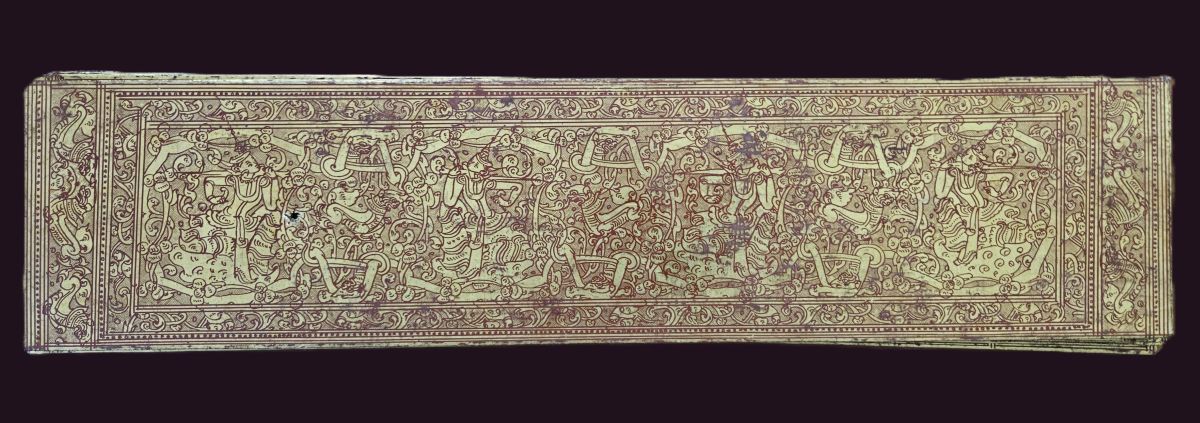
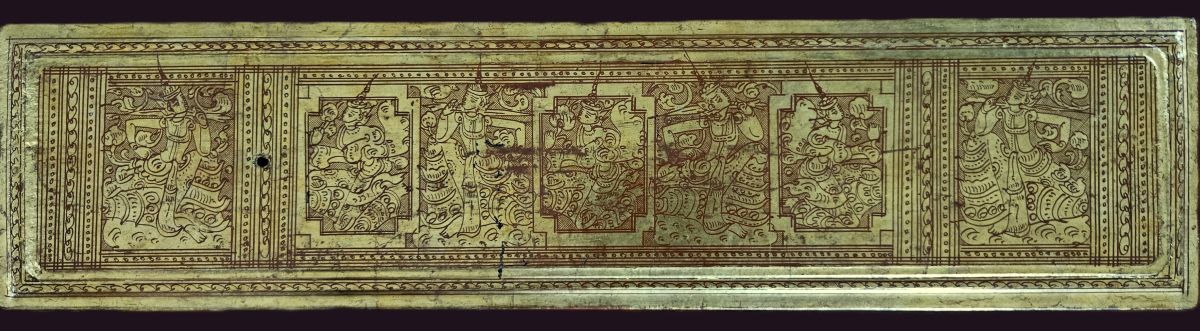
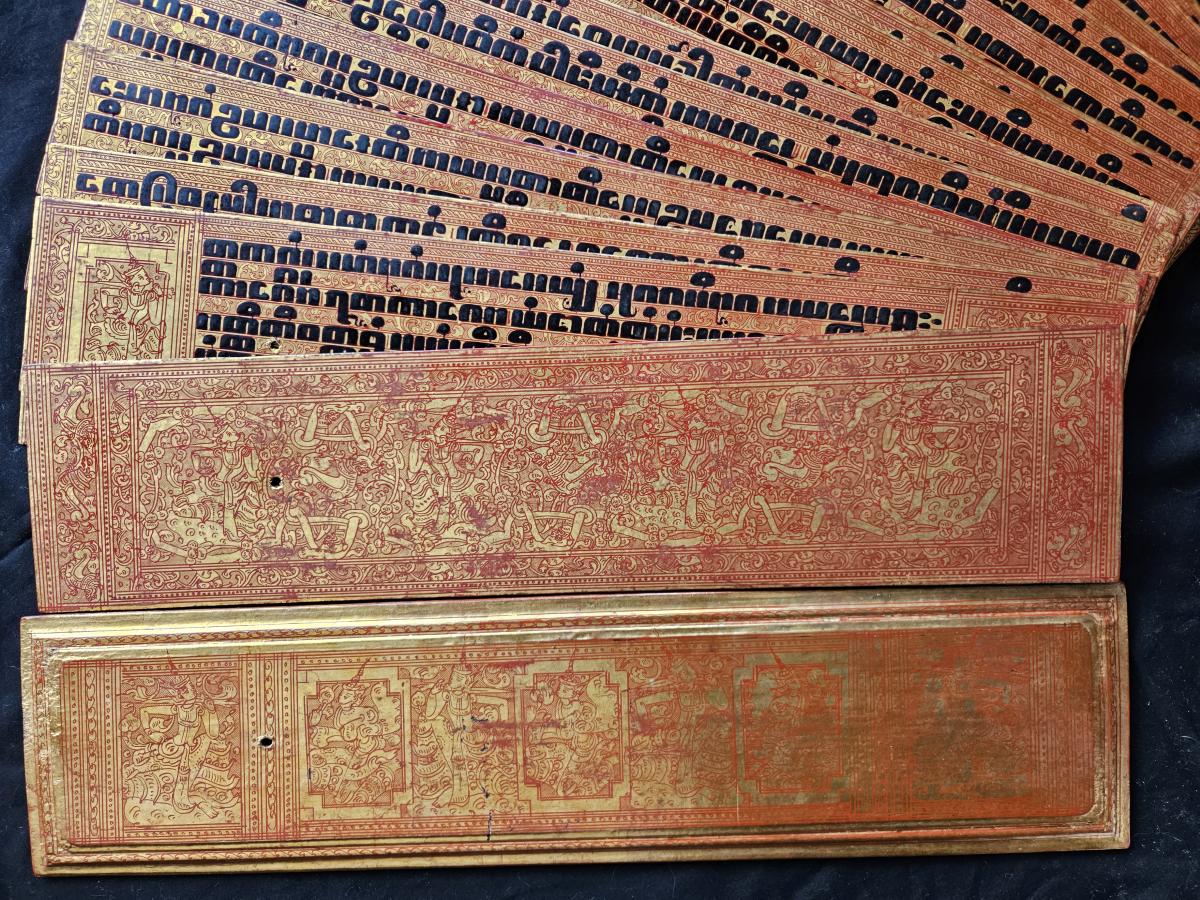
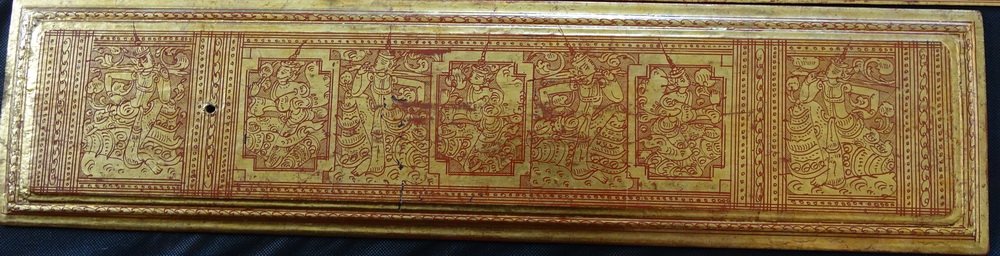
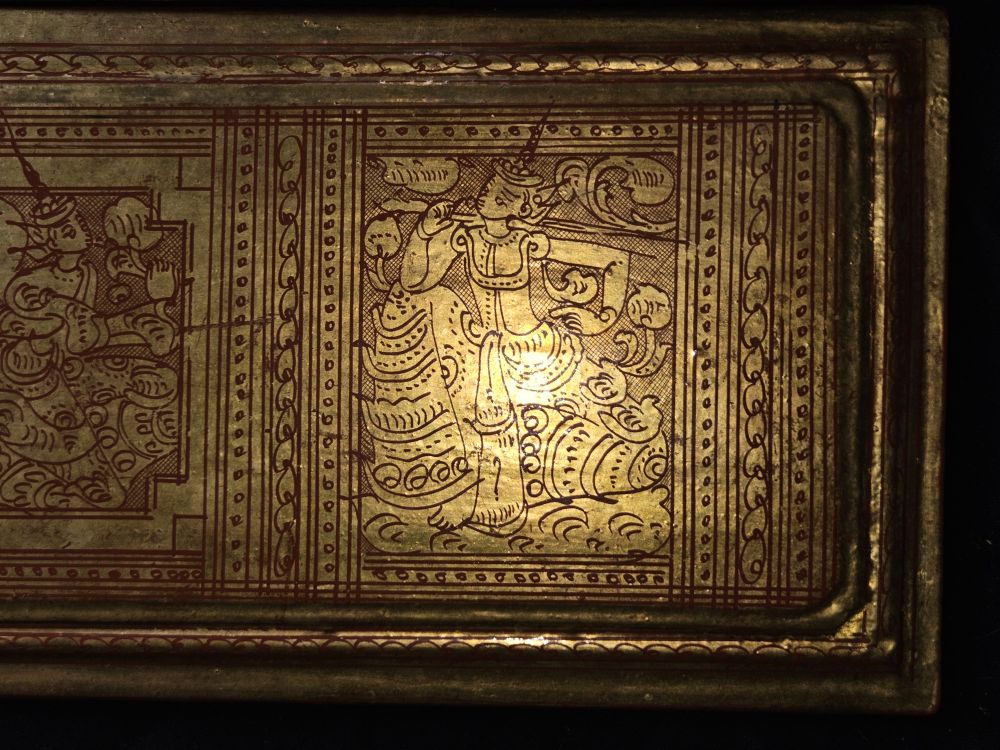
Beneath the exterior of each page, it consists of heavily lacquered and stiffened textile (cloth-bain), coated with layers of traditional Burmese black lacquer and cinnabar powder (thitsi) to create a perfectly flat, durable surface. The background is sumptuously decorated with pure gold leaf gilding, featuring intricate cinnabar-red patterns of devas (celestial beings), scrolling foliage, and traditional geometric borders.
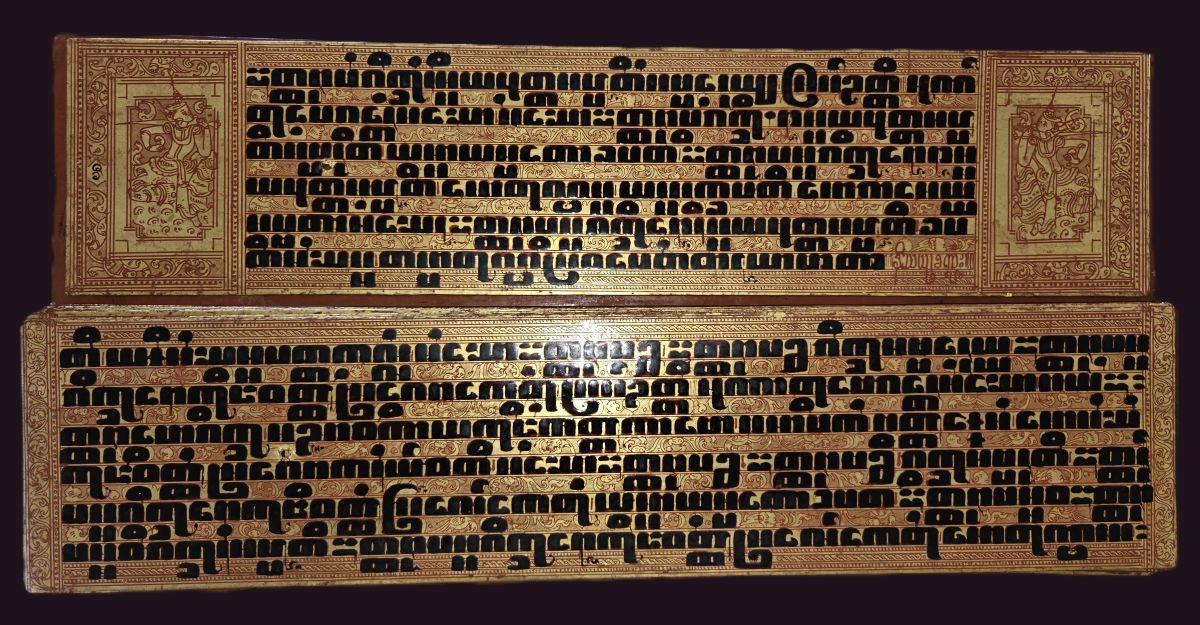
The text is written in the classic, highly stylized Burmese “Square” or “Tamarind-Seed” script (magyi-zi). Thick, resinous black lacquer was meticulously applied to build up a tactile, raised texture that sits the golden background.
Condition and Collectibility
The gilded surfaces retain excellent brilliance. The raised lacquer text remains crisp, complete, and highly legible, with only minor wear along the edges consistent with ritual handling within a monastery setting and in areas where it has been consistently handled the red lacquer underneath the gilding exposed.
Complete 16-page examples of this quality which retain their uniformity and structural integrity are increasingly difficult to find.
SPECIFICATIONS:
- LENGTH: 59 cm
- WIDTH: 14cm
- HEIGHT: 5 cm
- WLEIGHT: 3.2 kg
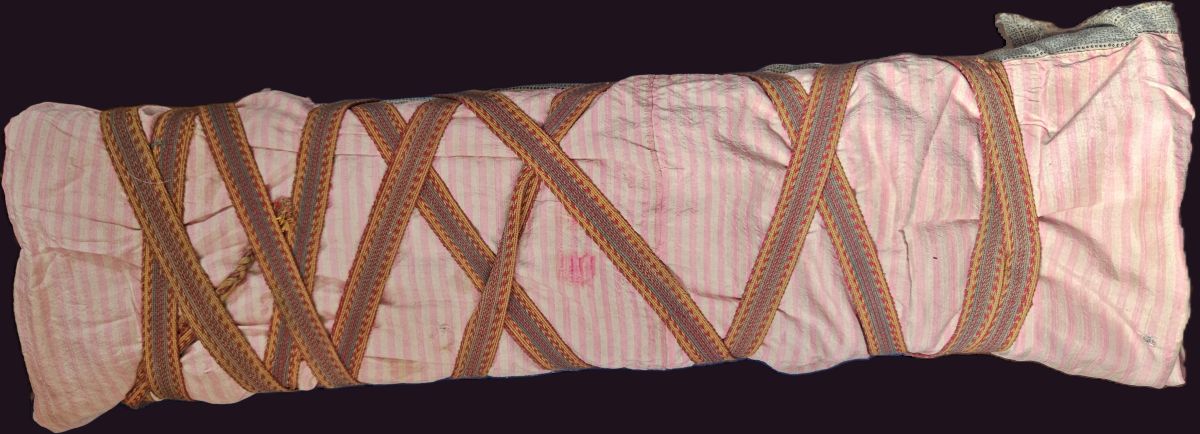
- CONDITION: Age related wear with long term handling – comes with cloth in which we acquired it, and the sasigyo (woven binding ribbon)
- #21a
Burmese Gilded Kammavaca Buddhist Manuscript
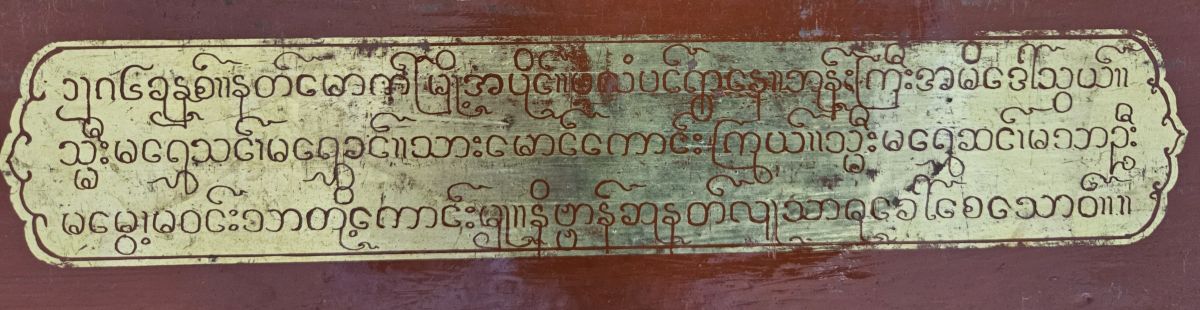
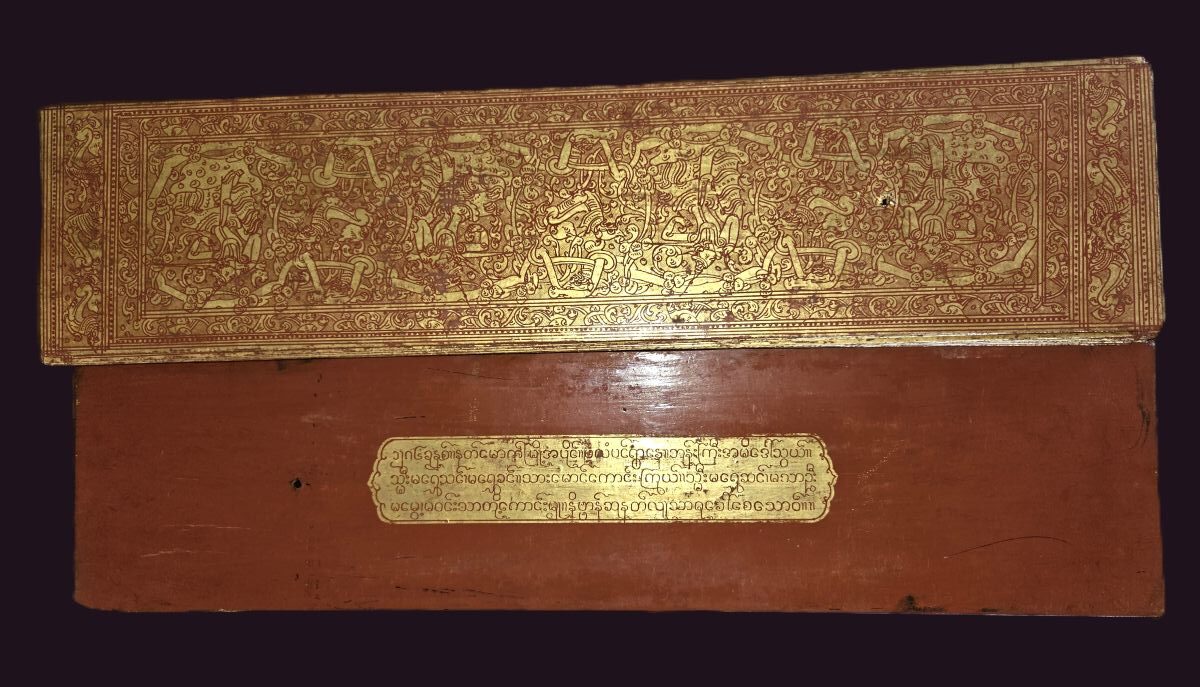
English Translation of the Donor Dedication – inside cover
Line 1: On the 15th waxing day of the month of Natdaw in the Burmese Era year 1286, [donated by] U Ein and Daw Thu Yar, monastery donors from the Mawlamyine district. Line 2: [Along with their] daughters Ma Shwe Thin and Ma Shwe Khin, son Maung Kaung Kywal, and daughters Ma Shwe Thin and Ma Sar Bu. Line 3: Ma Mway and Ma Win. May everyone call “Sadhu” (well done) and share in the merit of this deed to attain Nibbana.
Context and Details
- The Date: The Burmese Era year 1286 corresponds to December 1924 in the Gregorian calendar. Natdaw is the 9th month of the traditional Burmese lunar calendar.
- The Donors: U Ein (ဦးအိမ်) and Daw Thu Yar (ဒေါ်သူယာ) are the primary donors. They are titled Kyaung Taga and Kyaung Amagyi (ကျောင်းတကာ / ကျောင်းအမကြီး), which means they sponsored the construction or maintenance of a Buddhist monastery.
- Location: They are listed as being from Mawlamyine (Moulmein), a major city in southeastern Myanmar.
- The Purpose: The final line is a standard Buddhist dedicatory formula. It asks onlookers to witness the good deed, rejoice by saying “Sadhu, Sadhu” (Amen / Well done), and shares the spiritual merit so that all involved may eventually attain Nibbana (Nirvana).
- Note: Burmese transcription and English translation assisted by AI
Structure and Content
- 16 Double-Sided Pages/Leaves: A complete, beautifully preserved set of leaves, numbered in traditional Burmese alphanumeric notation along the margins.
- The Liturgy: The text contains specific extracts from the Vinaya Pitaka (the monastic code of discipline), written in Pali, the sacred language of Theravada Buddhism.
- Wooden End boards: The outer protective leaves feature highly detailed pictorial panels depicting guardian spirits and celestial attendants flanking the text zones.
- Traditional Burmese manuscripts utilized a thread through the small holes on each page (known as sar-kywint-pauk), keeping the loose leaves structured and safe.
The Peak of Excellence: Pre-Colonial Monastic Liturgies
The creation of Kammavaca and palm leaf manuscripts reached its highest level of artistry under the Konbaung Dynasty between 1752 and 1885. This elite production line collapsed in 1885 when British forces annexed Upper Burma and exiled King Thibaw, effectively cutting off all financial support for the royal artisan guilds in Mandalay.
With the sudden disappearance of imperial patrons who funded extravagant editions made from ivory, silver, or recycled royal garments, the market transitioned entirely to affluent private citizens. To earn spiritual merit during their sons’ monastic ordinations, these wealthy families began hiring independent commercial workshops. While this new commercial market sustained the traditional craft into the early 20th century, production methods adapted to more accessible, standardized materials such as lacquered textiles, copper, and brass sheeting.
By the start of the 20th century, commercial printing technology spread rapidly through major urban centers like Rangoon and Mandalay. This technological shift meant that Vinaya legal codes and ordination liturgies could be mass-produced on paper rapidly and at a fraction of the cost.
Although owning a gilded, hand-made Kammavaca still carried immense social status, monasteries no longer required these labor-intensive objects for daily operations. Monks transitioned to printed volumes for regular recitations, which reduced the traditional handcrafted market to a niche luxury industry supported solely by affluent donors.
The Post-War Decline: 1940s–1950s Material Shortages
The outbreak of World War II delivered a devastating blow to this heritage craft, as the Japanese occupation and intense military conflict dismantled Burma’s artistic communities. Essential trade routes that supplied critical raw materials including pure gold leaf, thitsi lacquer resin, and cinnabar pigments completely broke down.
The situation worsened after the war and Burma’s declaration of independence in 1948, as the nation faced severe economic stagnation and internal political conflict. Because older masters passed away without instructing apprentices, the intricate, multi-step techniques needed to brew thick tamarind-seed text paste (magyi-zi) and execute precise gold-leaf stenciling (shwe zawa) were lost.
As a result, the production of authentic, gilded cloth Kammavaca for genuine monastic use came to a standstill by the 1950s. Most items manufactured from the late 20th century onward are lower-grade replicas made specifically for the global tourist market and lack the rich, multi-layered texture and masterful calligraphy found in vintage ecclesiastical examples.
RESOURCE: Kammavaca | Collections | University of St Andrews