

19th – Early 20th C. Burmese Buddhist Parabaik Manuscript
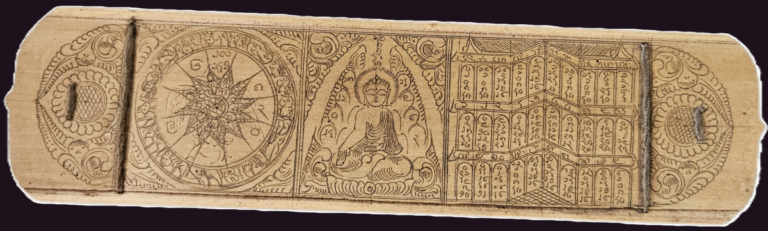
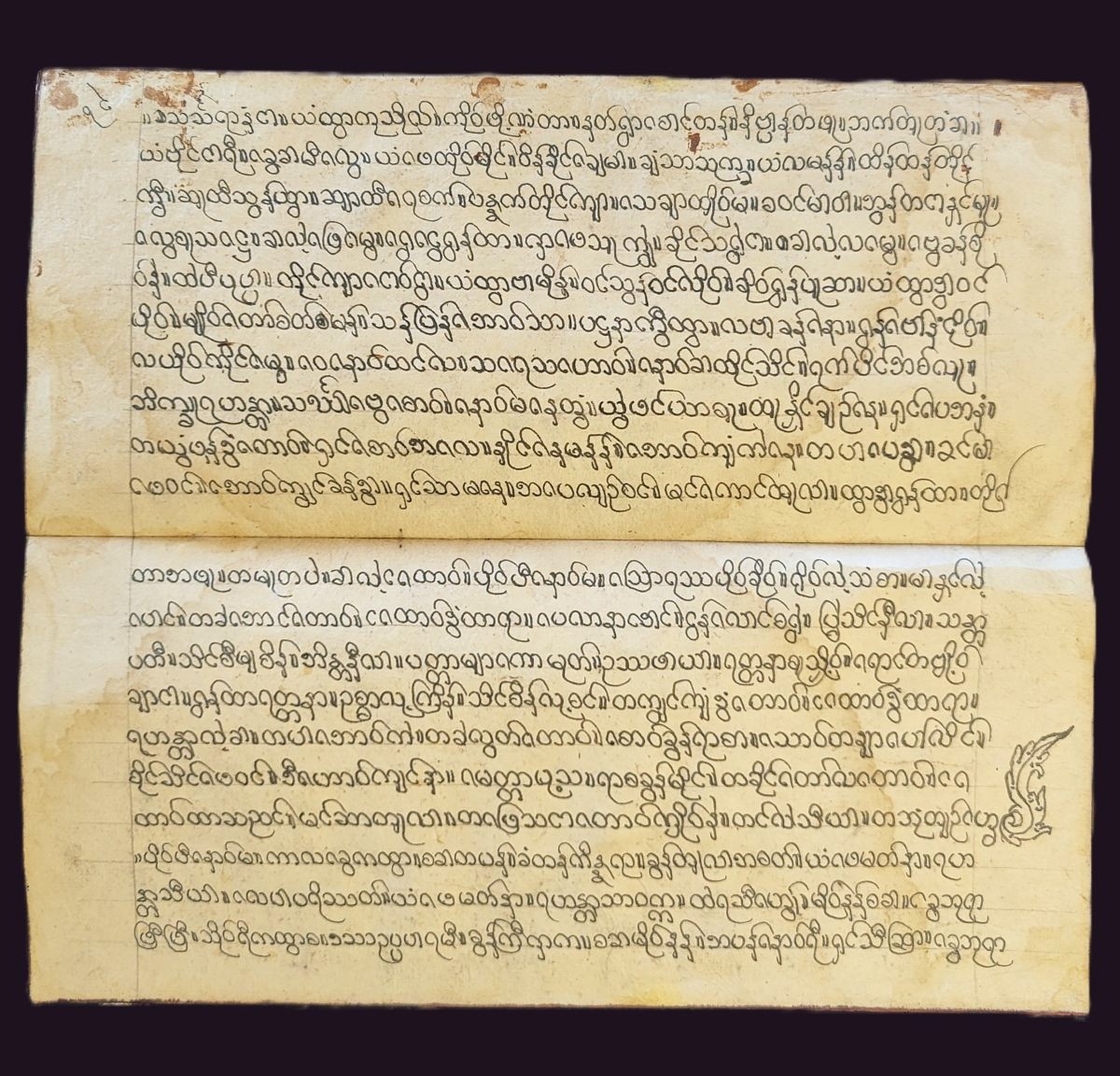
This 19th to early 20th C. Burmese Buddhist Parabaik Manuscript (concertina-style folding book) with 10 lines of black ink text in Shan round script (double sided) is an excellent example of the traditional monastic manuscript tradition from Myanmar, dating to the twilight era of handmade texts (circa 1880–1920).
Acquired in the Shan State near Inle Lake, the manuscript highlights the deep historical connections between the monastic centers of central Myanmar and regional trading hubs.
This Burmese parabaik manuscript consists of 63 double-sided folds, opening up accordion-style to reveal 126 individual text panels. This substantial length indicates that it is a major, complete monastic volume rather than a fragmented section or a short tract.
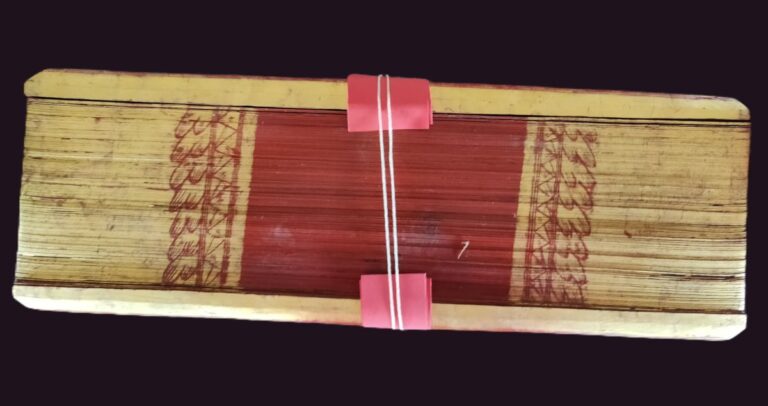
The pages in this parabaik manuscript are constructed from durable, fibrous mulberry paper known locally as Maingkaing paper. Looking under a microscope at the damaged corners on the covers it reveals the classic, multi-layered application of natural Burmese lacquer (thit-see) mixed with cinnabar (hinthapada) to achieve its deep, resilient red finish.
SPECIFICATIONS:
- LENGTH: 39.5cm
- WIDTH: 18 cm
- DEPTH: 6.5 cm
- WEIGHT: 1.5 kg
- #401
19th – Early 20th C. Burmese Buddhist Parabaik Manuscript
As in most parabaik manuscripts of this age there are brown spots throughout, the text in this parabaik is clean and complete, and is a well-preserved record of Southeast Asian Theravada Buddhist heritage, representing the final era of a centuries-old manuscript tradition before modern printing presses became popular.
Note: During the 1870’s King Mindon set up Myanmar’s first royal, state-run printing presses in Mandalay. These presses produced Buddhist literature and the country’s first domestic newspaper, the Yadanapon Naypyidaw, in 1874.
126-Panel – Buddhist Parabaik Manuscript
The cover of this parabaik was specifically treated to withstand heavy handling, insects, and the humid climate of Southeast Asia.
The Lacquer Process (Thit-see) – on the covers
The base material of the cover is a thicker, layered mulberry paper, but it has been strengthened through the application of natural Burmese lacquer, known as thit-see (the sap of the Gluta usitata tree).
- The Base Layers: Scribes or lacquer artisans applied several thin coats of raw, dark lacquer directly to the paper to stiffen it and form a waterproof seal. Each layer had to cure in a cool, damp cellar before being sanded smooth.
- The Red Finish (Hinthapada): The vibrant red color you see is the result of mixing the final coats of translucent lacquer with cinnabar (mercuric sulfide), traditionally called hinthapada in Myanmar. Applying this in multiple micro-layers gave the cover its deep, rich tone and lustrous body.
The Gold Decoration (Shwe-zawa) on the covers
The faint gold patterns remaining on the surface of both the front and end cover were applied using the classic shwe-zawa (gold leaf stencil) technique.
The artisan painted the intricate floral and foliate motifs onto the cured red lacquer using a water-soluble resist paste made from neem gum and orpiment. After the gold settled, the manuscript was washed with water. The gold leaf over the resist paste washed away, while the gold sitting directly on the red lacquer adhered permanently.
Over decades of handling and opening the folding book, the delicate gold leaf naturally rubbed off, leaving the beautiful, ghost-like silhouettes of the original design embedded on the resilient red lacquer base.
Wikipedia – Burmese Shan Parabaiks – Variations.