Burmese Kammavaca written in Tamarind Script
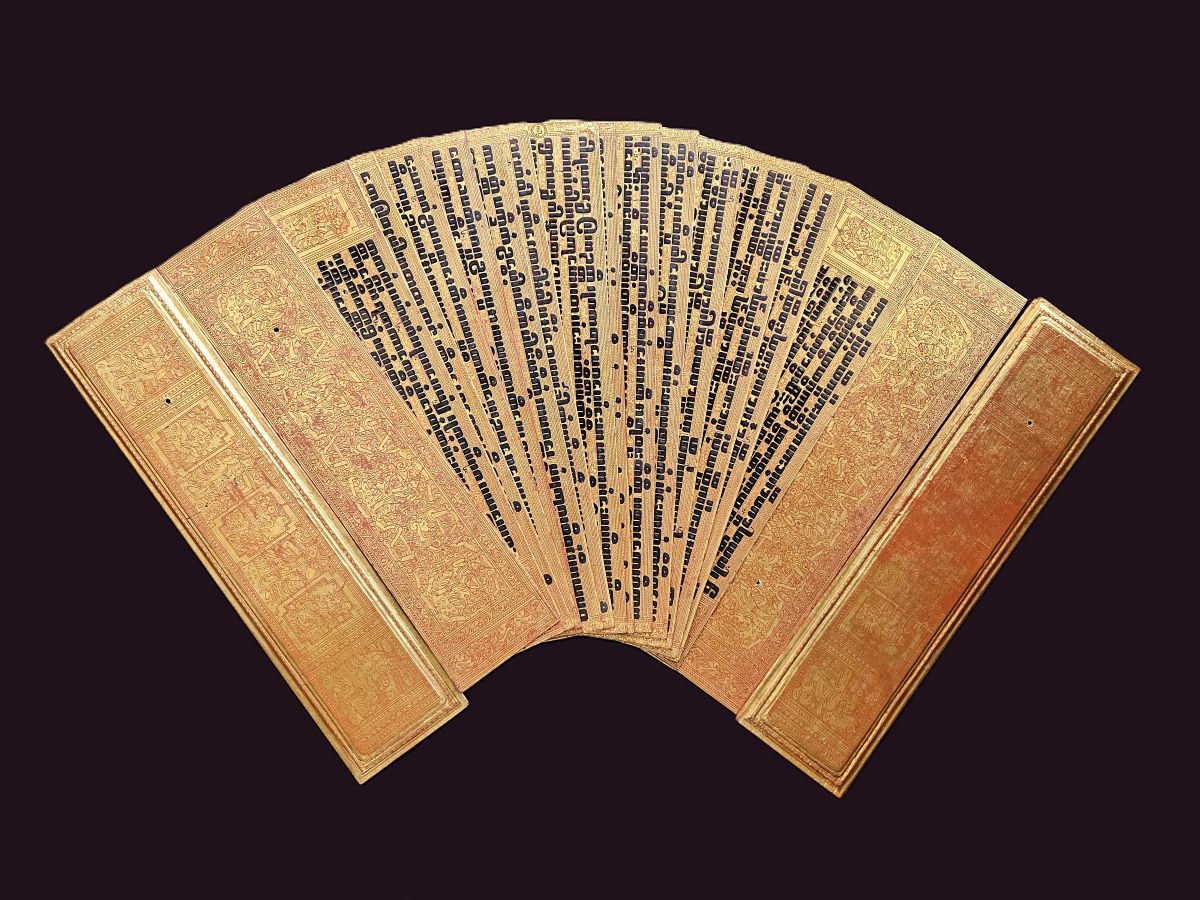
The Burmese Kammavaca written in Tamarind Script is a unique and beautiful loose leafed manuscript written in the Pali language featuring essential chapters from the Vinaya Piṭaka, the canonical code governing Theravāda monastic discipline. Monks chant these precise Pali recitations sequentially during major internal Sangha rites, including higher ordination (Upasampadā), boundary (sīmā) consecrations, and Kathina robe-offering ceremonies.
In Myanmar, this specific manuscript tradition is known as magyi-zi kammavā, literally “tamarind-seed Kammavacā“. The name describes its ornate, square script (magyi-zi akkharā), written in thick black lacquer with block-like contours resembling tamarind seeds. Reserved almost exclusively for sacred texts, this highly stylized calligraphy requires specialized training to read and has largely passed out of everyday use.
A traditional Burmese Kammavaca manuscript typically comprises either fourteen or sixteen rectangular folios, secured between a pair of wooden boards with a hole close to the end of the boards and on each folio (leaf). The outer surfaces are richly gilded and decorated. The inner faces of these wooden boards are usually plain, though many examples bear a brief donor inscription. Unlike bound books, the folios remain loose and are inscribed on both sides, producing a total of twenty‑eight to thirty‑two pages of text. The opening page of the first folio and the final page of the last are intentionally left blank or adorned with floral panels rather than written upon.
The exact number of leaves in the Burmese Kammavaca varies according to the monastic act (saṅghakamma) being recorded such as ordination or boundary consecration and the scale of the script, but scribes consistently adhered to even‑numbered formats. This ensured that the manuscript could be tied symmetrically with a woven ribbon (sazigyi) and wrapped in a protective cloth (kammavā hto‑pa‑so), preserving both its ritual dignity and its physical integrity.
Within Burmese Buddhist practice, Kammavaca manuscripts fulfil a dual role, they preserve the formal liturgies of monastic ordination and simultaneously function as exceptional works of religious art. Their visual splendour is inseparable from their sacred purpose. Elaborate ornamentation, especially lacquer and gold leaf is understood to augment the donor’s spiritual merit, reinforcing the manuscript’s devotional intent and binding its physical beauty to the sanctity of the text it enshrines.
Crafting the Kammavaca: Tools and Techniques
The production of a Burmese Kammavaca manuscript demanded sophisticated lacquer craftsmanship. Each folio was constructed from thayo, a dry‑lacquer compound made by combining thitsi sap with bran ash. Strips of cloth were impregnated with lacquer, built up through successive applications of sap and thayo, and left to cure slowly, each layer requiring several days to dry. More than a dozen coatings were typically needed to create a durable sheet, and the uppermost layers were often tinted with vermilion to impart the surface’s characteristic warm hue.
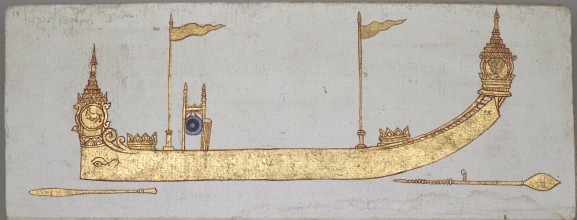
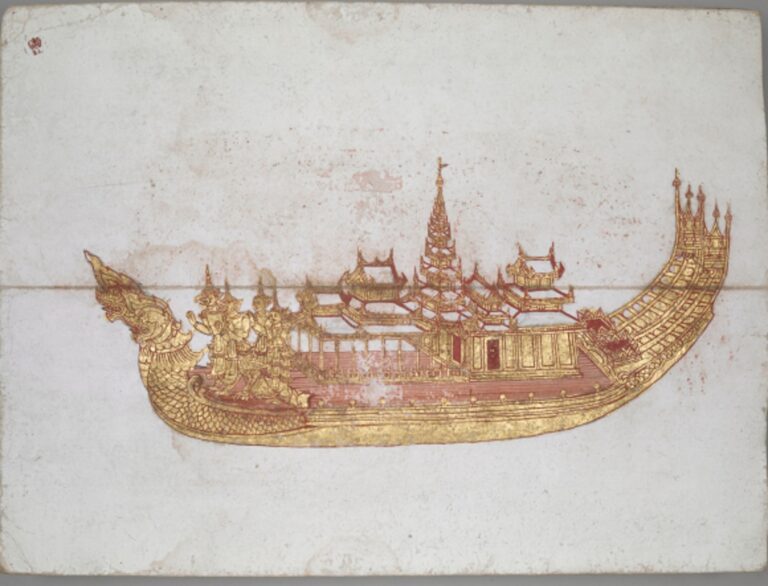
Artisans crafted traditional Burmese kammavaca folios by applying gilded ornamentation through shwe zawa, a gold-leaf resist technique often mistaken for yun (incised lacquer). Scribes first painted background areas with dat-wah, a yellow water-soluble mixture of realgar powder, soap, and acacia gum. They then covered the surface with a thin layer of clear lacquer, laid down gold or silver leaf, and washed the folio with water. This process dissolved the dat-wah, washing away excess metal leaf while leaving intricate gold motifs such as hamsa birds, devas, floral scrollwork, and geometric borders firmly bonded to the exposed lacquer ground.
Unlike standard wood finishes, Burmese lacquer (thit-si) requires moisture to cure rather than heat or sunlight. Artisans stored the lacquered folios in underground cellars with 80% to 85% relative humidity, allowing the sap’s laccase enzymes to polymerize and harden the surface. Once cured, scribes added the sacred monastic text using thick black lacquer to form the characteristic square magyi-zi (tamarind-seed) script.
- The creation of a lacquered Burmese kammavaca manuscript required a wide array of traditional implements, from bamboo frames for curing leaves to delicate brushes made from squirrel tails or cow-ear hair, cotton pads soaked in lacquer for smoothing surfaces and gold leaf applied by hand then burnished with clean cotton. Water was used to set the gilding before the final wipe‑down, a stage requiring absolute precision.
- Artisans relied on specialized scribal implements, including brass styluses and fine bone applicators, to render the dense lacquer script.
- To execute the thick, boxy letterforms of the tamarind script, scribes utilized custom wooden and metal implements designed to manipulate heavy lacquer resin.
Traditional, hand-crafted kammavaca manuscripts are no longer produced in Myanmar for active monastic use. The primary driver of this shift was the rise of modern printing. Monasteries and lay donors now rely on printed editions of the Vinaya Piṭaka, which are far more practical, affordable, and legible for monks conducting ordination or recitation ceremonies. As printing presses took over, the specialized lineage of scribes capable of executing the dense, lacquered magyi-zi akkhara (“tamarind-seed script”) gradually died out.
Also, the original process in manufacturing to make a gilded kammavaca was an exceptionally labour-intensive and costly undertaking. Crafting a single manuscript required stiffening cloth or palm leaves with multiple layers of natural thitsi lacquer, applying delicate gold leaf (shwe zawa), and painstakingly painting resinous characters across every folio. Today, lay donors fulfill merit-making through other avenues, such as funding monastery upkeep or monk provisions. While master artisans in places like Bagan occasionally produce single decorative replica leaves for the art and antique market, contemporary work related to the Burmese genuine Kammavaca written in tamarind script is strictly focused on preservation, cataloguing, and digitizing surviving 18th- to early 20th-century historical examples.
To learn more about the Burmese Lacquer technique this is an excellent article written by Sylia Fraser-Lu