Ming Dynasty Terracotta Horse and Rider
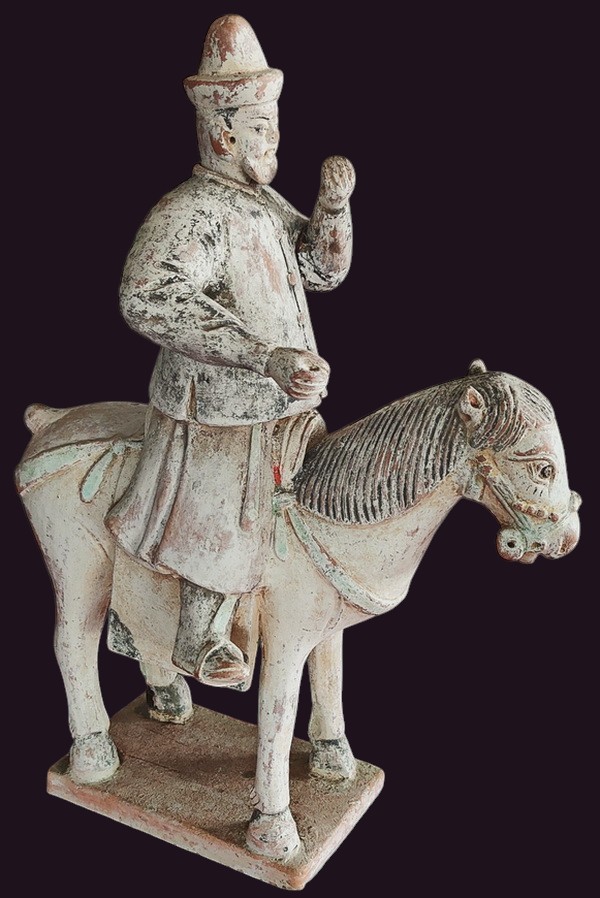
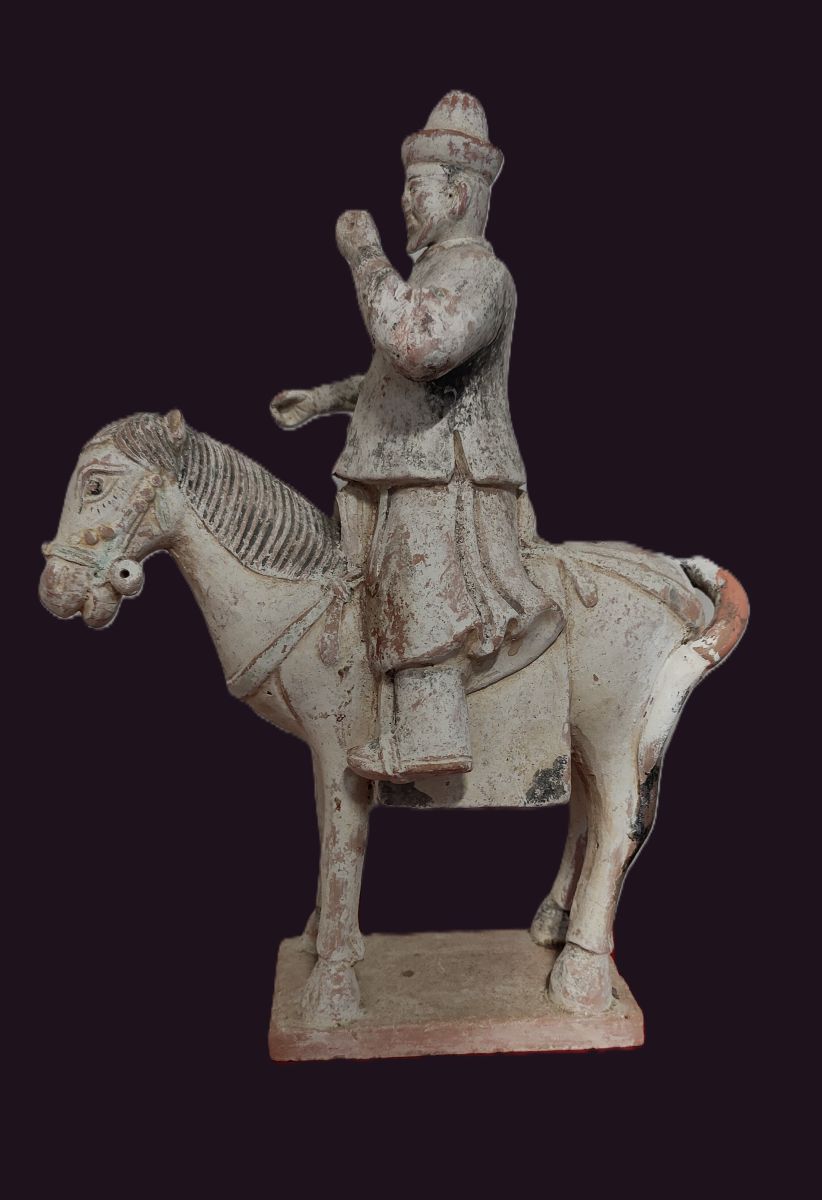
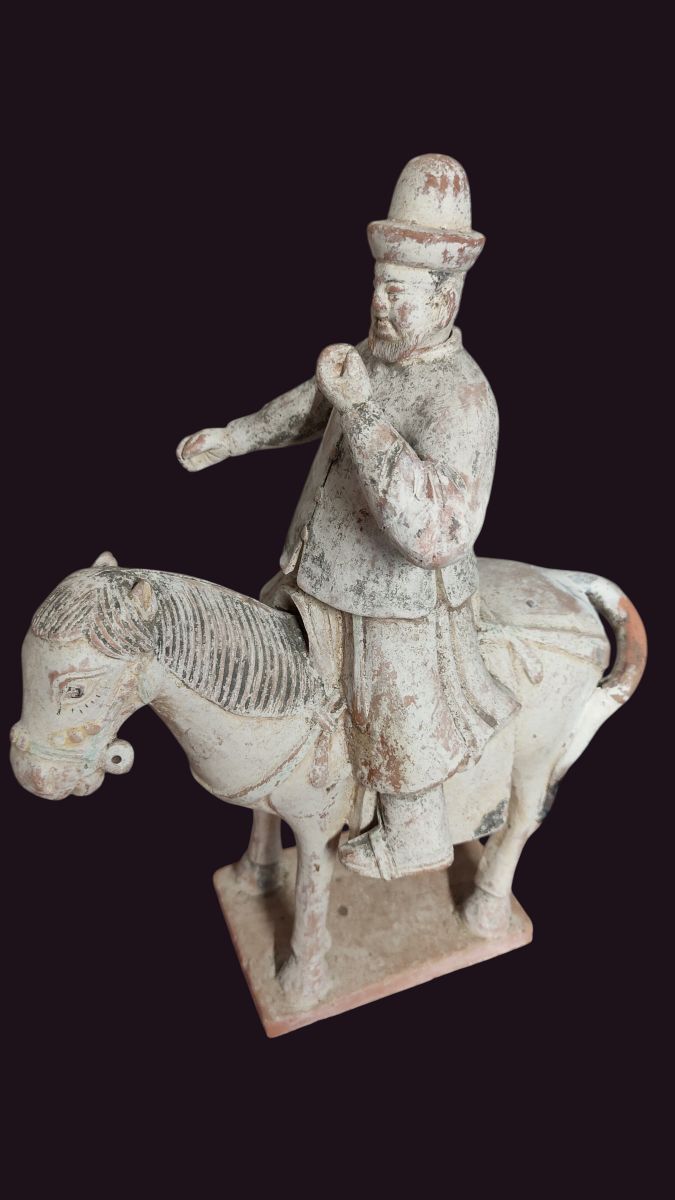
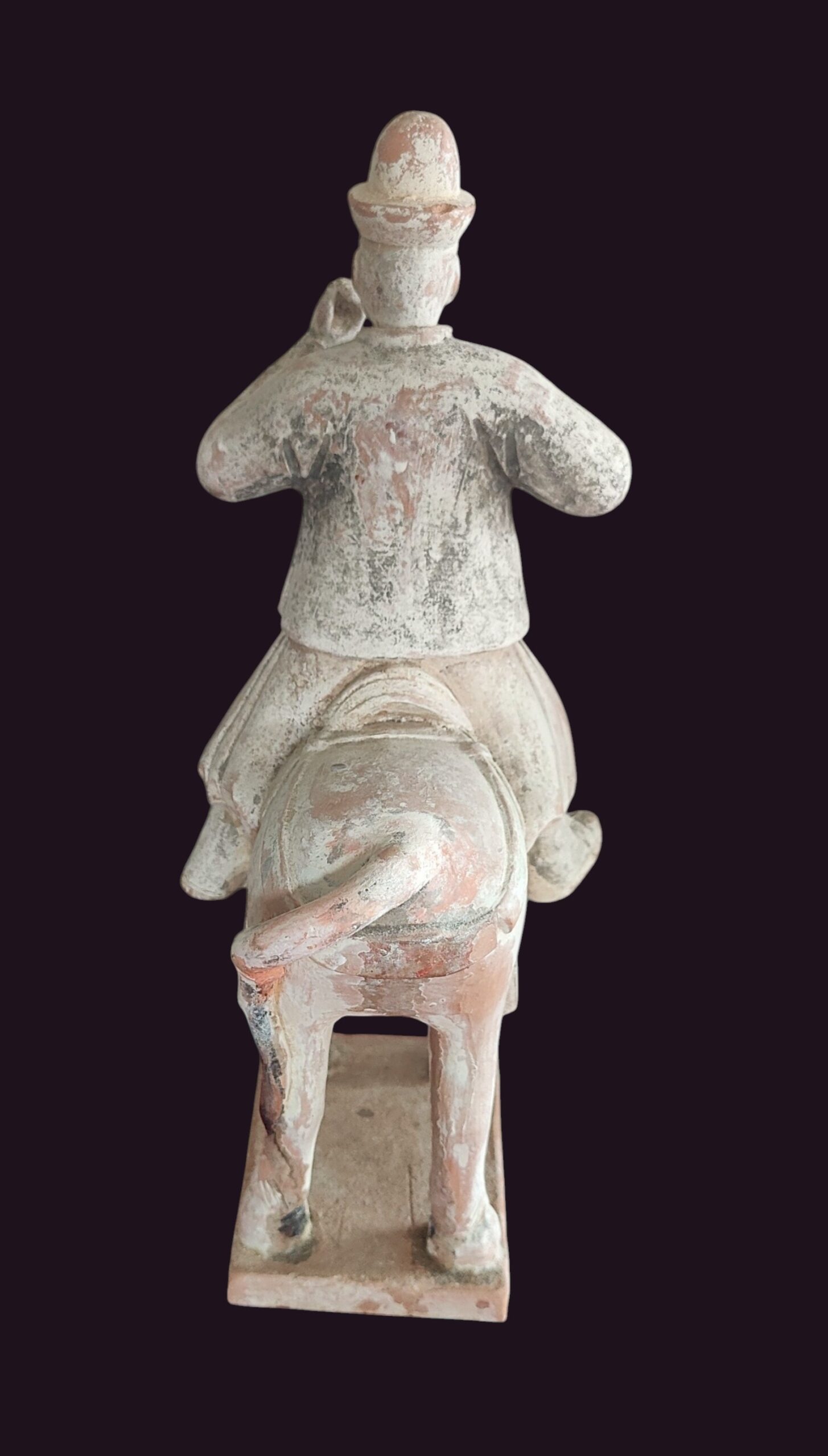
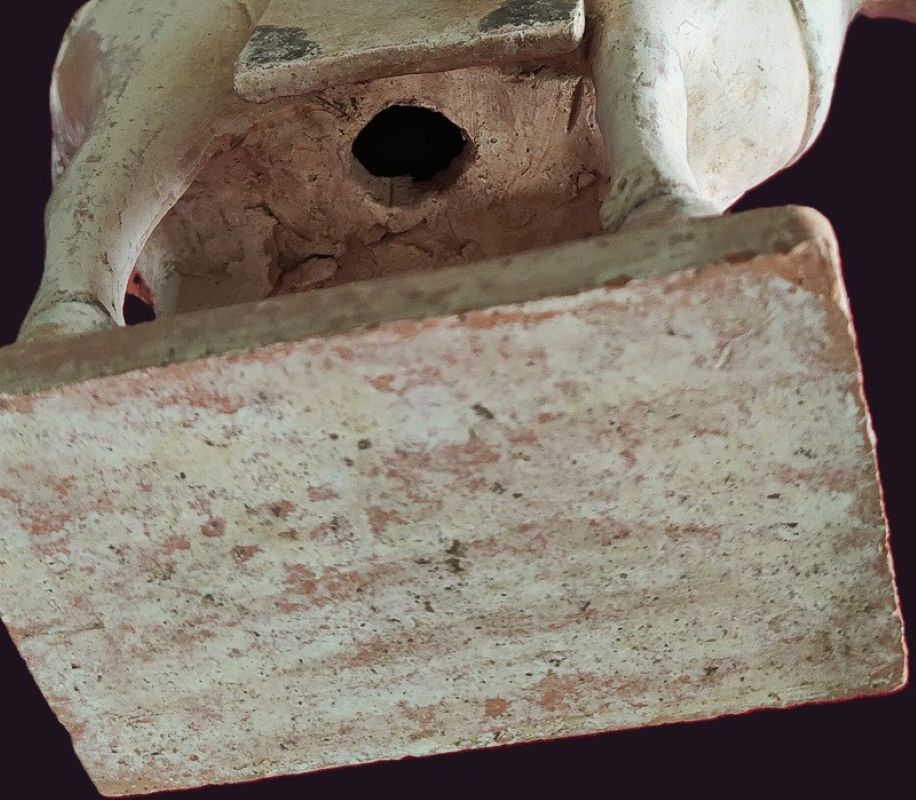
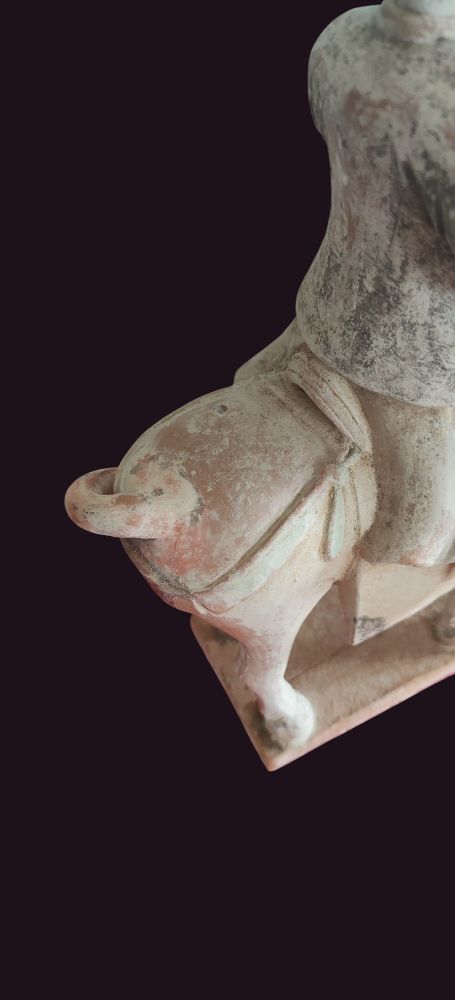
Ming Dynasty Terracotta Horse and Rider
This Ming Dynasty terracotta horse and rider is an example of a mingqi funerary object, also known as “spirit objects”. This rider features a removable head, a standard production technique in imperial ceramic workshops that permitted modular customization. The horse’s tail displays evidence of historical repair.
The Ming Dynasty (1368–1644 AD) succeeded the Mongol-led Yuan Dynasty and represented the final imperial period governed by ethnic Han rulers.
Although human and animal sacrifice occurred in early Chinese antiquity, the practice was largely replaced by ceramic and wooden effigies centuries prior to the Han Dynasty (202 BC–220 AD). During the Han period, economic growth expanded access to terracotta and earthenware tomb goods, making mingqi accessible to broader segments of society rather than remaining an exclusive privilege of the elite.
The contents of a burial chamber reflected the status, occupation, and personal estate of the deceased. Agricultural workers were frequently buried with miniature granaries, while livestock owners or enthusiasts were interred with earthenware figures of horses and farm animals. Wealthier individuals commissioned elaborate models of houses, ensuring that the deceased’s soul (po) would be accompanied into the afterlife with familiar objects, believed to ease the transition into the ancestral realm and preventing the spirit from becoming a displaced, wandering ghost, also referred to as “hungry ghost“.
SPECIFICATION:
- AGE: – Ming Dynasty 1368 AD to 1644 AD
- CONSTRUCTION: – Terracotta
- HEIGHT: – 34cm
- WIDTH: – 27cm
- WEIGHT: – 2.5 kg.
- CONDITION: Repair to tail
- #408