Thagyamin King of Nats
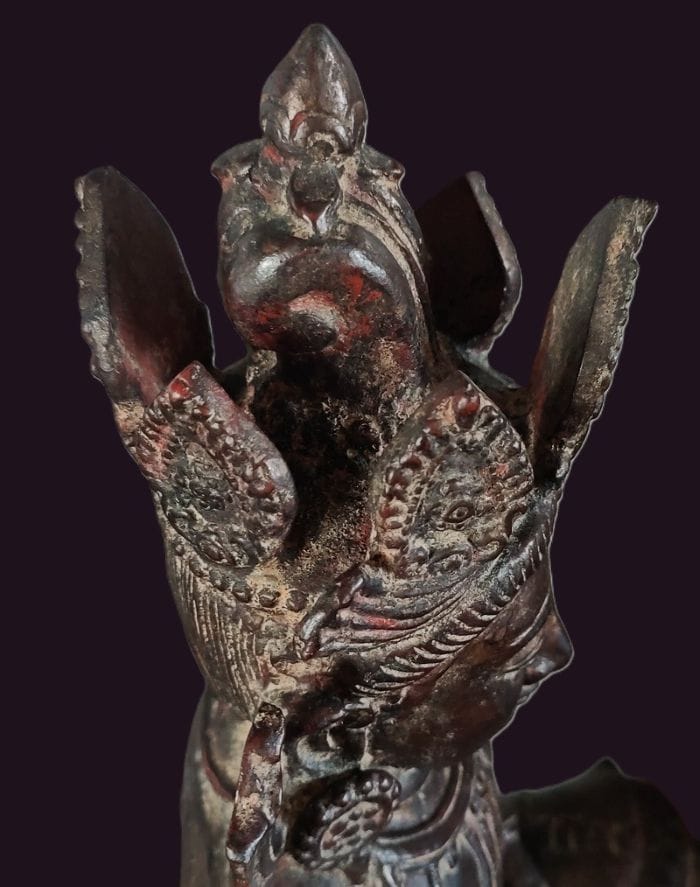
Thagyamin King of Nats in Burmese folklore sits high above the mortal realm, in the celestial heavens of Burmese mythology, he sits as the supreme ruler of the spiritual world, a regal deity tasked with overseeing human affairs, cosmic order, and the turning of the seasons. Thagyamin, revered as the King of the Nats, stands at the absolute center of traditional Burmese folklore, bridging ancient animist beliefs with Buddhist cosmology. Before King Anawrahta unified Pagan in the eleventh century, spiritual life among the Bamar people revolved around localized spirit worship alongside various early forms of Buddhism. Communities relied on Nats and spirits associated with nature, ancestors, and regional sites to guide everything from crop harvests and weather predictions to family fortunes, marriages, and protection from bad luck. Countless local Nats were venerated across different villages and regions.
As statecraft and religion evolved, this decentralized spiritual landscape underwent a massive transformation. Under the guidance of Shin Arahan, a Mon monk from Thaton, Anawrahta embraced Theravada Buddhism as the state religion. According to historical tradition, he initially tried to dismantle the old spirit cults by destroying local shrines and images. When it became clear that Nat worship was too deeply embedded in everyday culture to erase, Anawrahta adopted a brilliant compromise, he brought the spirits directly under the umbrella of Theravada Buddhism.
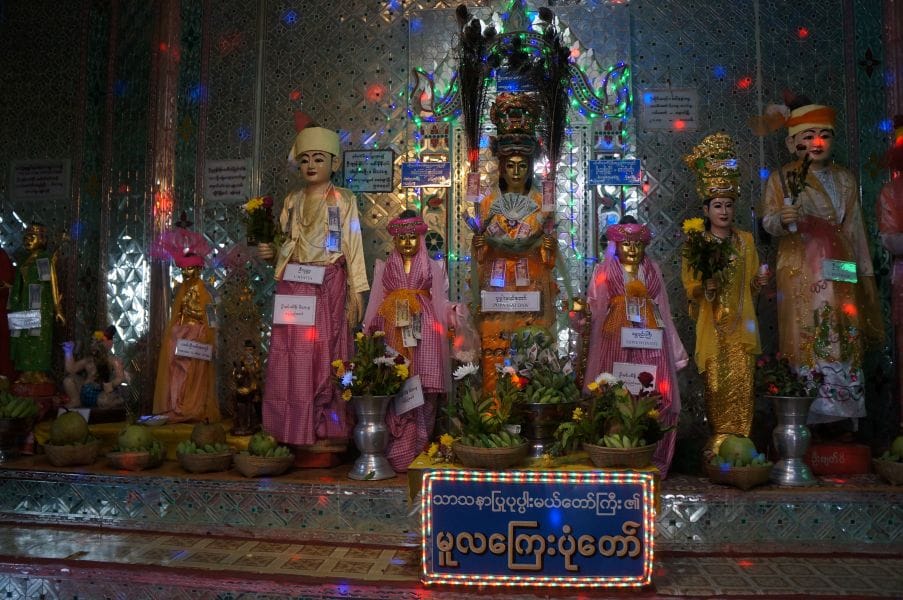
Anawrahta selected thirty-six prominent regional spirits and introduced a thirty-seventh Nat, Thagyamin referred to as king of Nats to lead them as their chief guardian. Adapted from the Hindu deity Indra (the ruler of the heavens associated with thunder and rain), Thagyamin was positioned as a devout protector of the Buddha’s teachings. By placing statues of these thirty-seven official Nats inside the Shwezigon Pagoda in attitudes of reverence toward the Buddha, Anawrahta ensured that spirit worship served to reinforce Theravada Buddhism rather than compete with it.
Thagyamin King of Nats in Burmese Folklore
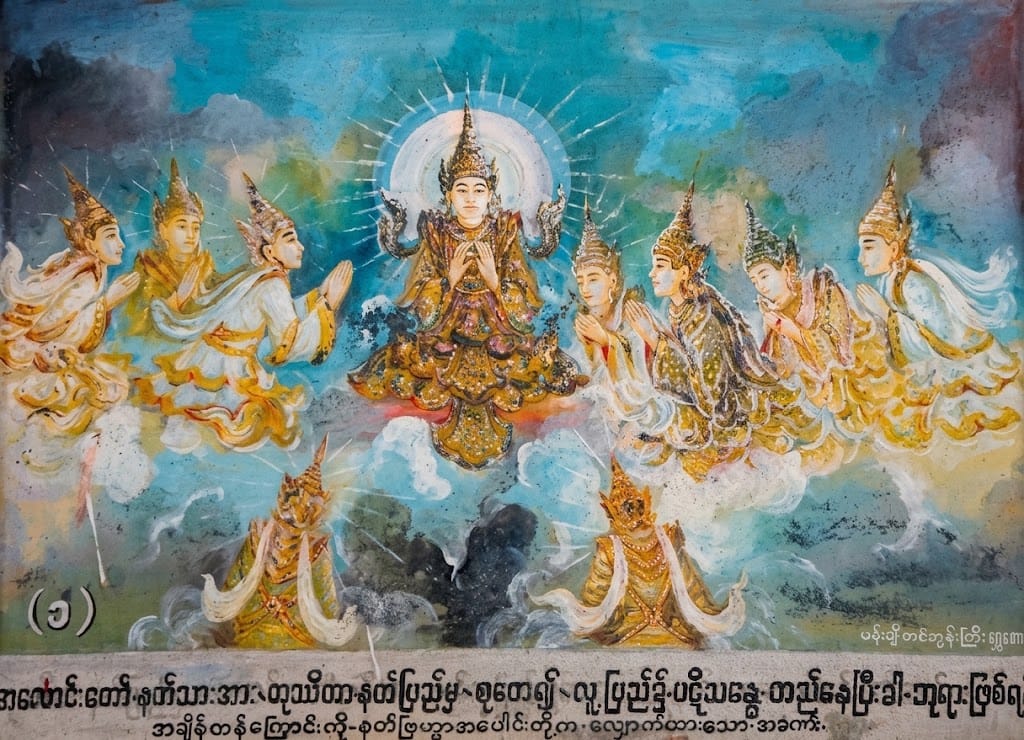
As the ruler of the spirit realm, Thagyamin plays an important role in Burmese cosmology and features prominently during the annual Thingyan (Water Festival) celebrations. Thagyamin is known as Sakka in Pali and Indra in Sanskrit, he is one of the most revered deities in the Burmese pantheon.
According to popular tradition, Thagyamin descends to Earth every year during Thingyan to observe human behaviour and record their actions in two separate books, a golden book for good deeds and a book bound in dog skin for bad ones. A person’s fortunes in the coming year are said to depend on which book contains their name.
In traditional iconography, Thagyamin is depicted holding a conch shell and a yak-tail flywhisk while riding Airavata (Erawun), a three-headed white elephant. He is also affectionately referred to as U Magha, referencing his previous life as a virtuous human leader described in Buddhist Jataka tales.
When King Anawrahta established the official pantheon of 37 Royal Nats in the 11th century to harmonize local spirit worship with Theravada Buddhism, he placed Thagyamin at the very top. Unlike the other 36 Nats who were historical human figures who suffered tragic or violent deaths Thagyamin is a celestial deva (an “Upper Nat” or heavenly being. By placing him as the head of the pantheon in an attitude of devotion to the Buddha, Anawrahta successfully brought the local spirit world under the umbrella of Buddhist doctrine.
Okkalapa and Thagyamin – the Founding of Shwedagon Pagoda, Yangon
While King Anawrahta later institutionalized Thagyamin as the political guardian of the state, mythological tradition places the King of Heaven much closer to the heart of Myanmar’s most sacred origins linking him directly to the founding of Yangon’s most iconic monument, the Shwedagon pagoda.
According to the traditional chronicles concerning the founding of Yangon and the origins of the Shwedagon Pagoda, King Okkalapa is described as the son of Thagyamin. In Burmese cosmology, Thagyamin descended from the Tavatimsa heaven and fell in love with Me Lamu, a hermit‑raised maiden miraculously born from a giant mangrove fruit (lamu). From their union, King Okkalapa was born.
One day, Okkalapa decided to build a pagoda on a hill near his city, to enshrine a relic of the Buddha. He asked his subjects to donate gold and silver for the construction, but some of them were greedy and gave him copper instead. Okkalapa was unaware of this deception, and he proceeded to build the pagoda with mixed metals.
When he tried to place the relic inside the pagoda, it refused to enter. Okkalapa realized that something was wrong, and he ordered his ministers to investigate. They discovered the copper coins that were hidden among the gold and silver, and they reported it to the king.
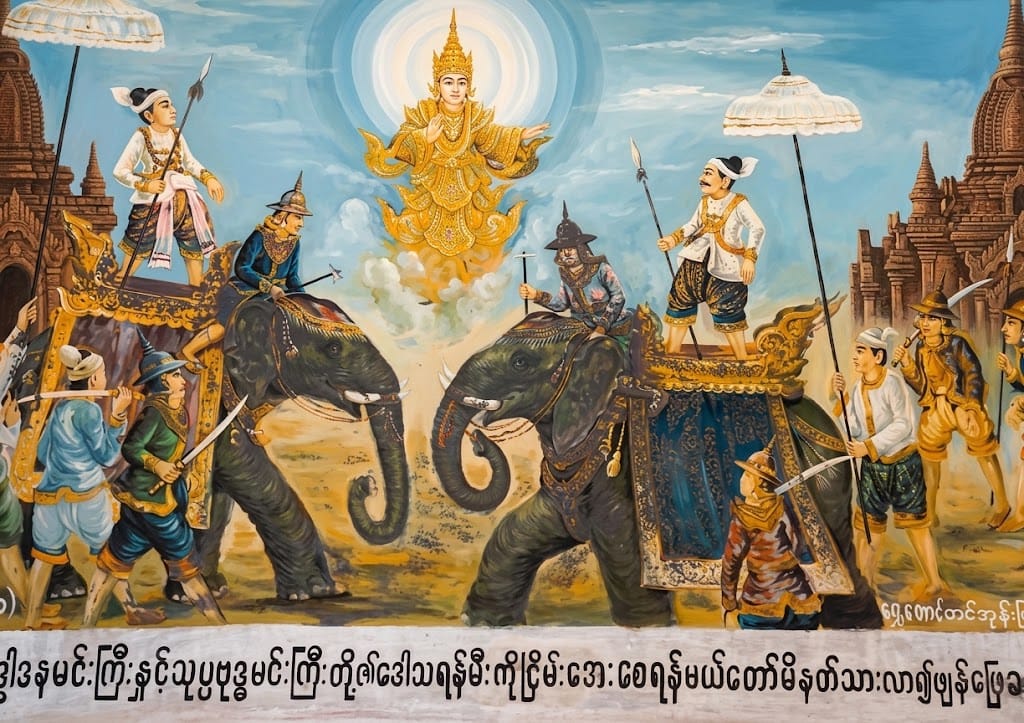
Okkalapa was furious and decided to punish the culprits. He ordered them to be executed by throwing them into a pit of fire. As he was about to carry out his sentence, he heard a voice from the sky, saying: “Stop, O king! Do not kill these people, for they are your relatives from your previous lives. They have given you copper because of their ignorance and delusion, not out of malice. If you kill them, you will create bad karma for yourself and them. Instead, forgive them and teach them the Dhamma.”
Okkalapa looked up and saw Thagyamin, his divine father, descending from the Tāvatiṃsa heaven upon the great elephant Erawan. As the celestial guardian of the Buddha’s dispensation, Thagyamin had come to guide his son regarding his decision to execute those who gave copper instead of gold. Thagyamin reminded Okkalapa of the protection and blessings he had bestowed upon him since birth and revealed that the sacred relic of the Buddha had been entrusted to him so that it might be enshrined upon Singuttara Hill, where the relics of past Buddhas already lay hidden. Okkalapa prepared the site with reverence, and the relic entered the chamber without obstructio.
Okkalapa was amazed and humbled by Thagyamin’s words. He bowed down to him and thanked him for his kindness and guidance. He also apologized for his anger and violence, and he pardoned the offenders. He then asked Thagyamin to help him complete the pagoda, and Thagyamin agreed.
It is believed that Thagyamin visits the pagoda every year during the Thingyan festival, which marks the Burmese New Year. He brings rain and blessings to the land and its people, and he also judges their deeds from the past year.
Thagyamin is a symbol of justice, wisdom, compassion, protector, benefactor and power in Burmese culture. He is also associated with various myths, stories and rituals that reflect the rich culture and history of Myanmar and worshipped by many people, especially those who seek protection, success, or enlightenment. He is also respected by other Nats, who regard him as their leader and lord.
Note: Thagyamin is frequently represented in Buddhist art and Iconography as a Lokapala but Burmese tradition does not generally treat him as one of the four great kings instead he is their superior, the ruler of Tavatimsa heaven, the protector of Buddhism and a divine figure who interacts directly with humans.