

19th Century Burmese Shan Marble Buddha
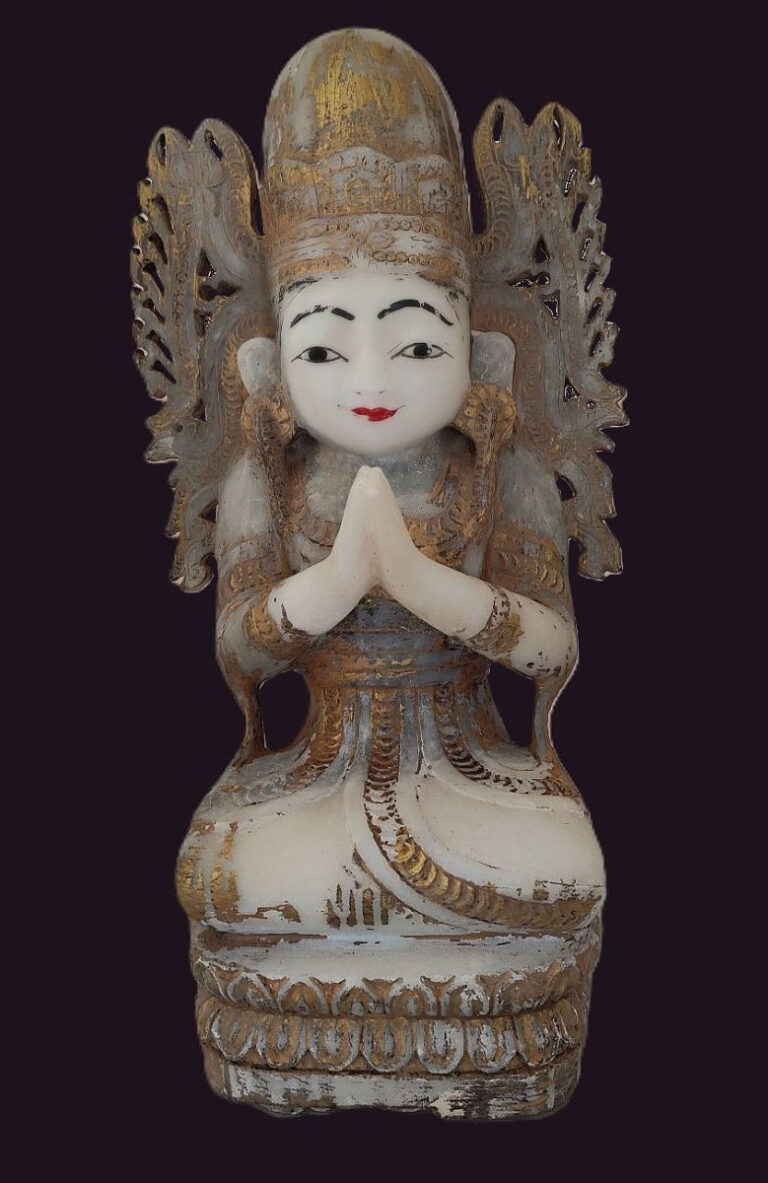
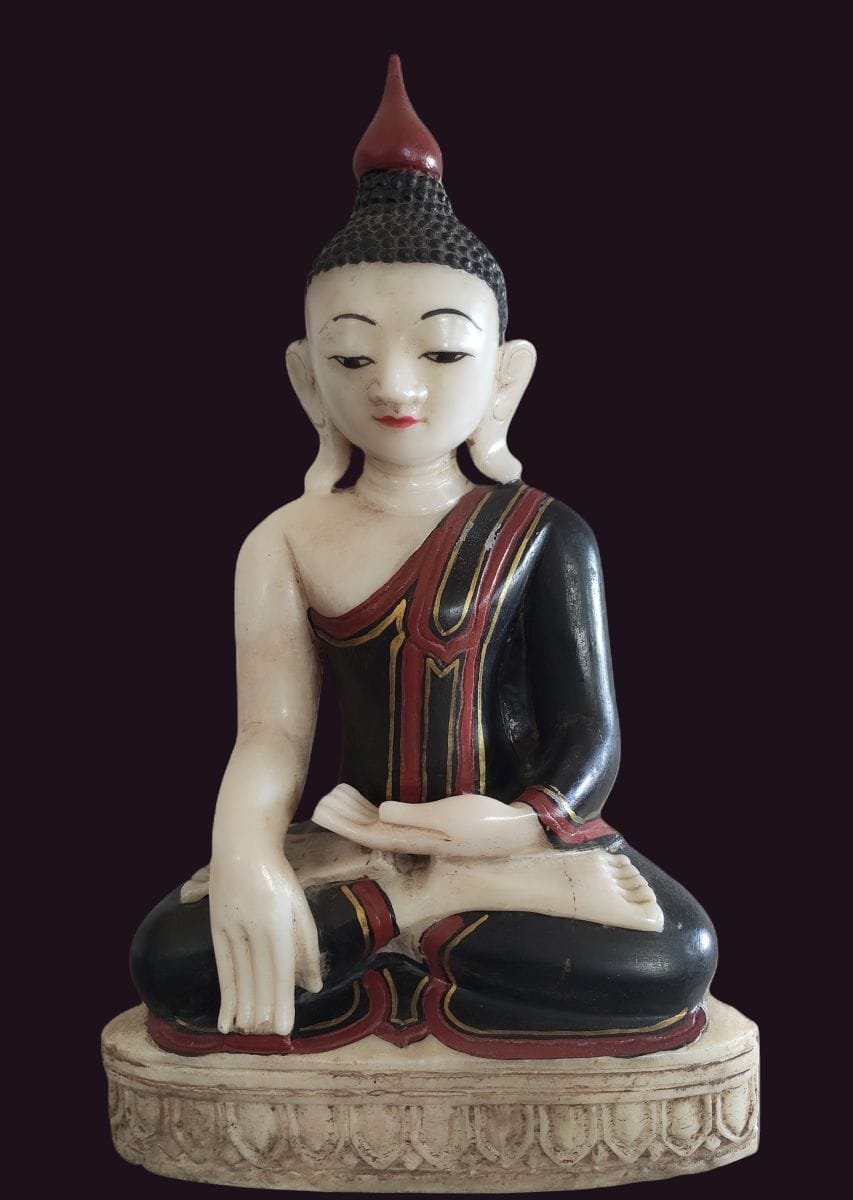
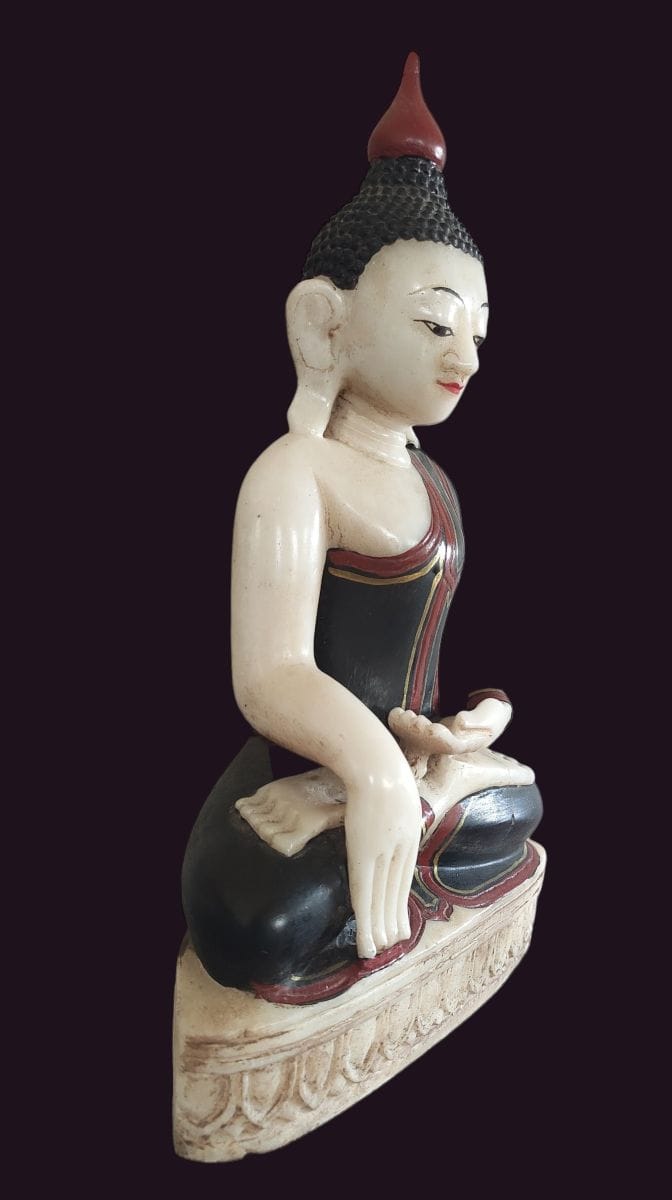
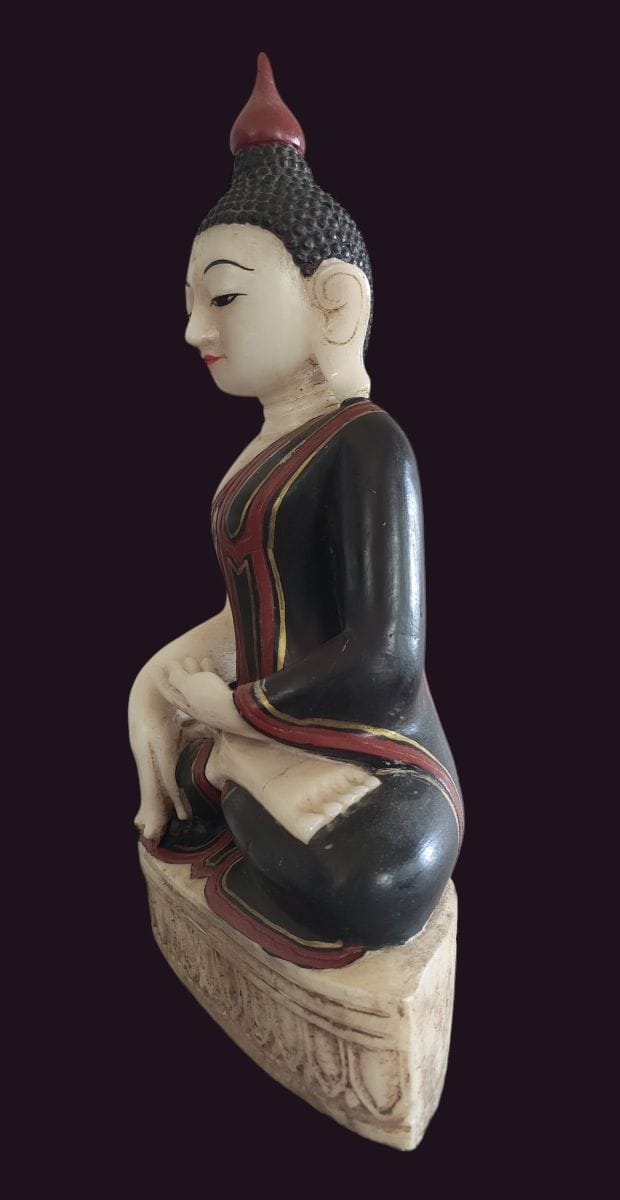
This 19th-century antique Burmese Shan marble Buddha statue carved from white marble exhibits classical Shan regional characteristics from the late Konbaung period (19th century). Seated on a single lotus pedestal in bhumisparsa mudra, The face shows high, arched eyebrows, almond-shaped downcast eyes, and a broad forehead. The elongated ears flare outward away from the neck before resting on the shoulders. The cranial protuberance (ushnisha) features tight black hair curls topped by a tall, reddish conical spire.
This Buddha statue is seen here wearing a simple dark-colored monastic robe, with a gilt trimmed red and gold painted lapel draped over the left shoulder, extending down the back and around the edges of the robe.
The robe, hair curls, and finial show evidence of having been repainted in more recent times (20th century), not unusual for many old Buddha statues from Burma, although usually they are regilded rather than painted.
SPECIFICATIONS:
- HEIGHT: – 44cm
- WIDTH: – 27cm
- DEPTH: – 10.5cm
- WEIGHT: – 11.55 kg.
- #858
19th Century Burmese Shan Marble Buddha
Among the many regional Buddha styles of Myanmar, the Shan tradition is notable for its remarkable diversity. Facial morphology, eye shape, and attire vary widely across the Shan States, reflecting local aesthetics and cross‑cultural influences. Shan images range from simply robed monastic figures to richly adorned Tai Yai‑style Buddhas seated on tiered pedestals, embellished with gilding and inlaid glass mosaics. The “Royal King Buddha” or “Jambhupati crowned Buddha” is distinguished by jewellery, shoulder flanges, and pronged crowns, although these also vary in the amount of ornamentation, they appear in bronze, wood, marble, and alabaster.
This stylistic variation is largely a consequence of the Shan State’s vast size and ethnic complexity, as well as its shared borders with China, Laos, and Thailand. These neighbouring cultures have played a significant role in shaping the evolution of Shan Buddha imagery, resulting in one of the most varied sculptural traditions in Myanmar.