Preservation of Tibetan Buddhist manuscripts
Preservation of Tibetan Buddhist manuscripts
To honor the tradition and ensure the longevity of these materials, standard archival and traditional protocols for the preservation of Tibetan Buddhist manuscripts include:
- Placement: Manuscripts should be stored in an elevated, clean position. Traditional etiquette dictates that sacred texts should never be placed directly on the floor or walked over.
- Handling: Hands should be clean and free of oil before handling un-encapsulated pages to avoid transferring skin oils to the porous Daphne paper.
- Environment: Store texts away from direct sunlight, high humidity, and extreme temperature fluctuations. Ultraviolet light can degrade the paper fibers and cause underlying lacquer treatments to crack, even if the soot-based ink remains stable.
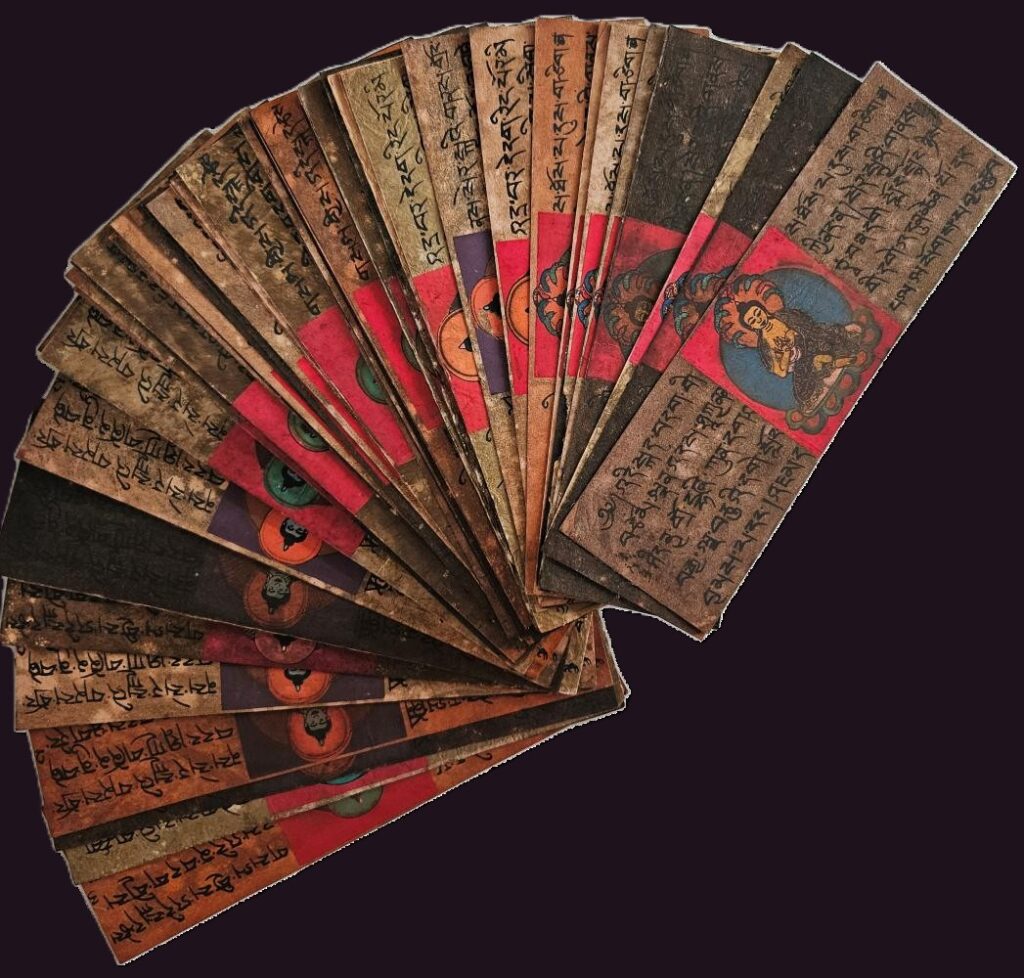
In the digital age, holding a Tibetan pecha (loose-leaf manuscripT) provides a physical connection to a centuries-old tradition. In Tibetan culture, these texts are not mere books; they represent the literal speech of the Buddha (sungten). Whether you have acquired a text through a family collection, an estate sale, or an antiquities market, understanding its physical and textual characteristics is the first step toward proper identification and preservation.
Tibetan Manuscripts – physical evidence of age:
Determining the age and authenticity of a Tibetan Buddhist manuscript requires looking closely at the materials, script and wear patterns, although many manuscripts from Nepal and Tibet are intentionally aged there are some factors which can point to a manuscript being genuinely old.
- Wormhole Alignment: When examining a loose-leaf text, look closely at insect damage. If the small holes tunnel through multiple pages and align perfectly when the stack is compiled, it proves the pages have been kept together as a single, undisturbed bundle over a long period.
- Daphne Paper: Authentic Himalayan paper is traditionally handmade from the fibrous bark of the Daphne (argeli) or Stellera plants. This paper is thick, uneven, highly durable, and slightly toxic to pests, which naturally protected the texts from insects on the high plateaus.
- Soot Ink and Surface Treatments: Traditional Tibetan ink was made from soot mixed with hide glue, which provides a rich, deep black color that resists fading. For deluxe editions, the paper was treated with black lacquer or a mixture of animal glue and pigments to create a dark background, allowing gold, silver, or white ink to stand out.
The Covers
Tibetan manuscripts are traditionally placed between two heavy wooden boards, which are may be wrapped in silk or brocade textiles.
- Carved or Painted Boards: The outer faces of these wooden covers are frequently carved with deities, auspicious symbols, or complex floral motifs.
- Gilded Inscriptions: If a metal or wooden cover features the carved or gilded mantra Om Mani Padme Hum, it signifies a dedication to Avalokiteshvara (Chenrezig), the Bodhisattva of Compassion. High-quality covers were commissioned by families or monasteries to generate spiritual merit and protect the household or temple.
Decoding the Script: Uchen vs. Ume
The primary feature of any Tibetan manuscript is its calligraphy. Tibetan script generally falls into two major categories:
Key Identifier: Look for the tsheg, the small, inverted triangle or dot between clusters of letters. This mark does not function as a full stop or period; it indicates the end of a syllable, which is a foundational element of Tibetan grammar. The end of a sentence or phrase is marked by a shad (a vertical line).
- Uchen (dbu-can – “with a head”): This is the formal, block style used for major canonical texts, woodblock prints, and formal manuscripts. You can identify Uchen by the strong horizontal line running across the top of each letter. It was standardized during the imperial period to ensure absolute clarity in recording sacred teachings.
- Ume (dbu-med – “headless”): This style is cursive and semi-cursive, used for informal notes, letters, administrative documents, and specific lineage texts. It lacks the straight top horizontal bar, displaying rounded, fluid lines instead.
SCRIPT TYPES
| Script Type | Uchen (Headed) or Ume (Headless/Cursive) | Uchen Indicates formal or canonical text; Ume is typically used for commentary or secular writing |
| Format | Pecha (Horizontal, loose-leaf) | In herited from the ancient Indian palm-leaf manuscript tradition |
| Materia | Daphne or Stellera bark paper | High Durability and natural resistance to insect dsmage |
| Mantra Inscriptions | Om Mani Padme Hum | Indicates themes relating to Avalokiteshvara and the cultivation of compassion |
| Punctuation | Tsheg (Syllable dot) and Shad (Vertical phrase bar) | Essential structural markers for reading and verifying text continuity |
| Age Markers | Aligned wormholes, ink wear, and lacquer crackle | Physical evidence of historical use and authentic long-term storage |
Resources: Digital Library of LTWA