Rare Burmese Mon Maitreya Sandstone 10th-11th C Stele
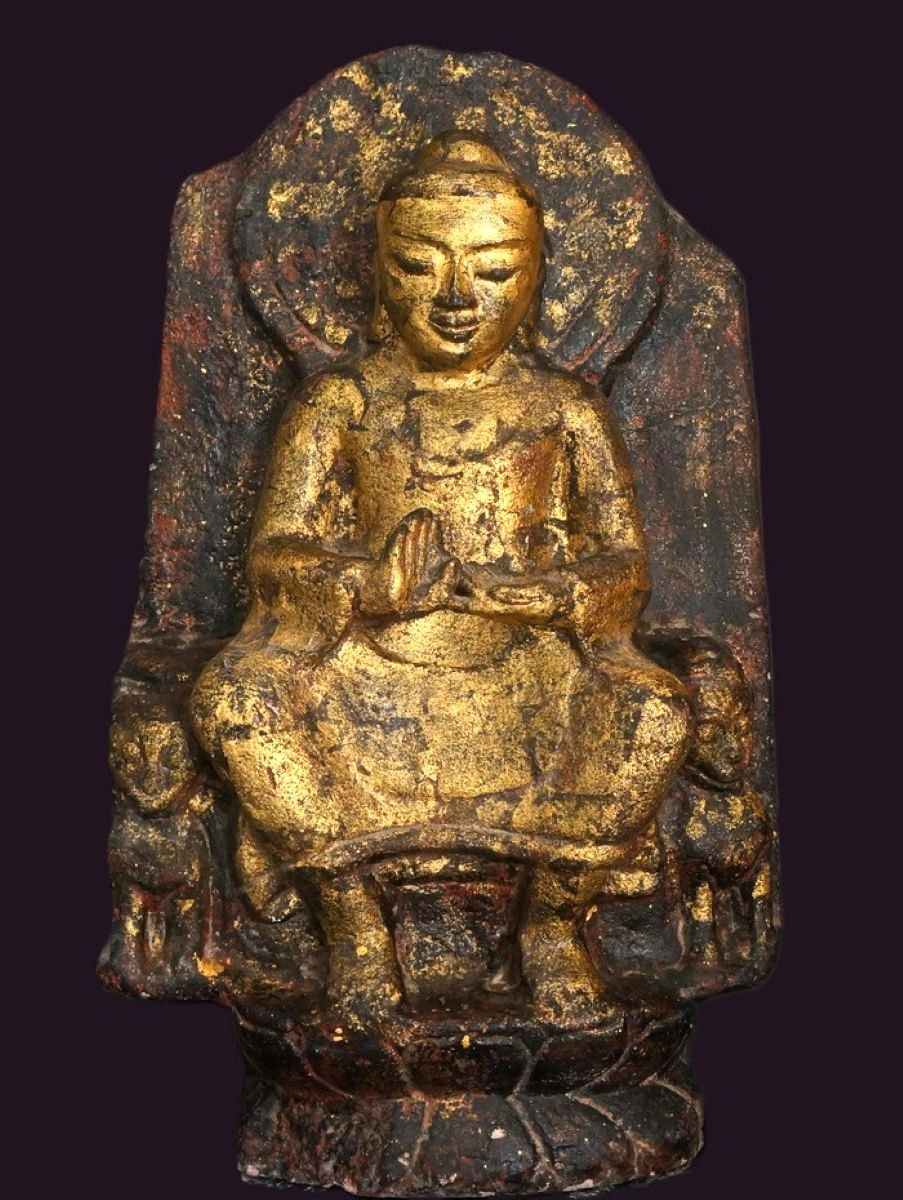
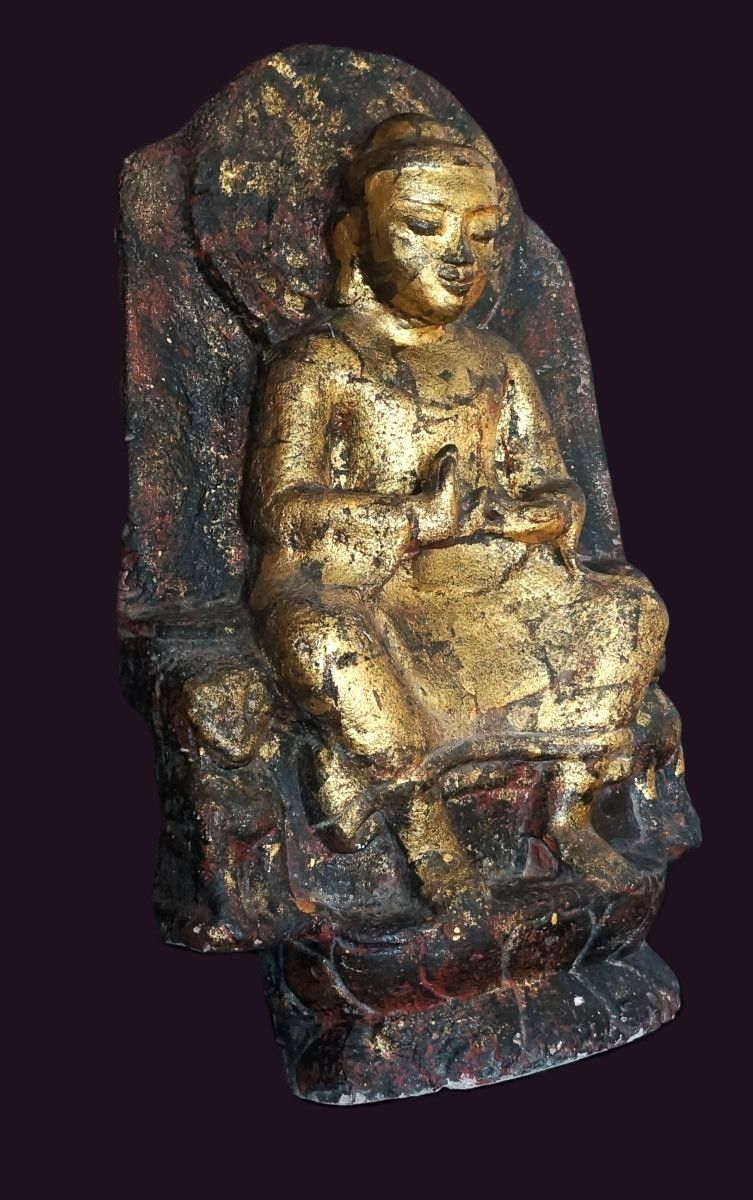
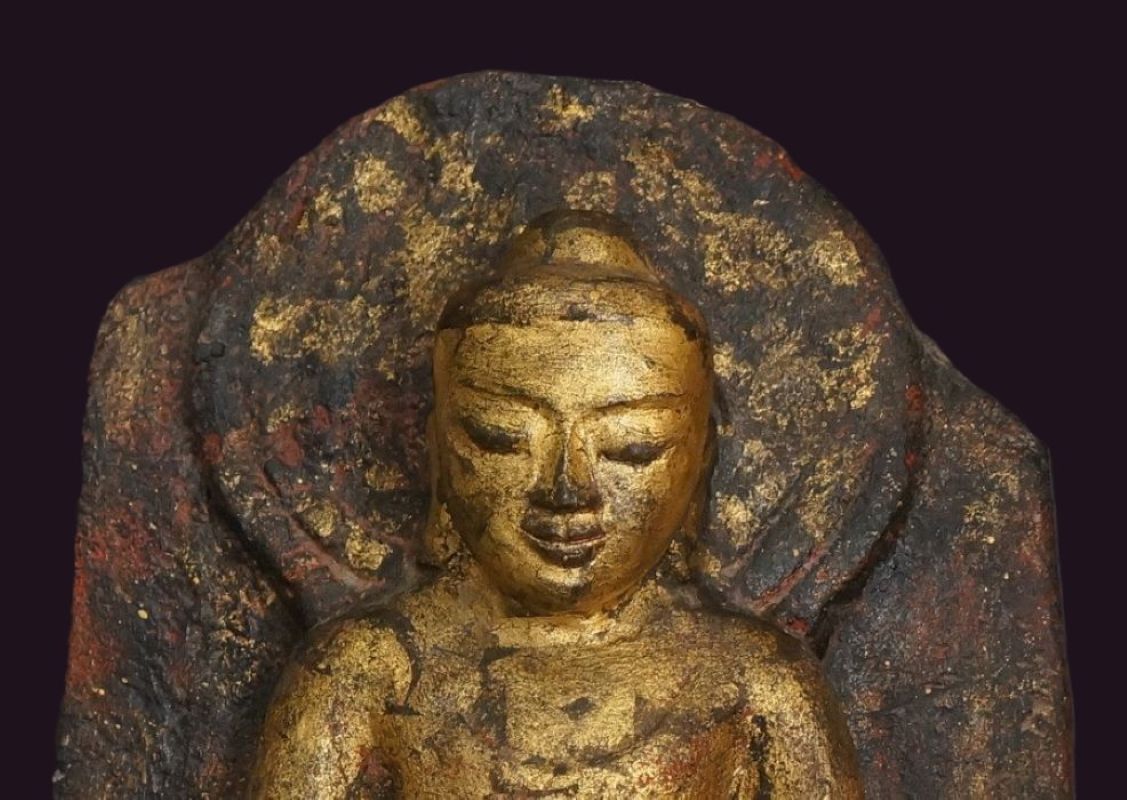
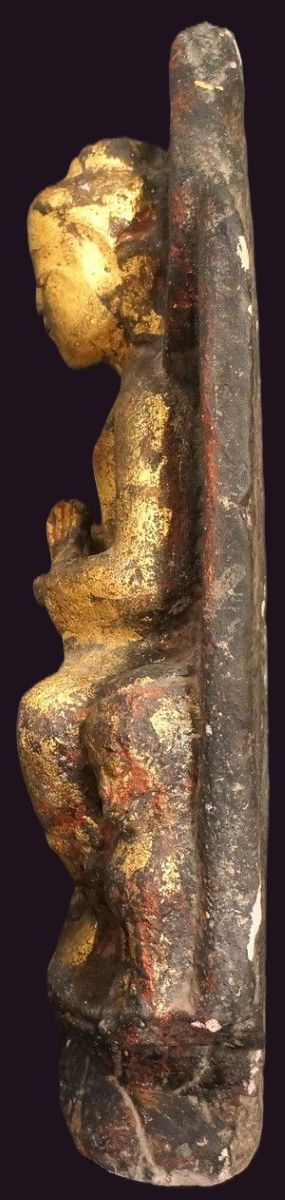
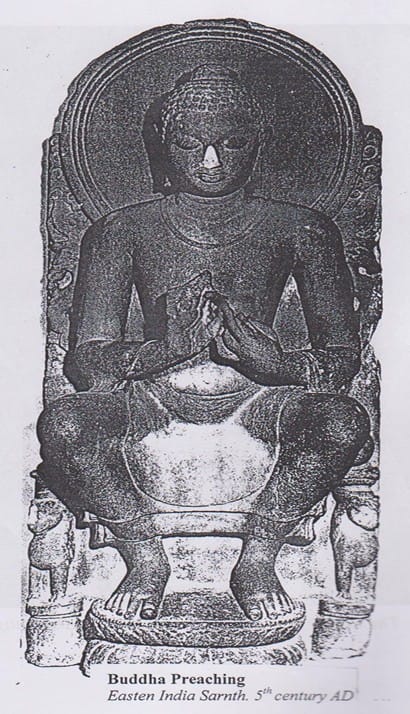
Rare Burmese Mon Maitreya Sandstone 10th-11th C Stele with hand gesture in dharmachakrapravartana mudra, also known as the gesture of teaching, depicting the Buddha’s first sermon in Sarnath after attaining enlightenment. Seated with legs pendant, sometimes referred to as European fashion, a hallmark of early Buddhist statuary that gained prominence during the Gupta and post-Gupta periods in India.
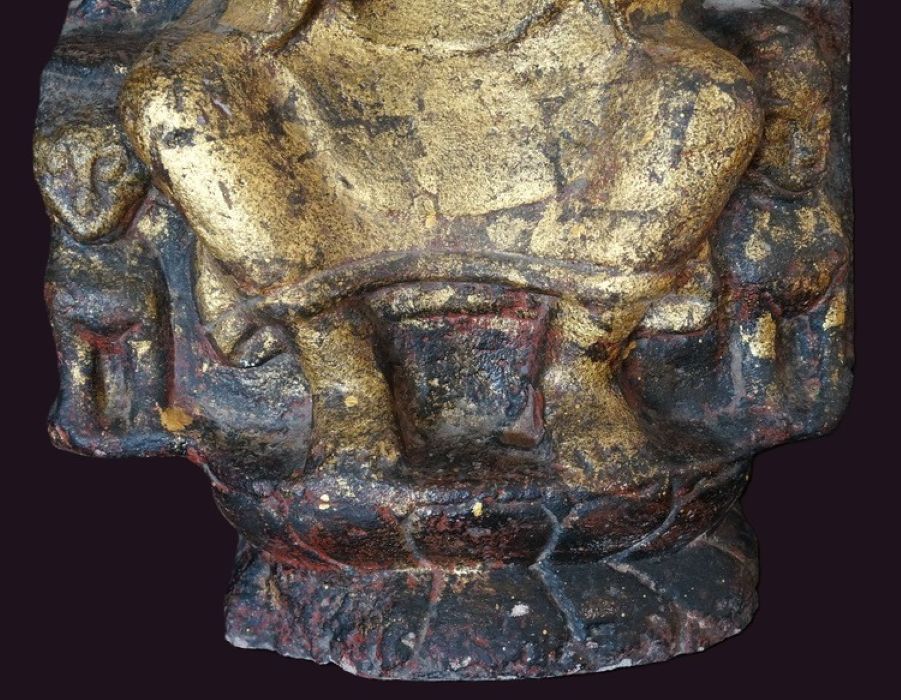
The feet of the Maitreya rest upon a double‑layered lotus pedestal, and a single, gently arched halo rises behind the head, emphasizing the figure’s serene presence. On either side of the Buddha, flanking guardian creatures, likely stylised lions or other protective mythical beasts stand as attendants, reinforcing the sculpture’s symbolic role as a sacred and auspicious image.
The Halo: While Indian art used various halo styles, a large, rounded, and highly defined halo can often signal the blending of regional Burmese preferences with influences from the wider maritime trade networks that connected Myanmar to East Asian artistic motifs.
SPECIFICATIONS:
- AGE: Although we have stated 10th -11th Century, this stele could be pre Pagan, Pyu or early Mon (8th – 10th Century)
- HEIGHT: – 61cm
- WIDTH:– 37cm at widest part
- WEIGHT:– 25 kg.
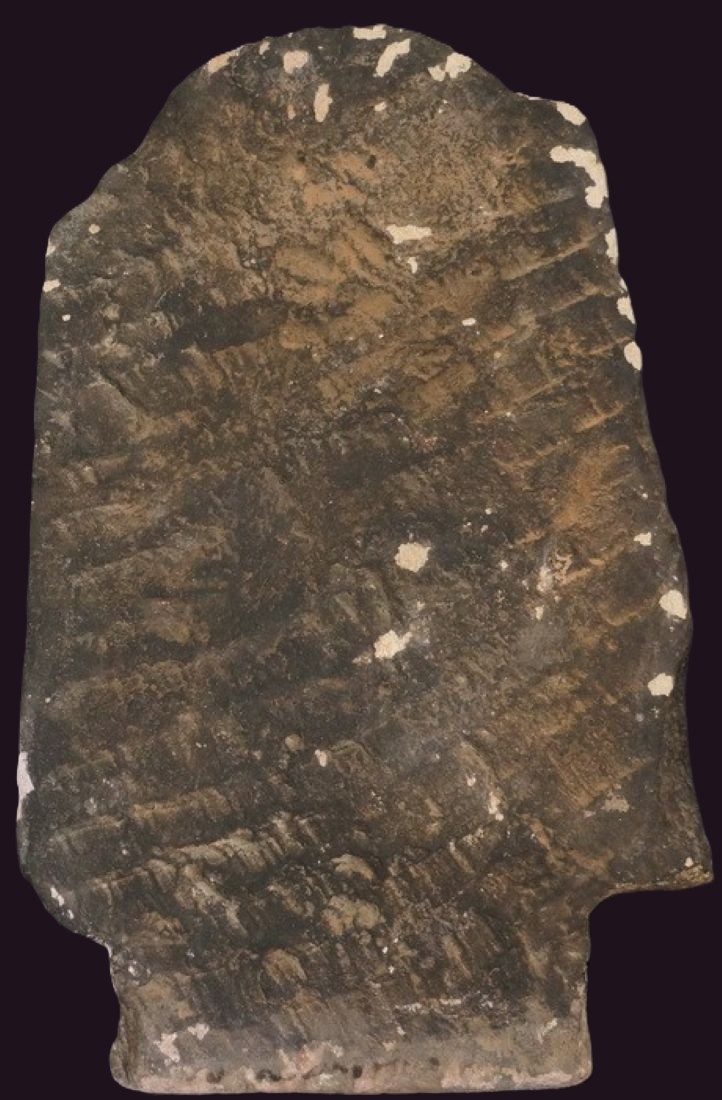
- CONDITION: Age related wear to stone and gilding
- #867
Rare Burmese Mon Maitreya Sandstone 10th-11th C Stele
The Mon – Early Bearers of Buddhism in Mainland Southeast Asia
The ancient Mon‘s, one of the oldest ethnolinguistic groups in mainland Southeast Asia, played a foundational role in transmitting Buddhism into what is now Myanmar, Thailand, and Laos. Their early kingdoms, most notably Thaton and Dvaravati were flourishing Buddhist centres from at least the 5th–6th century CE.
The Mon were among the first peoples in the region to adopt Indian religious, artistic, and literary traditions, and they served as a cultural bridge between India and Southeast Asia.
Although the Mon are today associated primarily with Theravada Buddhism, historical evidence shows that Mahayana Buddhism had a significant presence in early Mon culture.
Mahayana Connections
- Dvaravati art (in present-day central Thailand), strongly linked to the Mon, contains Mahayana imagery, including:
- Avalokiteśvara
- Maitreya
- Prajñāpāramitā
- Bodhisattva triads
- Archaeological finds from Thaton and Lower Burma show Mahayana-style votive tablets, inscriptions, and iconography.
- The Mon were in contact with Bengal, Nalanda, and eastern India, where Mahayana and Vajrayana traditions were flourishing between the 7th and 11th centuries.
- Mon inscriptions occasionally reference Mahayana concepts, including Bodhisattva ideals and paramitas.
The Maitreya Buddha, often described as the future Buddha or Buddha-to-come, occupies a distinctive place in Buddhist belief and artistic tradition. In sculpture and paintings, Maitreya is frequently portrayed in a seated posture with both legs pendant, the feet resting naturally on a pedestal. Another well‑known iconographic form, particularly in Indian, Himalayan, and Chinese Buddhist art shows Maitreya seated with one leg pendant while the other leg is bent, the foot placed upon the opposite thigh or upon the pedestal supporting the figure. This relaxed, approachable pose symbolizes readiness to descend into the world when the time of his future enlightenment arrives.
Unlike many other Buddhist figures, Maitreya is not depicted as strictly male or female. Instead, the future Buddha embodies a more universal, transcendent presence, reflecting qualities of compassion and spiritual potential that are not bound to gender.