

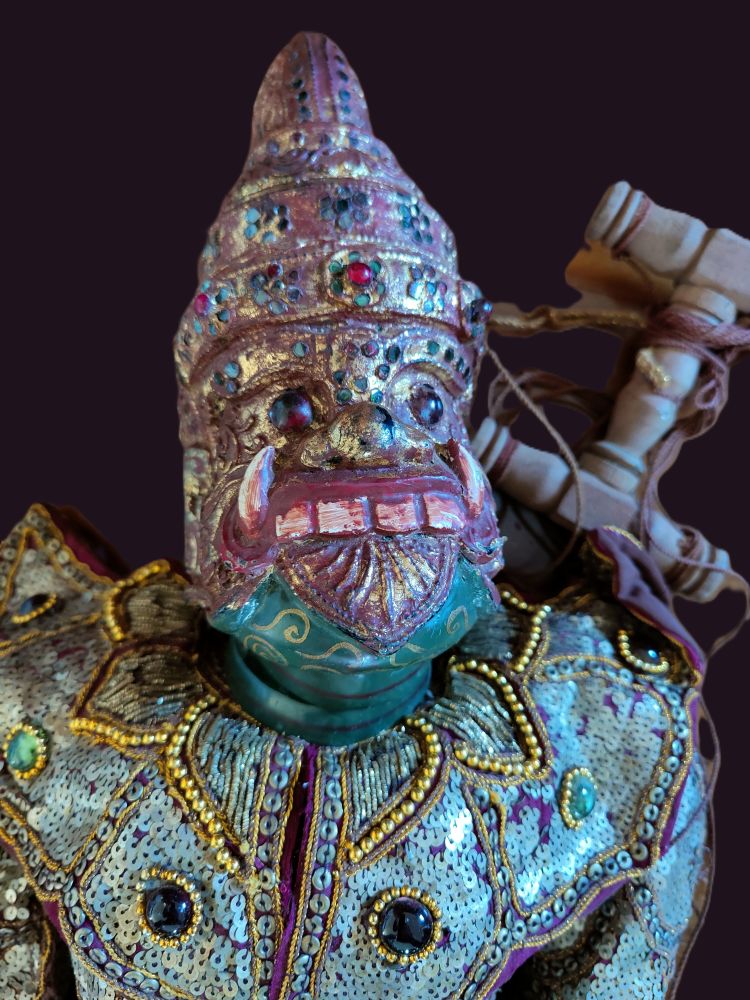
Antique 97cm Burmese Puppet – Taw Belu Forest Ogre
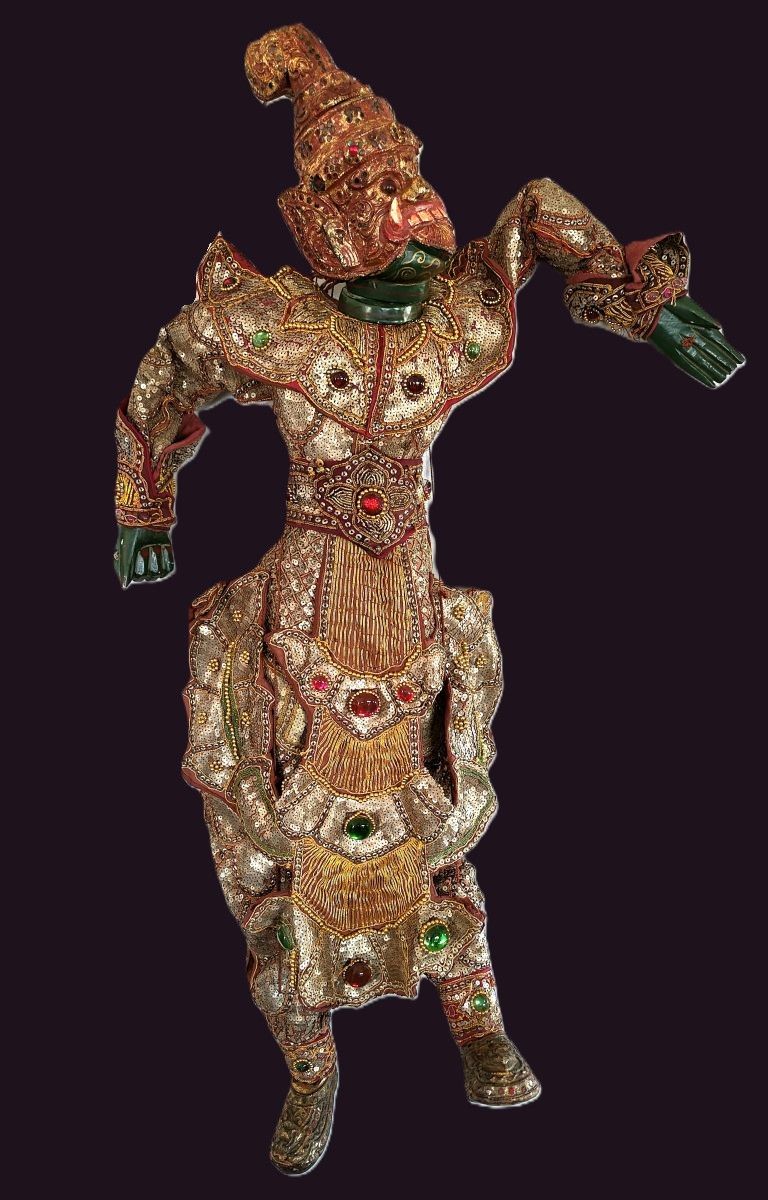
This antique 97cm Burmese puppet – Taw Belu Forest Ogre represents an exceptional example of traditional Burmese craftsmanship. This puppet figure is a classic traditional character in the set of 28 Burmese puppets. One of a pair acquired in Mandalay 15 years ago, the other is the Garuda (galon).
The part Taw Belu plays in Burmese folklore is known for his fierce nature, he is an antagonist who frequently engages in a choreographed conflict with his counterpart, the Nan Belu.
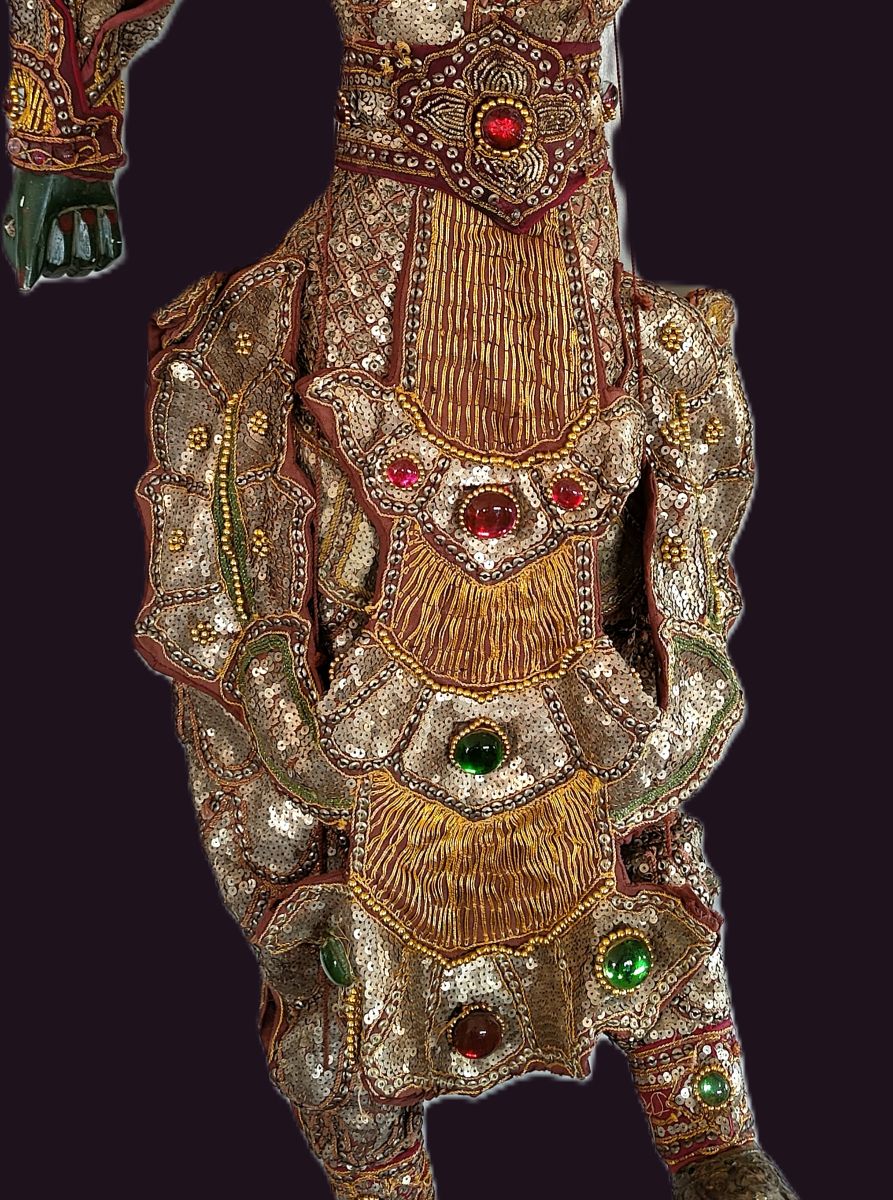
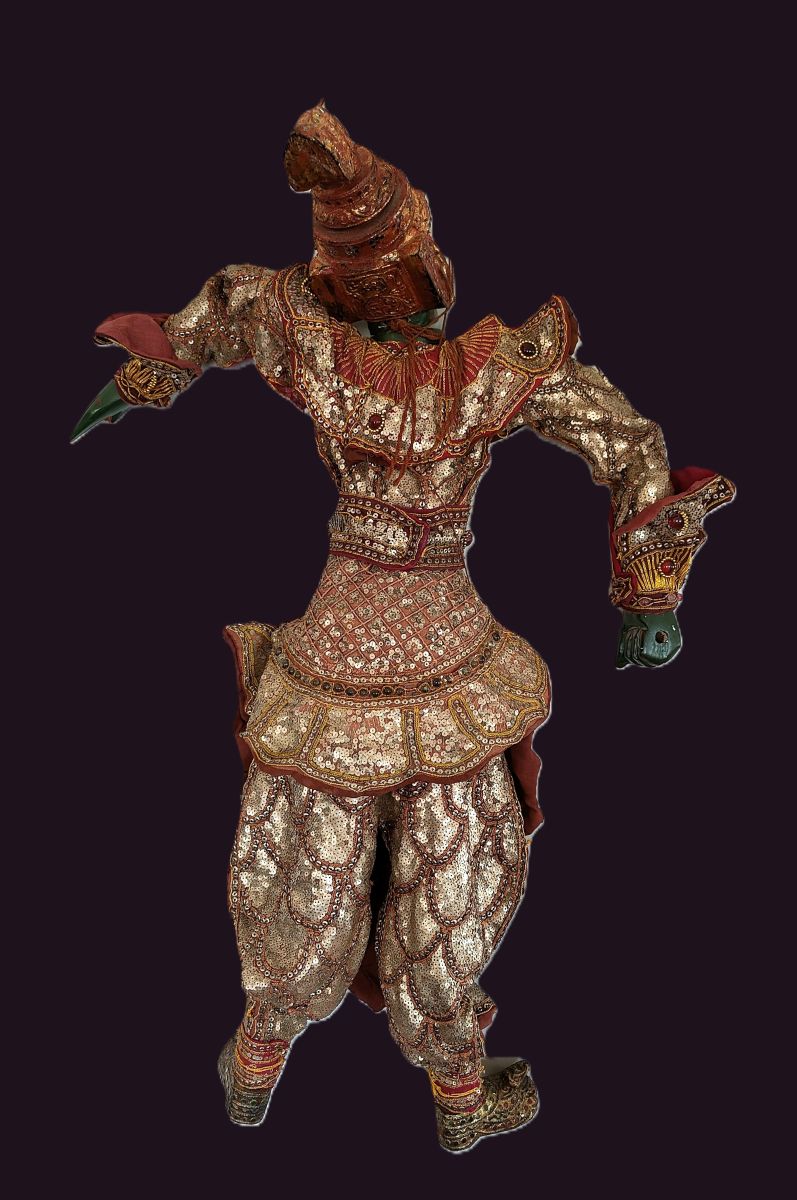
This piece features a solid wooden body and is heavily embellished with silver sequins, glass beads, glass mosaics and elaborate embroidery. The head and feet are decorated with thayo lacquer work and gilded. This puppet remains a significant piece of Burmese theatrical heritage, complete with its original stringing system and wooden control bar.
The puppet shows minimal age-related wear, including some losses to the sequins and glass beadwork, which is consistent with its history as a performance piece. The original, complex stringing system remains attached but intertwined with each other and connected to a wooden control bar intended for manipulating the movements of the head, arms and legs. The Taw Belu character represents a significant element in Burmese theatrical heritage.
SPECIFICATIONS:
- AGE: – Early 20th Century
- LENGTH: – 97cm
- WEIGHT: – 4.95 Kg.
- #7
Antique 95cm Burmese Puppet – Taw Belu Forest Ogre
The puppet theatres in Burma known as yoke the or yoke thay, has a rich history dating back several centuries.
- Early Origins (15th Century): References to yoke thay date back as early as the 15th century. An inscription on a stone slab at the Htupayon Pagoda in Sagaing, dated 1444 AD, lists specific individuals as “ah-yoke” (puppeteers).
- Royal Patronage (c. 1780 – 1885): The art form flourished under the Konbaung Dynasty. It is widely believed that the modern structure of the yoke the performance, including the set of 28 characters, was standardized around 1780 by U Thaw, the Minister of Royal Entertainment under the reign of Singu Min.
- A “Golden Age” (19th Century): The 19th century is considered the peak or “apogee” of Burmese puppetry. During this era, puppetry was highly favored by royalty, partly because human dancers were sometimes forbidden from performing on stage to avoid standing higher than nobles or the elderly.
- Political Significance: Beyond entertainment, marionettes served a unique political role as a conduit between the ruler and subjects. Because “you could kill a messenger but not a marionette,” puppets were used to deliver veiled warnings or critiques to the king, or to reprimand court members without causing direct offense.
- Colonial Decline (1885): The traditional patronage of yoke the troupes largely vanished following the British conquest of Upper Burma in November 1885 during the Third Anglo-Burmese War.
- Modern Revival: After a period of decline, the art form saw a revival in the late 1990s with official support, and today it remains a significant cultural symbol of Myanmar, often seen in tourist-focused performances and continuing to evolve through new genres that combine puppets with live human actors.