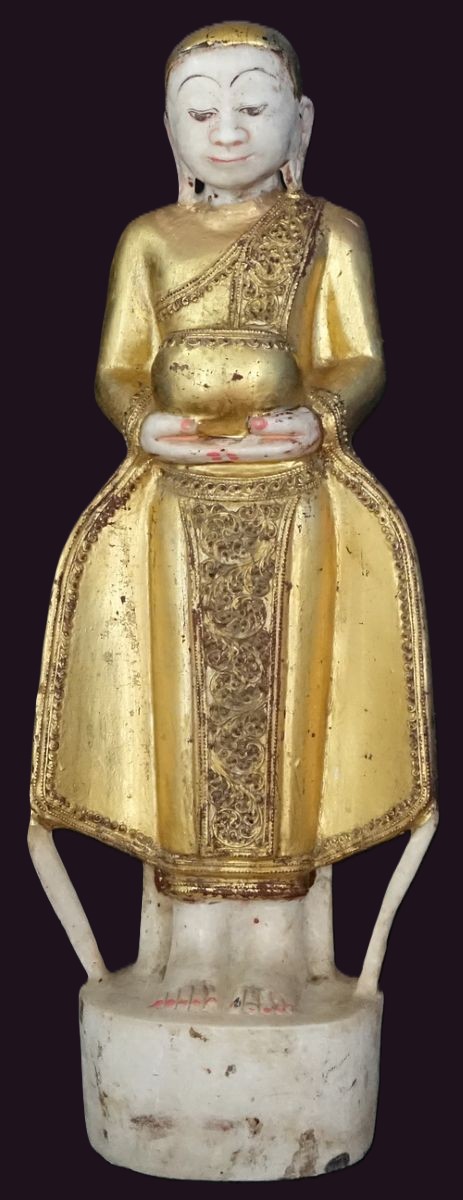

Antique Burmese Alabaster Monk with Alms Bowl
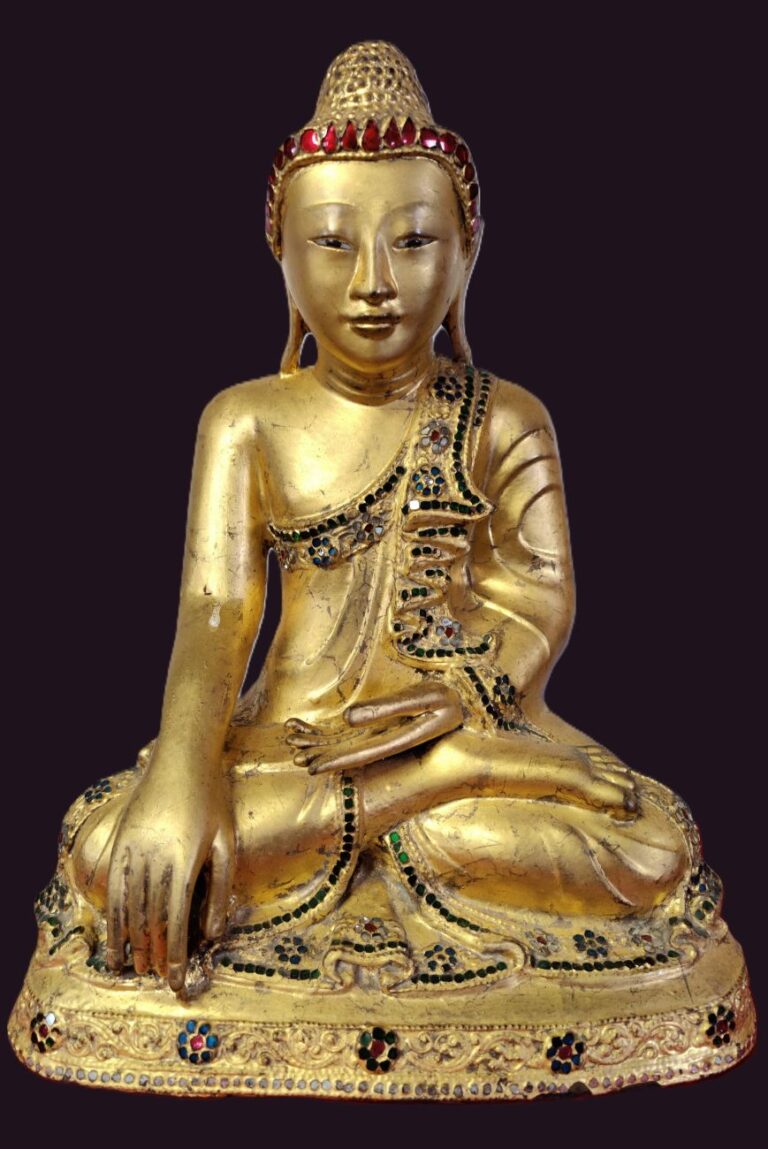
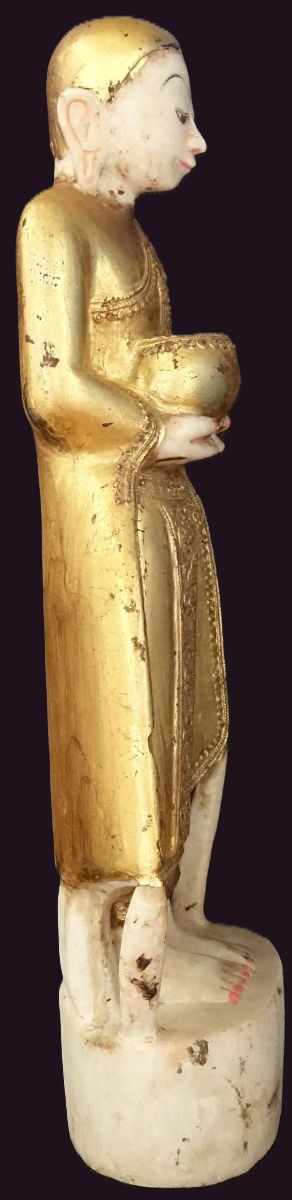
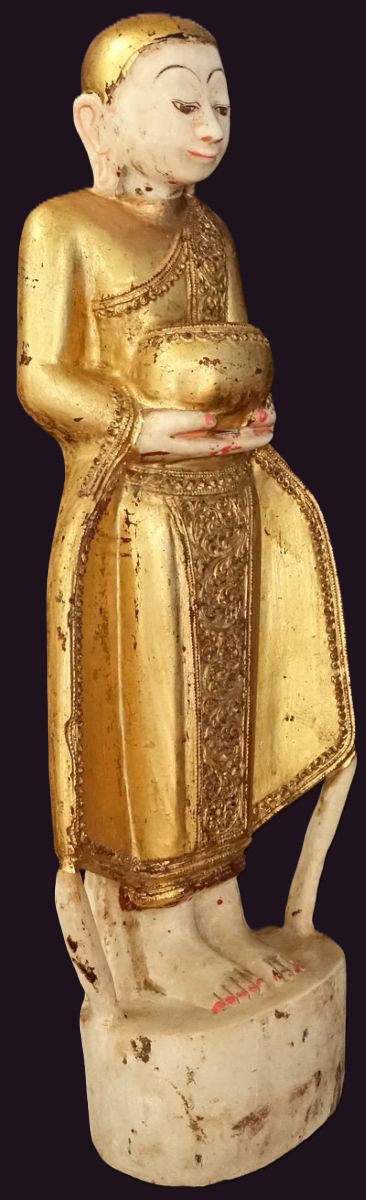
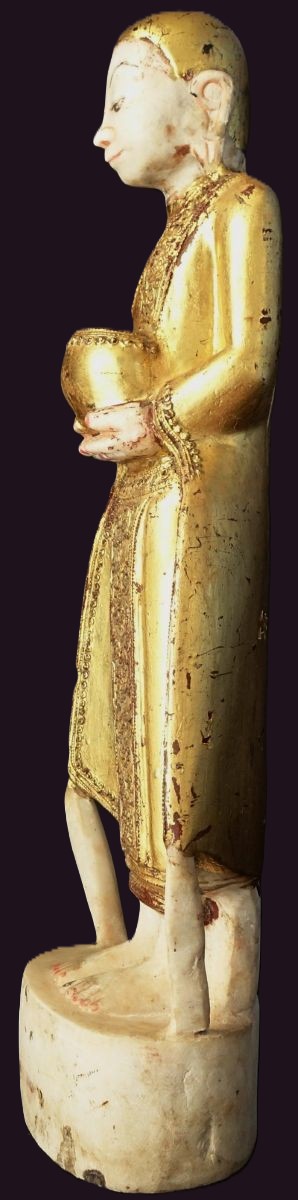
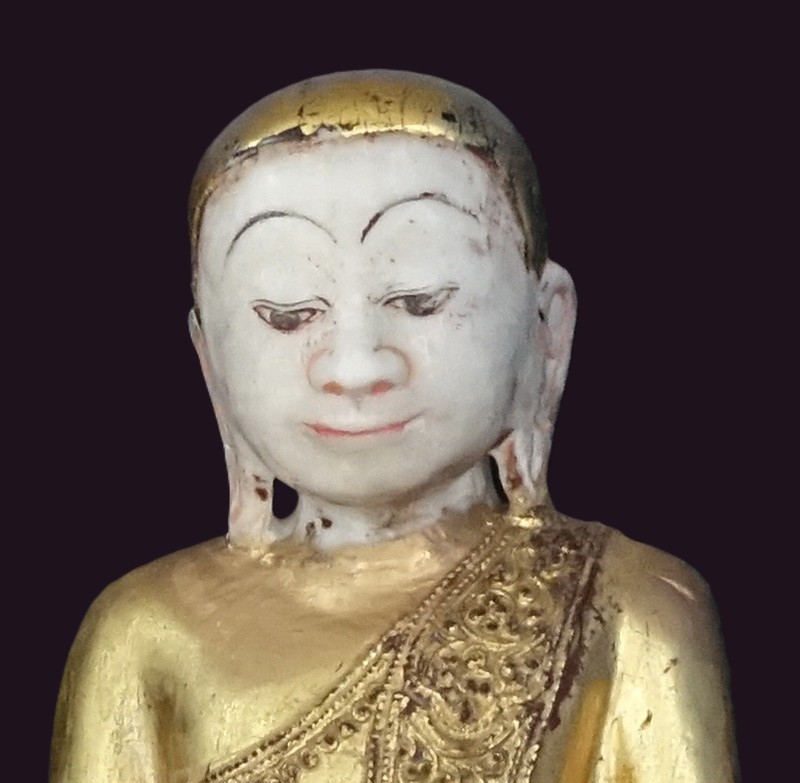
Antique Burmese Alabaster Monk with Alms Bowl stands on a tall plain plinth with side supports to carry the weight of the robe. This monk statue is a classic example of late Konbaung to early Mandalay workshop sculptures.
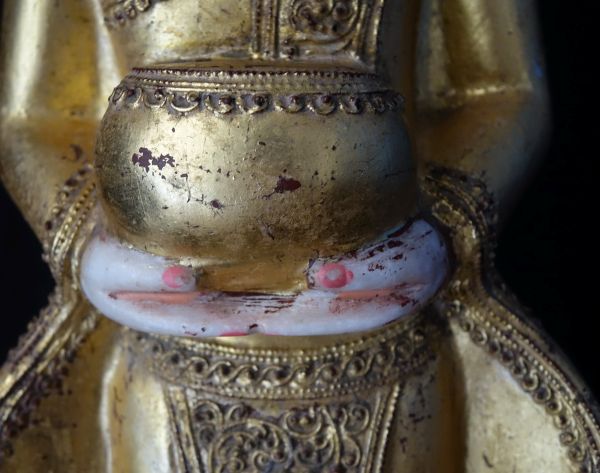
The figure represents the monk in the alms‑receiving posture, holding a rounded offering bowl close to the chest, an iconographic form deeply associated with Burmese devotional practice and the daily ritual of monastic alms collection.
The borders of the robe, central apron, and shoulder sash (sanghati) are decorated with raised relief lacquer scrollwork (thayo), with an incised motif decorating the sanghati on the back and gilded over with gold leaf, reflecting the ornate aesthetic that flourished in Mandalay from the late 19th century onward.
A particularly charming detail is the presence of painted fingernails and toenails; painted eyes and lips, a feature found on higher‑quality Burmese alabaster images of this period.
The heavy side-flares of the outer robe (civara), stiffly winging outward away from the body, are a signature convention of late Konbaung and Mandalay-era standing monk images.
- AGE: 1880 – 1920
- HEIGHT: 65 cm
- WIDTH: 18 cm
- DEPTH: 16cm
- WEIGHT: 18.05 kg.
- #875
Antique Burmese Alabaster Monk with Alms Bowl
In the early Buddhist tradition, the Buddha was accompanied by a circle of revered disciples whose presence shaped the spiritual landscape of his teaching. Foremost among them were the great elder monks Śāriputta and Moggallāna, celebrated respectively for their wisdom and meditative mastery, and often invoked as exemplars of perfect discipleship.
Around them gathered other distinguished followers, Kassapa the ascetic, Ānanda the devoted attendant, and Upāli the guardian of monastic discipline, each embodying a particular virtue that supported the Buddha’s mission. Images of the Buddha holding the alms bowl, such as this alabaster figure, evoke the daily rhythm shared by these disciples, the quiet dignity of receiving alms, the humility of wandering from house to house, and the deep companionship of a community united in practice and compassion.