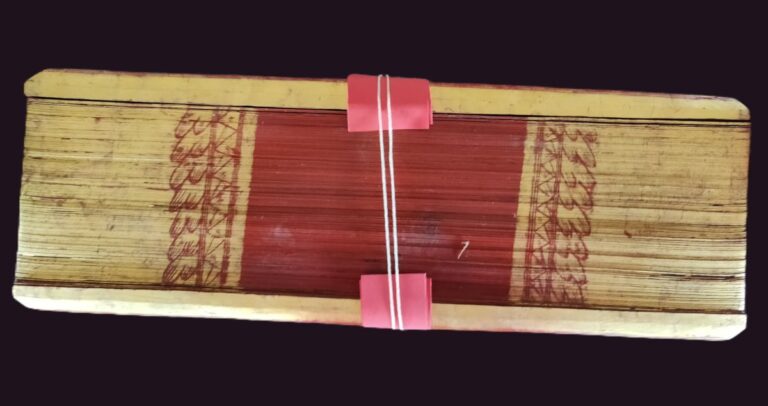
17th C Burmese Bronze Arakan Crowned Buddha Statue
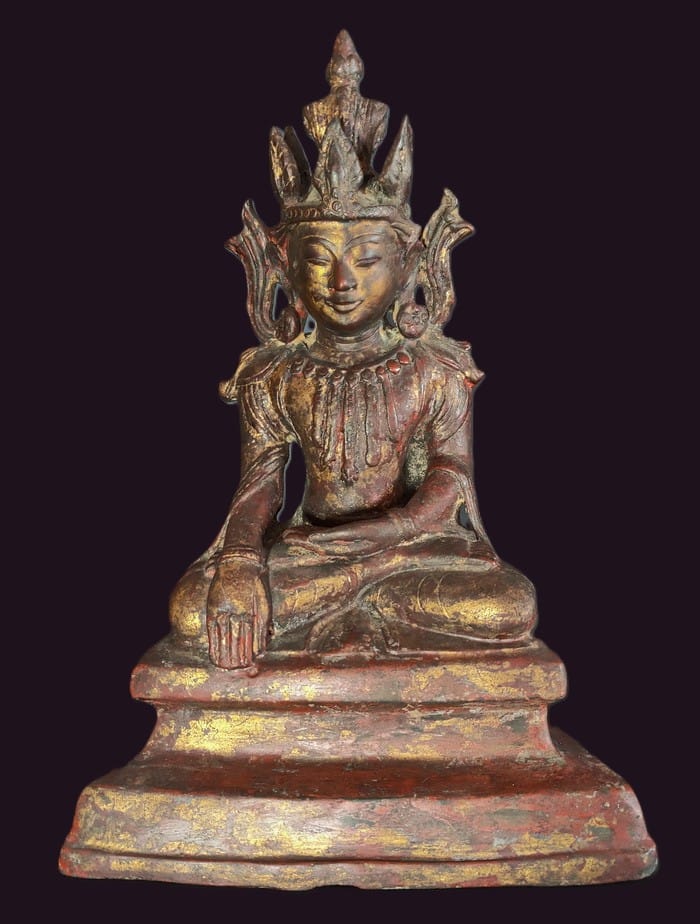
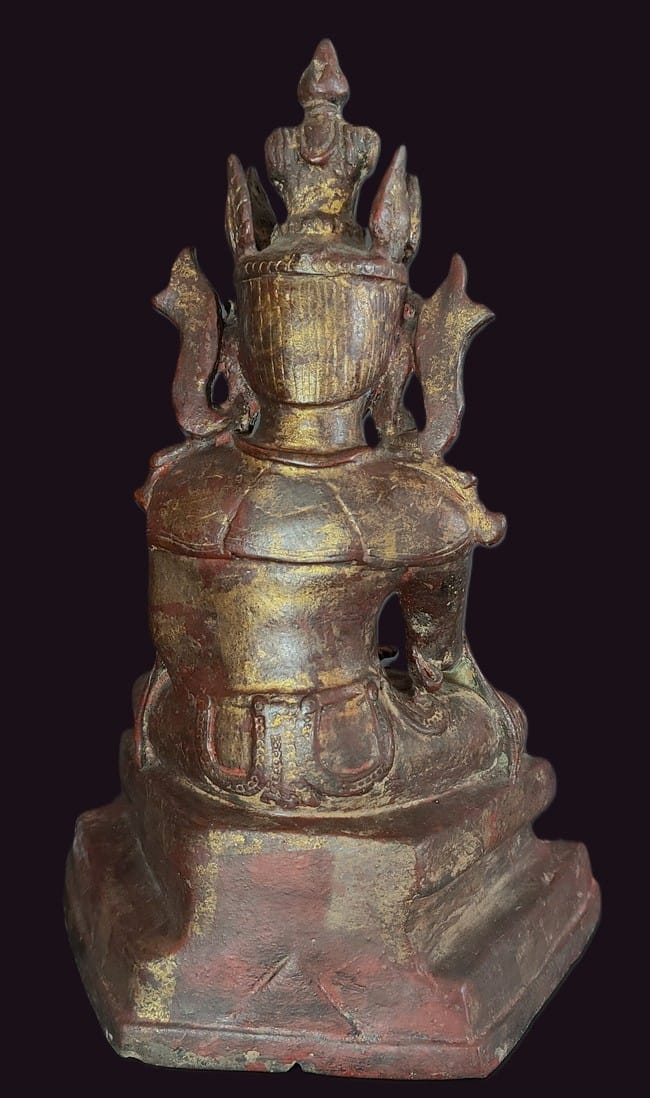


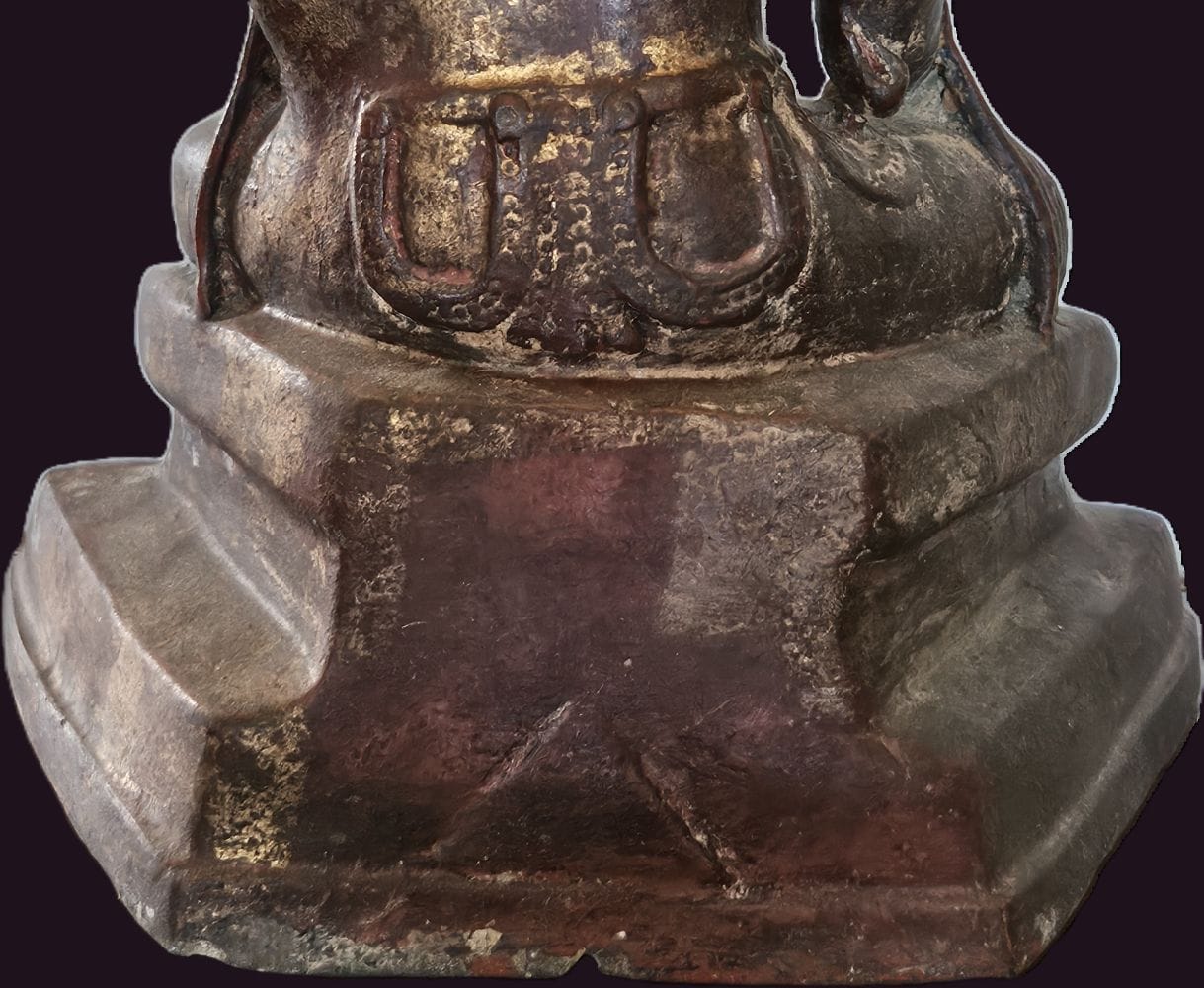
17th C Burmese Bronze Arakan Crowned Buddha Statue
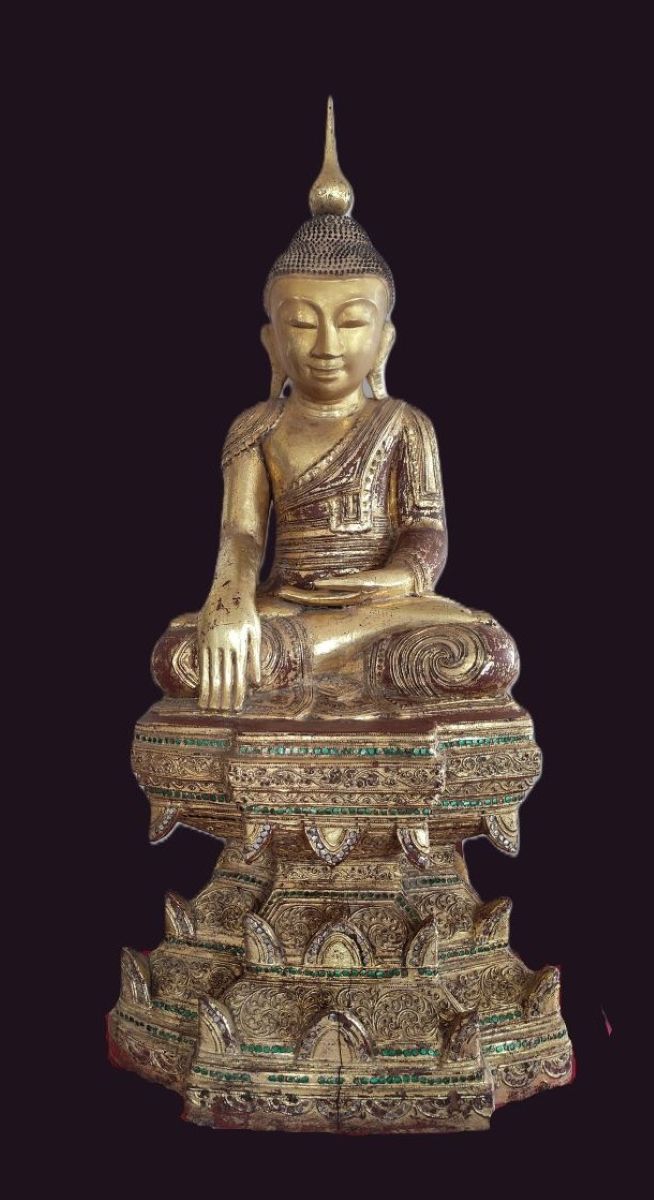
17th c Burmese bronze Arakan crowned Buddha statue seated in padmasana on a two-tiered square pedestal, hands depicted in bhumisparsha mudra (earth-touching gesture). The figure wears full royal regalia, featuring an elaborate crown with five lotus-bud prongs (one missing on the back) and a tall, decorative chignon style usnisha topped by a pointed finial surrounded by lotus flowers at the base. Large side flanges extend from the base of the crown, and the ears decorated with heavy earrings and necklace. Rings adorn the fingers of the right hand. The face displays classic downcast eyes and a subtle, serene smile.
This royal iconography represents the Jambhupati visual tradition, depicting the Buddha in sovereign attire to subdues the mythical King Jambhupati. While originating in early regional traditions, this crowned style became central to Arakanese art during the Mrauk-U period and subsequently influenced Buddhist imagery across Myanmar, where craftsmen executed the form in bronze, wood, marble, and lacquer.
The crown shows a circular vestigial point with a granular texture on the back, indicative of a historical loss of a prong on the back of the crown, oxidation and lacquering suggests the damage occurred during its original period of devotional use.
SPECIFICATIONS:
- AGE: – Estimate between 17th – 18th Century
- HEIGHT: – 38cm
- WIDTH: – 21cm
- DEPTH: – 15.5cm
- WEIGHT:– 6.1 kg
- CONDITION: – Gilt has mostly deteriorated exposing the red lacquer used as a base preparation for gilding.
- #21
17th C Burmese Bronze Arakan Crowned Buddha Statue
Arakan (modern Rakhine State) occupies the western coastal border of Myanmar. Geographically isolated from central Myanmar by the Arakan Mountains (Arakan Yoma) and bordered to the northwest by Bangladesh along the Naf River, the region developed a distinct artistic tradition blending indigenous styles with neighboring South Asian influences.
The people of Arakan have their own distinct culture, dialects and style of Buddha statues. The casting of bronze Buddha statues in the State of Arakan (Rakhine) was heavily influenced by visiting Buddhist pilgrims from India during the first millennia.
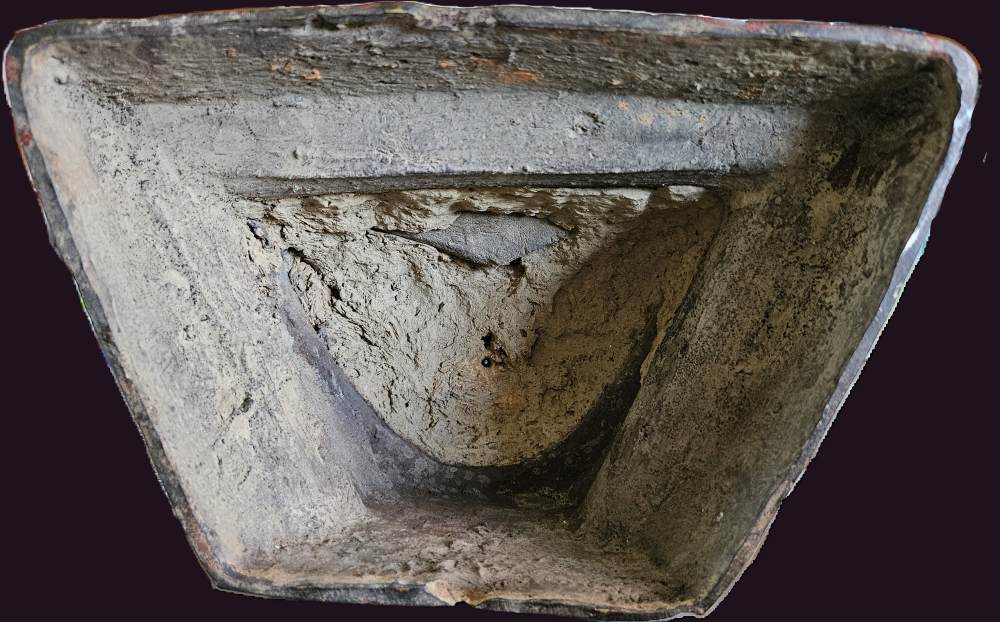
The Triratna (Three Jewels): A triangle often serves as a quick symbol for the Three Jewels, the Buddha, the Dhamma, and the Sangha. Placing this mark at the base of the spine creates a solid foundation, anchoring the figure with a permanent symbol of Buddhist identity. (That is my assumption), or that Unlike modern signatures, these geometric marks may identify the work of a specific master founder or a family of donors. If this was a high-status commission, the mark ensures the merit of the gift is tied to the correct lineage.