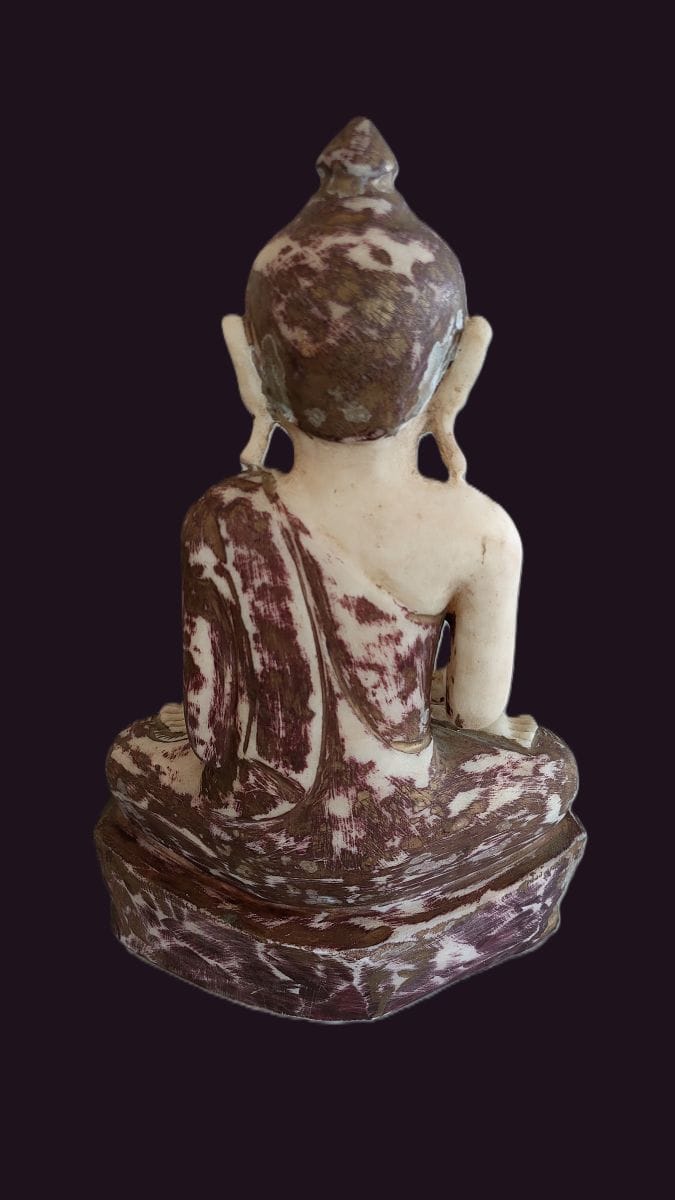

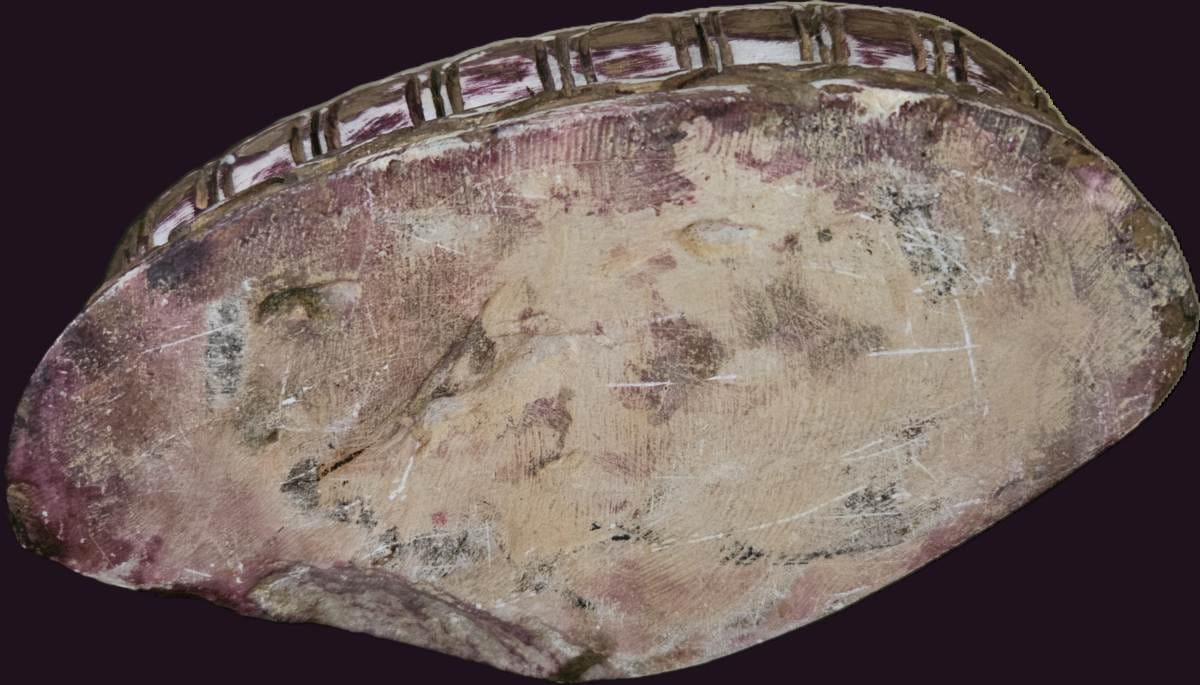
19th-Century Shan Alabaster Buddha Statue
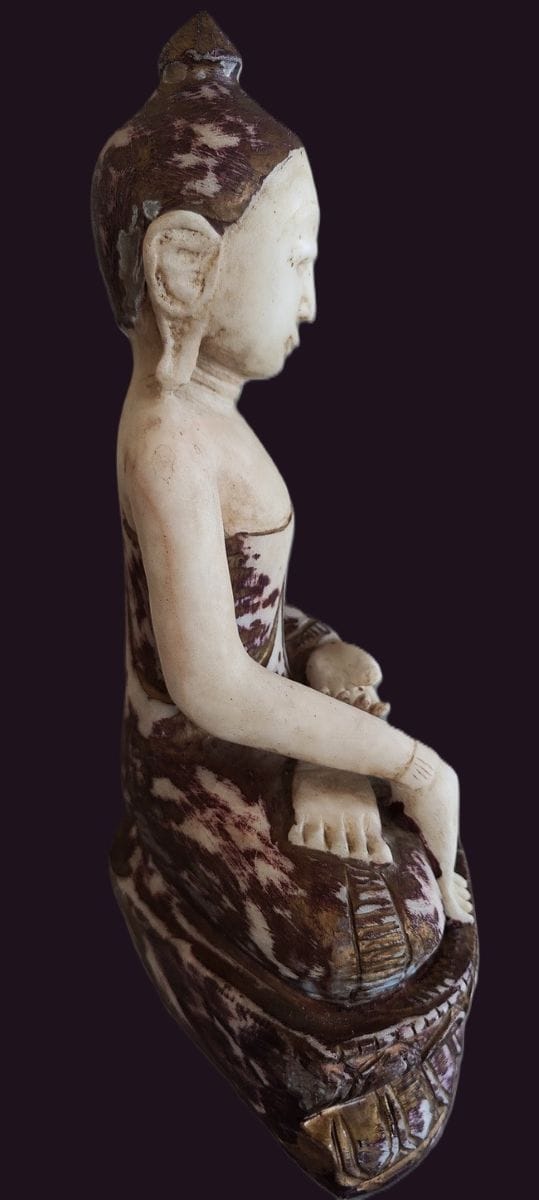
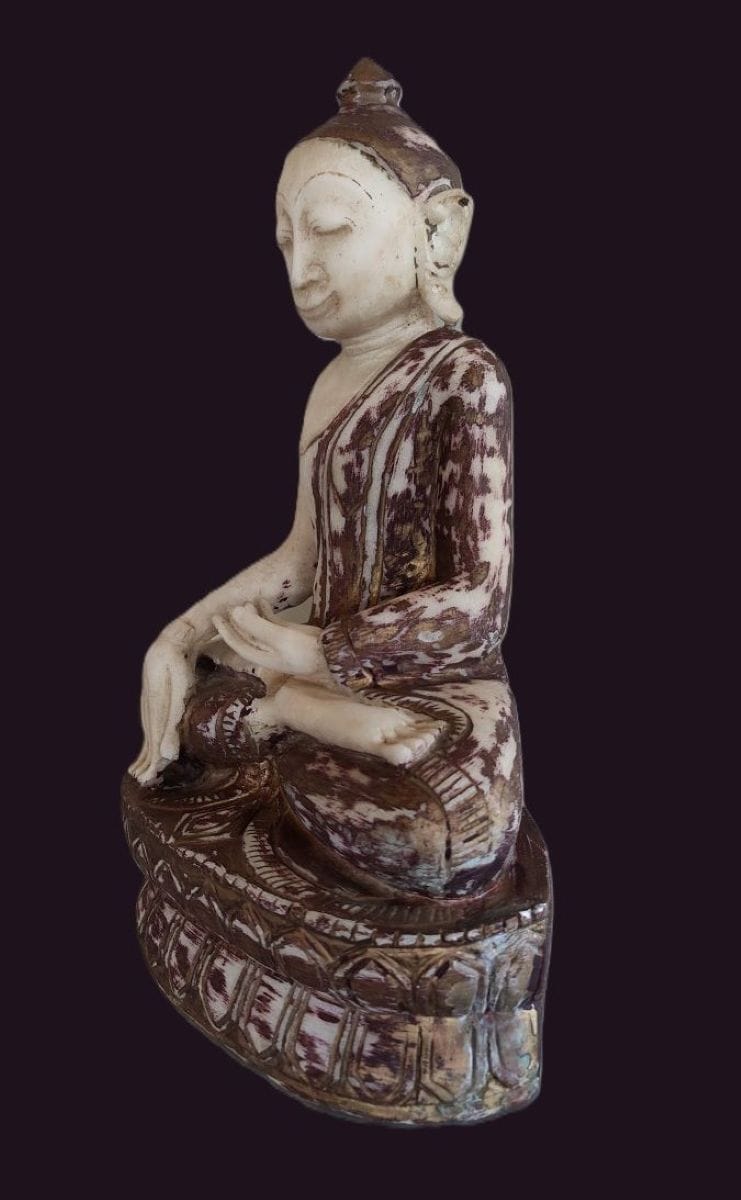
Seated in bhumisparsha mudra on a double-lotus pedestal, this 19th-century Burmese alabaster Buddha blends Ava stylistic traditions with regional Shan craftsmanship. The head features classic Ava characteristics, with a rounded pointed conical finial and large, long, sweeping earlobes that reach toward the shoulders. These features sit alongside a soft, rounded face with high-arched brows, downcast eyes, and a broad smile. The elongated, stylised fingers and fluid gesture reflect the regional Tai Yai lineage, similar to the hand gesture in this hollow Tai Yai lacquer Buddha statue.
An unusual feature of this statue is the incised wristband on the right wrist, which bears a similar incised pattern to the hemline of the robe.
SPECIFICATIONS:
- HEIGHT: 38 cm
- WIDTH: 22 cm
- DEPTH: 10 cm
- WEIGHT: 9.6 kg
- #840
19th-Century Shan Alabaster Buddha Statue
There are a few reasons why this statue has been scraped of its gilding:
1. Direct looting during conflict
The Shan States often served as front lines in conflicts between the Burmese crown, local Sawbwas (princes), and later British forces. A statue with “scraped” gold symbolises the resilience of these highland monasteries. During the Anglo‑Burmese conflicts, especially the Third Anglo‑Burmese War in 1885, British forces carried out extensive prize‑taking and looting in royal compounds, monasteries, and major pagodas. Large alabaster and marble Buddha images were far too heavy to transport, so soldiers and opportunistic camp followers resorted to stripping them instead. Using knives and small tools, they shaved off the thick layers of 24‑karat gold leaf and lacquer that covered the statue; the scrapings were then melted down into compact, easily portable gold bullion.
2. Western Aesthetic Preferences vs. Local Devotion
In Burmese Theravada practice, applying gold leaf (shwe chi) to a sacred image is regarded as one of the highest forms of devotion and merit‑making. Over generations, devotees repeatedly added fresh layers of gold and protective lacquer, gradually enveloping the original white stone beneath a thick, gleaming surface.
When such objects later entered the colonial art market or Western collections, tastes shifted. British collectors often favoured the “pure” classical appearance of unadorned alabaster or marble rather than the richly gilded aesthetic valued in Myanmar. As a result, dealers and collectors deliberately removed the sacred lacquer and gold coatings to expose the underlying stone, reshaping the objects to suit European preferences.
3. Hardship during hard times in Burma
In Burma, gold leaf on a sacred image was not only ornamental; it also functioned as a tangible reserve of wealth. During periods of hardship, communities sometimes removed the gilding and sold it to support the monkhood or safeguarded it from thieves. Historical accounts describe this protective practice when invading armies or roaming bandits threatened a region; lay custodians or villagers might scrape away gold foil, melt down detachable ornaments, or deliberately mask gilded figures beneath thick coatings of black lac‑resin or mud. The aim was to make precious alabaster or bronze images appear like plain, unremarkable stone or clay, preserving them until danger passed.
This statue has been crafted from high-grade, pure white Sagyin alabaster with no visible mineral veining. The torso and chest show a smooth, matte finish where the original gilding and red lacquer have been manually removed, leaving faint linear striations. This could also suggest a historical “reclamation” of the gold leaf, a practice sometimes seen during periods of monastic hardship.