Mandalay Crowned Buddha: Alabaster & Wood
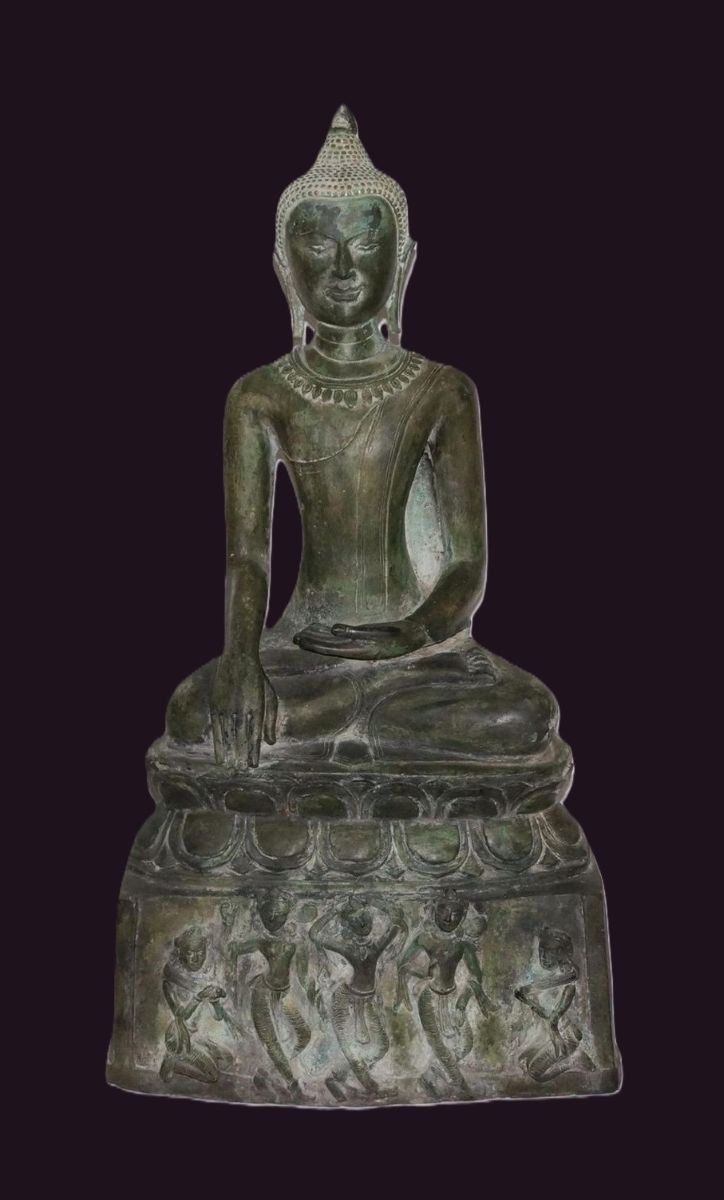
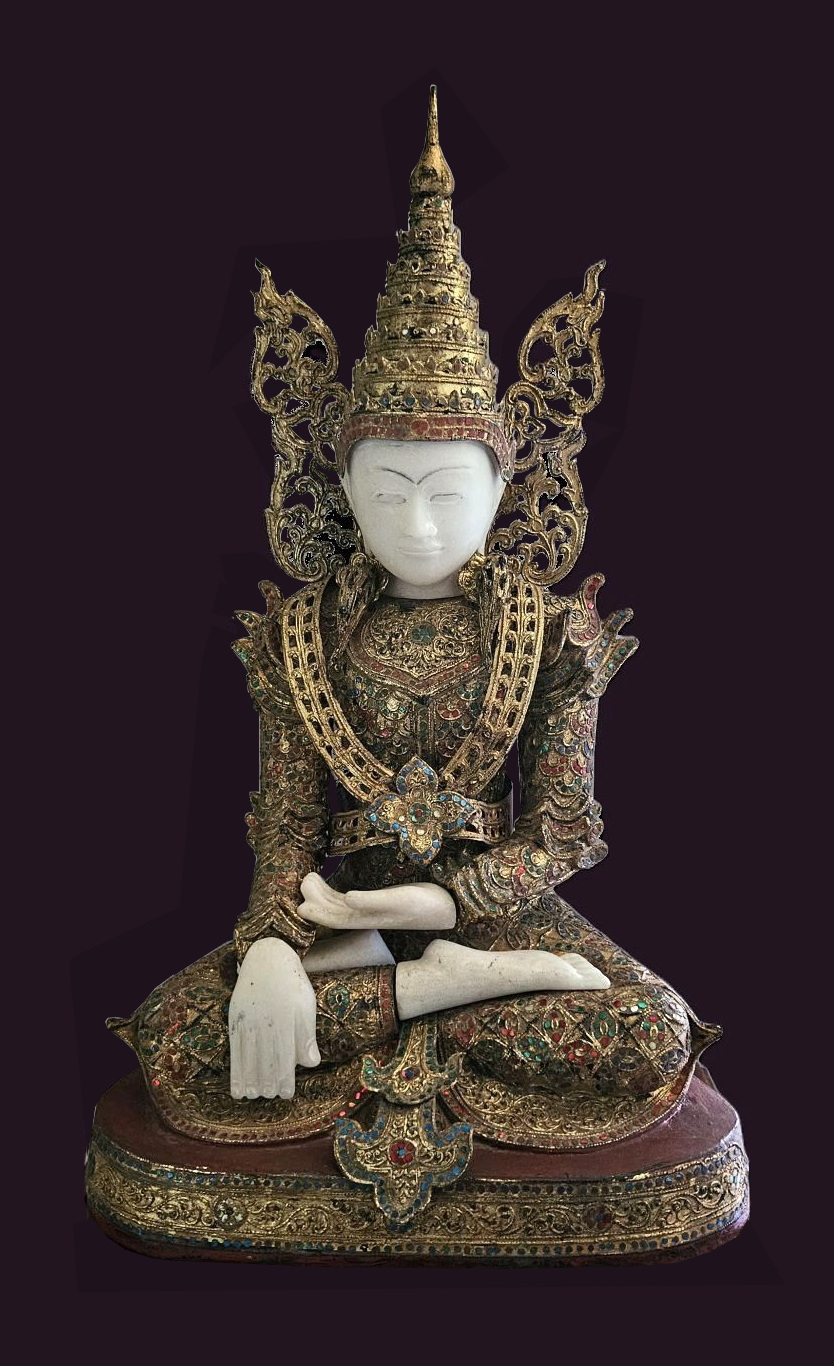
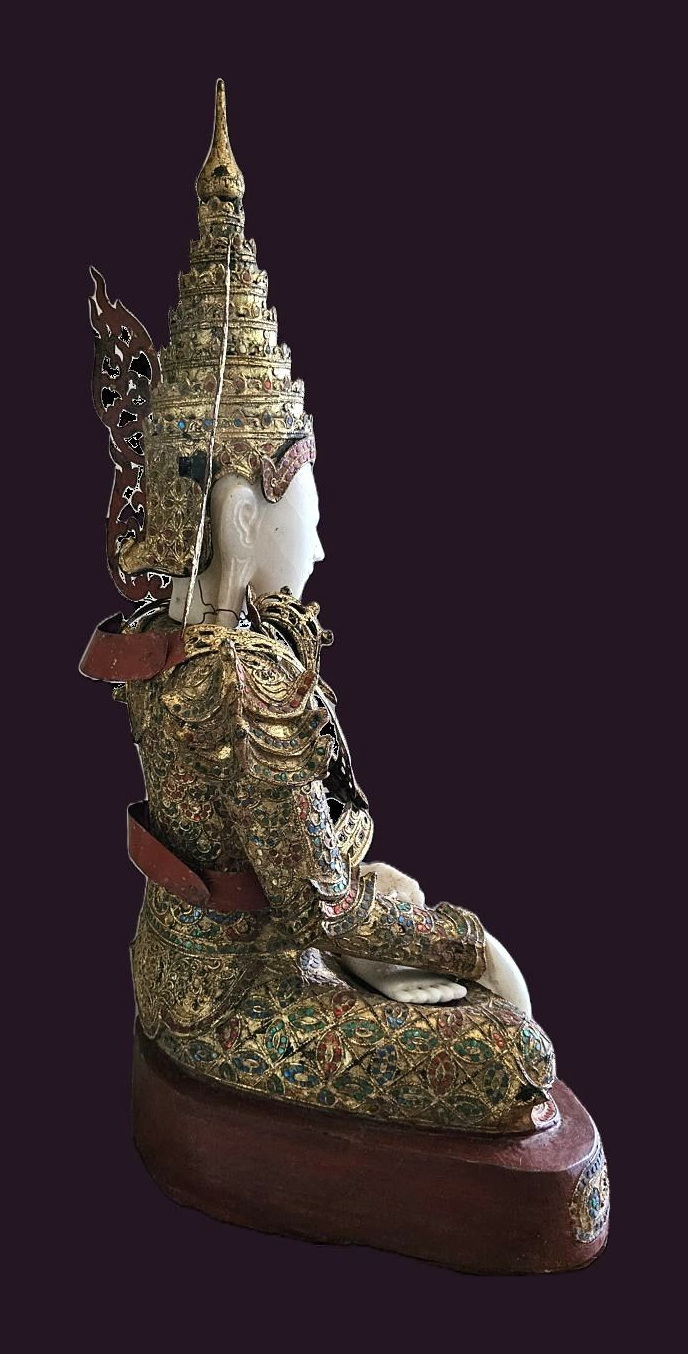
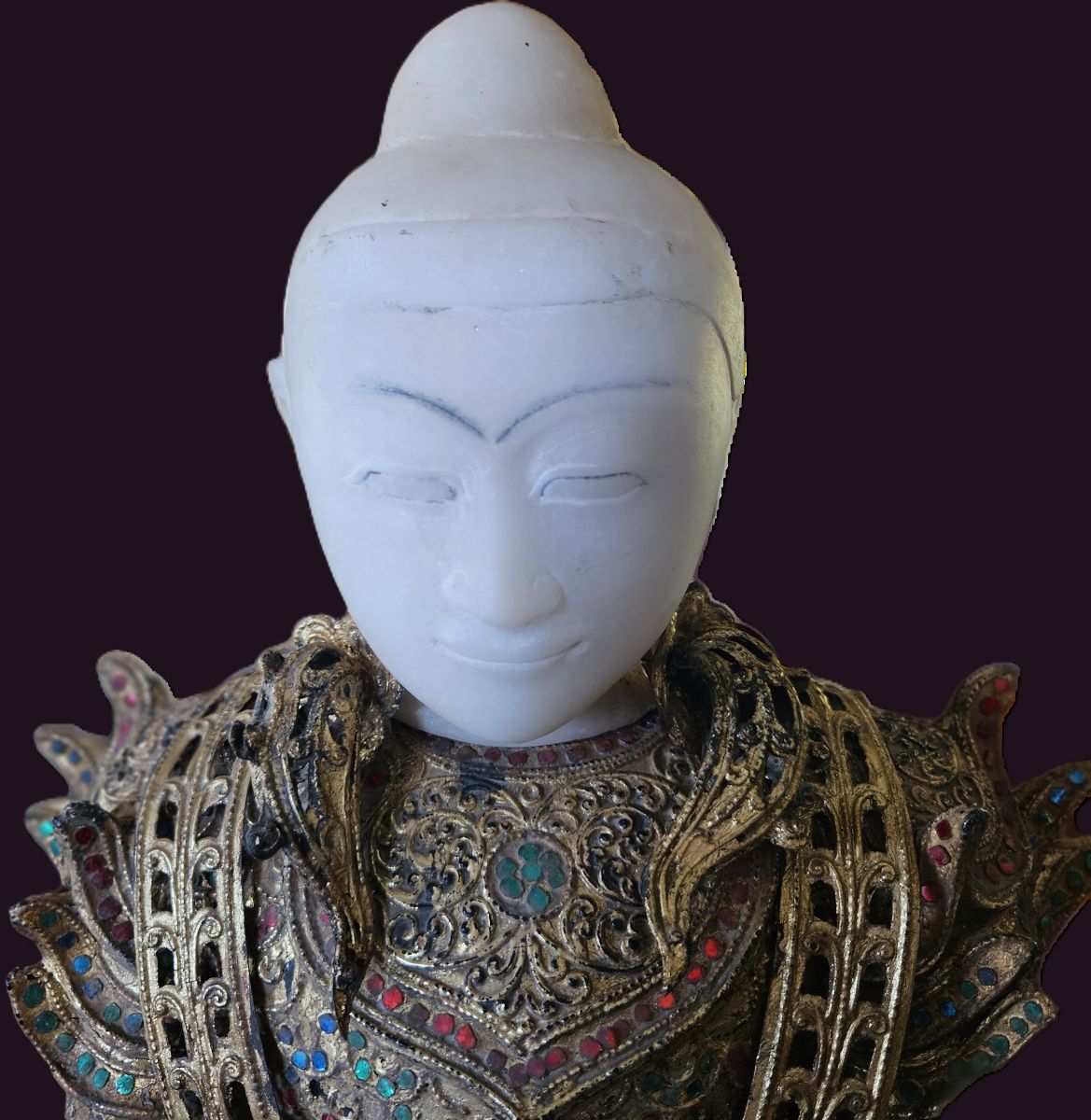
Modeled in the regal Jambhupati tradition, this Burmese Mandalay crowned Buddha alabaster & wood statue beautifully contrasts a smooth alabaster face with the crown, flanges, earrings and regalia made from metal.
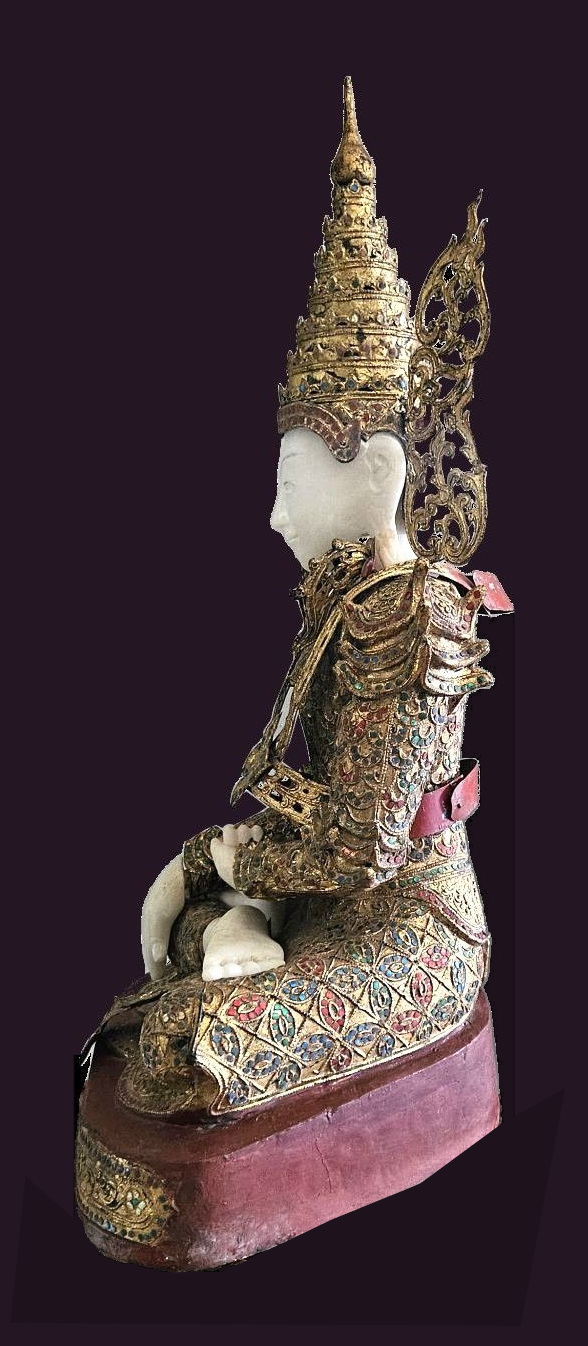
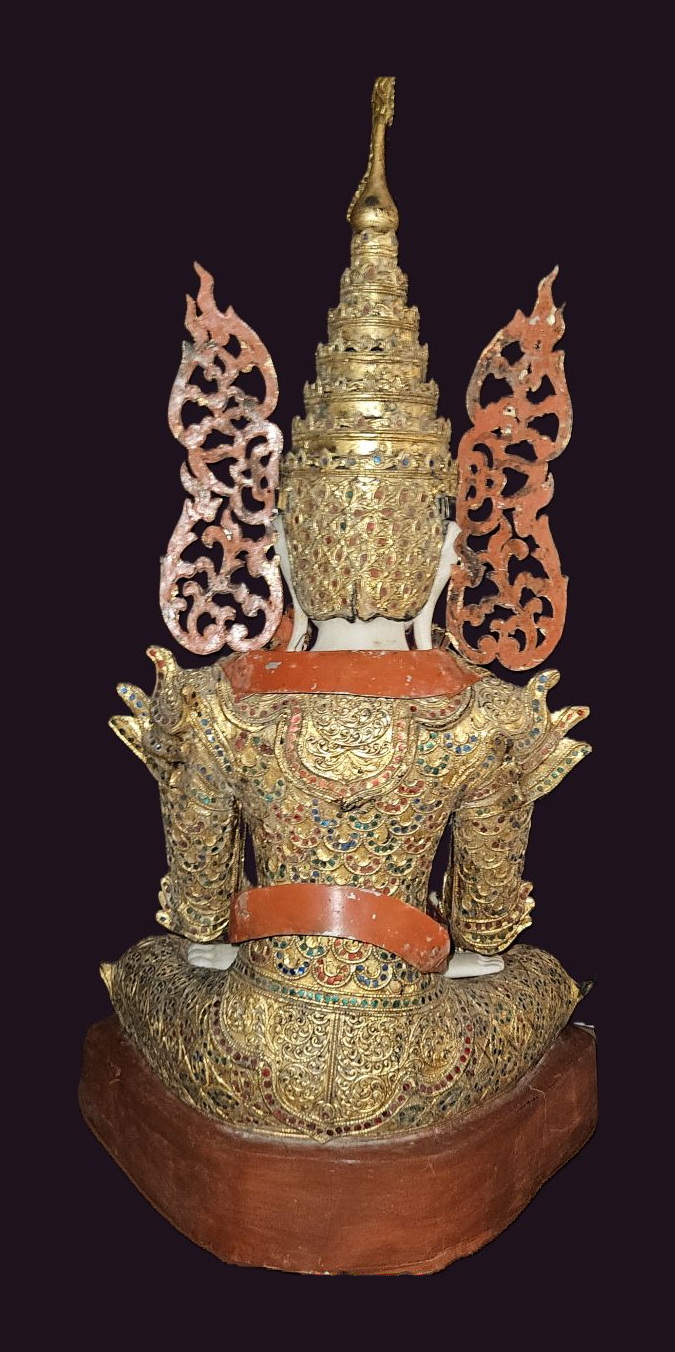
The figure wears a distinct seven-tiered metal crown emulating a pagoda with a small pointed wooden finial. The headband is slotted into the crown and is inlayed with coloured glass mosaics. Adorning the torso are elaborate separate components, including large side flanges, heavy earrings, and royal regalia.
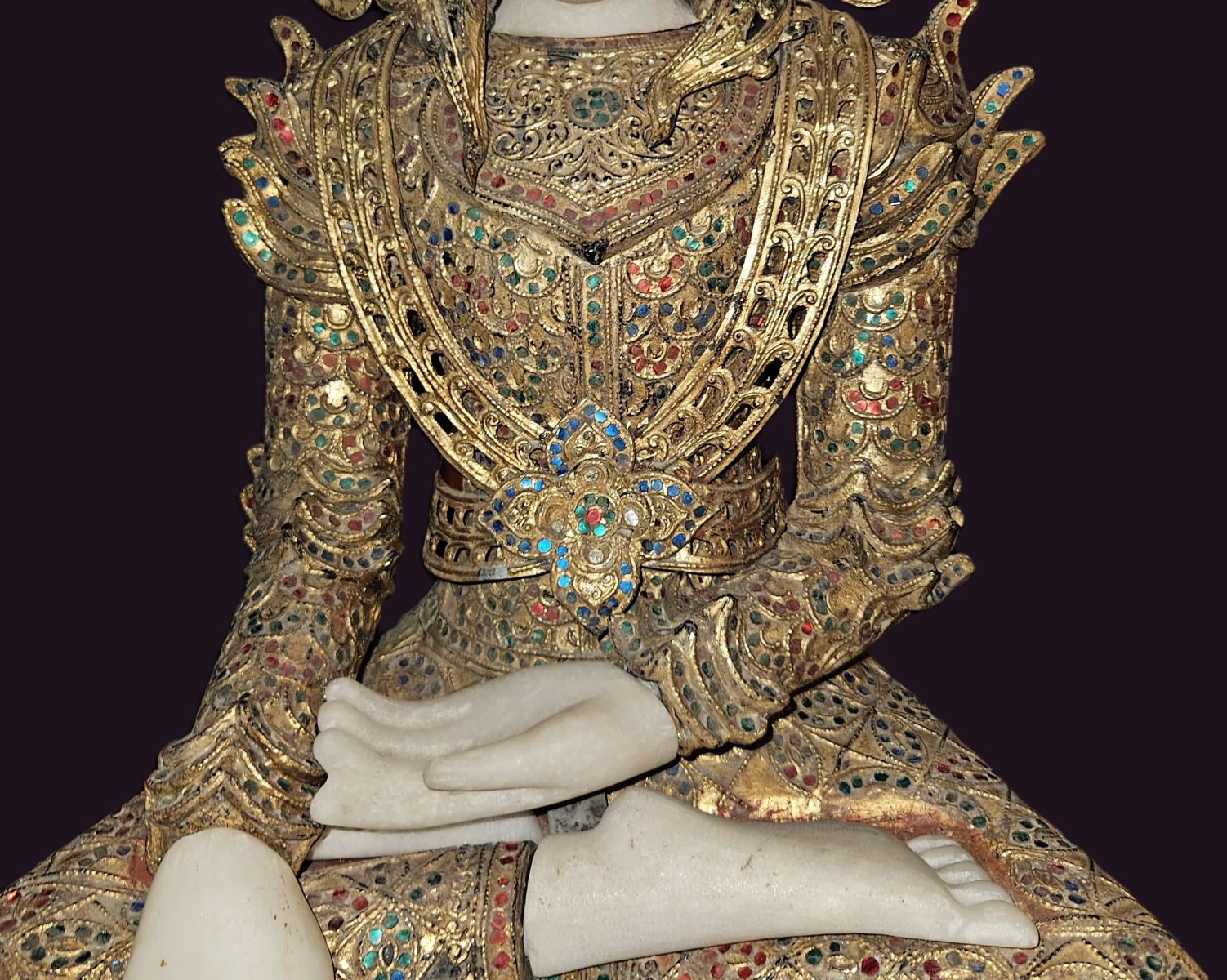
The alabaster hands, feet and head are all separate pieces.
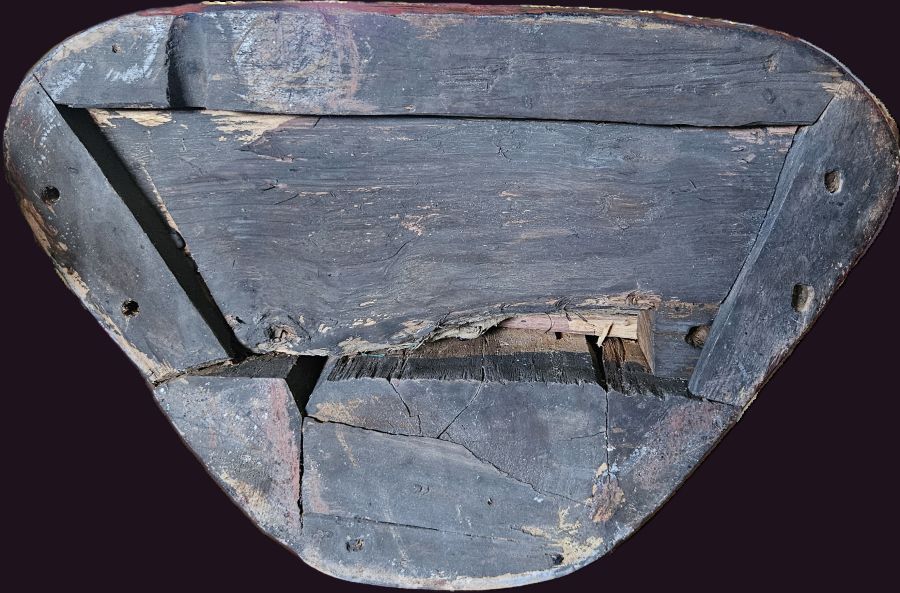
To achieve the dramatic relief work on the garments, craftsmen applied thayo lacquer, the traditional Burmese resin paste which holds the coloured mirror glass mosaics in place as well as creating the fish-scale pattern on the chest and a geometric diamond grid on the lower waist and legs. A decorative technique that carries over to the reverse side of the statue and across the scrolling border of the wooden base.
SPECIFICATIONS:
- 19th – early 20th century
- HEIGHT: – 78 cm
- WIDTH:– 42 cm
- DEPTH: – 30 cm
- #809
Mandalay Crowned Buddha: Alabaster & Wood
The iconographic style of the crowned Jambhupati Buddha statue depicts a pivotal narrative from the Buddha’s life involving the arrogant and tyrannical King Jambhupati. Known for terrorizing neighboring regions and lacking humility and compassion for his subjects, the ruthless monarch set his sights on conquering Rajagaha, a kingdom under the protection of King Bimbisara. To prevent bloodshed and guide the tyrant toward a path of righteousness, the Buddha intervened.
Knowing that the king would ignore regular spiritual teachings and only respected raw power and wealth, the Buddha manifested a grand illusion. He created a magnificent cosmic palace, transforming himself into a resplendent, supreme Emperor adorned in breathtaking royal regalia. Confronted by a majesty that completely eclipsed his own, King Jambhupati’s immense pride was shattered. Awestruck and humbled by the display, the king renounced his tyrannical ways, embraced the Buddhist precepts, and dedicated the remainder of his life to practicing kindness and compassion.
During the 19th-century Mandalay period in Myanmar, artisans perfected a mixed-media approach to religious sculpture. High-quality examples of this style beautifully contrast a serene, smooth face carved from white alabaster with a highly ornate body sculpted from gilded wood and metal.