
Literary Origins of the Jambupati Buddha
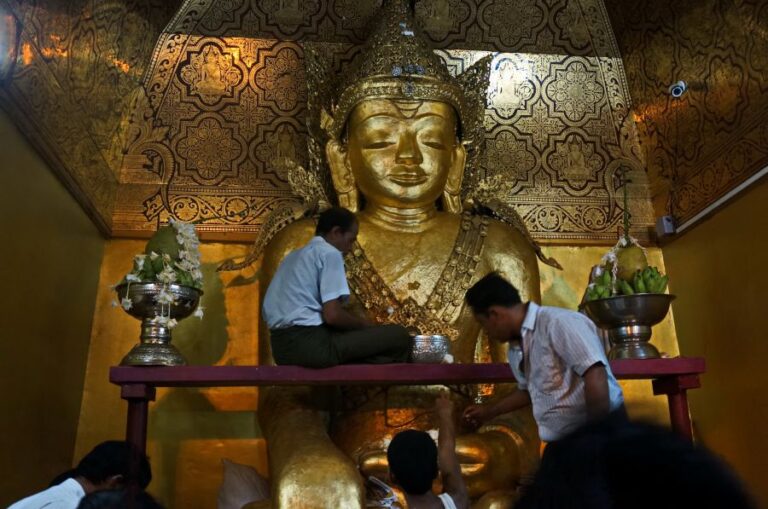
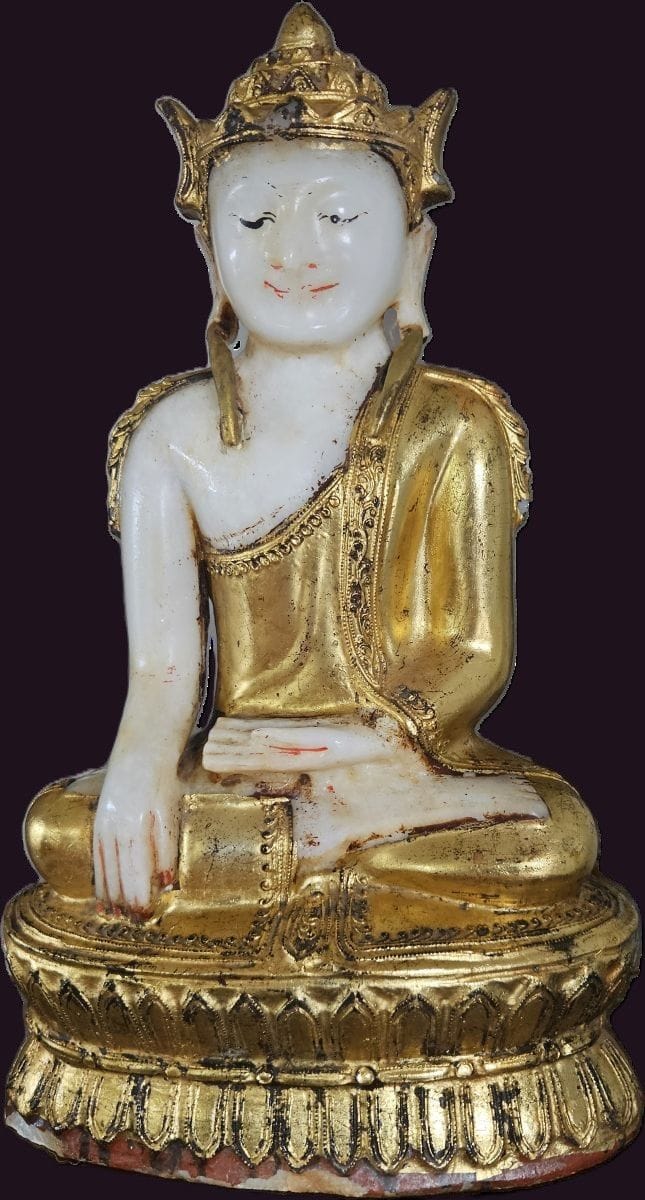
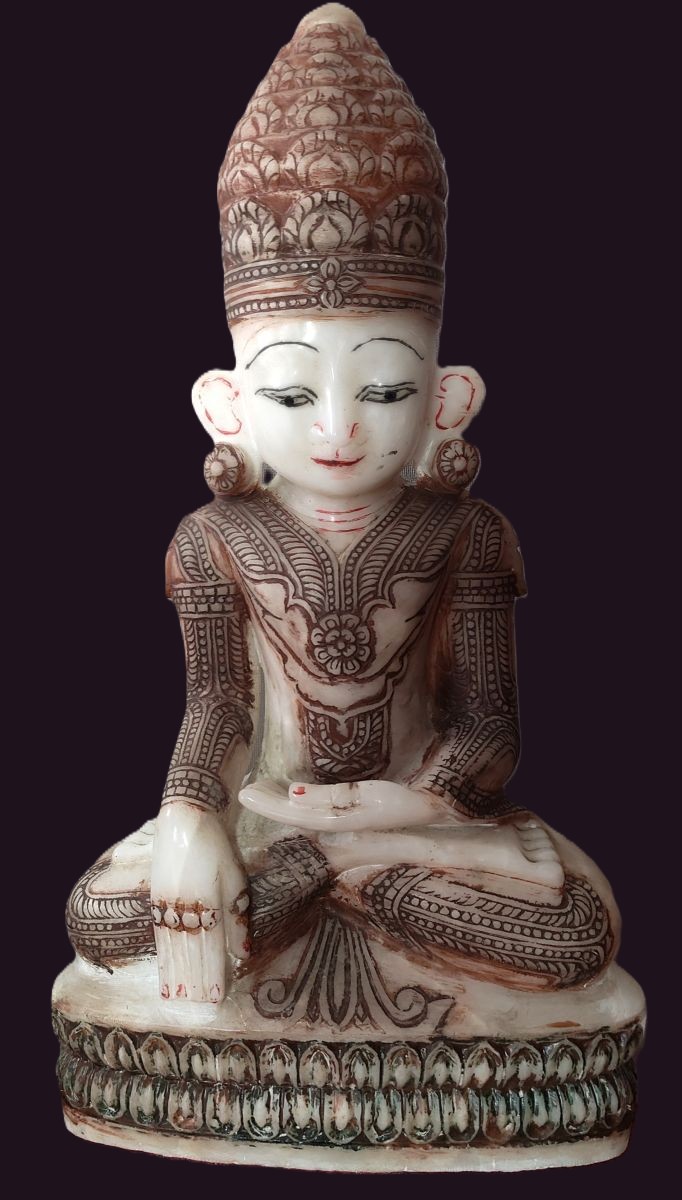
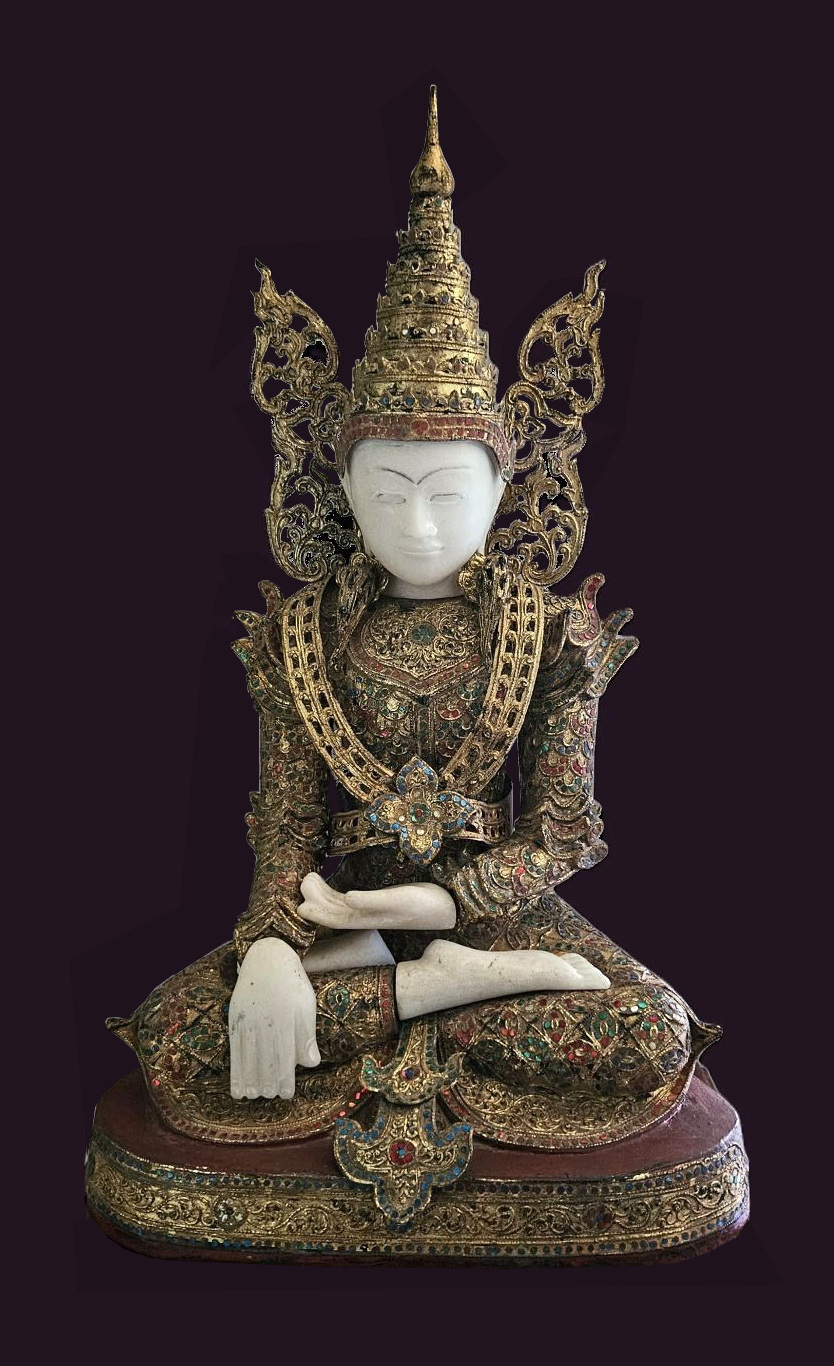
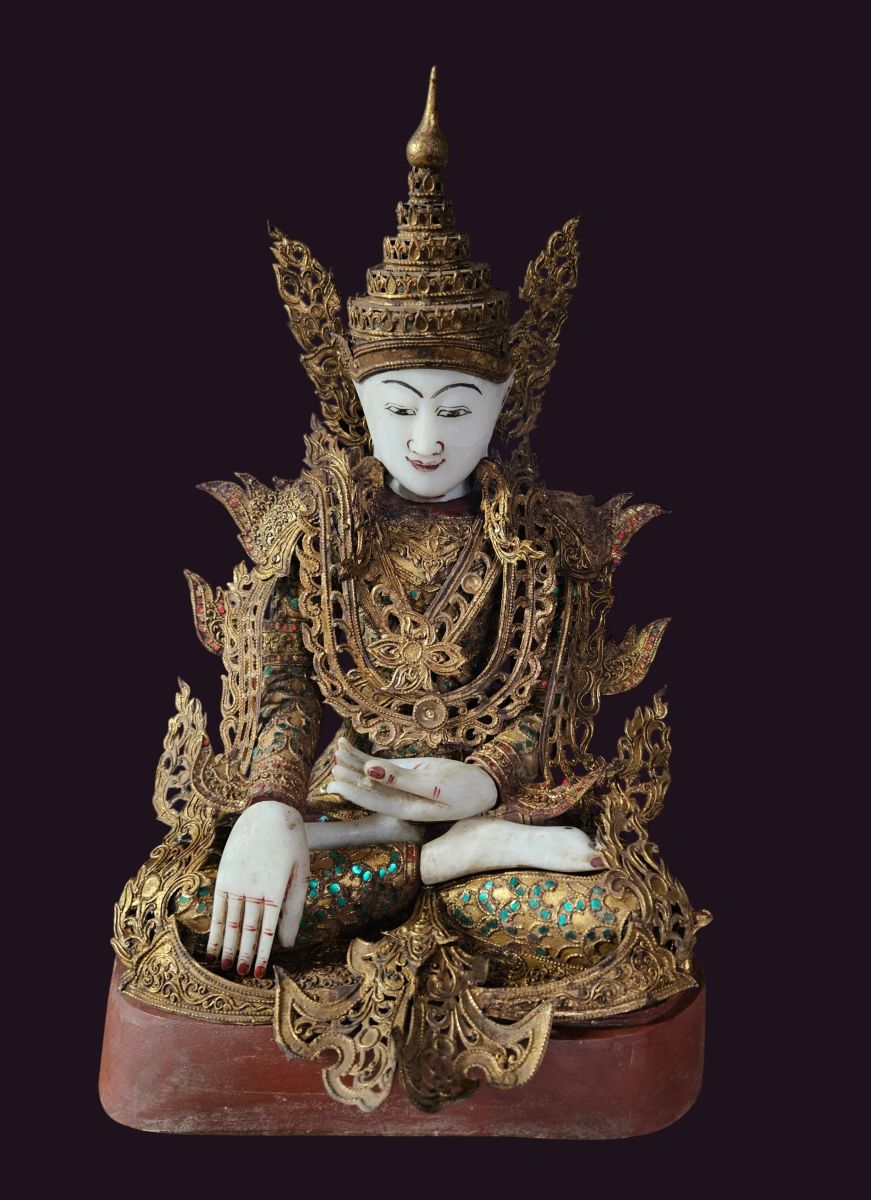
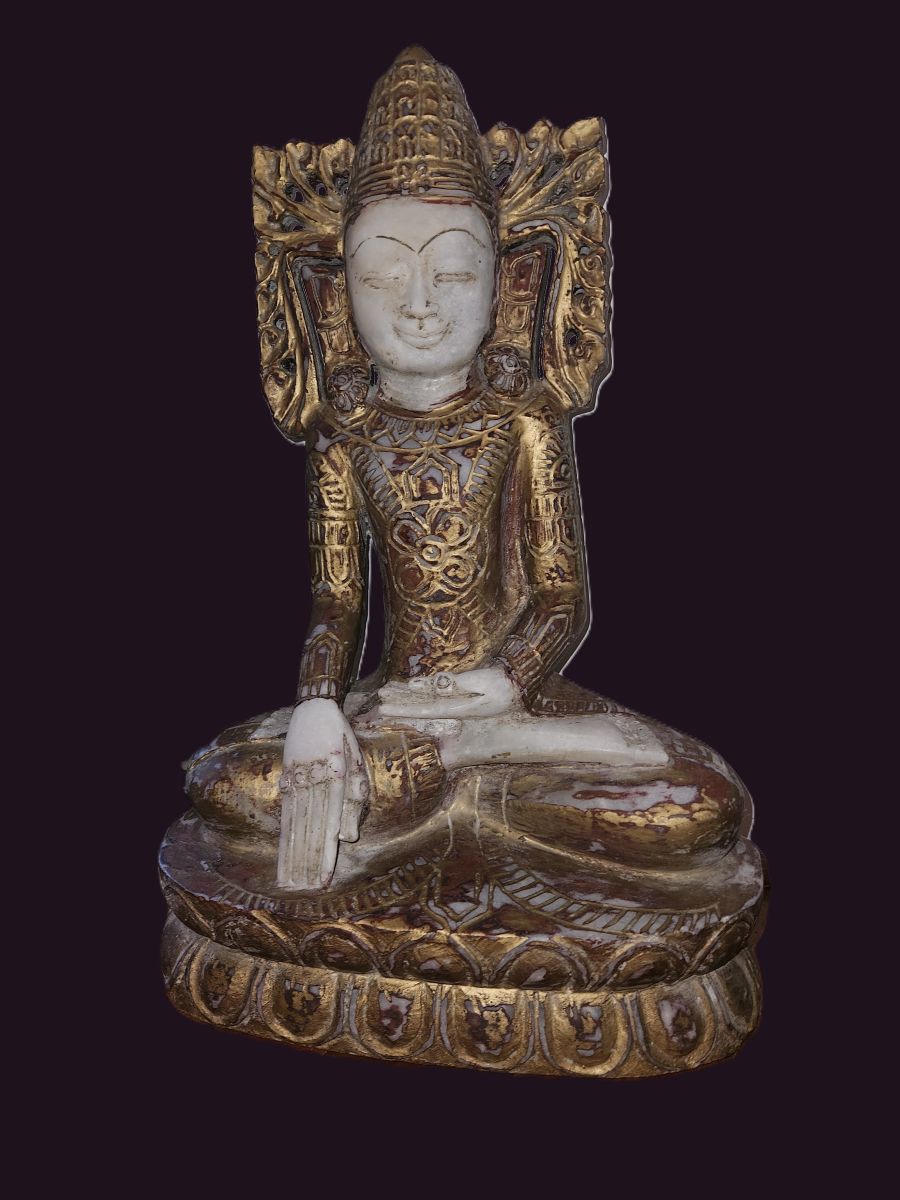
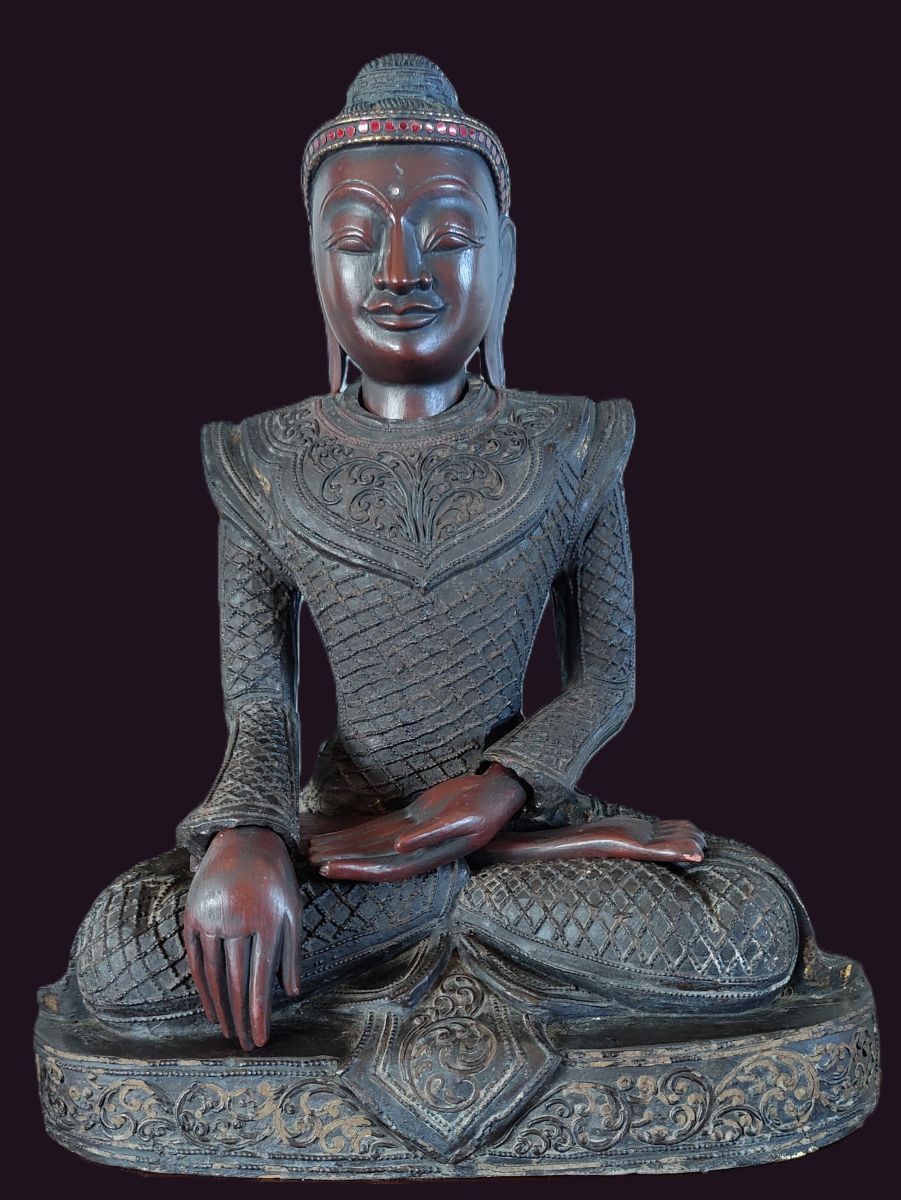
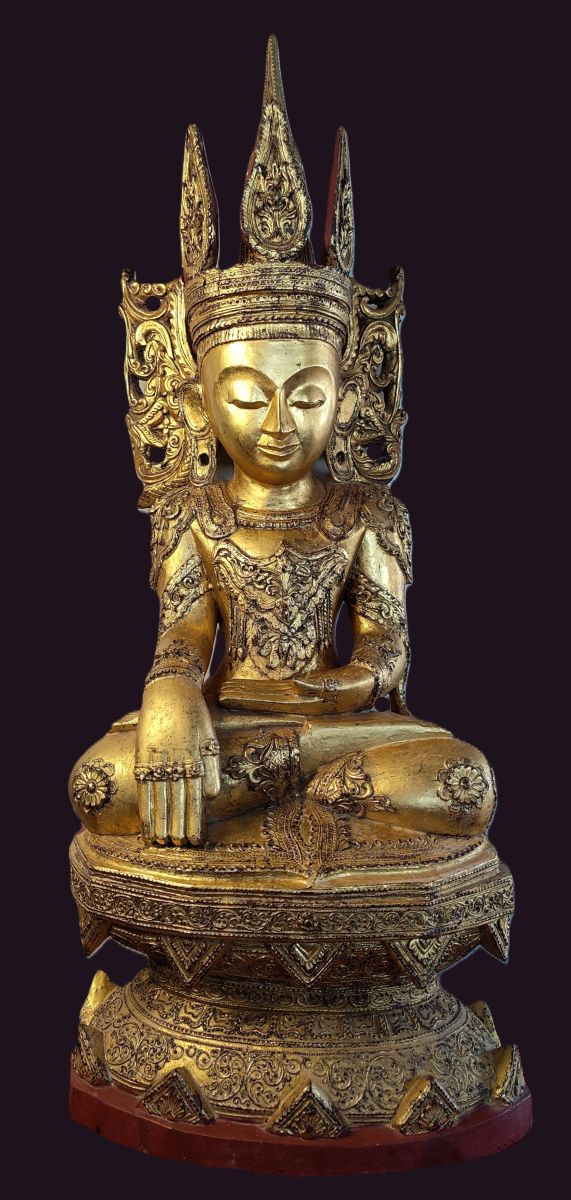
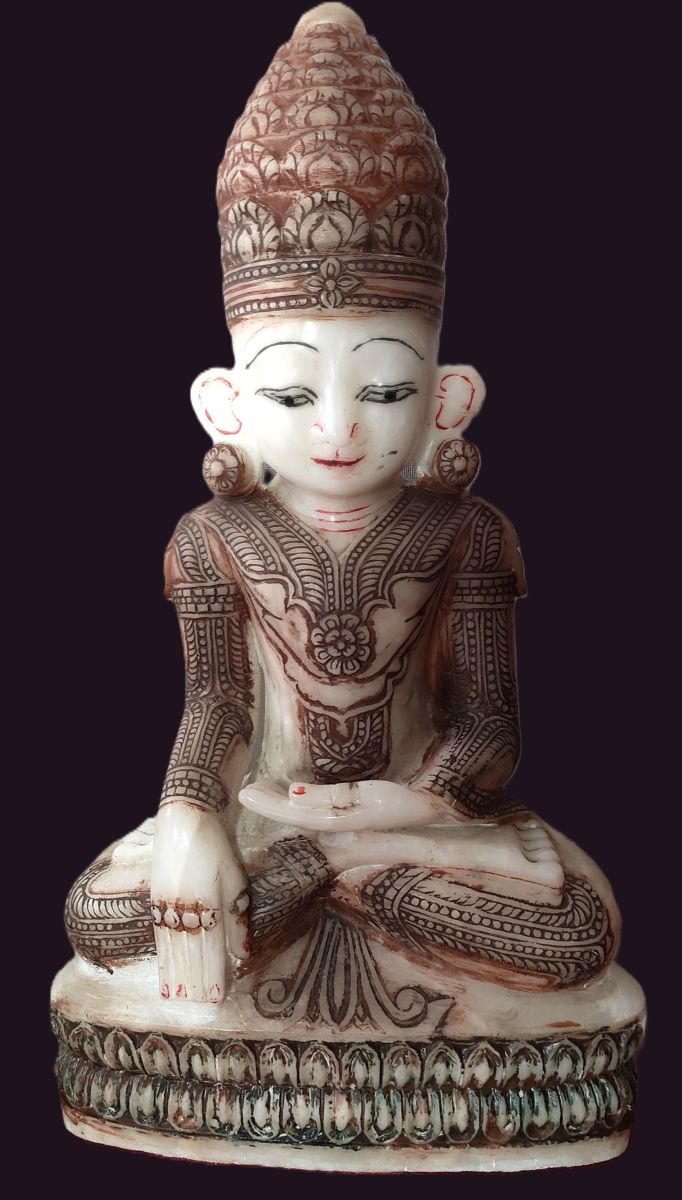
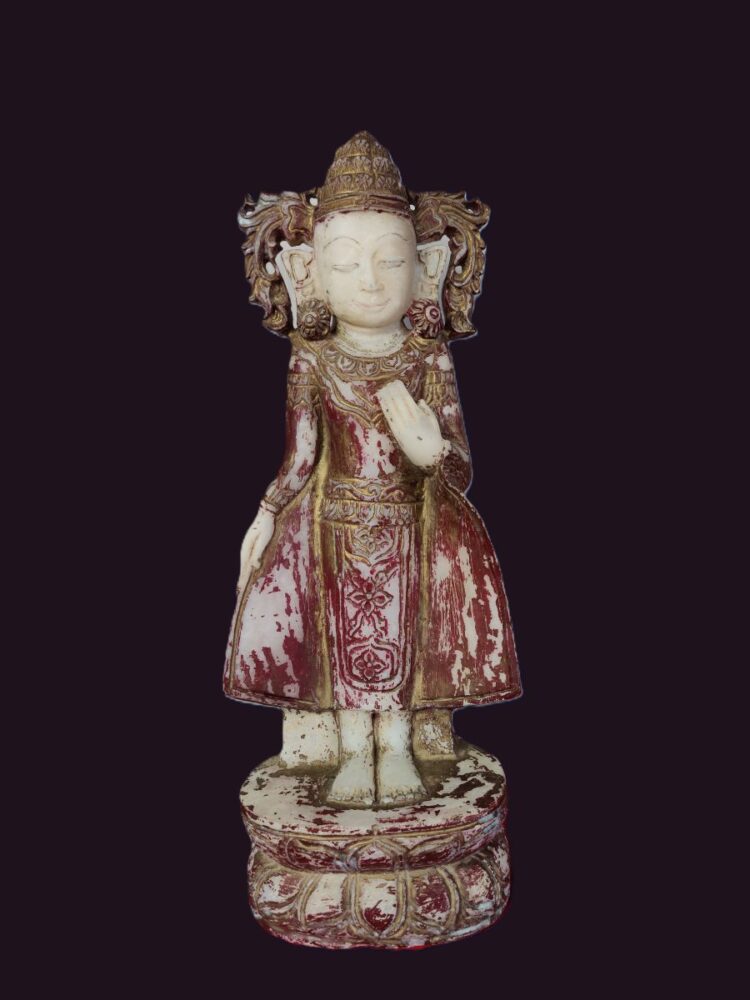
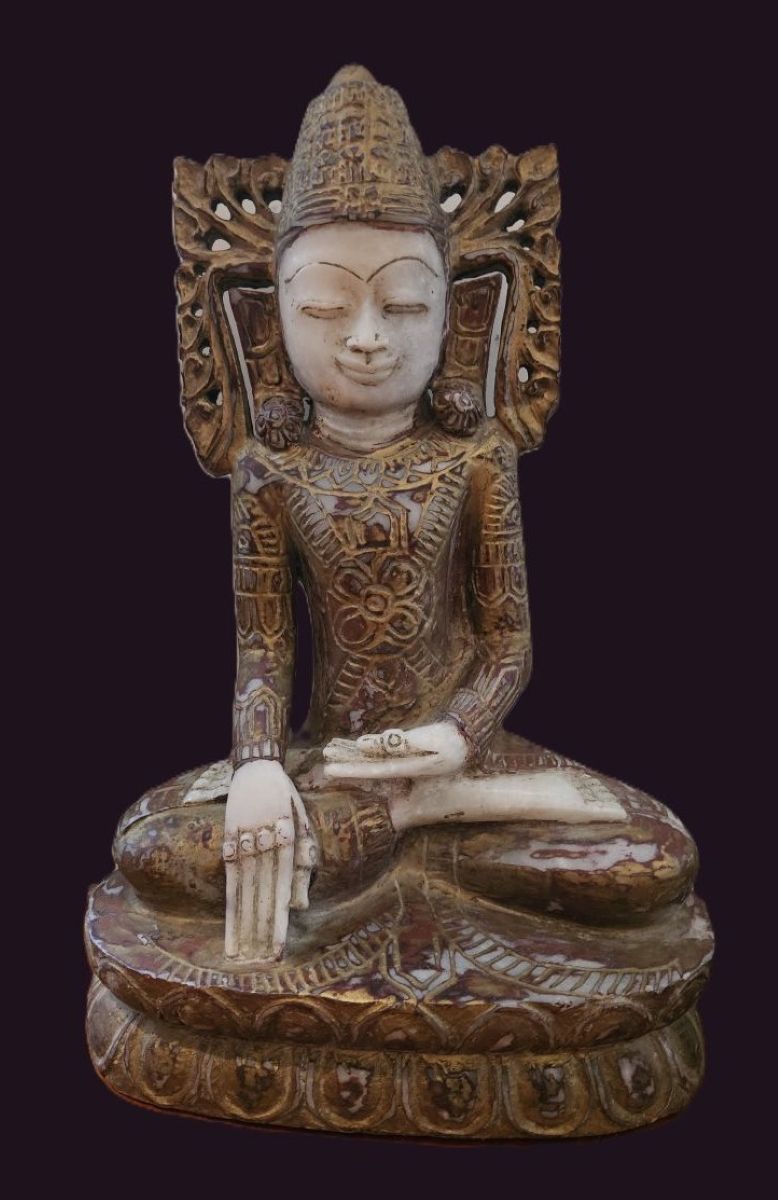
While early Pali scriptures such as the Mah Parinibbana Sutta portray the historical Buddha as an ascetic in simple monastic robes devoid of adornments, the literary origins of the Jambupati Buddha developed distinct narratives to explain the emergence of crowned Buddha imagery. According to the regional Jambupati legend, the Buddha used his psychic powers to manifest himself as a supreme Universal Monarch, donning a radiant crown, jewels, and royal regalia to subdue the pride of the arrogant King Jambupati. This tradition, alongside the concept of the Buddha as a spiritual sovereign, provided the theological basis for producing and worshipping crowned (Jambu Pati) Buddha statues throughout Southeast Asia.
The Tathagata Udana Dipani, written by Dipeyin Sayadaw, records another account explaining the origins of jambupati crowned Buddha images. Completed in 1134 B.E. (1772 CE), this text predates the Samanta-cakkhu Dīpanī by approximately 38 years.
While the Tathagata Udana Dipani explanation differs from the accounts in the Samanta-cakkhu Dipini and the Gulattha Vinicchaya, the narrative clearly expands well beyond the original Pali texts into imaginative storytelling. Even so, Dipeyin Sayadaw was no doubt writing down what had been passed down through his own teachers. Whatever its origins, his version took hold, giving rise to the name we still use today for these regally attired Jambupati images, after the proud king at the head. According to the 18th-century Burmese text Tathāgata Udāna Dīpanī (Chapter 153), the legend of King Jambupati unfolds as follows.
The Legend of King Jambupati & Origins of the Jambupati Buddha
During Buddha’s lifetime, King Jambupati ruled the kingdom of Pancala as an exceptionally powerful monarch who was gifted with supernatural powers. At his conception, an 18-cubit pillar of gold emerged from the ground in the royal courtyard. When he was born, pots of gold surfaced from the earth, dropped from tree branches, and floated up from the waters and ruby-encrusted sandals known as Maṇijotirasa flew from Mount Vepulla to find his feet. These omens foretold that the prince would become supreme ruler of Jambudipa, his dominion reaching one league into the sky, one league into the earth, and down to the realm of the Nagas. When he wore the sandals, he could fly at will.
When the Prince began learning martial arts, he shot his arrows not only through the air but deep into the earth. He practised the warrior’s craft for sixteen years. In his first year, an arrow from his bow travelled a single league through the air. In the second year, it reached two leagues, increasing each year until he could strike a target seven leagues away. When shooting his arrow into the ground, it could penetrate one league deep. When aimed at water, it vaporised the surrounding current a full league deep. If he fired toward the subterranean realm, the abode of the Nagas, the arrow turned the entire domain to ashes. Whenever he wished to summon the one hundred and one kings of Jambudīpa, he would use his special arrow to retrieve them. With its supernatural power, the arrow pierced their earlobes and towed them back, bound together like blossoms on a thread.
In due time, Jambupati held a grand coronation at Pancala, where, accompanied by his queen, Kancana Devi, he made himself King. One month later, while out on the terrace on the evening of the full moon day of Tazaungmon, he saw the moon in all its splendour in a cloudless sky, seemingly attended by a host of stars. This sight made him think that he alone was the glorious moon, while his courtiers and the one hundred and one kings of Jambudīpa were mere attendant stars.
That night, he arrayed himself in full royal regalia, put on his ruby sandals, and flew up into the air to visit the one hundred and one kings and demand their homage. During his journey, he encountered the majestic presence and domain created by the Buddha, which utterly eclipsed his own earthly pomp. Struck by this profound display, the Buddha’s teachings took immediate effect. Humbled by the display, King Jambupati and his retinue discarded their royal pride and entered the monastic order as bhikkhus. Queen Kancana Devi and her court ladies similarly renounced worldly life and joined the bhikkhuni order following the monastic path.
This narrative ultimately gave rise to the term Jambupati for a Buddha image dressed in royal attire. However, no historical or textual evidence suggests that the legend of King Jambupati’s emancipation derives from canonical Buddhist scriptures.
According to legend, the story originated in Chiang Mai before it spread south to Ayutthaya. The writer’s underlying intent appears didactic, aiming to craft a moral Buddhist framework that could reform a proud and despotic ruler.
Beyond this literary tradition, the emergence of crowned Buddha images was also strongly influenced by Tantric Mahayana Buddhism that flourished in Bengal and Bihar under the Pala dynasty.
Some crowned Buddha statues likely arose from a visual overlap between depictions of the Buddha and those of the Bodhisattva Maitreya (Arimetteya), who is traditionally portrayed in regal attire. Ultimately, the crowned Buddha image emerged from a shared desire to venerate the Buddha as the supreme “King of Kings.” This concept gained popularity through regional folklore rather than early canonical suttas.